
Evaluating Long Term Recovery Rates Of Receptor Slot Capacity In Partners With Concurrent Burnout
Concurrent burnout destroys the social baseline subsidy, turning shared presence into sensory overhead until extended allostatic clearance restores receptor capacity.

Deficit
Two operators enter an empty room after twenty months of sustained solvency defense. The silence carries weight because neither body possesses the metabolic surplus required to steady the other. Under social baseline principles, human neural architecture treats proximity to a known, predictable partner as an external energy subsidy.
Proximity lowers vigilance. Proximity distributes the neural load of environmental scanning. Proximity reduces basal cardiovascular expenditure.
When prolonged systemic overload drains both partners simultaneously, that external subsidy collapses. The presence of the partner ceases to function as a metabolic reserve and begins to register as an unserviced claim.
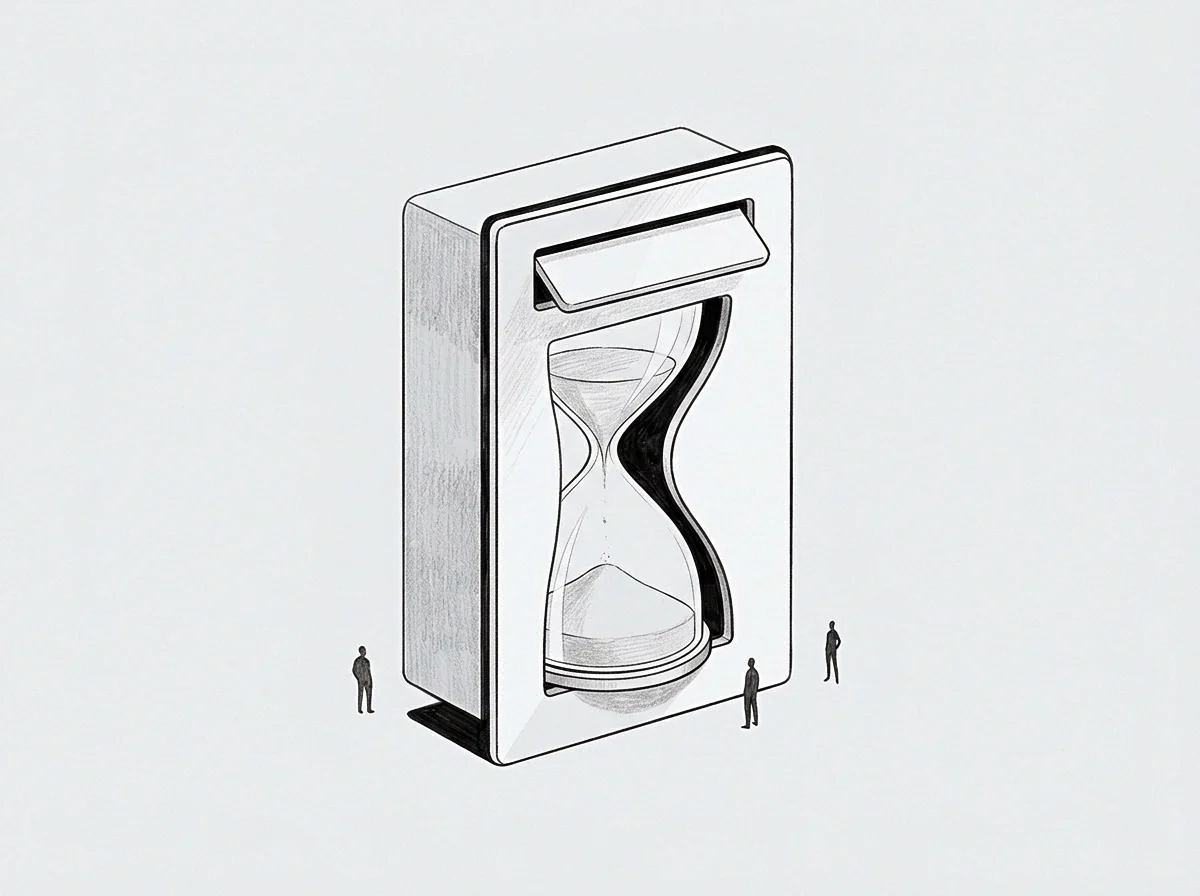
The receptor slot names the physiological and neural configuration necessary to take in co-regulatory calm from another human being. In unilateral strain, an exhausted operator leans against a stable partner whose autonomic nervous system absorbs and attenuates the incoming stress arousal. The exhausted operator relies on an intact template of reception.
The partner provides the baseline. In concurrent burnout, both individuals have crossed the threshold where baseline supply is exhausted. Neither operator holds excess stability to loan.
When the exhausted partner reaches outward, the gesture meets another deficit.
Co-regulatory attenuation fails whenever two concurrent nervous systems operate above their baseline threat thresholds.
Receptor capacity is not a cognitive orientation that responds to intellectual agreement. An individual cannot decide to open a receptor slot through sheer intention. Prolonged sympathetic dominance alters vagal regulation and desensitizes oxytocinergic pathways in the hypothalamus, locking the physiology into defensive self-containment.
When a partner attempts an offer of warmth, physical stillness, or shared attention, the depleted nervous system reads that offer as a sensory demand. The recipient must compute the intent of the gesture, track the other party’s baseline state, and maintain social engagement. That computation carries a steep energetic invoice.
- Autonomic exhaustion sets in when baseline parasympathetic tone remains depressed across consecutive quarters of work, preventing somatic settle.
- Stimulus inversion occurs when an intentional offer of presence produces defensive muscular contraction or withdrawal rather than down-regulation.
- Somatic insolvency denotes the threshold where metabolic reserves fall below the baseline required to complete simple neuroceptive social engagement cycles.
The breakdown escalates because partners confuse receptor failure with emotional hostility. An unreturned gaze or an involuntary physical flinch reads as interpersonal rejection. The flinch is an energetic conservation reflex.
The organism closes its peripheral awareness to protect remaining systemic reserves from further expenditure. When partners interpret this shutdown as indifference, vigilance escalates. The demand for relational reassurance increases precisely when neither person can afford the physiological expenditure to deliver it.
Repeated attempts to extract calm from a dry well accelerate autonomic depletion, locking both partners into chronic neuroceptive threat states.
Bench
Shared Space and Sensory Overhead
Consider two partners seated on a wooden bench at dusk. They have spent three years scaling an enterprise through continuous capital constraints. Neither person speaks.
An observer might misread the scene as tranquil rest. Inside each ribcage, sympathetic tone hums at high pitch. One partner shifts an inch closer.
The second partner stiffens. That stiffness is involuntary. The sensory presence of another body requires peripheral tracking, micro-postural adjustment, and cortical anticipation.
To a body running on empty reserves, an adjacent human body is sensory overhead.
The habit of being the baseline for others creates a reverse relational template. An operator accustomed to absorbing company panic learns to associate regulation with unidirectional output. The operator regulates everyone in the room by projecting unbroken composure.
When load stays elevated across multi-year cycles, that output template becomes rigid. The capacity to reverse the current and accept incoming comfort atrophies. The person knows how to supply calm under pressure.
The person possesses zero functional circuitry for receiving that same calm when exhaustion arrives.
An offer of physical presence registers as an intolerable load when the receiver possesses no surplus energy to track it.
The problem deepens when both partners share this reverse template. Each partner was the structural shock absorber for an entire enterprise. Both individuals built reputations on being unshakeable under investor pressure, operational collapse, and regulatory threat.
When both collapse into home space at the end of an acquisition or a brutal restructuring, two shock absorbers sit face to face. Neither partner knows how to become the soft surface. Both partners instinctively wait for the other to absorb the room.
When the expected absorption fails to materialize, confusion surfaces. The tired operator feels entirely abandoned. The partner sitting two feet away feels equally abandoned.
The room becomes an echo chamber of unmet regulatory expectations. Each partner demands that the other person be the adult in the room. Neither person has the physiological currency left to buy that composure.
The mutual expectation acts as a solvent on whatever relational trust survived the working sprint.
You sit there looking steady while I am drowning, and you offer me nothing.
Interval
Biochemical Reconstitution and Recovery Windows
Recovery of receptor capacity follows non-linear temporal arcs governed by neuroendocrine reset rather than calendar time. Clinical observation of severe occupational exhaustion demonstrates that hypothalamic-pituitary-adrenal axis dysregulation requires eighteen to twenty-four months of reduced load to re-establish normative diurnal cortisol curves. Sleep architecture remains fragmented for quarters after operational pressure ceases.
Rapid recovery is an illusion fostered by brief periods of vacation or physical withdrawal. True neurobiological reconstitution requires extended low-demand intervals.
The recovery process demands sequential biological clearance. Cellular inflammation markers must normalize before baseline parasympathetic tone returns. Once vagal efficiency improves, central oxytocin receptor density slowly up-regulates.
Only after these internal substrates settle can the organism afford to lower defensive scanning and open the receptor slot. Attempting interpersonal repair while inflammatory markers remain elevated yields repeated relapse into defensive hyper-reactivity.
| Stage Parameter | Acute Depletion Phase | Somatic Clearance Phase | Receptor Emergence Phase |
|---|---|---|---|
| Chronological Range | Months 1 through 6 | Months 7 through 14 | Months 15 through 24 |
| Autonomic State | Sympathetic dominance | Vagal bounce and lethargy | Restored heart rate variability |
| Receptor Slot Status | Fully refractory | Latent and fragile | Functional under low load |
| Co-Regulation Response | Perceived as threat | Tolerated without relief | Absorbs borrowed stability |
| Primary Failure Mode | Premature intimacy demands | Forced emotional processing | Relapse through load re-escalation |
The table maps three distinct phases. During the initial six months, the receptor slot remains refractory. Interpersonal demands during this window inevitably fail.
In the middle phase, lethargy replaces panic, but the capacity to be soothed remains minimal. True co-regulatory capacity begins to emerge only after month fifteen, provided the partners prevent secondary operational spikes from resetting the biological timer.
A premature demand for mutual soothing during the refractory phase resets the autonomic recovery timer to zero.
Biological reconstitution rates diverge across individuals based on genetic resilience, sleep hygiene, and prior allostatic history. A partner who sustained four consecutive years of emergency operations enters a much longer recovery arc than one who experienced an isolated six-month sprint. When one partner begins to recover receptor capacity at month twelve while the other remains refractory at month eighteen, an asymmetry emerges.
The partially restored partner seeks connection. The still-depleted partner experiences that approach as a predator at the perimeter.
The unresolved question remains whether concurrent burnout alters permanent neuroceptive thresholds or simply extends the biological reconstitution interval beyond ordinary empirical observation windows.
Contract

Operational Isolation of Interpersonal Demands
Surviving concurrent burnout requires the suspension of default co-regulatory assumptions. When two partners run out of fuel, they must formalize mutual independence rather than demanding shared processing. The intuitive impulse to talk through the exhaustion produces friction.
Conversational repair requires continuous attentional allocation, linguistic synthesis, and emotional attunement. Those faculties consume the very glucose and neural bandwidth that are in deficit. De-escalation starts by reducing relational friction to zero through explicit, unemotional structural terms.
Partners establish parallel recovery tracks. They treat shared physical quarters like a shared workshop where two injured craftsmen work independently without obligation to assist one another. Stating the limit in plain words replaces the interpretive guessing that consumes cognitive reserve.
One partner states an incapacity to listen, hold, or advise. The second partner acknowledges the statement without demanding justification. This explicit boundary insulates each person from the phantom weight of the other’s unspoken expectations.
- Spatial compartmentalization establishes dedicated physical zones where an individual guarantees total sensory isolation from partner evaluation and demand.
- Silence covenants eliminate the conversational obligation upon crossing the domestic threshold, allowing nervous systems to down-regulate without linguistic performance.
- Externalized care delivery transfers somatic regulation needs to massage, non-evaluative bodywork, solitary nature immersion, and medical oversight rather than marital extraction.
These terms look cold to observers steeped in conventional therapeutic models of emotional openness. Modern relational literature insists on mutual vulnerability and verbal processing as the universal cure for distress. That literature assumes at least one party has sufficient autonomic surplus to hold the space.
In concurrent burnout, applying that counsel is catastrophic. It forces two drowning swimmers to cling to each other, ensuring both submerge. Clinical wisdom in deep insolvency demands flotation devices, distance, and silence.
Silence acts as an active biological barrier against secondary relational depletion.
The contract succeeds only when partners view load isolation as an act of relational preservation rather than hostility. The moment an operator views a partner’s withdrawal as a targeted injury, the covert contracts reactivate. The unstated contract says that if I suffer, you must demonstrate equivalent somatic distress to prove your loyalty.
Dismantling that covert expectation allows each person to heal at their natural biological cadence without guilt.
A written agreement specifying six months of zero mutual emotional processing converts an ambiguous standoff into a clear operational parameter.
Yield
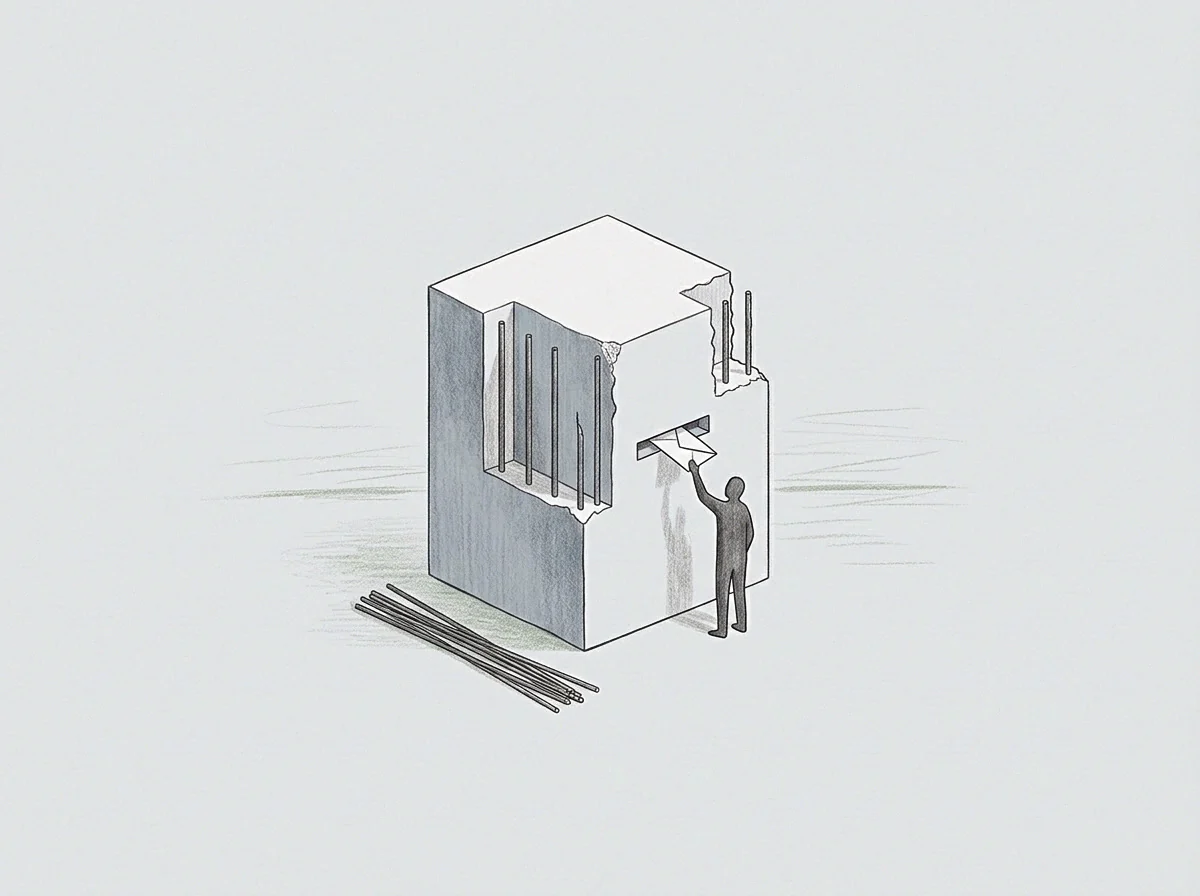
The final phase of long-term recovery involves the slow, deliberate cultivation of earned security. Earned security describes the structural reconstruction of an internal working model, moving from self-reliant defensive containment toward measured relational trust. This evolution does not occur through intellectual insight or mutual declarations of love.
It occurs through thousands of micro-experiences where an offer of proximity does not lead to an administrative bill. The nervous system registers safety only through repetitive, somatic non-events.
A non-event occurs when one partner rests a hand on the other’s shoulder and expects nothing back. The hand stays for ten seconds, then lifts. No conversation follows.
No emotional audit begins. The receiver’s system anticipates the usual extraction, tightens briefly, and then notices that no demand arrived. The anticipated debt did not materialize.
Over dozens of months, these low-amplitude, zero-demand contacts build new neuroceptive pathways. The receptor slot ceases to be an open wound and becomes a functional gateway.
Recovery is fragile. A single quarter of operational panic can trigger the old survival circuitry, shuttering the receptor slot overnight. The nervous system retains long-term memory of allostatic bankruptcy.
When environmental threat spikes, the body reverts to familiar patterns: unidirectional output, defensive isolation, and complete shutdown of receptive capacity. Partners who understand this reality do not despair when regressions occur. They recognize the regression as an automatic protective reflex and re-implement the baseline isolation protocol without moralizing the event.
Partners who exit concurrent burnout discover that their relational architecture has permanently altered. They abandon the romantic fantasy of continuous, effortless co-regulation. They treat relational energy as a finite biological commodity subject to thermodynamic constraints.
They track incoming load, monitor sleep debt, and state limits long before the well runs dry. The mature partnership operates not on infinite mutual absorption, but on careful, respectful conservation of shared baseline capacity.
When the room stays quiet, the body that spent years carrying the house can finally put its back against the floor.