
Evaluating Structural Limits of Executive Concurrency and Distributed Baseline Security During Hypergrowth
Executive concurrency limits emerge from biological working memory constraints when organizations offload systemic regulatory demands onto an isolated leader.

Shelf
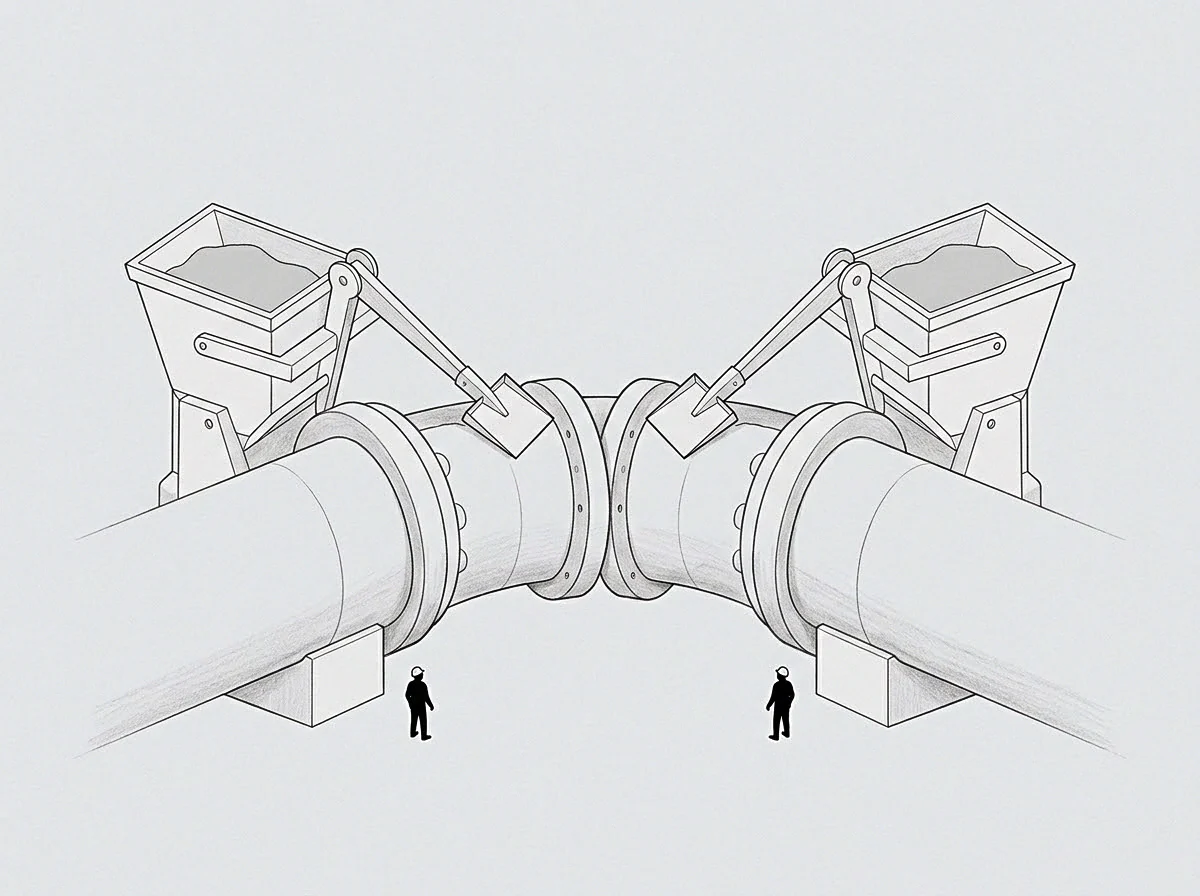
Concurrent Demands Across The Early Escalation Stage
At midnight, a founder sits before six open chat windows while a deployment stalls, three candidate evaluations sit unread, and an operating partner requests revised capital projections. Each thread treats working memory as an infinite buffer, demanding continuous executive availability. Biologically, that working capacity is an inelastic physical shelf.
The nervous system registers every concurrent operational thread as an active metabolic obligation, burning physical resources whether an issue resolves or stalls.
Under social baseline theory, the human brain budgets regulation against shared effort, presuming familiar cohorts will absorb the autonomic cost of monitoring threat. Rapid corporate expansion turns that economy upside down. Rather than drawing physiological relief from the team, the executive becomes an isolated baseline for dozens of new hires.
These reports carry unsettled states, ambiguous workflows, and interpersonal disputes directly to leadership for resolution. Every incoming query functions as an unhedged claim on attention, steadily draining regulatory reserves.
Baseline physiological security contracts whenever executive concurrency expands beyond the biological threshold of working memory.
Executive performance deteriorates under high concurrency through specific neural mechanisms. The prefrontal cortex maintains focus and suppresses impulsive reactions by routing glucose and oxygen to working memory circuits. When concurrency rates climb, this biological buffer saturates.
Allostatic load builds as cardiovascular, neuroendocrine, and metabolic systems run continuously to sustain vigilance, and operating in this state for extended periods leaves severe physiological consequences.
The executive quietly bears the metabolic energy cost of holding operational calm for the organization.

Hinge

The Economics Of Borrowed Baseline Security
Proximity to a trusted partner blunts neural threat responses, conserving metabolic resources for exploratory work. In early teams, physical and psychological closeness creates this baseline security naturally: colleagues share risk, verify decisions on the fly, and absorb relational strain together. Rapid expansion breaks that dynamic.
Structural layers separate team members, direct contact drops, and the executive becomes an abstracted regulatory fixture rather than a peer collaborator.
Incoming staff anchor their operational security by borrowing composure from leadership instead of generating it locally. Borrowed regulation occurs when personnel calm their own threat responses by offloading systemic anxieties onto executive attention. The executive absorbs operational ambiguity and projects stability back down the reporting line.
Subordinates experience lower regulatory strain, mistaking this executive-supplied composure for their own stability, while the organizational cost remains hidden behind an appearance of equilibrium.
Shared baseline security in small founding teams operates through direct mechanisms that contrast sharply with the distributed models required in expanded structures.
| Operational Criterion | Shared Baseline Setting | Distributed Baseline Setting |
|---|---|---|
| Primary Regulation Source | Mutual biological proximity and direct mutual monitoring | One-directional projection from the executive seat |
| Threat Budget Allocation | Distributed across the immediate working group | Concentrated inside prefrontal executive functioning |
| Metabolic Cost Direction | Reciprocal, low individual energy expenditure | Asymmetrical, heavy personal executive depletion |
| Vulnerability To Concurrency | Minimal, bounded by immediate group size | Severe, scaled linearly with reporting layers |
An executive’s internal working model dictates how long this load can be carried. Leaders conditioned to equate care with performance develop backwards regulatory habits, treating personal fatigue as operational failure. They have difficulty accepting external support, instinctively turning incoming help into administrative chores.
When pressure mounts, they double down on solitary vigilance, compounding systemic fragility as operations expand.
Observing steady executive composure, subordinates assume limitless capacity remains available in the seat.

Spoke

Distinguishing Concurrency Throttling From True Depletion
Rapidly expanding organizations routinely mistake executive throttling for an individual psychological breakdown. When an executive goes unresponsive, delays administrative approvals, or narrows conversational scope, observers often suspect personal pathology. In reality, the nervous system uses protective down-regulation to defend against metabolic exhaustion.
Executive concurrency reaches an architectural threshold where biological bandwidth cannot maintain current processing demands, so the brain restricts sensory input to preserve baseline function.
Down-regulation generally progresses through four observable stages:
- Attentional narrowing restricts working memory to immediate existential risks while deprioritizing strategic planning.
- Affective blunting damps emotional responsiveness to conserve prefrontal glucose reserves during prolonged strain.
- Latency elongation inserts systematic delays into interpersonal responses, buffering the nervous system against incoming stimuli.
- Complete disengagement halts outbound executive communications to prevent total physiological breakdown.
The protective nature of this withdrawal becomes clear when examining systemic stress markers. Cortisol levels elevate, sleep architecture fractures, and inflammatory markers rise across sustained operating periods. Autonomic research under chronic threat shows that extended parasympathetic withdrawal accelerates exhaustion toward physical collapse.
Seen through this metabolic reality, executive unresponsiveness during hypergrowth is a protective adaptation that preserves biological continuity.
A stated operational limit protects organizational baseline stability better than individual executive endurance.
Organizational concurrency constraints stem from fixed cognitive biology rather than character flaws. The human brain cannot maintain dozens of high-stakes relational interactions indefinitely. When leadership hides concurrency limits behind long hours, the company builds debt directly into executive physiology.
Down-regulation inevitably follows, arriving either through deliberate boundaries or through involuntary physical collapse.
The executive who avoids establishing firm communication boundaries will soon find biological limits enforcing them instead.

Clock
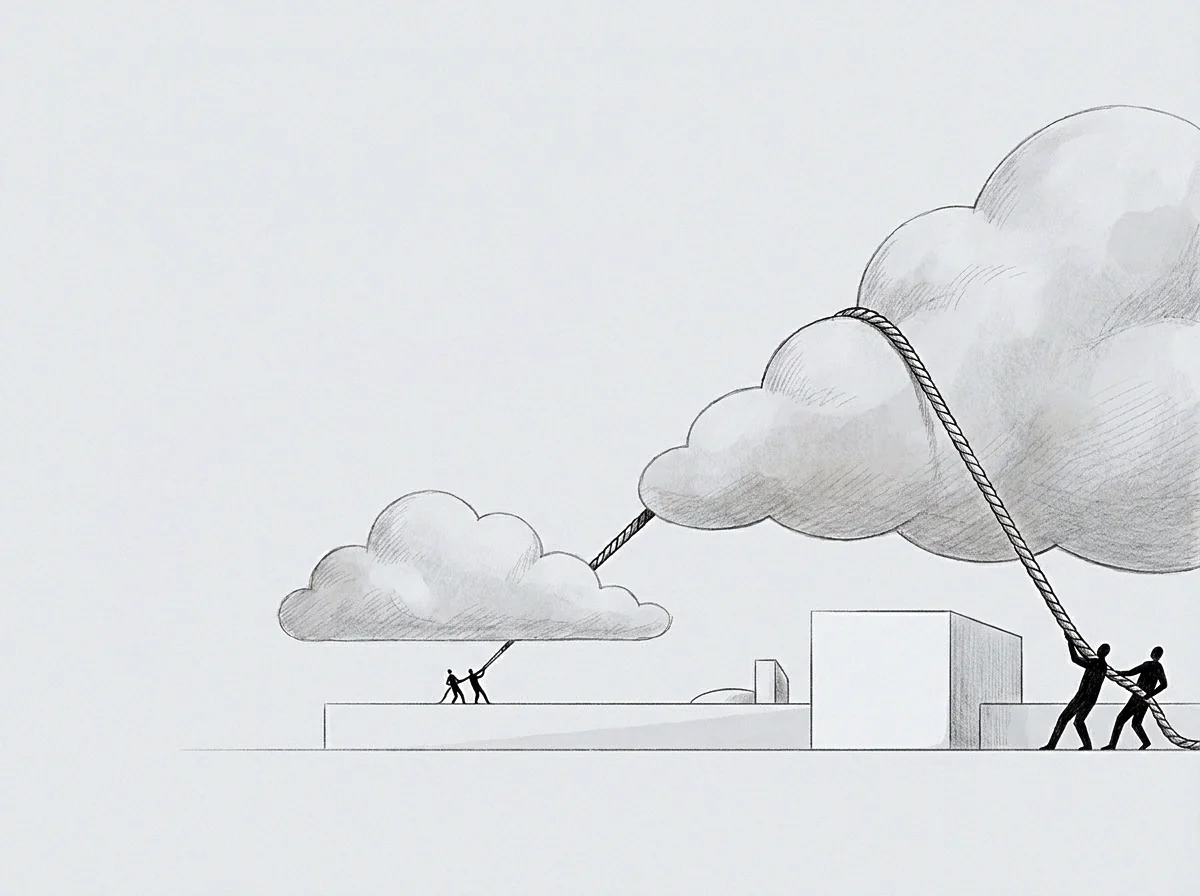
Will Structural Delegation Expand Nervous System Bandwidth?
Founders often attempt to resolve concurrency bottlenecks by hiring mid-level executives to insulate leadership focus, assuming additional managerial layers immediately relieve strain. In practice, operational transitions introduce heavy coordination overhead during early integration phases. New managers generate high volumes of clarifying questions, request operational validations, and disrupt established informal communication channels.
The executive must continuously evaluate managerial competence while managing preexisting operating responsibilities.
This dynamic creates a secondary concurrency loop that strains executive reserves. During this period, the executive evaluates candidate autonomy against systemic execution risks, where mistakes at scale threaten enterprise survival. Earned security requires extensive, repeatable positive experiences to establish functional trust between executives and incoming managers.
Until this relational baseline solidifies, delegation inflates rather than deflates executive cognitive loads.
Consider a practical operational scenario. An enterprise expands from twenty to one hundred personnel over six months. The founder hires three vice presidents to insulate executive attention.
During the initial ninety days, concurrent communication channels jump from eight direct reports to thirty cross-functional escalation points. The new vice presidents validate tactical initiatives with the founder, attempting to read subtle strategic intent. Executive concurrency increases forty percent, while sleep duration falls below five hours nightly.
The founder carries both strategic direction and secondary managerial oversight.
Relational trust develops through consistent operational performance rather than rapid administrative handoffs.
Industrial safety research demonstrates that distributed command structures reduce central cognitive demands only after local units master decentralized decision protocols. If local leadership lacks decision competence, central authorities experience severe cognitive overload. Rapid organizational expansion demands deliberate operational architectures that establish clear decision criteria.
Without explicit boundaries, administrative delegation simply redistributes systemic friction back toward the executive office.
When the executive seat leaves decision rights ambiguous, the incoming team continuously refers minor disputes back to leadership for final resolution.

Brace
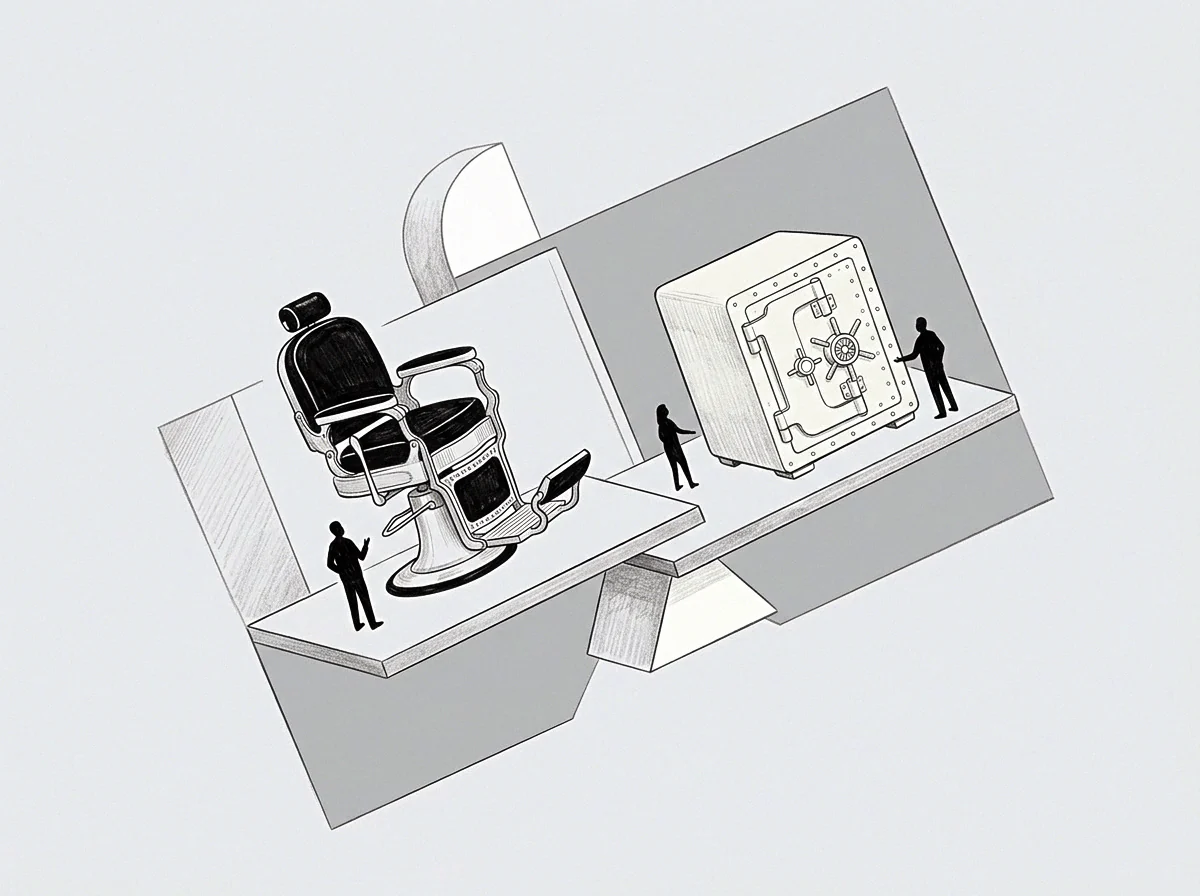
Architecting Sustainable Distributed Baseline Security
Resolving executive concurrency limits requires replacing centralized borrowed regulation with structural operational boundaries. Organizations must build systems that distribute threat management across operational teams, freeing executive capacity for strategic concerns. Establishing functional distributed security demands rigorous constraints on communication availability and escalation pathways.
Executive availability functions as a costly corporate resource requiring strict architectural protection.
Decentralizing operational security relies on several interlocking mechanisms:
- Asynchronous communication bands enforce mandatory delays on non-critical inquiries, disrupting reactive escalation spirals across the enterprise.
- Threshold-based governance grants team leads autonomous operating authority within predefined financial boundaries, eliminating executive sign-offs for standard operational decisions.
- Decentralized incident ownership establishes local crisis resolution units, preventing tactical disruptions from capturing executive focus.
- Explicit operational limits articulate exact boundaries around executive attention, outlining operational domains that proceed without central oversight.
Drawing explicit boundaries alters interpersonal dynamics across the executive layer immediately. When leadership restricts informal access, subordinates encounter systemic ambiguity without their familiar regulatory cushion. They must resolve operational stress locally rather than exporting anxiety up the hierarchy.
The executive experiences internal discomfort, confronting old habits that associate personal disengagement with neglect. Tolerating this friction enables the enterprise to build authentic, independent operational resilience.
Long-term systemic security develops through decentralized coordination protocols rather than centralized heroic endurance. Teams master localized problem-solving by repeatedly resolving operational shocks without executive intervention. As local competencies solidify, the executive moves away from continuous crisis firefighting.
Leadership presence becomes a strategic stabilizing force rather than an omnipresent emotional ballast. The organization secures its operational baseline across autonomous units, protecting executive nervous system reserves over the corporate lifecycle.
The operating term governing this transition grants operational teams full operational autonomy on the condition that local managers absorb and resolve their own tactical anxieties.