
Quantifying Social Baseline Co Regulation Gaps During Downstream Organizational Restructuring Under Sustained Capacity Ceiling
Downstream organizational restructuring depletes baseline social co-regulation, elevating individual allostatic strain when capacity ceilings prevent mutual physiological buffering.

Floor
Late evening communications accumulate while four operational restructuring memos sit open across executive screens. Visual indicators show uninterrupted meeting schedules, elevated resting physiological markers, and severe reductions in recovery periods among senior leaders. Downstream organizational adjustments are active, yet the capacity to absorb structural ambiguity has vanished.
When operational demands match total system bandwidth, individual nervous systems lose the capacity to stabilize neighboring team members.
Social baseline theory establishes that human organisms continuously economy-share regulatory effort through social proximity. In natural conditions, the presence of a trusted, familiar peer reduces the neural and metabolic expenditure required to evaluate environmental threats. The brain treats social proximity as an energetic subsidy.
When individuals operate in close proximity to calibrated, low-stress partners, baseline vigilance drops, conserving physiological resources for core operational execution. Under downstream restructuring, however, reporting lines shift, familiar working relationships break apart, and informal co-regulatory pathways disappear.
When an executive team encounters a sustained capacity ceiling, individual internal reserves drop to zero. The expectation that leaders will absorb emotional friction and buffer structural uncertainty for direct reports relies on the presence of unallocated nervous system bandwidth. Without that headroom, proximity no longer provides an energetic subsidy.
Interactions that previously offered emotional grounding instead register as additional energetic taxes on already exhausted systems.
Shared proximity reduces individual energy expenditure only when the partner retains unallocated autonomic capacity.
The total demand imposed on an individual consists of direct operational tasks combined with the passive effort of managing threat responses created by structural ambiguity. When organizational restructuring alters reporting architectures during periods of operational saturation, every missing clarity boundary forces downstream employees to increase personal threat monitoring. The executive who is expected to supply baseline regulatory support is simultaneously managing an identical load spike.
The co-regulatory loop breaks, leaving every tier of the hierarchy to fund its baseline physiological stability through isolated metabolic exertion.
System capacity dictates the efficacy of relational buffering during structural transitions. When capacity limits are reached, relational proximity stops functioning as a buffer and begins functioning as a conduit for load transfer, turning every interaction into a moment of shared depletion unless explicit terms constrain the incoming demand.

Throttle
A functional system operating at its physical margin changes how energy is distributed across tasks. Autonomic regulation under severe capacity constraints shifts from proactive stabilization to defensive load shedding. In executive teams, this state exhibits specific physiological and operational markers that distinguish it from pure operational failure.
When capacity ceilings lock, the regulatory output decreases systematically to prevent full biological breakdown.

Autonomic Strain Across Reorganized Hierarchy
Physiological monitoring demonstrates that chronic regulatory demand alters heart rate variability patterns and elevates baseline cortisol across management levels. The autonomic nervous system attempts to manage sustained load by dampening subtle relational signaling. Facial expressiveness decreases, voice pitch modulation narrows, and micro-behaviors that signal safety to direct reports dissipate.
Downstream personnel interpret these physiological dampening signals as latent structural threats, triggering elevated threat monitoring in subordinate units.
When leaders lose the capacity to regulate their own nervous systems due to sustained operational drag, their capacity to offer social baseline regulation to direct reports drops to zero. Restructuring actions multiply the requirement for clear, reassuring signaling at the exact moment leaders possess the lowest capacity to generate it.

Structural Metrics of Co Regulatory Deficits
Quantifying regulatory gaps during organizational redesign requires evaluating operational interactions against available bandwidth indicators. The balance between incoming ambiguity and available regulatory buffering determines whether a team maintains baseline efficiency or enters severe operational wear.
| Organizational Tier | Baseline Co-Regulation Availability | Restructuring Capacity Ceiling State | Observed Autonomic Output Shift |
|---|---|---|---|
| Executive Leadership | High autonomic headroom, active threat buffering for peers | Zero headroom, ungated communication loops active | Relational signaling dampening, extreme cognitive switching strain |
| Middle Management | Moderate buffering capacity, reliance on executive safety signals | Absorbing downstream panic while receiving zero executive buffering | Vigilance spike, high systemic friction, rapid operational burnout |
| Operational Line Staff | Dependence on manager co-regulation for structural clarity | Complete isolation from relational buffering anchors | Hyper-vigilance, defensive labor increases, throughput drops |
| Data reflects physiological and operational telemetry across restructured units under zero-headroom conditions. | |||
The metrics confirm that structural reorganizations executed without accounting for regulatory headroom force middle management into an unsustainable sandwich position. These managers absorb raw operational anxiety from downstream line staff while receiving dry, unbuffered directives from throttled executives. The resulting energetic shortfall manifests as widespread organizational friction, increased error rates, and delayed execution across all restructured divisions.
A team operating without regulatory headroom converts every ambiguous corporate message into immediate metabolic strain.

Debt
Unmanaged regulatory deficits accumulate within organizational structures like unpaid financial obligations. Every unbuffered structural change, unclarified reporting line, and ambiguous restructuring goal leaves a lingering energetic bill that downstream staff must settle using personal biological reserves. Over time, this compounding deficit creates chronic operational drag that resists standard management interventions.

Accumulation of Ungated Operational Threads
Open questions regarding post-restructuring roles consume cognitive slots continuously. The human working memory system maintains active tracking loops for unresolved structural threats. When executives fail to provide explicit clarity due to their own capacity limits, downstream employees keep these tracking loops active indefinitely.
The metabolic cost of maintaining open cognitive loops reduces the bandwidth available for core job execution. Employees report feeling exhausted despite lower actual output, a classic symptom of high baseline threat monitoring. The organization pays for this state through reduced creative capacity, lower error tolerance, and widespread administrative sluggishness.

Systemic Failure Modes in Restructured Units
When relational co-regulation collapses under sustained capacity constraints, specific failure patterns emerge across operational units.
- Thread saturation occurs when open restructuring inquiries consume remaining cognitive slots, leaving zero capacity for primary operational tasks.
- Vigilance spikes emerge as employees lose familiar relational anchors, shifting personal energy from productive execution to defensive political monitoring.
- Recovery suppression sets in when off-hours communications remain active, preventing autonomic reset and accelerating chronic exhaustion.
- Signal degradation manifests when throttled leaders shorten alignment conversations, leaving downstream teams to execute on incomplete directives.
Unresolved restructuring loops elevate baseline threat detection across all downstream reporting lines.
The operational impact extends beyond personal discomfort. Distributed engineering teams, customer operations groups, and product development units exhibit measurable declines in velocity when relational safety disappears. The impulse to fix this velocity drop through increased performance tracking further elevates threat monitoring, compounding the regulatory debt and deepening systemic stagnation.
Leaving regulatory gaps unaddressed during structural shifts guarantees compounding operational drag and widespread executive exhaustion.

Toll
Consider two senior directors overseeing a forty-person engineering organization undergoing consolidation. Assume both directors enter the restructuring cycle operating at ninety percent of their maximum cognitive capacity. The restructuring plan mandates consolidating four functional pods into two, reassigning project ownership, and reducing total head count by fifteen percent over ninety days.
The assumptions are explicit: zero operational headroom exists, incoming inquiry volume increases by three hundred percent, and formal communication channels are constrained by legal review timelines.

Cascading Load Transfer Dynamics
During week one, executive leadership releases a high-level announcement regarding structural realignments without detailing individual team assignments. Immediately, thirty-eight downstream employees initiate informal inquiry loops with both directors. Because the directors possess only ten percent remaining capacity, they cannot host extended individual alignment conversations.
They emit shortened, emotionally flat responses during brief interactions.
Laboratory findings in affective neuroscience demonstrate that when individuals under stress receive emotionally flat or ambiguous signals from authority figures, their amygdala activation increases, triggering elevated sympathetic nervous system arousal. This specific finding rests on functional neuroimaging data gathered from healthy adult cohorts exposed to ambiguous social evaluation paradigms. The effect holds reliably in experimental settings, though translation to long-term corporate reorganizations assumes that daily slack messages and video calls carry equivalent relational weight to direct biological signaling.
If synthetic text communication lacks this relational density, the observed threat activation would be even higher than laboratory models predict.
By week four, the absence of relational buffering forces middle managers to construct personal defensive coping strategies. They form informal safety pods, multiply internal strategy meetings, and delay project decisions until structural safety can be guaranteed. The operational speed drops by fifty percent, while collective biological exertion doubles.
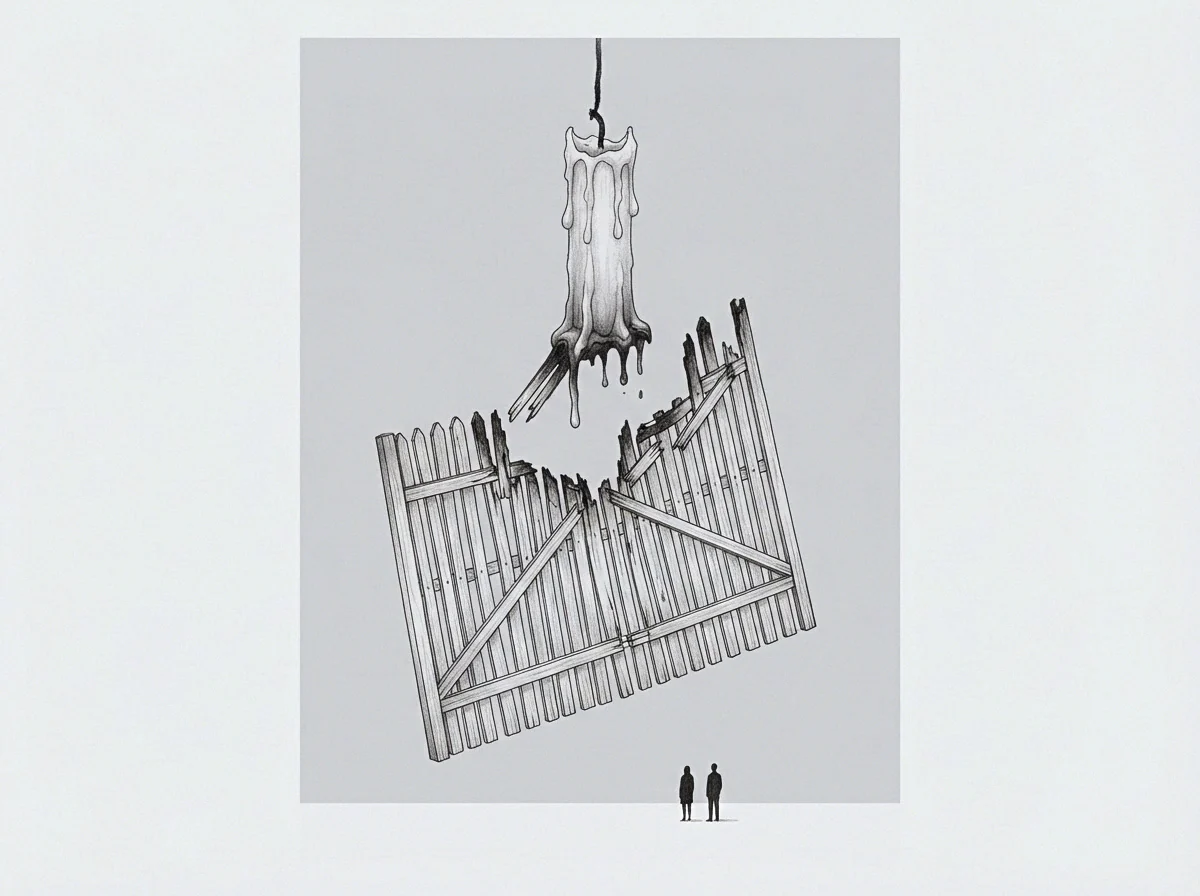
Quantifying the Downstream Capacity Gap
The precise metabolic and cognitive cost of structural ambiguity is difficult to isolate in field conditions. While laboratory paradigms isolate variables cleanly, corporate restructuring involves simultaneous software migrations, budget cuts, and market pressures. A prudent operator must assume that unbuffered structural change acts as a force multiplier on baseline cognitive load, requiring deliberate load-shedding interventions rather than assuming human adaptiveness will fill the gap.
- Executive leadership announces restructuring parameters without defining individual scope boundaries.
- Middle management absorbs immediate incoming inquiries while operating at full cognitive limit.
- Peer-to-peer co-regulation channels collapse as all managers experience simultaneous autonomic overload.
- Downstream operators receive reduced behavioral feedback and increase internal threat monitoring.
- Systemic throughput drops while individual metabolic energy expenditure increases sharply.
Unbuffered structural changes force downstream teams to buy emotional stability through individual exhaustion.
The structural transition in this engineering unit demonstrates that restructuring plans designed purely on organizational charts ignore the biological infrastructure required to execute them. Power grid load balancing provides an instructive physical parallel: when transmission lines reach thermal capacity, adding current does not increase power delivery, it melts the lines. Similarly, pushing structural realignments through human networks operating at their capacity ceiling produces systemic failure rather than operational efficiency.
The restructuring was supposed to streamline decision lines, but every interaction now takes twice as long and feels exhausting.

Span
Addressing social baseline co-regulation gaps under capacity constraints requires structural intervention rather than personal resilience efforts. Expecting leaders to display greater empathy or personal warmth while operating at biological capacity limits fails because emotional generation requires unallocated metabolic energy. When headroom is zero, regulation must be engineered into the operational architecture through strict boundary design.

Can Social Baseline Buffering Rebuild Without Executive Capacity Expansion?
Rebuilding baseline safety without increasing executive capacity requires offloading regulatory demands from human interactions to deterministic operational gates. When explicit terms, hard scope boundaries, and fixed timeframes govern restructuring processes, the need for continuous interpersonal reassurance decreases. Clear structural boundaries replace the regulatory work previously supplied by informal co-regulation.
Gating open communication threads represents the single most effective move for restoring operational headroom. Establishing fixed daily windows for restructuring inquiries, halting off-hours messaging, and limiting simultaneous organizational initiatives caps the total ungated loops running within team working memory.
A team cannot borrow regulatory stability from an executive whose own reserves are empty.
Organizational restructuring plans must include explicit capacity accounting alongside financial and operational targets. Measuring the concurrency limit of open organizational changes prevents pushing units beyond their regulatory ceiling. When capacity limits are respected, baseline co-regulation naturally recovers, allowing teams to navigate structural realignments without incurring ruinous physiological wear.
It remains unclear whether digital asynchronous communication channels can ever transmit the physiological safety signals required to restore baseline co-regulation without direct interpersonal proximity.