
Longitudinal Impact of Founder Co-Regulation Limits on Executive Team Autonomy and Capacity
Executive team autonomy depends on replacing direct founder co-regulation with structural governance boundaries that absorb operational risk stress.

Wall
Four messages sit unread on a screen at midnight while an executive team waits for the founder to signal which path carries lower risk. The trade under review involves a simple pricing decision for a enterprise client, yet three senior operators hesitate to approve the term sheet without direct attunement from the founding seat. This delay reveals how executive capacity becomes tied directly to a founder’s real-time physical and psychological availability.
When an executive team operates on borrowed calm, the individual operator does not budget metabolic or operational risk independently. The team draws upon the founder as a primary neural and emotional baseline, treating the founder’s explicit presence as a substitute for internal risk governance.
Social baseline theory establishes that the human brain treats proximity to a familiar, protective conspecific as the default state for resource management. When a reliable individual is present, the brain down-regulates its own vigilance mechanisms, delegating danger detection and stress management outward. In executive teams, this physiological economy manifests as state-attachment.
Executives align their decision-making speed, emotional state, and risk appetite with the immediate disposition of the founder. The team conserves cognitive energy because the founder bears the regulatory overhead of the environment. Under conditions of open availability, this arrangement produces rapid execution and low apparent friction within the senior rank.

Attunement Dependence and Energy Conservation
The reliance on founder presence creates an unstated structural dependency across senior management. Operational choices that lie well within an executive’s formal authority are brought back to the founder for unspoken emotional sign-off. The executive does not present the choice to seek intellectual critique; the executive presents the choice to share the baseline stress of execution.
Over extended periods, this continuous regulatory transfer alters the baseline operational threshold of the executive team. The capacity to make consequential decisions under uncertainty without immediate co-regulation begins to erode across the leadership tier.
A team relying on borrowed calm delegates risk evaluation outward to the primary regulator.
This dynamic remains invisible as long as the founder possesses sufficient reserves to absorb incoming operational stress. When the founder maintains open access, quick response times, and active attunement, the executive team appears highly aligned and functional. The true cost of the arrangement remains hidden inside the founder’s individual physiological budget.
The founder absorbs the ambient anxiety of six operational domains while the executive team operates inside a artificially stabilized environment.
The boundary condition emerges when the founder’s capacity to co-regulate reaches its absolute threshold. Physical exhaustion, external market pressure, or sustained operational scaling forces a reduction in founder availability. The founder reduces meeting frequency, delays responses to electronic channels, or establishes formal communication boundaries.
This reduction in proximity alters the physiological calculus for the executive team. Deprived of the external regulator, the executive team encounters the unmitigated weight of its own operational decisions for the first time.
The transition exposes the structural reality of the organization. The baseline availability agreement, once broken, forces every executive to fund their own regulatory overhead from internal reserves.
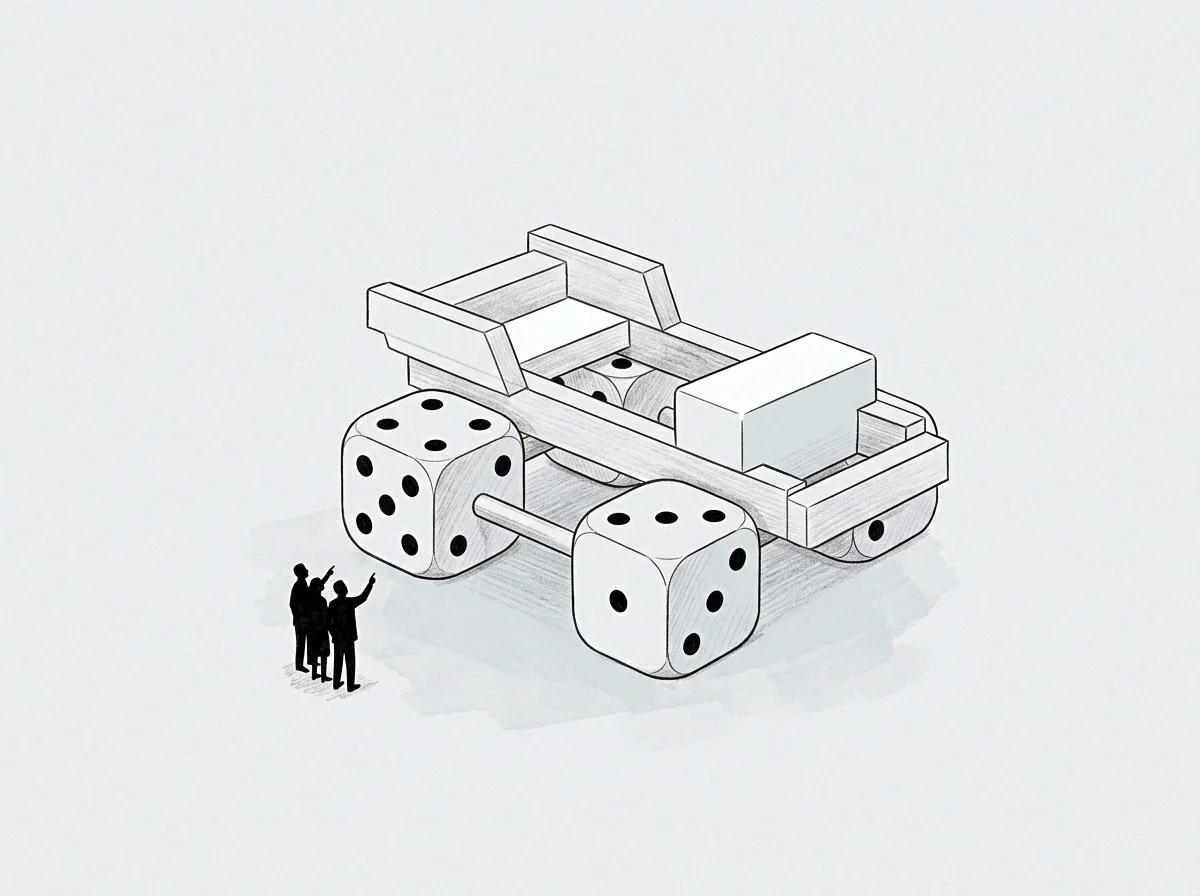
Strain
The sudden withdrawal or explicit limiting of founder co-regulation introduces immediate physiological and administrative shock to the executive rank. When access to the external baseline narrows, individual allostatic load across the leadership team increases rapidly. Operators who previously managed large portfolios with apparent ease begin to report cognitive fatigue, decision paralysis, and heightened interpersonal friction.
This surge in distress does not stem from an sudden increase in workload volume. The surge stems from the metabolic expense of self-regulating under acute operational uncertainty without a co-regulating buffer.

Physiological Expenditure in Isolated Decision Loops
Self-regulation demands substantial prefrontal cortical expenditure. When an executive must hold the full emotional and strategic weight of a high-stakes choice alone, the brain registers the environment as fundamentally less predictable. Threat detection mechanisms elevate baseline cortisol and sympathetic nervous system activation.
Over months, this sustained elevation produces noticeable operational degradation across senior management.
- Vigilance hyper-arousal produces over-analysis of routine operational metrics, causing significant latency in daily tactical execution.
- Defensive risk contraction prompts executives to reject standard strategic growth targets to keep operational exposure within narrow comfort zones.
- Fragmented peer communication emerges as operators, lacking a central emotional anchor, treat adjacent departments as competing threat vectors.
- Surrogate anchor search drives executives to recruit external advisors or middle-management echo chambers to replicate the missing baseline.
The executive team undergoes a severe test of operational autonomy during this phase. Without the founder functioning as an emotional shock absorber, internal working models within the team dictate how each member copes with elevated load. Executives who possess earned security or well-developed internal self-regulation capabilities adapt by establishing clear local governance structures.
They accept the elevated stress as a condition of true authority and build peer-to-peer co-regulation channels. Conversely, operators whose career progression relied entirely on attaching to a founder’s state suffer functional collapse.
Surges in executive fatigue frequently register the metabolic cost of unbuffered self-regulation.
The organization experiences a sharp decline in operational velocity while this adjustment occurs. Projects halt at minor decision gates because senior leaders refuse to commit without the founder’s explicit sign-off. When forced to proceed independently, executives hedge their commitments, creating ambiguous operational directives for junior staff.
The administrative buffer that previously allowed the company to move quickly dissolves into a series of defensive, risk-averse protocols designed primarily to protect individual leaders from personal exposure.
When an executive team fails to bridge the regulatory gap, the cost surfaces as chronic leadership turnover and institutional paralysis.

Shelf
To survive the limitation of founder availability, executive autonomy must shift from a relational posture to a structural container. Autonomy is not an abstract psychological state that an operator adopts upon instruction. Autonomy is an operational shelf constructed through explicit governance limits, clear resource allocations, and formalized decision authority.
When the founder sets explicit co-regulation limits, the organization must build mechanical substitutes to hold the operational weight previously absorbed by the founder’s personal presence.
The baseline model of the firm changes from attunement-based governance to structural governance. In an attunement-based model, correctness is determined by alignment with the founder’s immediate state and implicit preferences. In a structural governance model, correctness is determined by adherence to explicit parameters, boundary conditions, and measurable performance standards.
This shift requires both the founder and the executive team to abandon covert relational contracts in favor of overt operational terms.
Consider a practical operational situation involving a growing enterprise software firm. Take two senior leaders, a chief technology officer and a chief revenue officer, who spent three years consulting the founder on every contract discount exceeding ten percent. Assume the founder unilaterally caps their direct co-regulation access to one hourly check-in per week to manage personal capacity constraints.
If the founder simply demands that they act autonomously without altering the structural framework, execution halts.

Replacing State-Attunement with Explicit Operating Terms
The two executives lack the operational shelf required to hold the risk alone. To establish true autonomy, the organization must replace the founder’s real-time presence with three concrete operational mechanisms. First, explicit financial and operational risk parameters must be defined in writing, granting absolute sign-off authority within specified numerical thresholds.
Second, a peer co-regulation protocol must be established, requiring the chief technology officer and chief revenue officer to review and cross-validate major strategic commitments together before escalation. Third, an explicit escalation contract must specify the exact conditions under which founder intervention is permitted, removing the ambiguity surrounding when escalation is acceptable.
A clear operational boundary converts ambient anxiety into defined execution authority.
Under these conditions, the nature of the executive role changes. The executive no longer relies on the founder’s physical or verbal calm to validate a course of action. The executive relies on the structural parameter.
If a decision falls within the defined boundary, the executive executes it immediately, bearing the emotional and operational responsibility for the outcome. The governance framework provides the container that holds the stress, taking over the role previously fulfilled by the founder’s neural baseline.
The executive team requires predictable boundary lines to replace the founder’s real-time emotional presence during high-stress operational cycles.

Drift
Over a multi-year period, limiting founder co-regulation produces divergent longitudinal trajectories across the executive team. The continuous exposure to unbuffered operational stress forces a permanent structural reorganization of the team’s internal working models. Some operators build true executive capacity, developing robust internal mechanisms for stress regulation and strategic choice.
Others drift into structural disengagement, operating with superficial compliance while withholding genuine leadership initiative. The long-term trajectory of the team depends on how the transition from state-anchored regulation to structural autonomy is managed.
The development of genuine capacity follows a predictable adaptation curve. When an executive is denied access to borrowed calm but provided with clear operational boundaries, the operator undergoes a process similar to earned security in attachment dynamics. The initial period of elevated strain gradually gives way to internal stability as the operator accumulates successful decision outcomes without external validation.
The executive learns to tolerate high ambient uncertainty, building a resilient internal baseline. These operators stop seeking founder attunement and begin serving as co-regulating anchors for their own subordinate teams.
The alternative trajectory involves structural atrophy and capability drift. When founder availability is limited without establishing functional governance frameworks, executives experience chronic hyper-arousal followed by emotional withdrawal. The operator continues to fulfill basic job descriptions but refuses to exercise real initiative or assume personal accountability for complex outcomes.
They pass decision rights downward or defer action until external deadlines force a crisis, effectively transferring their unmanaged anxiety onto the broader organization.

How Do Executive Teams Rebuild Autonomy Under Limits?
Rebuilding capacity requires a deliberate, multi-stage restructuring of executive interactions over time. The team must transition through distinct developmental states rather than expecting immediate self-reliance.
- Formalization of independent decision thresholds across all functional areas to establish clear operational jurisdiction.
- Establishment of peer-led strategic review councils that replace founder attunement with structured peer cross-validation.
- Implementation of post-decision reviews focused on evaluating execution logic rather than founder emotional alignment.
- Gradual expansion of single-signature authority levels as executive internal baselines demonstrate sustained stability under operational stress.
The long-term impact of this longitudinal adaptation changes the cultural signature of the firm. Organizations that successfully navigate the shift move from a founder-centric star architecture to a distributed network of stable regulatory nodes. The senior leadership team becomes capable of processing massive environmental turbulence without transmitting panic downward through the management tiers.
The founder’s physical or emotional presence ceases to be a single point of failure for daily operational momentum.
What remains unresolved across organizational literature is whether every executive possesses the underlying psychological architecture required to build an internal baseline, or whether certain operators require permanent attachment to a primary regulator to function effectively at scale.

Grid
Evaluating executive team capacity across different stages of founder co-regulation limits reveals clear trade-offs between speed, sustainability, and operational resilience. The structural dynamics within the senior tier vary fundamentally depending on whether founder availability is unlimited, abruptly withdrawn, or governed by clear structural limits.
| Framework State | Decision Speed | Executive Allostatic Load | Longitudinal Capacity | Organizational Vulnerability |
|---|---|---|---|---|
| Unlimited Founder Availability | Rapid for routine tasks; slow for complex strategic choices | Low for executives; critical overload for founder | Atrophied; executive capacity remains bound to founder presence | High single-point failure at founder capacity boundary |
| Abrupt Limit Withdrawal | Paralyzed; severe latency across all functional gates | Acute stress spike; high potential for executive turnover | Fragmented; split between earned security and emotional burnout | Severe operational drift and administrative paralysis |
| Stated Structural Boundaries | Predictable; highly autonomous within defined authority thresholds | Moderate; stabilized by peer protocols and explicit rules | Compounding; executives build sustainable self-regulation systems | Low; distributed governance insulates firm from single-point failure |
The data in the table illustrates that unlimited availability provides high short-term alignment at the expense of long-term executive capacity. When a founder functions as a continuous emotional buffer, the executive team operates at artificially low stress levels, masking underlying deficiencies in individual self-regulation and governance clarity. The organization trades long-term institutional resilience for immediate tactical ease, creating a fragile operational environment that degrades the moment founder capacity falters.
Abruptly removing founder co-regulation without providing structural substitutes represents the most damaging operational choice. The immediate shock drives executive stress levels past the threshold where productive learning occurs, triggering defensive maneuvers, political posturing, and high turnover among capable leaders. Structural boundaries, by contrast, convert the friction of founder limits into a constructive catalyst for capacity expansion.
Predictable structural parameters protect executive capacity better than constant emotional availability.
Successful transitions depend on the founder’s willingness to tolerate short-term execution errors while executives adapt to managing their own regulatory budgets.

Shift
The ultimate transition from founder-dependent co-regulation to true executive autonomy requires an explicit update to the organization’s internal operating model. This shift demands that the founder relinquish the role of primary emotional baseline for the company while building structural containers that allow the executive team to hold operational weight independently. The process is fundamentally a structural redesign of how stress, risk, and authority flow through the senior leadership tier.
Founders frequently struggle with this transition because their own internal working models link organizational safety to direct personal control. Regulating for others provides a strong sense of efficacy and importance, making it difficult for a founder to step back even when personal allostatic capacity is exhausted. To execute the shift, the founder must recognize that providing continuous borrowed calm eventually inhibits the executive team’s professional evolution.
The founder must step out of daily emotional regulation loops and step into the role of architect of governance systems.
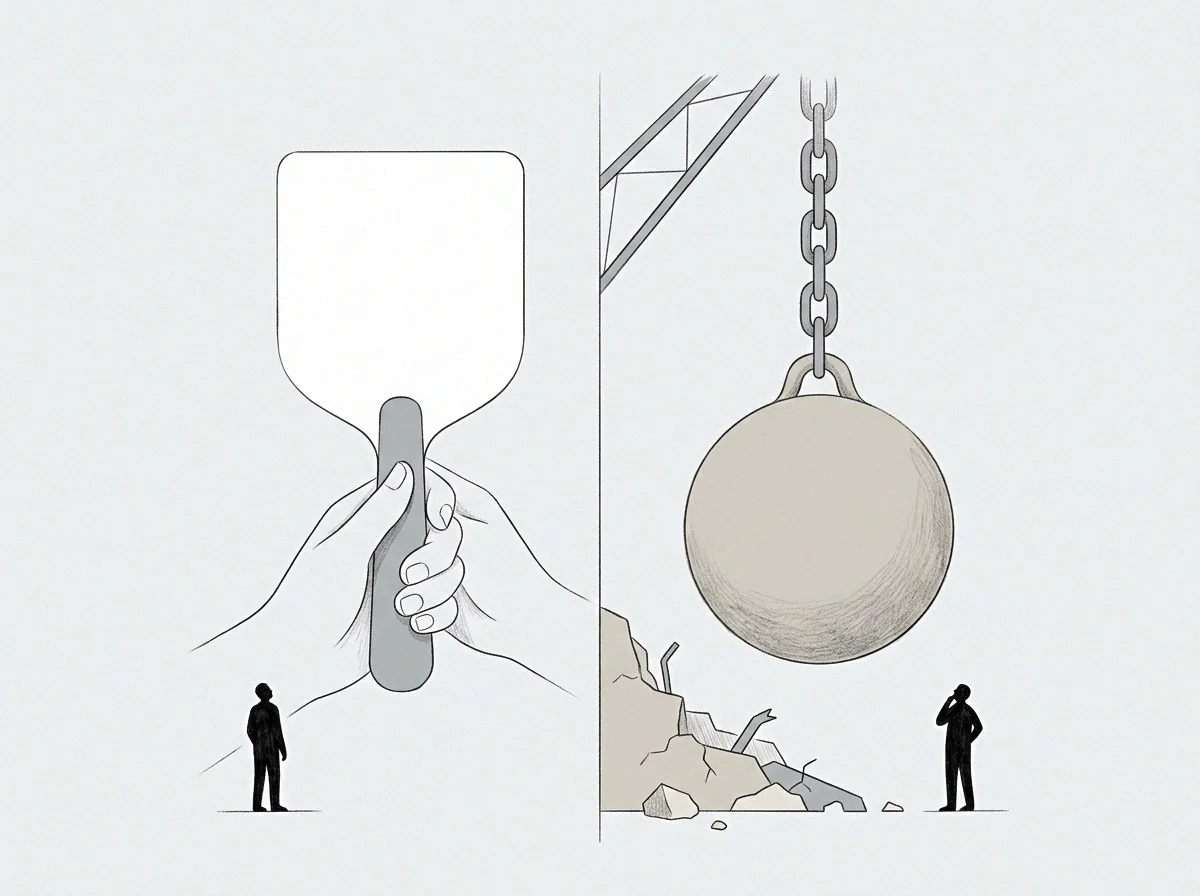
Establishing Distanced Governance and Earned Autonomy
For the executive team, this transition marks the shift from passive state-attunement to active operational stewardship. Leaders must accept that true executive autonomy carries an inescapable metabolic cost. They can no longer outsource the emotional strain of high-stakes decision-making to the founding seat.
Autonomy requires leaders to build personal stress resilience, rely on peer cross-validation networks, and operate decisively within explicit governance boundaries even when outcomes remain uncertain.
The organizational transition reaches completion when senior leaders operate as independent regulatory anchors for their respective business units. In this mature state, executives do not look upward to ascertain whether an action is safe; they look across to their peers and down at their parameters. The firm achieves true operational autonomy, capable of sustained execution regardless of the founder’s immediate physical or emotional state.
The structural framework holds the weight that was once borne by a single person.
This structural evolution redefines the relationship between the founder and the executive team, shifting their interaction from continuous emotional dependency to periodic strategic alignment within established operational parameters.