

Longitudinal Impact of Founder Co-Regulation Limits on Executive Team Autonomy and Capacity
Executive team autonomy depends on replacing direct founder co-regulation with structural governance boundaries that absorb operational risk stress.
Executive team autonomy depends on replacing direct founder co-regulation with structural governance boundaries that absorb operational risk stress.

Unidirectional baseline absorption under capital pressure alters internal working templates, converting executive presence into a continuous regulatory expenditure.

Executive baseline regulation operates as a metabolic threat economy where proximity to a steady presence reduces neural load and preserves capacity.

Internal working models update when repeated physical co-presence without operational demand lowers the metabolic cost of neural threat regulation.

When company builders act as an emotional baseline without stating capacity caps, team stability relies on borrowed calm that exhausts executive neural reserves.
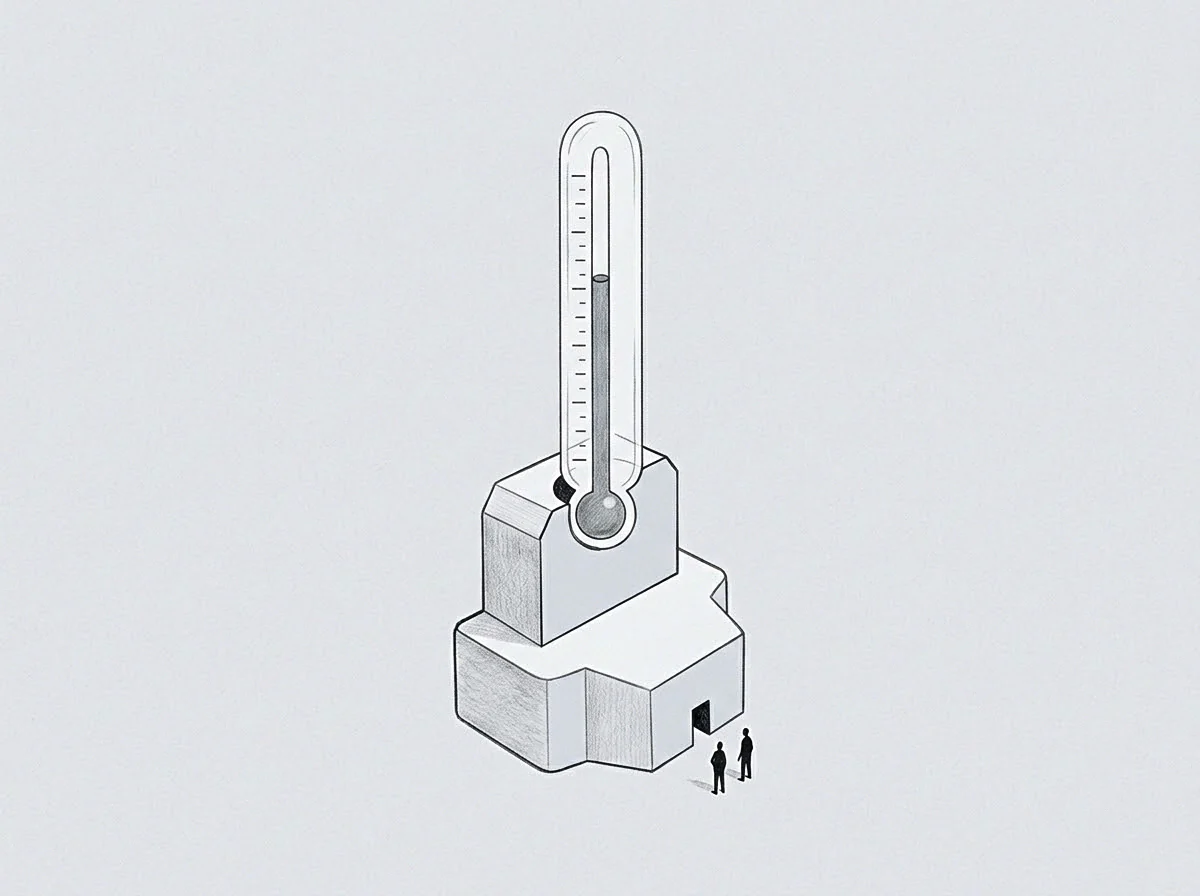
Solitary allostatic containment elevates metabolic expenditure by forcing continuous self-regulation without the biological cost reduction of shared presence.

Solitary leadership forces the nervous system to fund regulation through solo metabolic expense, requiring repeated low-stakes proximity to rebuild vagal tone.

Scaling increases solitary threat appraisal, degrading relational models unless unilateral load absorption shifts toward distributed co-regulation.

Shared social proximity lowers biological threat monitoring expenditure, while solitary leadership regulation transfers the metabolic tax entirely to the central anchor.
The terms are written where they belong. Each field holds three desks, and every entry a desk writes raises the terms it uses, each term given a meaning, a mechanism and the places it appears. The record on these pages stays first person and hand made; the fields grow the nomenclature.