
Structural Limits of Asynchronous Governance Gates in Mitigating Executive Biological Capacity Breakdown
Asynchronous governance gates fail when open review loops exceed executive working memory capacity, forcing biological throttling and organizational delay.
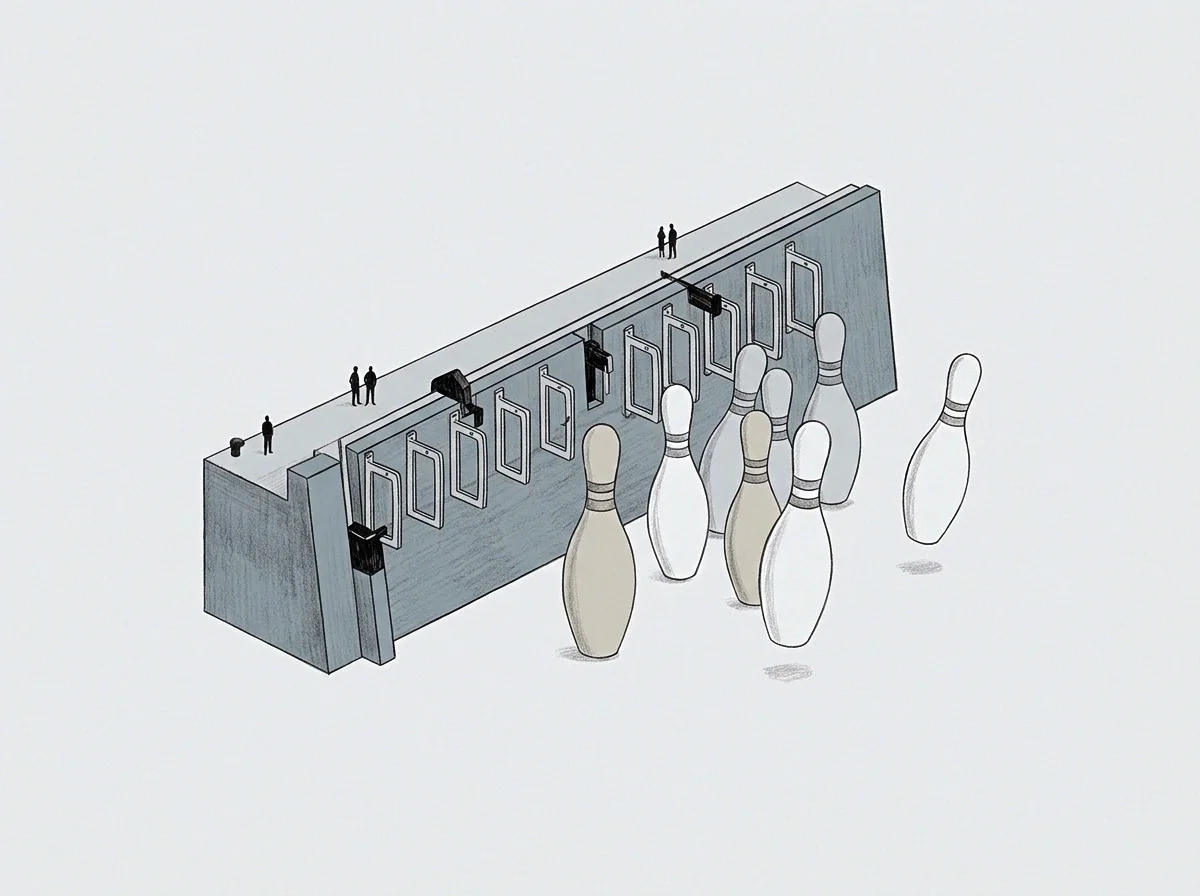
Ledge
Fourteen governance documents sit open on a monitor at midnight while biological recovery indicators show sustained sympathetic dominance. The organization built an asynchronous sign-off queue to shield executive hours from meeting interruptions. Decisions arrive in text files, structured pull requests, and recorded video walkthroughs.
Operations run across multiple time zones without verbal alignment. Yet the physical toll on the person in the decision seat matches the strain of continuous operational crises.
Asynchronous governance removes the need for physical presence during an operational choice, but it does not change the metabolic cost of holding an unresolved decision in working memory. Every unreviewed item in a digital queue stays open as an active mental loop. The brain tracks unresolved threads whether the exchange happens in a conference room or on an asynchronous message board.
When the total volume of these items outpaces physical capacity, executive focus deteriorates quickly.
An open review thread consumes biological working memory regardless of whether the decision sits in an asynchronous queue.
Stress physiology measures this wear through total allostatic load. This load builds as chronic regulatory demand keeps the sympathetic nervous system active without breaks for recovery. In a live meeting, physical fatigue produces visible cues that eventually bring the session to an end.
In an asynchronous system, those stopping points do not exist. The queue fills around the clock, generating a steady intake of requests that steadily drain limited executive energy reserves.
Executive systems throttle long before full breakdown occurs. This throttling is a protective reduction in processing capacity when incoming volume becomes excessive. The nervous system reduces working memory depth, slows complex pattern recognition, and limits analytical headroom.
Observers often misread this protective response as disengagement, low morale, or administrative delay. The failure comes from queue volume exceeding biological thresholds, not from a lack of operational discipline.
Leaving asynchronous queues ungated during periods of heavy biological load leads to chronic deferral, fractured attention, and administrative paralysis across the organization.
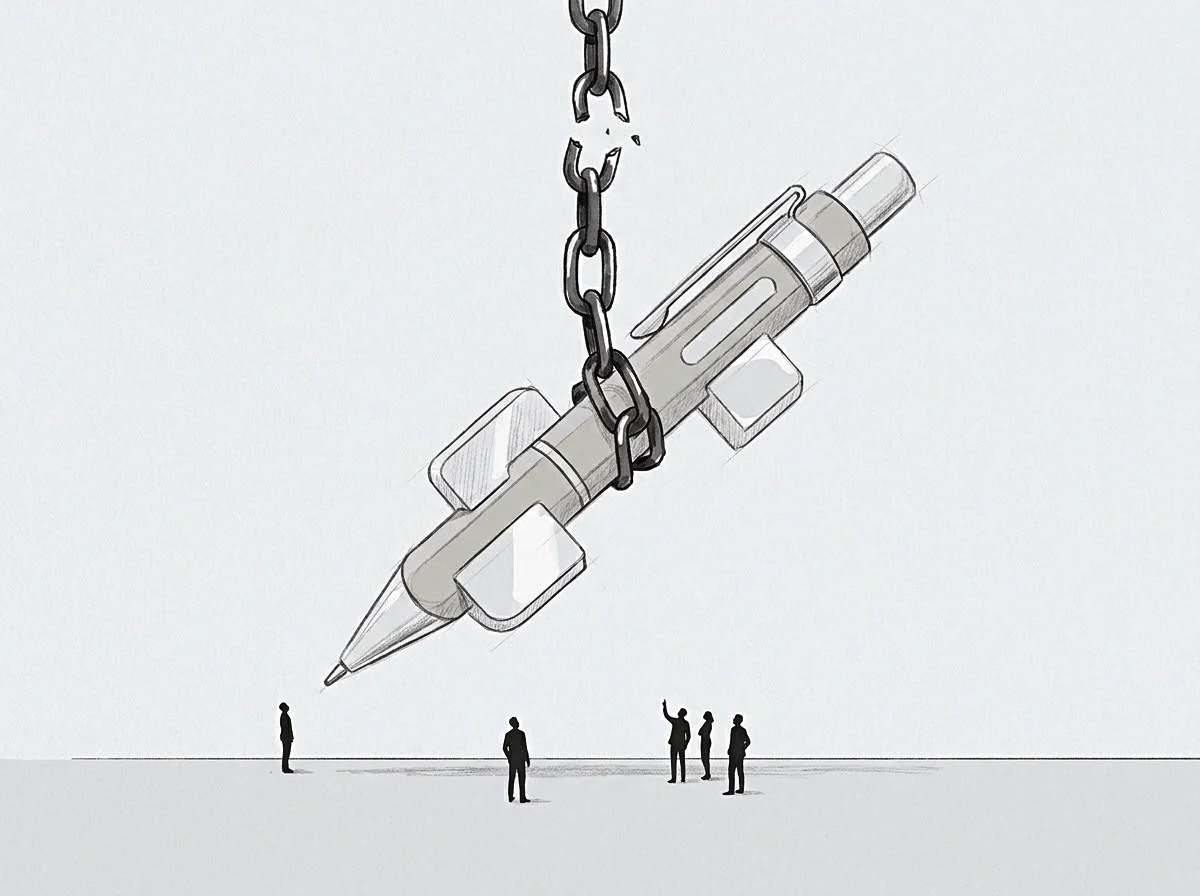
Frame
Asynchronous governance requires strict boundaries around review threads to remain stable. Without structural controls, an asynchronous gate stops acting as a buffer and becomes an unbounded sink for attention. The design of the gate determines whether a submission consumes continuous working memory or releases executive attention until specific review conditions are met.
- Scope containment boundary establishes exact limits on the technical or financial variables subject to executive review, preventing arbitrary scope expansion within the decision thread.
- Hard temporal termination enforces an automatic system action, such as approval or full rejection, if the review window closes without explicit executive intervention.
- Explicit binding terms obligate the requesting party to submit fully formulated binary options rather than open-ended questions requiring generative executive thought.
Unstructured submissions force the reviewer to define the problem before evaluating it. Framing an issue from scratch takes far more prefrontal capacity than assessing a clear binary trade-off. When three or four open-ended requests sit in an asynchronous queue at once, executive capacity drops fast.
The brain tries to handle multiple framing tasks in parallel, losing focus to context-switching every time attention moves between open browser tabs.
Asynchronous governance gates reduce metabolic wear only when review windows carry automatic rejection defaults upon expiration.
A structured filter alters the baseline energy expenditure of the decision seat. A request submitted without a defined scope or clear termination terms is turned away by operational protocol before reaching the executive review queue. This automated barrier protects biological capacity from poorly prepared operational inputs.
Requiring binary choices with automated expiration terms turns an open-ended cognitive burden into a set of contained, predictable reviews.

Pace
Operational velocity depends on the latency introduced at asynchronous governance gates. As executive biological capacity drops, review times stretch across every open initiative. Teams waiting on sign-offs run into widening operational bottlenecks, causing stalled work or unauthorized operational workarounds.
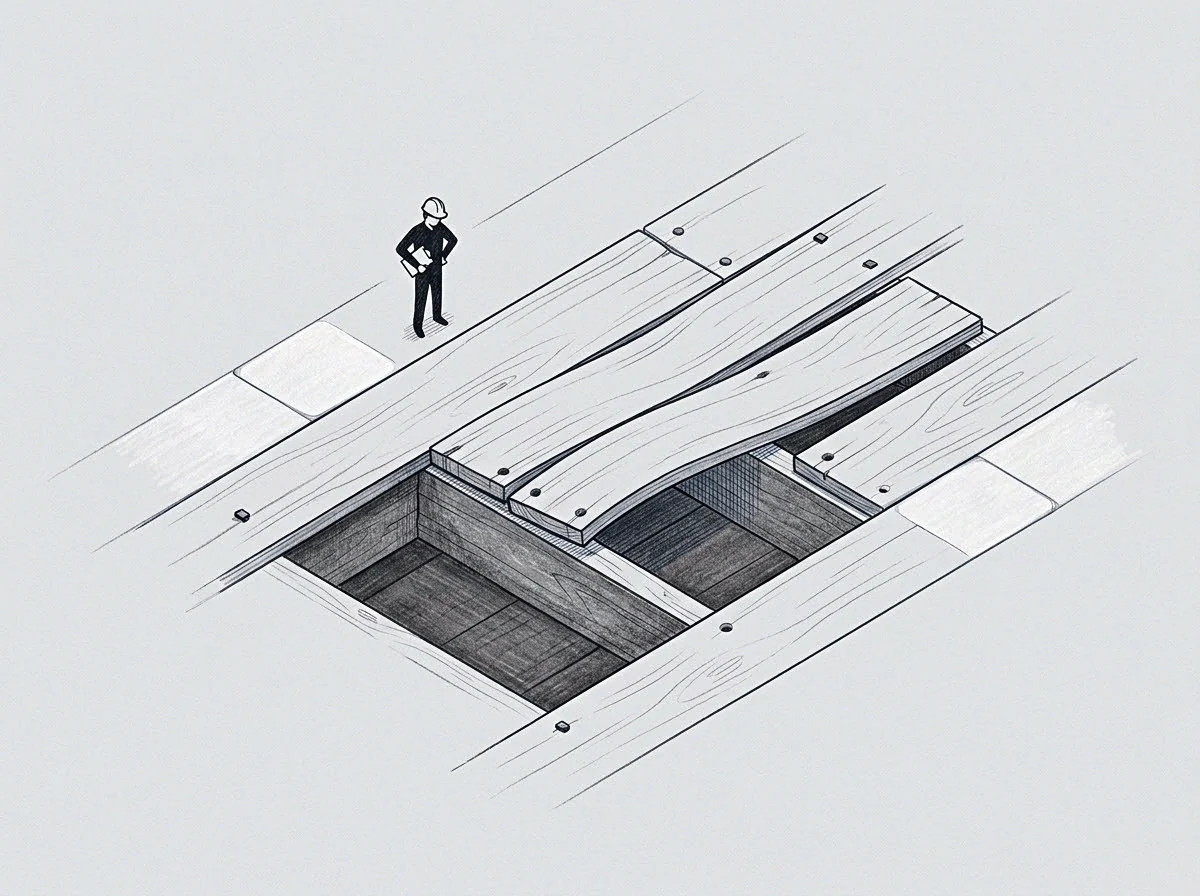
Which structural threshold breaks first under chronic asynchronous strain?
Latency bleed sets in when an executive attempts to process asynchronous queues while cognitively depleted. Clearing a single complex document takes two or three times longer as biological capacity falls. To manage the backlog, the reviewer either skims documents, handing out superficial approvals, or leaves items untouched without feedback.
Both patterns weaken organizational trust and cause downstream friction.
| Gating Strategy | Open Loop Allocation | Latency Bleed Potential | Biological Load Impact | Failure Mode Under Strain |
|---|---|---|---|---|
| Passive Unbounded Queue | High (Unlimited concurrent threads) | Severe (Indefinite queue expansion) | Cumulative allostatic overload | Executive withdrawal and systemic paralysis |
| Hard Concurrency Cap | Bounded (Fixed maximum slot count) | Moderate (Operational queues back up early) | Predictable operational strain | Subordinate bypass of formal governance |
| Automated Default Expiration | Low (Threads self-terminate) | Low (Enforced operational velocity) | Minimal ambient cognitive load | Rejection of complex long-term initiatives |
Subordinates watching a stalled queue adjust their expectations around executive availability. They note the growing delays and change how they communicate to navigate the bottleneck.
When the queue backs up without feedback, teams stop waiting on formal sign-offs and begin executing higher-risk decisions on their own.

Grid
In a technology venture, a founder managed four ungated asynchronous review channels. The workload included twelve active capital allocation reviews, six hiring sign-offs, and eight product specification approvals distributed across messaging platforms. Physiological markers showed sustained autonomic stress, fragmented sleep architecture, and an elevated resting heart rate.
The founder spent early morning hours working through the queue, using up physical recovery time to keep sign-off velocity moving.
Applying an explicit concurrency limit reorganized this bottleneck. The volume of open governance items under active review was capped at four items. Any additional requests were routed to an automated holding queue, keeping them out of the primary workspace until an active review slot opened.
The operational sequence transforms the workspace through clear structural steps.
- Rejection of all incoming governance requests that lack a structured binary recommendation and defined risk metrics.
- Allocation of exactly four review slots within the executive tracking interface, creating a hard physical ceiling on open loops.
- Implementation of a seventy-two hour automated expiration clock on every active review slot.
- Automatic delegation of expired items to regional operational leads under pre-approved expenditure parameters.
- Establishment of a single daily sixty-minute window for asynchronous queue processing, leaving remaining hours fully disconnected from decision queues.
Parking an incoming governance request without assigning a hard decision window preserves executive metabolic capacity.
Holding active reviews to four items produced an immediate drop in measured physical stress indicators. Working memory opened up, allowing faster and more thorough reviews of the gated items. Subordinate teams adapted by tightening operational proposals before submitting them, raising input quality across all governance channels.
Enforcing a hard concurrency cap on asynchronous reviews preserves processing depth and compels teams to refine operational proposals before submission.

Vault
Governance mechanisms cannot replace biological capacity. They operate as routing systems, distributing load across available physical resources. Once executive reserves are depleted, process optimization does not restore analytical precision.
The human nervous system runs on metabolic constraints that override institutional workflows.
A governance gate operating without a concurrency hard stop shifts executive fatigue into systemic organizational delay.
Organizations frequently treat asynchronous governance as an infinite resource, assuming that eliminating meetings creates unlimited decision capacity. This setup confuses open calendar space with mental processing bandwidth. A schedule free of meetings still breaks down if the review queue produces decision demands that exceed prefrontal metabolic limits.
Sustainable governance architecture keeps operational decision volume aligned with biological capacity. When physiological indicators show chronic regulatory strain, structural limits must restrict incoming demand directly at the gate. Protecting executive physical capacity is a basic requirement for maintaining organizational operations over time.
How long can an organization maintain operational integrity when its structural governance gates continuously demand more processing capacity than the executive biological substrate can produce?