
Metabolic Budgeting and Nervous System Entrainment After Corporate Exit
Corporate exit collapses external neural pacemakers, triggering acute metabolic budgeting deficits and autonomic instability until endogenous biological rhythms re-entrain.
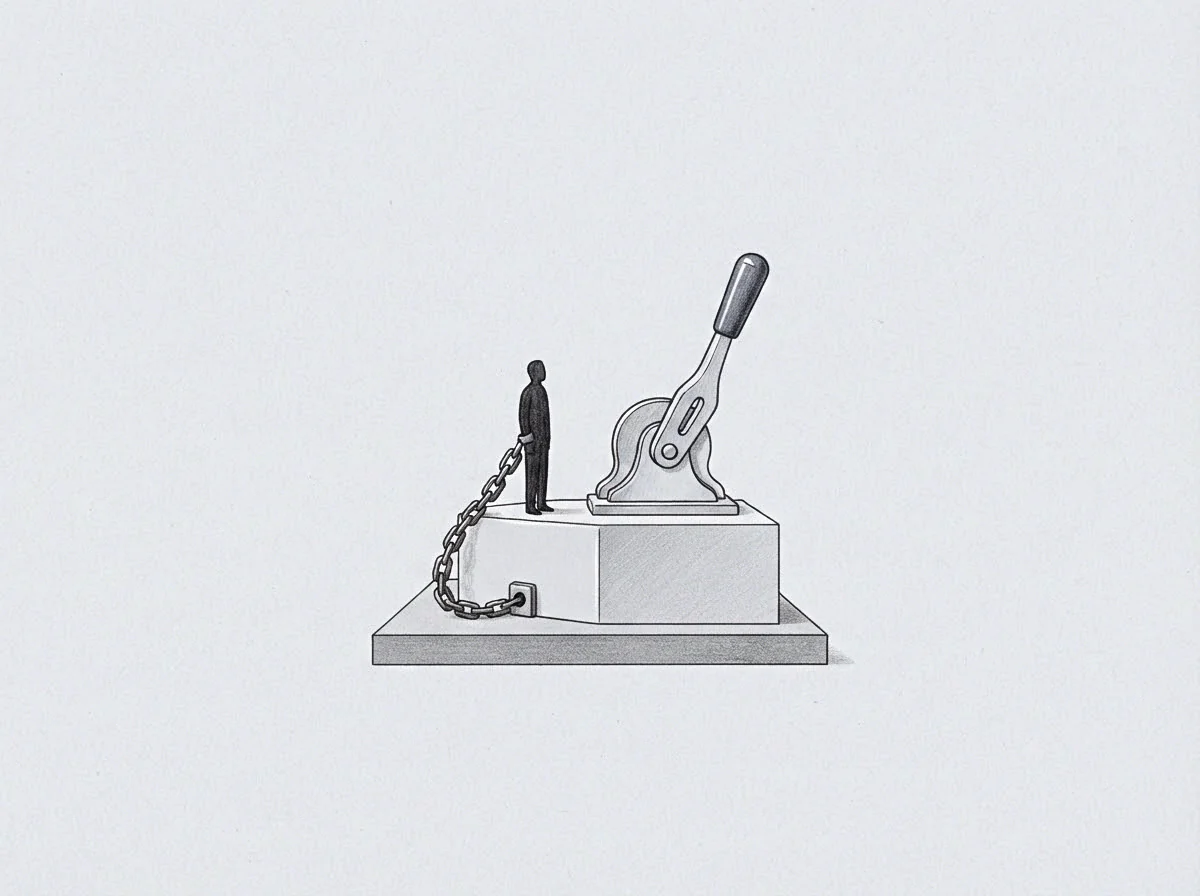
Halt
The access card stops working at midnight on a designated Friday. By Tuesday dawn, the executive wakes with elevated resting pulses, gastrointestinal spasms, and a dull, muscular paralysis that resists physical movement. The calendar emptied overnight.
Four devices that delivered three hundred incoming transmissions every twelve hours sit silent on the kitchen counter. The immediate assumption in executive cultures attributes this physiological plunge to emotional grief, sudden identity loss, or depressive withdrawal. Laboratory measurements of adrenal hormones and heart rate variability reveal an entirely distinct physical event.
The organism has collided with an unbuffered drop in exogenous activation cues.

The Sudden Cessation of Operational Friction
High-tempo corporate operational seats function as synthetic pacemakers. A continuous inflow of emergency decisions, relational friction, and structural accountability coordinates the autonomic nervous system through constant threat appraisals. The brain calculates an anticipatory energy allotment, mobilizing glucose and elevating peripheral vascular resistance hours before dawn to meet projected friction.
When the operating environment disappears, the anticipatory hormonal surge continues unchecked. Circulating catecholamines find no immediate operational crisis to burn through, leaving cellular tissues flooded with unused metabolic fuel. The nervous system waits.
A body adapted to perpetual operational triage misinterprets absolute silence as an immediate survival catastrophe.
Predictive metabolic regulation depends on reliable inputs to set daily energy expenditure. In an active operating seat, external demands dictate precisely when epinephrine peaks, when glycogen converts to circulating glucose, and when attentional circuits narrow onto proximate operational hazards. The sudden absence of those inputs collapses the biological budget.
Without external demands driving systemic arousal, peripheral vascular tone drops precipitously, producing severe lethargy, brain fog, and unexplained orthostatic dizziness. The somatic architecture attempts to balance an energetic budget using spreadsheets calculated for high-conflict combat, while existing in an empty living room.
Clock
Circadian biological rhythms depend on both light and social zeitgebers. In executive environments, recurring calendar commitments, public board deadlines, and continuous interpersonal negotiations act as non-photic synchronizers for the master biological oscillator in the suprachiasmatic nucleus. When corporate exit removes these structured encounters, internal neuroendocrine oscillations decouple from the solar day.
Cortisol secretion patterns, which normally exhibit a sharp morning peak and an unhurried nocturnal descent, flatten out into irregular, dysfunctional plateaus.

Exogenous Zeitgebers and Neuroendocrine Cadence
Every operational seat binds its occupant into physical synchrony with counter-parties. The nervous systems of leadership teams entrain to shared stress spikes, common pitch cadences, and mutually reinforced hyper-vigilance during financial cycles or supply disruptions. This entrainment creates borrowed autonomic stability.
The individual relies on the group tempo to stay upright, offloading the biological labor of autonomous diurnal scheduling onto institutional habits. The calendar dictated biological pacing for years.
- Interpersonal cortisol entrainment coordinates adrenal peaks across colleagues during acute crisis meetings, offloading autonomous hormonal pacing onto collective operational emergencies.
- Attentional capture consumes working memory through mandatory operational pings, preventing interoceptive awareness of physical exhaustion until systemic depletion forces collapse.
- Metabolic phase shifting forces gastrointestinal motility and insulin sensitivity to match erratic late-night corporate schedules rather than natural digestive cycles.
Predictive physiological budgeting collapses whenever external biological pacemakers vanish before internal regulatory rhythms mature.
Withdrawal of these institutional pacemakers unmasks latent autonomic exhaustion. Sleep fragmentation follows within weeks. The former operator attempts to recreate the lost rhythmic pressure through voluntary self-discipline, setting arbitrary morning alarms and synthetic task lists.
Artificial self-direction fails to generate the involuntary neuroendocrine mobilization produced by genuine external accountability. When individuals mistake this circadian uncoupling for moral failure or laziness, they compound the autonomic deficit by forcing synthetic urgency onto depleted visceral systems.
Deficit
Metabolic allostasis represents the process through which an organism actively alters internal physiological parameters to meet predicted environmental pressures. Every threat appraisal requires biological currency: glucose allocations, heart rate adjustments, immune dampening, and selective cognitive inhibition. Years spent inside high-stakes commercial governance force the nervous system into chronic predictive debt, borrowing against structural reserves to fund continuous sympathetic vigilance.
Where Does Borrowed Stability Settle After Departure?
The physiological books remain unbalanced during active corporate tenure because continuous operational demands subsidize the cost of constant mobilization. The firm provides the rationale, the dopamine surges of commercial victories, and the structural container that holds the hyper-activated nervous system together. After exit, the subsidizing structure dissolves, exposing the raw balance sheet of cellular wear.
The physical demand remains identical.
| Physiological Metric | Institutional Entrainment State | Post-Exit Autonomous State |
|---|---|---|
| Primary Allostatic Trigger | External institutional accountability and relational conflict | Interoceptive ambiguity and self-generated task demands |
| Autonomic Tone Bias | Sustained sympathetic activation with elevated vagal brake withdrawal | Erratic autonomic swings alternating between hyperarousal and dorsal collapse |
| Glucose Utilization Rate | Continuous high-flux cerebral consumption driven by constant triage | Peripheral insulin resistance with fluctuating tissue uptake efficiency |
| Interoceptive Perception | Blunted visceral signals overridden by high cognitive workload | Magnified somatic sensations registered as acute systemic threats |
Laboratory evaluations of autonomic tone demonstrate that social proximity alters the baseline metabolic cost of physical survival. Co-regulation inside high-performing teams allows members to share cognitive and cardiovascular loads; an operator uses the presence of competent colleagues to distribute threat evaluation. Once isolated post-exit, every minor life event demands solitary nervous system mediation.
Self-regulation alone is the expensive mode. The brain must fund every threat appraisal out of its personal energetic reserves, rapidly depleting glycogen and inducing sudden, visceral exhaustion in grocery aisles or during ordinary domestic conversations.
The metabolic balance swings negative.
Consider an operator who spent seven years governing three hundred employees before completing an orderly equity liquidation. The operator assumed sixty days of residential stillness would restore physical vitality. Instead, three weeks into retirement, blood panels show escalated fasting insulin, resting heart rates jump by fifteen beats per minute, and working memory degrades noticeably.
The operator assumed the executive seat caused the biological strain. The executive seat was actually providing the external adrenergic scaffolding that kept a severely degraded metabolic substrate functioning under load. Recovery demands actual tissue rest.
The contract condition governing this physiological transition states that energetic equilibrium returns only when autonomous predictive modeling matches actual metabolic expenditure.
Proxy
The vacuum left by lost institutional entrainment inevitably leaks into private domestic partnerships. A human nervous system conditioned to high-frequency relational friction seeks an immediate replacement oscillator to borrow regulation from. Without corporate subordinates, board adversaries, or co-founders to absorb and reflect relational tension, the former operator unconsciously casts personal domestic partners into operational roles.
Relational Transference of Biological Load
Spouses and family members suddenly find themselves treated as chief operating officers, vendor managers, or recalcitrant board members. The operator approaches mundane household coordination with the tactical intensity of a contested acquisition, pacing kitchen floors, demanding precise status reports, and interrogating scheduling discrepancies. This behavioral pattern stems directly from autonomic panic.
The un-entrained nervous system desperately seeks a dense interpersonal baseline to anchor its runaway oscillations.
- Conversational interrogation converts casual domestic discussions into forensic reviews, attempting to provoke heightened interpersonal stakes that match habitual catecholamine levels.
- Domestic operationalization imposes corporate workflow structures onto private domestic spaces, creating artificial procedural friction to generate familiar sympathetic stabilization.
- Affective misattunement reads peaceful relational states as threatening voids, triggering manufactured household disputes to re-establish an elevated autonomic baseline.
The domestic partner carries the biological toll of this behavior. The operator offloads internal anxiety by creating peripheral chaos, borrowing calm by exhausting the partner’s regulatory bandwidth. The partner gradually absorbs the sympathetic activation the founder can no longer discharge into the marketplace.
Organs adjust on cellular timelines. Over twelve to eighteen months, this unilateral metabolic extraction burns out the domestic environment, producing marital alienation or defensive hostility. The founder views the partner as unresponsive, while the partner is simply biologically bankrupt from acting as an unpaid shock absorber.
You run the household as if a quarterly audit will close our life down by Friday.
Substrate
Updating an obsolete metabolic template cannot occur through cognitive reframing, philosophical study, or intellectual insight. A person cannot think their way into autonomic equilibrium. The internal working model that projects threat and regulates energy expenditure lives in visceral tissue, baroreceptor sensitivity, vagal nerve myelination, and skeletal muscle tone.
Restoring self-generated somatic entrainment requires unhurried, repetitive physical encounters that provide genuine physiological stabilization without crisis-driven arousal.
Somatosensory Rebuilding and Earned Equilibrium
The reconstruction of an endogenous baseline demands biological pacing anchored in material realities rather than conceptual milestones. Neurological research confirms that earned security within one’s own physiology develops through repeated cycles of unpressured activation followed by complete somatic resolution. In heavy industry, large mechanical turbines cannot be halted instantaneously without warping their primary drive shafts; engineers step down rotational velocity across carefully timed deceleration bands to allow thermal dissipation.
The human nervous system after a corporate exit follows identical mechanical principles. The body keeps running the sequence.
A stated limit on external operational engagements protects autonomic tissue long before cognitive conviction feels solid.
Developing non-institutional biological anchors involves structural, non-negotiable physical commitments. Cold exposure, heavy resistance training with controlled eccentric tempos, and extended low-heart-rate locomotion provide visceral feedback that bypasses conceptual reasoning. These physical stressors supply clean, bounded challenges that begin, peak, and resolve completely within an hour, contrasting sharply with the open-ended, ambiguous threat loops of corporate administration.
Slowly, the brain learns that an elevated heart rate can return to baseline without an equity event, a board restructuring, or an emergency public relations campaign. The room offers no pace.
True somatic equilibrium emerges when an individual tolerates low-stimulation environments without generating internal emergency signals to fill the silence. The former executive discovers that energy can be collected, conserved, and directed toward chosen creation rather than involuntary threat containment. Stability shifts from an externally borrowed corporate commodity into an internally generated somatic capacity.
Physical tissue recalibrates only at the pace of uninterrupted biological turnover.