
Persistent Cardiovascular Strain When Isolated Nervous Systems Attempt Domestic Physical Connection
Isolated nervous systems process domestic physical contact as vigilance tasks, causing continuous cardiovascular strain instead of low-cost autonomic rest.
Pulse
A founder sits on a sofa at ten in the evening next to a domestic partner who rests an arm across their shoulders. The room is quiet, the day’s commitments have closed, and no active threat exists in the immediate environment. Under standard models of affective neuroscience, this physical proximity ought to initiate autonomic deceleration.
Social baseline theory establishes that physical contact with a familiar, non-threatening human organism signals to the brain that energetic resources can be conserved. The brain responds by down-regulating vigilance, reducing sympathetic adrenergic tone, and increasing cardiac vagal control. The heart rate settles, total peripheral resistance drops, and baseline vascular tone relaxes.
For an individual whose nervous system developed under prolonged operational isolation, the physiological response moves in the opposite direction. The physical contact triggers a covert sympathetic spike. Pre-ejection period shortens, signal-processed vascular resistance rises, and cardiac output increases to maintain continuous postural readiness.
The heart does not slow down; it maintains an elevated steady state while heart rate variability drops. The body remains in a high-cost metabolic state while sitting completely still on a living room sofa.
Co-presence registers as an active monitoring task when an isolated nervous system lacks the internal architecture for shared baseline regulation.
This physiological divergence creates an invisible, chronic strain on the cardiovascular network. The isolated nervous system has spent years relying strictly on self-contained autonomic loops to manage environmental threat, cognitive load, and affective stability. Over time, the neural pathways that support co-regulation undergo synaptic pruning from disuse.
When that nervous system enters a domestic relationship and attempts physical contact, the sensory inputs of touch, respiratory rhythm, and physical weight are not processed as regulatory support. Sensory pathways route those inputs through the hyper-vigilant threat appraisal circuits of the amygdala and anterior insula. The presence of another body inside the personal perimeter demands continuous sensory tracking.
The cardiovascular apparatus absorbs this continuous tracking through persistent nocturnal blood pressure elevations, delayed parasympathetic recovery, and systemic vascular stiffness.
The strain remains silent because the person rarely feels overt panic or psychological fear. The mind registers affection, gratitude, or a conscious desire for intimacy, while the baroreceptor reflex actively counteracts the internal pressure spikes required to maintain an alert posture. The cardiovascular system functions under dual competing demands: the conscious decision to stay settled in domestic physical contact, and an autonomic reflex that prepares the smooth muscle of the blood vessels for immediate, independent defense.
What remaining metabolic headroom exists when an isolated nervous system continuously treats physical rest alongside another person as an active vigilance task?
Receptor
Internal working models of attachment are structural distributions of neural resources. During developmental and operational stress, a person builds a template of how safety is maintained. When primary caregivers or professional environments reward complete self-reliance and penalize emotional reliance, the brain builds an internal working model organized around single-node regulation.
The individual becomes their own sole regulatory source. This architecture consolidates until self-regulation and regulating external environments merge into a single operational neural loop.
In this merged loop, the nervous system possesses explicit circuits for monitoring internal states and explicit circuits for stabilizing the emotional states of surrounding people. It lacks an internal receptor slot for receiving incoming regulation from an external body. The physiological machinery required to translate another person’s stable respiratory cadence, low heart rate, and physical warmth into a signal for personal autonomic deceleration simply does not exist on the template.
When a domestic partner offers touch or physical grounding, the input arrives at a wall. The input cannot dock in a receptor slot that was never formed. Instead, the incoming physical presence is re-routed to the active processing circuits.
The isolated nervous system assumes responsibility for managing the partner’s physical energy alongside its own. The offer of regulation is converted into an additional load on the brain’s baseline metabolic budget.
The neural mechanics of this misdirection operate through specific circuits:
- Interoceptive Misattribution occurs when afferent signals from cardiac and visceral receptors are processed by the insula as internal noise that must be controlled, rather than as signals of settling.
- Threat-Circuit Re-routing directs gentle tactile pressure through somatosensory circuits straight to the dorsal anterior cingulate cortex, treating touch as a spatial restriction rather than a grounding mechanism.
- Continuous Postural Adjustment engages persistent axial muscle contraction during simple sitting or lying down, preventing full muscular offloading onto the supporting surface or partner.
The individual who ran the self-regulation cycle backwards for a decade internalizes a model where they are the permanent baseline for others. When they attempt domestic intimacy, they maintain this role unconsciously. They read the partner’s calm as something to be preserved, guarded, or managed.
They hold their own breath slightly to match the partner’s rhythm, or adjust their joint posture to avoid disturbing the other person. The nervous system works double shifts while attempting to relax.
Attempting to receive co-regulation without a functional internal receptor template forces the cardiovascular system to burn metabolic fuel during physical intimacy.
Misinterpreting this structural absence as a character flaw or a lack of emotional affection leads to forced exposure. The individual attempts to force physical connection through willpower, staying on the couch or in bed for hours while their autonomic nervous system burns through metabolic reserves. The arterial system absorbs this strain day after day.
The vascular wall remodels under chronic shear stress, baseline heart rate variability drops further, and the domestic space transforms into a secondary zone of silent physiological exhaustion.
Hearth
Domestic expectations assume that home provides an automatic drop in baseline metabolic demand. The cultural and relational narrative frames physical proximity, touch, and shared quiet as intrinsic sources of recovery. For the isolated nervous system, this framing creates a functional trap.
The physical environment of the domestic space, the hearth, demands a level of autonomic uncoupling that the individual’s neural template cannot supply without prior retraining.
When two nervous systems share a physical room or a bed, they enter an ongoing physiological negotiation. An integrated system offloads energetic burden to the room; an isolated system absorbs the ambient physiological state of the room while maintaining its own defense. The table below traces the divergence in physiological metrics between these two modes during physical contact.
| Physiological Metric | Integrated Co-Regulation Profile | Isolated System Domestic Profile |
|---|---|---|
| Heart Rate Variability (RMSSD) | Increases by 15% to 35% during sustained physical contact | Decreases or remains suppressed below 25 milliseconds |
| Pre-Ejection Period (PEP) | Lengthens, reflecting reduced sympathetic drive to ventricles | Shortens, maintaining cardiac readiness and high contractility |
| Systemic Vascular Resistance | Drops as peripheral arterial smooth muscle relaxes | Elevates, maintaining high mean arterial pressure during touch |
| Respiratory Sinus Arrhythmia | Synchronizes with partner within three to five minutes | Shows erratic phase-lag or complete absence of synchronization |
| Basal Cortisol Clearance | Accelerates during evening co-presence, facilitating sleep onset | Flattens, maintaining elevated nocturnal glucocorticoid levels |
The difference between these profiles explains why standard domestic activities leave an isolated actor drained. Consider a simple evening scenario. The domestic space is set to low lighting, ambient noise is low, and no work tasks remain.
The partner sits nearby, making consistent physical contact. In the integrated profile, the brain registers these conditions as a signal to reduce central nervous system expenditure. It cuts the supply of stress hormones, opens peripheral blood vessels, and hands over part of the environmental monitoring to the partner’s presence.
In the isolated profile, the brain reads the same environment differently. Low lighting reduces visual confirmation of safety. Low ambient noise amplifies the sensory input of the partner’s breathing and movement.
Physical contact removes spatial distance, reducing the time available to react to unexpected shifts. The isolated nervous system compensates by increasing central vigilance. It keeps pre-ejection period short and total peripheral resistance high.
The body performs rest, but the cardiovascular system performs defensive work.
The partner reads the physical stillness as peace, while the isolated actor’s heart beats against stiffened arterial walls.
Friction
To analyze how this metabolic demand accumulates over time, take a worked situation involving two people living in a shared domestic environment for two years. Assume the primary actor spent eight years founding and scaling an enterprise under severe capital and operational constraints. During those eight years, the actor operated as the single point of failure and sole source of organizational stability.
Their baseline autonomic setting adjusted to chronic elevated sympathetic tone and high baseline vascular resistance. Assume the partner possesses an integrated attachment model, expecting physical contact to be the natural primary mechanism for evening decompression.
Every evening, the partner initiates physical proximity on the couch. The partner rests their torso against the actor. The actor’s conscious mind values the relationship and accepts the contact.
Their autonomic nervous system, however, reacts to the sudden weight and warmth by initiating micro-contractions across the core musculature. Blood pressure rises by twelve millimeters of mercury to compensate for the perceived physical restriction. Parasympathetic withdrawal occurs within sixty seconds of contact.
If this pattern repeats for five hundred consecutive evenings, the cumulative cardiovascular impact is substantial. The sustained nocturnal elevation in blood pressure prevents the normal nocturnal arterial dipping required for long-term endothelial health. The left ventricle works against elevated post-load resistance during hours that should be dedicated to systemic repair.
The actor experiences unexplained daytime fatigue, reduced working memory capacity, and a rising baseline of subtle irritability.
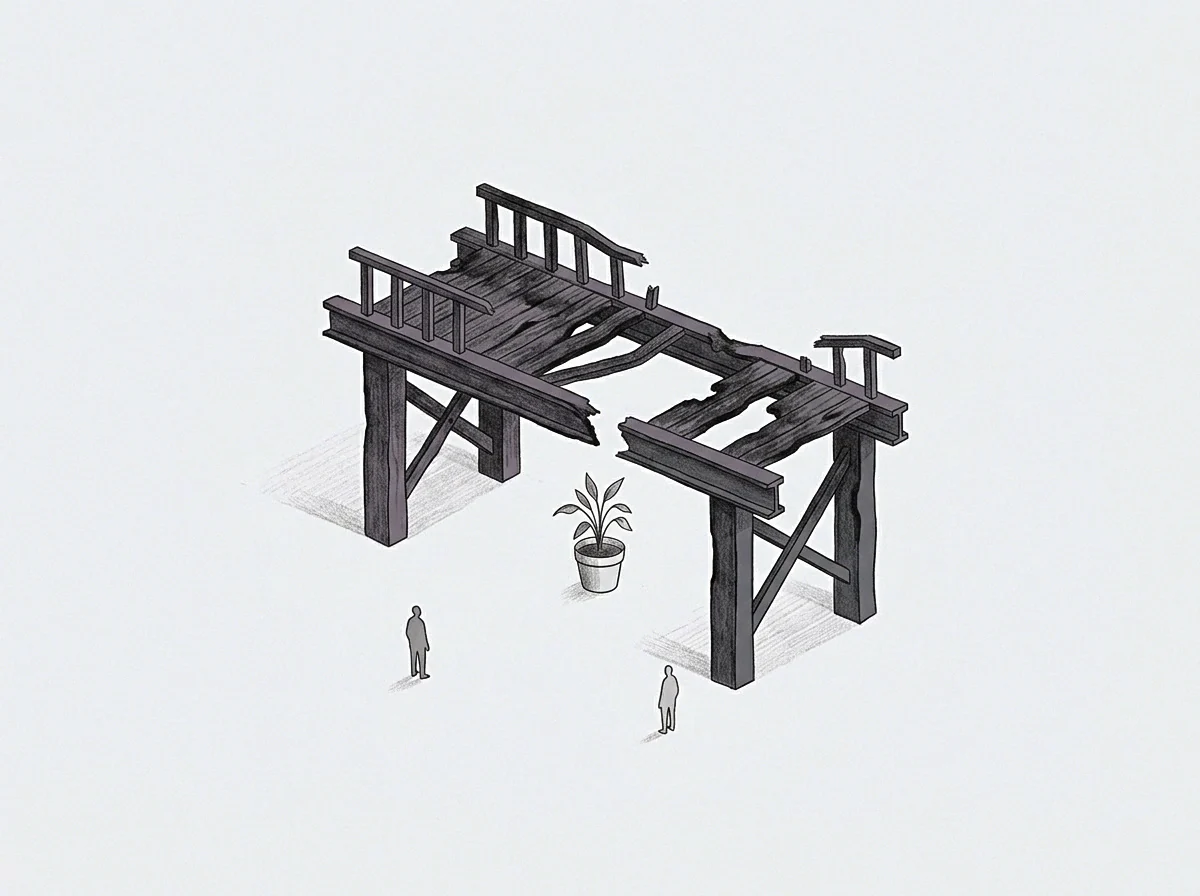
Does Stated Physical Distance Reduce Cardiovascular Load?
Separating the physical bodies removes the immediate sensory trigger, but it does not resolve the baseline underlying architecture. Stating a demand for physical space creates a secondary operational issue: the overt disruption of the relational bond. When the isolated actor moves to another room to escape the physiological strain, the partner frequently interprets the move as emotional withdrawal or rejection.
The resulting relational tension produces its own acute sympathetic activation through social rejection circuits.
The actor is caught in a closed loop. Remaining in physical contact maintains steady-state cardiovascular strain through sensory overload and missing receptor slots. Removing physical contact creates acute cardiovascular spikes through relational conflict and hyper-vigilance regarding the partner’s distress.
The dispute among clinical physiologists and relational researchers centers on whether the isolated actor should push through the discomfort or enforce strict physical boundaries. One school argues that sustained exposure to physical contact eventually forces neural adaptation through habituation. The counter-argument demonstrates that exposure without functional receptor templates simply deepens the threat association, accelerating vascular stiffening and metabolic exhaustion.
The cost of forcing physical intimacy with an unadapted nervous system is paid directly in vascular elasticity.
A working rule of thumb applies to this trade-off: sensory contact must never exceed the current interoceptive bandwidth of the more reactive nervous system.
When the reactive nervous system is forced beyond its bandwidth, the body converts the domestic living room into an operational theater. The smooth muscle of the blood vessels does not distinguish between a high-stakes board negotiation and a partner’s head resting on the chest. Both demand elevated perfusion, immediate muscle readiness, and continuous sensory appraisal.
The strain is not psychological drama; it is hydraulic pressure inside an unyielding system.
Revision
Updating an isolated nervous system requires building a second template. This process, known as earned security, does not occur through cognitive insight, self-analysis, or intellectual understanding of the mechanism. The brain does not rewrite autonomic reflexes because a person reads a paper on attachment theory or decides to be more open.
The update occurs exclusively through repeated, low-intensity physiological experiences that fall within the current autonomic bandwidth of the organism.
The initial move in building a functional receptor slot is decoupling touch from performance and duration. The isolated nervous system must experience physical contact that has a defined, brief duration and zero requirement for mutual regulation. The primary actor does not attempt to relax, sink in, or feel affection.
They track the physical surface of contact as a neutral sensory event, similar to leaning against a wall or resting a hand on a table.
Consider the delta in autonomic response across a twelve-month retraining sequence:
- The initial state features immediate sympathetic spike, muscular bracing, and parasympathetic withdrawal upon any unannounced touch.
- At three months of structured micro-exposures, sensory tracking shifts from threat appraisal circuits to primary somatosensory cortex, reducing muscular bracing by half.
- At six months, cardiac pre-ejection period remains stable during brief physical contact, indicating the absence of acute ventricular acceleration.
- At nine months, basal heart rate variability demonstrates initial micro-increases during low-demand physical contact lasting under ten minutes.
- At twelve months, the brain forms an initial functional receptor slot, allowing peripheral vascular resistance to drop during sustained domestic co-presence.
This sequence demonstrates that neural architecture updates through incremental physical evidence. The partner plays a specific role in this phase: providing stable, predictable physical presence without demanding an emotional or physical response. The partner functions as a neutral physical structure rather than an active provider of regulatory demands.
This removes the isolated system’s perceived need to manage the partner’s state.
Over time, the repeated experience of non-demanding physical proximity rewires the anterior insular cortex. The brain stops routing tactile inputs through the threat appraisal matrix. The vascular smooth muscle learns that sensory input from another human body does not precede a demand for sudden defense or complex emotional management.
The second template forms alongside the old one. The old single-node regulation loop remains intact for extreme operational crises, but the new multi-node loop becomes available for domestic physical connection. The cardiovascular system regains its capacity for nocturnal dipping, heart rate variability recovers its natural range, and the hearth becomes a space for genuine metabolic rest.
This structural update occurs if and only if physical contact is scaled strictly to current autonomic capacity, transforming domestic proximity from an active vigilance task into a low-cost physiological baseline.