
Quantifying Decision Processing Delay Under Baseline Executive Workload
Sustained executive workload reduces prefrontal evidentiary drift rates, expanding choice latency exponentially once working memory exceeds saturation limits.

Lag
An inbox holds thirty-eight unresolved operational requests at seven in the evening. The person review-screening them has evaluated sixteen strategic capital allocations since dawn. Each incoming item requires a binary clearance or an exact numerical threshold.
By late afternoon, the duration required to evaluate a low-complexity operational ticket expands from forty seconds to over four minutes. The physical hardware of the brain remains intact, yet response times slow systematically across every incoming channel.
This latency increase represents a measurable shift in accumulator drift rate. In standard drift diffusion models of decision making, an operator gathers perceptual or contextual evidence until reaching a predetermined boundary of certainty. Sustained executive workload degrades signal integration speed while widening the gap between baseline readiness and the commitment threshold.
The resulting pause is not fatigue in an emotional register. It is the physiological cost of clearing continuous cognitive interference while holding simultaneous strategic priorities.
Under saturated operational baselines, evidentiary drift rates decline systematically before overt error rates register.

Information Queuing at Capacity
Processing pauses expand non-linearly when working memory holds more than four distinct operational threads. Because an unresolved complex task ties up prefrontal resources continuously, evaluating lower-tier items against that loaded background steadily compounds processing latency.
Experimental trials in applied cognitive physiology demonstrate that acute continuous task demands double simple choice evaluation times within four hours of sustained focus. High-stakes executive environments push this duration to twelve or fourteen hours daily. The system adapts by increasing reliance on heuristics, deferring complex trade-off analysis, or simply stalling on non-urgent signals.
The delay protects the seat from total execution collapse at the direct expense of operational velocity.

Stack
Incoming demands land across asynchronous software tools, verbal requests, and formal approval chains. When an operator processes twenty concurrent streams, the switching overhead consumes more metabolic resources than the decisions themselves. The human prefrontal cortex resolves conflicts serially rather than simultaneously.
Background monitoring of open loops generates constant neurological noise.
- Interruption recovery interval measures the elapsed time required to return to primary analytical depth following a brief asynchronous query.
- Attentional residue consumes working memory capacity when an unresolved operational dispute remains open during subsequent task execution.
- Evidence accumulation threshold shifts upward when uncertainty in adjacent operational domains forces higher conservatism on simple routine clearances.
This queuing dynamic mirrors classical packet buffering in computational network nodes. When buffer capacity fills beyond seventy percent, transit delay increases exponentially rather than linearly. Executive operators operating near baseline saturation experience an identical curve.
A two-line financial approval that clears in two minutes at eight in the morning stalls for forty-eight hours by Thursday afternoon.
A persistent buffer saturation level above seventy percent produces exponential operational delay.

How Working Memory Saturation Alters Drift Rates?
Evidence integration slows when executive capacity diverts to internal homeostasis. The nervous system monitors energetic reserves, sleep debt, and social baseline threats concurrently with commercial calculations. When background load reaches ceiling, the biological substrate throttles decision speed to prevent physiological depletion.
A founder managing acute runway constraints and board disputes exhibits prolonged response times on standard procurement documents. The delay functions as an involuntary energetic brake. The nervous system rejects additional cognitive load by elevating the threshold required to trigger an operational commitment.
Signal detection models confirm that as background noise rises, the temporal window required to distinguish viable signals from operational clutter expands.
A simple priority rule: clear the deepest structural blocker before opening secondary communication channels.

Decay
Prolonged cognitive exertion alters the mathematical relationship between evaluation speed and outcome precision. In early stages of baseline overload, latency expands while accuracy remains statistically stable. The operator spends three times as long to reach the identical conclusion.
Continued load eventually causes both metrics to degrade together.
| Operational State | Mean Latency Shift | Drift Diffusion Rate | False Clearance Rate | Omission Probability |
|---|---|---|---|---|
| Rested Baseline | 1.0x (Reference) | 0.38 units/ms | 1.8% | 0.4% |
| Moderate Load | 1.9x | 0.24 units/ms | 4.2% | 3.1% |
| Saturated Queue | 3.8x | 0.12 units/ms | 11.6% | 18.9% |
| Systemic Overdraw | 6.2x | 0.05 units/ms | 24.1% | 42.5% |
The transition between moderate load and saturated queue marks the onset of operational gridlock. In moderate load, the executive compensates by extending the evaluation interval, preserving governance quality at the expense of personal capacity. Beyond the saturation point, temporal expansion fails to protect accuracy.
False clearances rise fivefold while omission errors climb rapidly.
A stated term establishes an external operational boundary where individual regulatory capacity fails.
Operators frequently misinterpret this degradation as an emotional failure or an acute loss of commercial acumen. It is neither. Cognitive control networks possess finite metabolic throughput.
When continuous inputs outpace the rate of resolution, processing delay becomes the default stabilization mechanism.
When an organisation mistakes structural cognitive throttling for personal hesitation, leadership teams misallocate administrative support, increase oversight cadence, and accelerate executive capacity collapse.

Seat
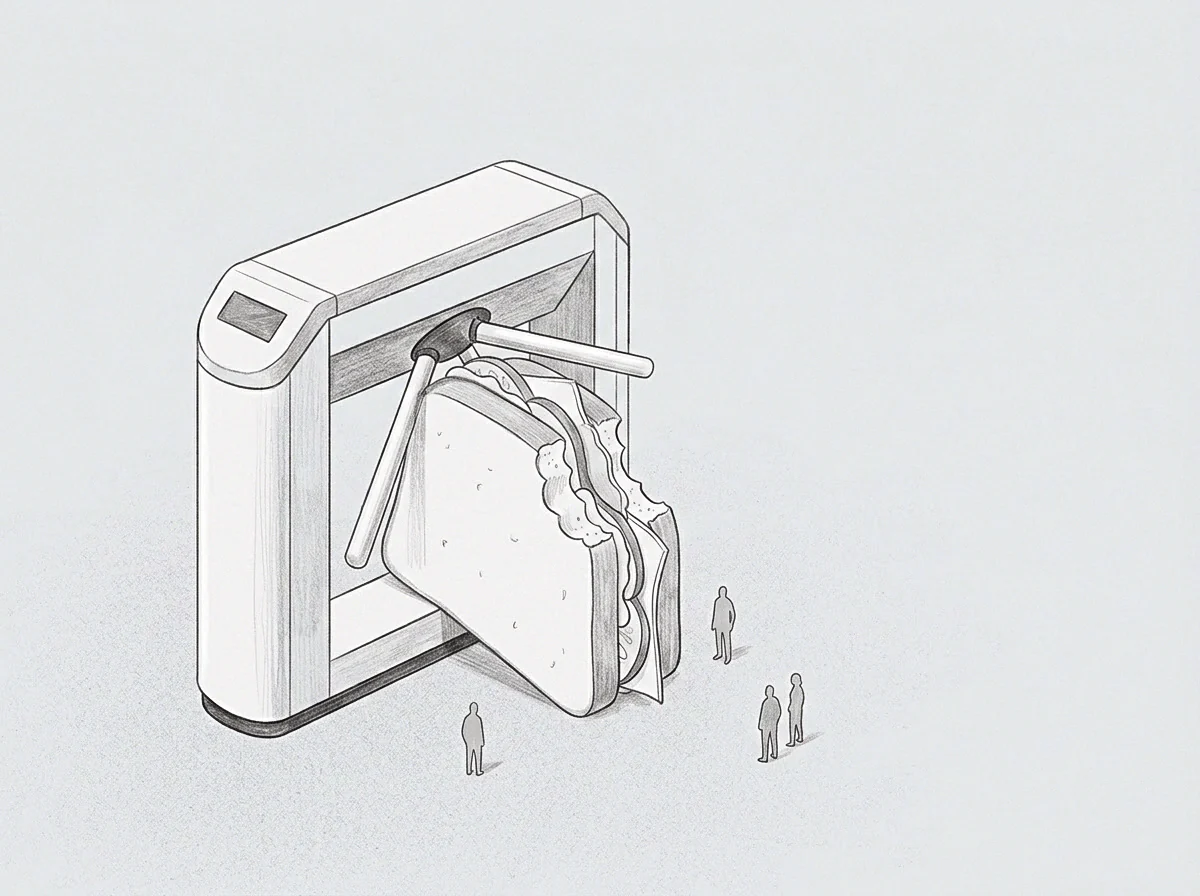
The authority concentrated in an executive role determines the volume of inbound decision traffic. When an organisation fails to define concrete terms for autonomous delegation, every ambiguous operational dispute floats upward to the same central desk. The occupant of the chair becomes the universal operational regulator.
A load-transferring system instinctively routes friction toward any point that absorbs work without pushing back. If an executive resolves ambiguous tickets through personal overwork, adjacent team members increase submission frequency. The incoming queue expands until the central bottleneck forces system-wide latency.
- Structural limit defines the explicit operational boundaries beyond which an executive will not process escalations without prior filtering.
- Derived availability reflects the actual response cadence observed through behavioral latency rather than stated corporate intentions.
- Decision gating separates routine threshold-based actions from complex subjective evaluations that require high-order executive state.
Consider two operating partners managing a high-growth industrial supplier. One partner works seventy hours weekly, reviewing every supplier invoice above ten thousand dollars. The secondary partner establishes a strict written threshold: expenditures under one hundred thousand dollars execute autonomously against defined balance-sheet criteria.
The first partner averages four days to clear routine operational purchases. The second partner clears complex strategic filings in thirty minutes because baseline attention remains unburdened.
Operational availability is derived from observed response latency rather than public scheduling claims.
The team will simply wait until Monday because the operational bottleneck will not clear the paperwork sooner.
Brake
Resolving executive processing delay requires treating cognitive throughput as a physical capacity constraint. No amount of willpower alters the basic physics of neural evidence integration. The only viable path to restoring baseline decision speed lies in reducing concurrent active threads through hard architectural limits.
A stated limit operates as a rigid wall. It replaces subjective negotiation with a fixed structural rule. When an executive declares that specific communication channels receive reviews only during designated two-hour windows, the system adapts to the constraint.
Inbound volume drops as originators resolve minor ambiguities locally.
The difference between decision-gated acts and state-gated acts becomes paramount. A decision-gated act executes through analytical choice once evidence is gathered. A state-gated act depends entirely on underlying nervous system headroom.
Forcing a state-gated strategic decision through a saturated cognitive stack produces severe analytical blindness. The executive must recover baseline energetic capacity before high-order signal detection functions return.
How an enterprise accurately measures real-time cognitive exhaustion across its leadership layer before systemic delays compound into commercial losses remains an open empirical challenge.