
Restoring Co-Regulation And Parasympathetic Baseline In High Stress Partnerships
Predictable proximity and explicit autonomic limits reset parasympathetic baseline by lowering the metabolic cost of self-regulation in high-stress partnerships.

Room
Four late-night operational alerts land within ten minutes while two founders sit across from each other in an empty office. One reads the incoming metrics as their pulse rate spikes into sympathetic dominance, watching the composure of the partner across the table. That steady partner shows no shift in breath, posture, or vocal tone, offering a visible anchor.
The agitated founder uses that calm to settle their own autonomic nervous system, a process known as borrowed regulation. Their physical presence changes the metabolic calculation.
In high-stress partnerships facing severe operational uncertainty, individuals often lean on a partner’s autonomic state instead of relying on internal coping mechanisms. This habit establishes an unstated baseline. The partner who appears unshakeable acts as a human buffer, absorbing the enterprise’s ambient tension.
Yet maintaining that flat physical baseline while absorbing an agitated peer carries a hidden biological price, requiring them to suppress their own stress responses while providing a calm presence for the other.
The partner who remains calm during acute uncertainty frequently absorbs the metabolic strain of both individuals.
Over extended quarters, this dynamic turns the relationship into an extraction channel. The agitated partner feels temporary relief after shared working sessions, attributing renewed focus to intellectual collaboration, while the stabilizing partner suffers a steady erosion of baseline resilience. Because this transfer occurs beneath conscious awareness through subtle vocal cues, micro-expressions, and posture, neither partner recognizes what is actually happening.
The pattern passes for ordinary leadership endurance until physical exhaustion halts operations.
The steady partner eventually develops a silent dysregulation marked by delayed autonomic recovery and nocturnal hypervigilance. Even during quiet operational periods, their body stays in a heightened state of readiness, anticipating the next surge of peer distress. The initial capacity for shared calm dissolves into an implicit burden, leaving both leaders operating with narrowed cognitive bandwidth and diminished emotional headroom.
Composure displayed during a crisis is easily taken as proof that the operational burden exacted no physical toll.

Metabolism
Human autonomic systems calculate energy expenditure based on the presence of familiar species members. Under the principles of social baseline theory, the mammalian brain treats proximity to a reliable, non-threatening partner as the natural baseline state for energy conservation. Operating in isolation or alongside an unpredictable peer causes neural architecture to register higher environmental risk, committing greater metabolic resources to threat detection and self-regulation.
In high-stakes corporate environments, this neurological budget dictates how long two leaders sustain performance before physiological breakdown. Mediated through the vagus nerve, the parasympathetic nervous system acts as an autonomic brake, slowing heart rate and lowering blood pressure to allow bodily maintenance, digestion, and systemic recovery. When partners maintain genuine alignment, they effectively share the metabolic load of threat monitoring, lowering the neural cost of facing acute external hazards.
Shared presence reduces the neural expenditure required to process environmental threat signals.
When partnership conditions deteriorate into chronic friction, this metabolic efficiency collapses into persistent sympathetic hyperarousal. The parasympathetic baseline retreats, replaced by continuous, low-grade autonomic activation that the human body cannot sustain indefinitely without showing specific signs of biological overload:
- Vagal Suppression: The continuous dampening of parasympathetic brake activity, which flattens heart rate variability across operational cycles.
- Allostatic Accumulation: The cumulative biological toll exacted by continuous autonomic adaptation when threat signals remain unresolved.
- Sympathetic Hyperarousal: A persistent state of heightened motor readiness that treats ordinary operational communications as immediate physical threats.
As parasympathetic tone drops, executive functions in the prefrontal cortex begin to degrade. Attention narrows, risk appraisal skews toward catastrophe, and the ability to process ambiguous feedback from a partner vanishes. The relationship enters a state of mutual autonomic threat, where interactions feel like competition for regulatory resources, and the baseline that once conserved energy begins accelerating physical depletion.
Proximity lowers neural energy consumption only when the adjacent body is perceived as predictable rather than demands-generating.
Conduit
When one individual consistently stabilizes the emotional atmosphere, a structural imbalance forms inside the leadership team. Take a worked situation involving two co-founders, an executive chairman and a chief executive officer, who have managed an enterprise through four years of capital instability. Assume the executive chairman possesses an internalized regulator template built on early developmental demands to manage the emotional states of those around them.
This individual operates on a model of themselves as the sole source of stability, leaving no receptor slot to receive care or co-regulation from others.
Facing heavy external performance demands, the chief executive officer discovers that spending sixty minutes in a room with the chairman restores their focus. They unconsciously begin seeking this proximity daily, using the chairman as an external parasympathetic baseline. The chairman willingly offers this calm, misinterpreting their ability to suppress autonomic distress as personal strength.
Over two years, the underlying balance shifts radically. The chairman absorbs the chief executive officer’s acute anxiety, market dread, and operational panic while suppressing their own physiological alarms. The chief executive officer thrives under this borrowed regulation and expands the business rapidly, while the chairman develops chronic sleep fragmentation, systemic inflammation, and severe executive fatigue, lacking any internal framework for stating a limit or requesting support.
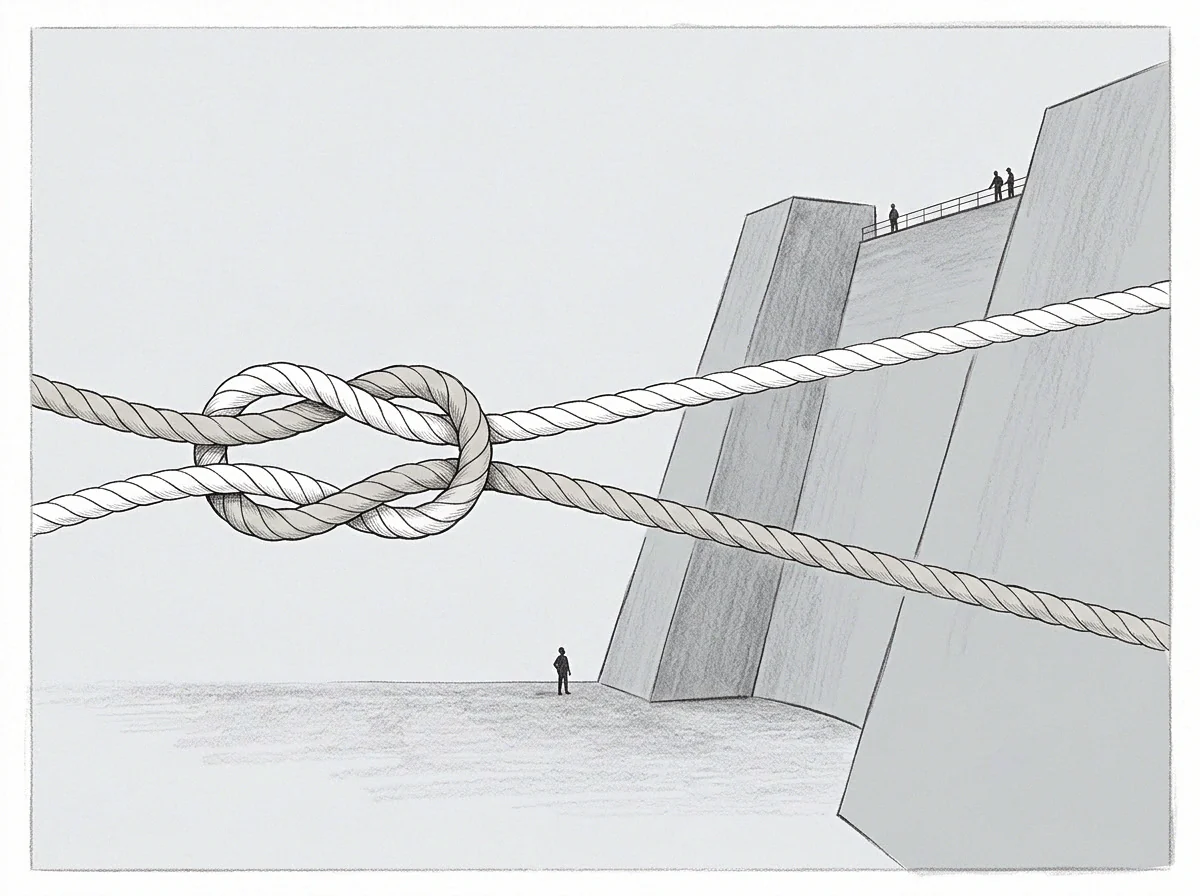
The regulatory template functions as a one-way valve.

Can Asymmetric Regulation Be Updated Without Distance?
Modifying a habitual relational dynamic requires setting explicit physiological boundaries. The stabilizing partner must recognize that providing continuous calm without receiving co-regulation accelerates biological breakdown. When the chairman in this scenario begins establishing operational limits, declining non-essential debriefings and limiting off-hours access, the chief executive officer initially experiences this withdrawal as an acute threat signal, reacting with heightened agitation to push the chairman back into the regulatory buffer role.
A steady partner who conceals their own biological load invites continuous state-borrowing from peers.
Re-establishing a balanced baseline requires both individuals to build an updated internal working model that accommodates mutual vulnerability and explicit boundary conditions. The chairman learns to state physical fatigue directly rather than masking it behind an unyielding composure, while the chief executive officer learns to process acute operational stress through individual somatic protocols rather than defaulting to state-borrowing. This adjustment redistributes the regulatory burden across the executive structure.
Treating a partner as an infinite regulatory reservoir drives that partner into silent autonomic collapse while masking structural weaknesses in the enterprise.

Scale
Partnerships evaluate regulatory interventions through the trade-off between immediate relief and long-term autonomic recovery. The choice of intervention determines whether the relationship continues to extract metabolic energy or begins to rebuild parasympathetic tone.
| Intervention Type | Physiological Mechanism | Autonomic Cost to Regulator | Parasympathetic Baseline Impact |
|---|---|---|---|
| Unstructured State Borrowing | One partner absorbs active sympathetic arousal through unmediated physical presence and passive listening. | Severe metabolic depletion and cumulative vagal suppression over time. | Negative baseline shift; drives long-term dysregulation in the regulatory anchor. |
| Structured Parallel Presence | Partners work in physical proximity without active verbal engagement or immediate operational demands. | Low autonomic cost; permits passive social baseline activation without active processing. | Moderate positive reset; gradually lowers neural threat appraisal in both partners. |
| Explicit Limit Enforcement | The regulatory partner establishes formal time boundaries and non-contact operational recovery windows. | Transient increase in social conflict distress followed by rapid systemic recovery. | High positive reset; protects the parasympathetic baseline from acute overload. |
| Synchronized Somatic Reset | Partners engage in deliberate, slow-paced respiratory matching or silent shared grounding protocols. | Balanced neural expenditure with reciprocal vagal nerve stimulation. | Maximum positive reset; builds durable co-regulation templates across the partnership. |
Transitioning from unstructured extraction to a balanced autonomic state follows a distinct sequence:
- Establishing non-operational physical co-presence without agenda or verbal debriefing twice weekly.
- Formally transferring distinct decision domains to eliminate continuous pinging and vigilance checks.
- Instituting explicit silent intervals where neither partner carries responsibility for monitoring external threats.
Implementing a non-negotiable zero-contact recovery window shifts the autonomic baseline by allowing the sympathetic nervous system to disengage completely.
Repair
Restoring parasympathetic tone within a high-load partnership relies on repeated physical experiences of safety rather than conceptual insight. Intellectual comprehension of attachment styles or nervous system dynamics does not alter autonomic reactions. The nervous system updates its threat appraisal maps solely through consistent, non-threatening physiological input delivered under conditions that previously triggered sympathetic arousal.
This process of forming a secondary neural template is known as earned security. When partners consistently uphold stated limits, respect silent recovery periods, and engage in non-extractive proximity, the brain slowly rewires its expectations. The partner who historically acted as the sole regulatory anchor begins to experience genuine safety in releasing vigilance, discovering that the partnership survives without constant physical stabilization.
Earned security forms through repeated non-threatening physical interactions rather than theoretical understanding.
Concurrently, the partner who traditionally borrowed regulation develops internal capacity for self-soothing, reducing their autonomic reliance on the peer. The partnership transitions from a dynamic of extraction to one of reciprocal stability. Over successive quarters of structured practice, the nervous system updates its expectation of safety, establishing a durable baseline where calm is shared rather than extracted.