
Somatic Baseline Recalibration Through Repeated Relational Proximity Patterns
Repeated physical proximity to a calm conspecific lowers solitary metabolic vigilance, allowing the nervous system to update its baseline threat calculation.
Reserve
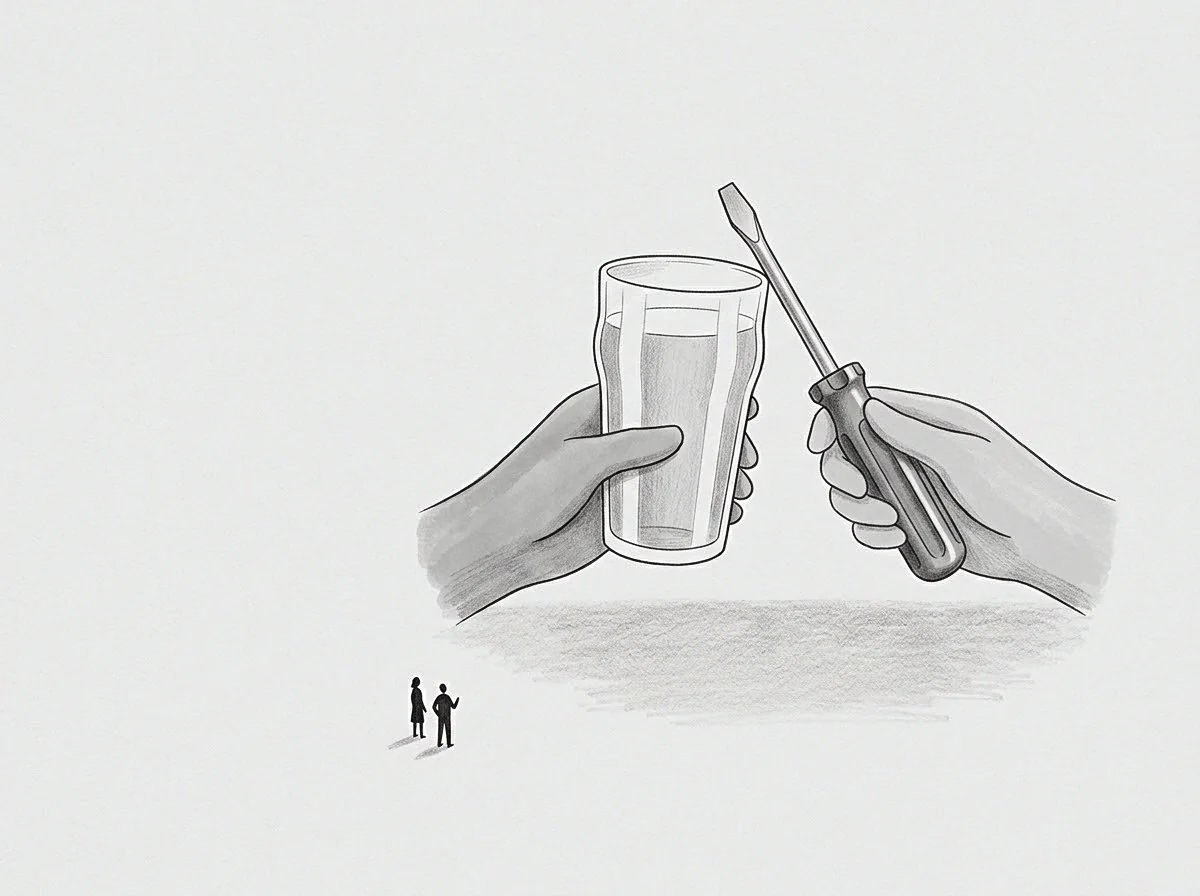
A founder sits at a dining table at midnight with three message windows open, answering an engineer who cannot sleep, an operations lead seeking guidance on payroll timing, and an early backer asking about cash runway. The sentences typed onto the glass remain measured, cheerful, and definitive. Inside the founder’s chest, resting heart rate sits at eighty-four beats per minute, elevated thirty points above baseline, while peripheral capillaries constrict to shunt blood toward large muscle groups.
The recipients of those late replies read the answers, experience an immediate reduction in their own muscular tension, close their laptops, and sleep. The founder stays awake until four in the morning, watching the ceiling while cortisol and norepinephrine circulate without a physical outlet.
The human central nervous system maintains an ongoing budget of physical energy based on perceived environmental support. Under conditions of physical isolation, the brain treats every operational hazard as a solitary burden, escalating autonomic vigilance to maintain survival. Social baseline theory establishes that the human body defaults to shared physiological load as its natural operating state.
When an individual operates without reliable, physically present allies, the neural architecture registers that solitude as an emergency condition, doubling the metabolic expenditure required to resolve ordinary daily stressors.
A steady voice across a screen conceals an accelerating resting heart rate.
This metabolic reality shapes executive function across prolonged stretches of venture building. An executive who routinely functions as an unyielding shock absorber for an entire organization burns through biological capital at an unsustainable rate. The team views the executive as exceptionally capable, drawing reassurance from that apparent steadiness.
In reality, the executive is spending private physiological reserves to supply an artificial sense of safety to the surrounding group. The founder paid for the quiet.
The regulatory distribution across such an enterprise reveals distinct somatic signatures across different roles within the company hierarchy:
- Allostatic accumulation accelerates in the executive who absorbs institutional uncertainty without distributing operational stress back to colleagues.
- Borrowed regulation flows toward junior operators who anchor their day-to-day emotional equilibrium to the physical presence of their team lead.
- Solitary vigilance develops in remote leaders who lack daily, non-demanding physical contact with peers capable of bearing equivalent operational weight.
- Metabolic debt settles into skeletal muscle tone and digestive tract motility after months of uninterrupted organizational defense.
The body pays first. When prolonged executive isolation persists, the brain recalibrates its set point, treating continuous threat anticipation as the permanent default. Physical rest ceases to produce physiological recovery because the environmental scanning mechanisms in the amygdala and dorsal anterior cingulate cortex never receive the sensory signals of mammalian safety.
Autonomic baseline reset requires physical data, not intellectual rationalization.
Floor
Somatic stability requires physiological mechanisms that operate below conscious cognition. When two people occupy the same physical room without speaking, their autonomic nervous systems engage in continuous mutual assessment through peripheral vision, vocal timbre, respiration rhythms, and micro-movements of facial musculature. This unconscious data stream informs the subcortical threat detection apparatus whether the environment permits rest or demands continuous perimeter defense.
Is Baseline Recalibration Measurable In Solitude?
Solitary practices such as breathwork, cognitive reframing, and solitary exercise alter state transiently, leaving the underlying autonomic threat floor intact. Laboratory experiments in social neuroscience demonstrate that the neural circuits governing threat reactivity, specifically the right anterior insula and the hypothalamus, show dramatic attenuation in activation when a participant facing acute physical shock holds the hand of a trusted long-term partner. This effect rests on experimental functional magnetic resonance imaging paradigms conducted on adult cohorts in established pair bonds subjected to predictable electrical shock trials.
The attenuation effect drops by more than half when the hand belongs to an unfamiliar stranger, and vanishes when the participant faces the shock alone with access only to internal cognitive calming strategies. Introducing developmental attachment avoidance into the test cohort alters these attenuation values, suppressing the measurable relief of touch.
Autonomic arousal declines under acute threat when a familiar hand rests on the skin.
Solitude doubles the vigilance budget. The solitary brain must dedicate continuous glucose and neural bandwidth to monitoring horizons for systemic failure. Physical proximity to a regulated peer offloads that monitoring task.
The brain calculates that four eyes and two nervous systems are scanning the room, permitting the individual prefrontal cortex to allocate glucose away from survival monitoring toward long-range planning, abstract problem solving, and cellular repair.
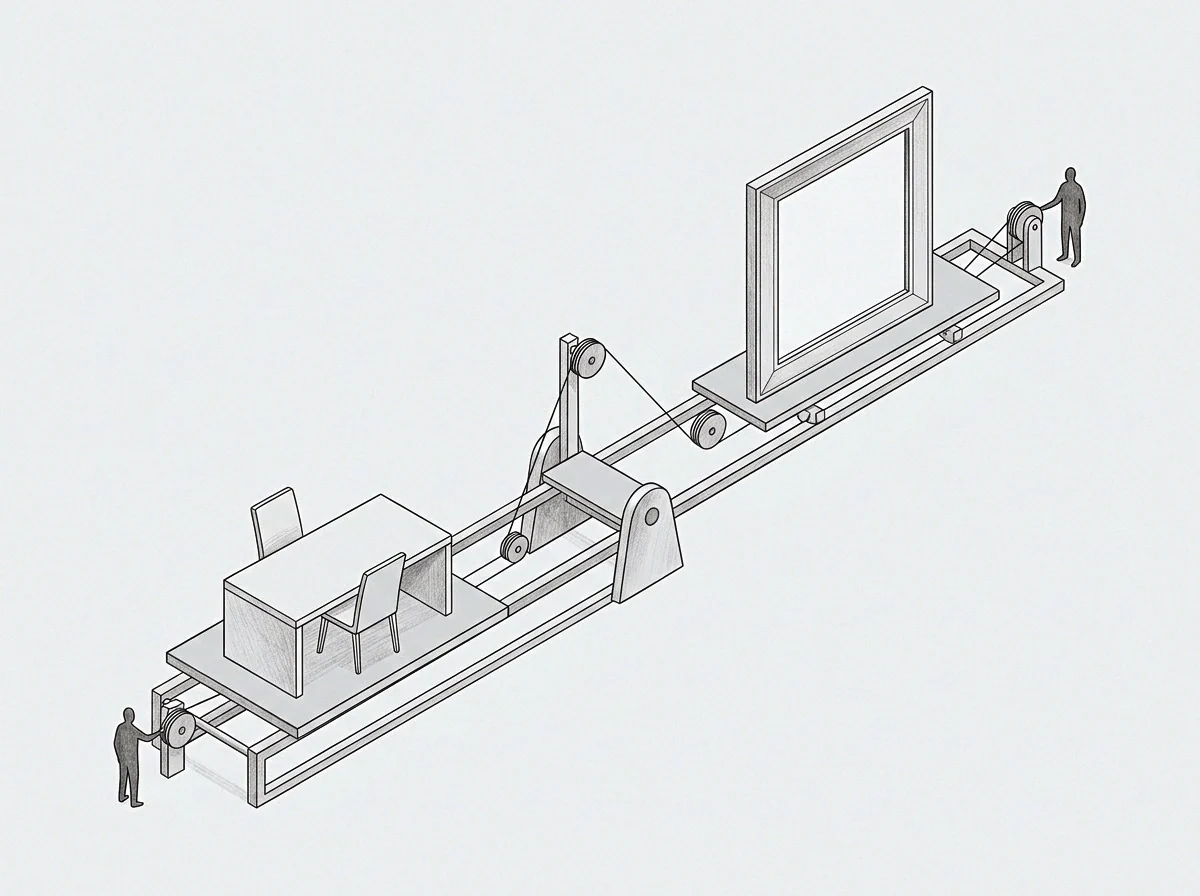
Presence reduces autonomic arousal. An operator who isolates themselves in a private office during severe corporate contractions experiences accelerated cardiovascular deterioration compared to an operator who works through the same crisis sitting shoulder-to-shoulder with an equally committed peer. The verbal content of their interaction matters far less than the unadorned sensory confirmation of shared spatial occupancy.
The nervous system tracks physical distance.
Measure the reliability of an ally by how quiet the pulse stays when both people share a desk in silence.
Transfer
Energy transactions between interacting human bodies follow strict metabolic gradients. When an agitated employee enters the office of an unshakeable executive, a silent transfer of autonomic tone occurs over several minutes. The agitated individual matches the slower respiratory rate, lower vocal pitch, and steadier postural cadence of the seated leader.
This physiological convergence allows the distressed worker to leave the room feeling renewed, clear-headed, and capable of returning to duty. The solitary regulator absorbed the bill.
| Physiological Variable | Solitary Regulation Mode | Proximity Co-Regulation Mode | Metabolic Consequence |
|---|---|---|---|
| Vagal Brake Function | Endogenous prefrontal suppression of heart rate; high cognitive load | Exogenous entrainment to peer respiratory rhythm; low cognitive load | Solitary mode expends central glucose; proximity conserves fuel reserves |
| Hypothalamic-Pituitary-Adrenal Axis | Sustained baseline cortisol release during ongoing strategic ambiguity | Rapid cortisol attenuation upon physical contact with familiar ally | Unshared ambiguity accelerates vascular wear and chronic inflammation |
| Dorsal Anterior Cingulate Tone | Continuous hyper-activation tracking potential institutional isolation | Suppressed metabolic signaling under shared bodily spatial presence | Solitary track drives insomnia, digestive slowdown, and muscular bracing |
| Pupillary Oscillations | Rapid scanning patterns indicating high sympathetic survival drive | Stabilized focal tracking reflecting social safety and prefrontal control | Proximity preserves executive working memory for complex trade-offs |
The physiological data in the comparative assessment rests on ambulatory electrocardiography and pupillometry measurements gathered from working dyads engaged in joint high-stakes negotiations. The vagal tone advantages of joint physical occupancy weaken when an existing interpersonal relationship carries chronic unresolved status disputes or hidden contractual ambiguities. Under conditions of relational ambivalence, proximity introduces competitive monitoring costs that equal the burdens of pure physical isolation.
In industrial refrigeration, compressors mounted on isolated dampers wear bearings faster than coupled units that share vibrational load through a common concrete pad. The human nervous system displays identical structural dependency on adjacent physical mass. A solitary executive running three consecutive product launches without an equal peer experiences mechanical breakdown in vascular tissue, endocrine sensitivity, and sleep continuity.
When an operator conceals exhaustion to preserve team stability, incoming demands accelerate rather than subside.
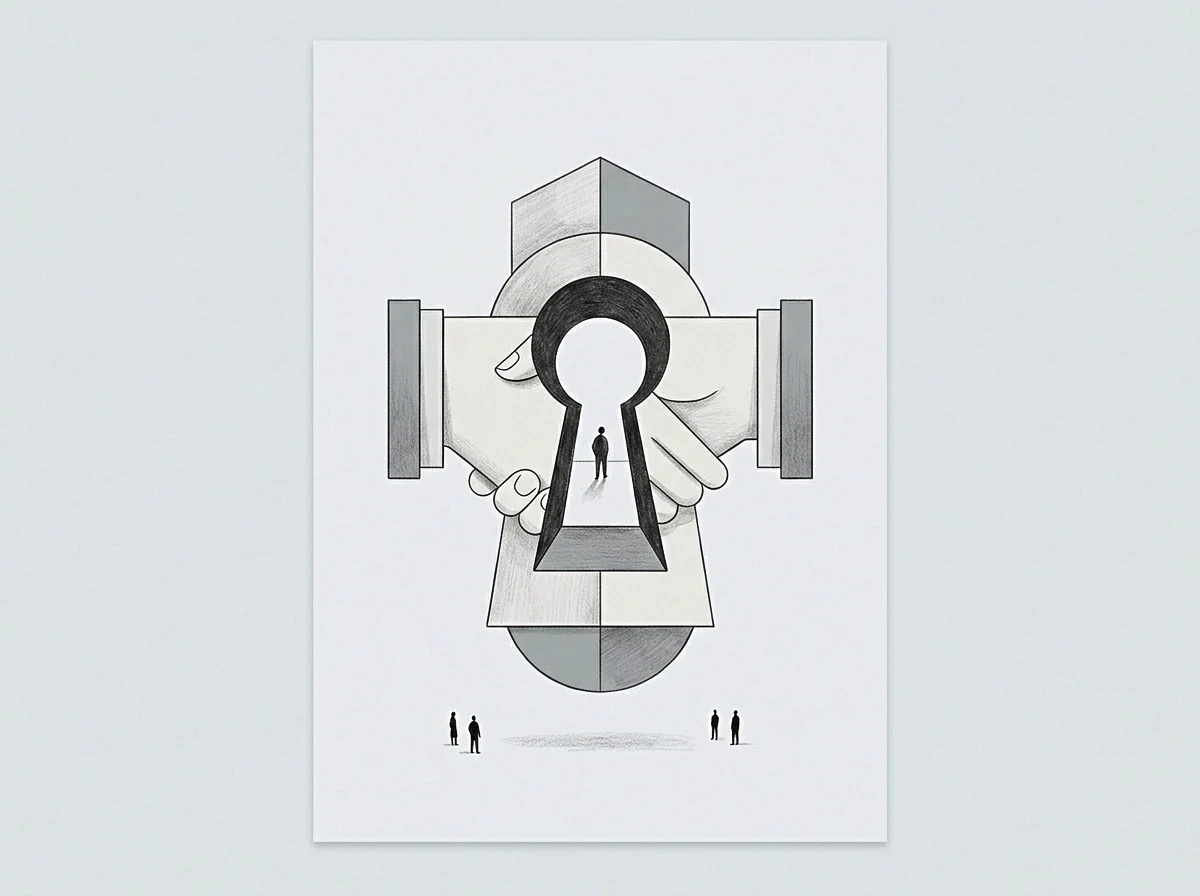
The transfer of regulation becomes predatory when structured entirely in one direction. Teams naturally gather around whoever provides stability, depositing anxiety and departing with borrowed equilibrium. The central figure in this dynamic feels needed, equating that structural indispensability with leadership excellence.
Calm carries an energy price. When weeks of unidirectional regulation pass without reciprocal physical containment, the provider begins experiencing sudden executive paralysis, emotional detachment, and unexpected hostility toward harmless requests.
Persistent reliance on borrowed calm without physical proximity depletes the central nervous system until ordinary organizational problems trigger visceral immobilization.
Pacing
Recalibration of an exhausted somatic baseline demands physical exposure repeated over calendar quarters. An intellectual realization that one is overextended does nothing to shift the tonic firing rate of the locus coeruleus. Somatic memory yields only to repetitive, low-threat sensory exposures in physical proximity to another human being whose autonomic state remains grounded.
A second relational template forms along a defined operational sequence:
- Spatial coexistence initiates when two professionals work within physical sight lines on independent tasks without verbal demands for two hours.
- Bilateral down-regulation emerges as breathing patterns align unconsciously, lowering ambient sympathetic tone across the shared workspace.
- Micro-load sharing occurs when one party verbalizes an operational obstacle without receiving immediate advice, fixing, or strategic redirection.
- Visceral yield takes hold when the hyper-vigilant executive experiences involuntary muscular relaxation in the presence of an observant colleague.
- Template consolidation stabilizes after months of repeated sessions, embedding an automated neural expectation that support exists under duress.
The baseline resets slowly. Security takes repeated physical contact. Many executives attempt to accelerate this pacing by scheduling high-intensity offsite meetings, deep conversational retreats, or intensive personal disclosures.
These linguistic interventions fail to alter the somatic threat floor because the subcortical survival networks treat rapid emotional intimacy as an unpredictable demand for performance. A steady pulse needs no speech.
Exactly how many cumulative hours of shared physical quiet are required to install a receptive regulation template in an executive conditioned to solitary vigilance remains unquantified in clinical literature. What a careful person does under this uncertainty is schedule quiet co-working blocks without performance demands twice weekly for a calendar quarter before evaluating autonomic stability. Relational trust is an operational calculation made by the autonomic nervous system over time, evaluating whether being near another body reduces metabolic expenditures or increases social defense costs.
The quiet in the room seemed unconditional until the calendar emptied without warning.
Tenure
A mature operational baseline distinguishes between immediate emotional relief and enduring structural regulation. Junior operators confuse proximity with excitement, seeking allies who amplify intensity, confirm outrage, and accelerate defensive reactions against external stakeholders. Experienced executives seek a different physical presence: individuals whose breathing stays low, whose posture remains unclenched under hostile legal or commercial cross-examination, and whose nervous systems absorb ambient panic without reflecting it back into the room.
Three hundred hours of shared quiet alter autonomic responsiveness where five years of analytical conversation leave the resting pulse untouched.
No verbal contract alters bodily calculation. The long-term delta between an executive who needs a co-founder and one who chooses a co-founder becomes visible only under crisis conditions. The dependent executive requires the partner’s physical proximity to prevent catastrophic cognitive collapse, treating any absence as abandonment.
The grounded executive recognizes that proximity lowers the baseline metabolic invoice of corporate defense, selecting a partner based on somatic stability and commercial competence.
The room stays quiet. Load shifts toward the steady chair. An organization inevitably replicates the physiological state of its founders.
When the executive suite operates from chronic solitary vigilance, the middle management layer exhibits hyper-reactivity, hair-trigger threat appraisals, and defensive communications. When the executive suite functions from a shared baseline anchored in frequent physical proximity, the surrounding operational layers demonstrate sustained focus, measured crisis response, and low turnover through difficult market downturns.
Whether a nervous system trained entirely on solitary survival can fully relinquish its vigilance floor, or merely learns to tolerate temporary respite while retaining an underlying readiness for catastrophe, remains an open inquiry for those who build companies.