
Structural Constraints on Internal Model Updating for Regulators Exposed to Chronic High Threat
Chronic high threat locks defensive priors by treating safety signals as noise, blocking internal model updates until shared load disconfirms catastrophe.

Room
Four direct messages remain open on the screen at midnight while the building air conditioning hums down to its scheduled shutdown. The engineering lead asks for an emergency equity adjustment to match an outside offer. The principal investor requests a revised cash runway projection before an unannounced board call at nine in the morning.
A key enterprise client sends a terse notification that their procurement director has escalated three open tickets to executive review. Across the desk sits an operator waiting for sign-off on a supply contract that commits seven months of operating reserves. The person in the middle answers each message with steady, measured punctuation, gives clear instructions on the inventory purchase, and organizes the runway models into three clean scenarios.
The room reads that calmness as surplus capacity. When someone appears entirely unflappable under cascading operational friction, every participant in the organization treats that stability as an invitation to transfer their unresolved pressure onto the same desk.
Load travels down the gradient.
The Inverted Social Baseline
Physical proximity to a dependable human partner typically reduces the neural and metabolic cost of processing high-stakes environmental friction. Under classic social baseline dynamics, an individual human brain treats the physical presence and attentional availability of trusted conspecifics as an extension of its bioenergetic budget. Environmental demands register as less threatening, motor responses require less localized glucose expenditure, and sympathetic arousal attenuates because the perceptual apparatus calculates that load will be distributed across multiple capable bodies.
The person occupying the central operational seat experiences an inversion of that architecture. When team members, board representatives, and commercial counterparties enter the office, their presence does not signal shared distribution of incoming threats. Their arrival delivers an influx of uncontained volatility that demands immediate metabolic stabilization by the central actor.
Proximity consumes reserves instead of restoring them.
Under sustained operational volatility, the presence of dependent observers increases localized prefrontal metabolic expenditure by requiring continuous suppression of distress signals.
This dynamic alters the predictive processing baseline of the nervous system. The autonomic apparatus cannot utilize the social environment as a distributed damping field. Every additional human interaction demands an active, vigilant expenditure of prefrontal resources to project coherence, preserve morale, and absorb ambient panic.
The regulator acts as the exclusive damping device for the surrounding human network while running an absolute biological deficit. Capacity drains in silence.
They handle the pressure so effortlessly that sending another urgent escalation tonight will cause no harm.
Precision
The human brain constructs an ongoing perceptual simulation of its environment by balancing prior predictions against incoming sensory prediction errors. Sensory prediction errors communicate unexpected discrepancies between anticipatory models and current bodily inputs, prompting updates to the governing internal working model. Under conditions of acute, bounded challenge, prediction errors register with high fidelity, compelling the model to adjust its structural assumptions about risk, reliability, and human support.
Chronic high threat disrupts this update cycle by altering the relative precision assigned to sensory prediction errors compared to entrenched threat priors. Prior assumptions freeze into permanent defensive architecture.
Priors govern incoming sensation.
Hyper-Precision of Defensive Priors
When operational survival remains precarious across rolling quarters, the nervous system upweights the precision weighting of top-down defensive priors. In formal predictive processing models, precision acts as a multiplicative gain applied to specific informational channels, dictating how aggressively an incoming sensory discrepancy can modify the existing internal state. Under continuous allostatic saturation, descending threat priors carry near-absolute statistical weight.
The internal model predicts that any dip in vigilance produces immediate collapse, that human encounters carry uncompensated relational extraction, and that isolation serves as the only stable barrier against catastrophic exposure. When a genuine signal of social safety or unsolicited operational assistance enters the perceptual field, the hyper-precise threat prior instantly discounts the prediction error as aberrant noise.
A teammate steps into the workspace, closes the door quietly, and places a hot meal on the desk without asking for instructions or raising a problem. Under ordinary relational baselines, this behavioral sequence delivers an unambiguous safety cue that downregulates sympathetic tone and updates the recipient model toward relational safety. Within a system governed by hyper-precise threat priors, the sensory observation is re-encoded before it can alter the baseline.
The sudden appearance of unsolicited assistance triggers an immediate calculation of future relational debt, hidden managerial incompetence, or an impending performance collapse from the colleague delivering the food. The defensive prior maintains its integrity by reinterpreting the disconfirming evidence as an atypical tactical threat. The nervous system remembers.
A top-down defensive prior preserves its structural integrity during prolonged crisis by treating unexpected relational safety signals as operational liabilities.
This selective discounting produces a closed Bayesian loop. The greater the external operational pressure, the higher the precision assigned to threat-based predictions; the higher that precision, the less capable sensory inputs become of updating the governing internal working model. The individual continues to perceive pervasive vulnerability even when capital arrives, operational redundancies stabilize, and competent colleagues assume key functional duties.
The physiology remains trapped in an emergency state that empirical changes in reality cannot reach.
Maintaining hyper-precise threat priors across prolonged periods degrades neural plasticity, leading to chronic executive exhaustion, impaired associative decision-making, and structural detachment from collaborative support.
Filter
The architecture of human attachment develops through repetitive cycles of interpersonal distress, signaling, and responsive somatic soothing. When this sequence completes normally across early developmental or prolonged adult bonds, the nervous system constructs an internal working model featuring a dedicated receptor slot for external regulation. The individual possesses a clear sensorimotor representation of what it feels like to yield somatic weight to another human presence.
For many who gravitate toward central leadership seats, this sequence developed in reverse during formative periods or early high-stakes professional crises. They established security by becoming the reliable stabilizing other for distressed adults or chaotic organizations, internalizing a backward relational model where personal survival depends upon maintaining total composure while stabilizing others.
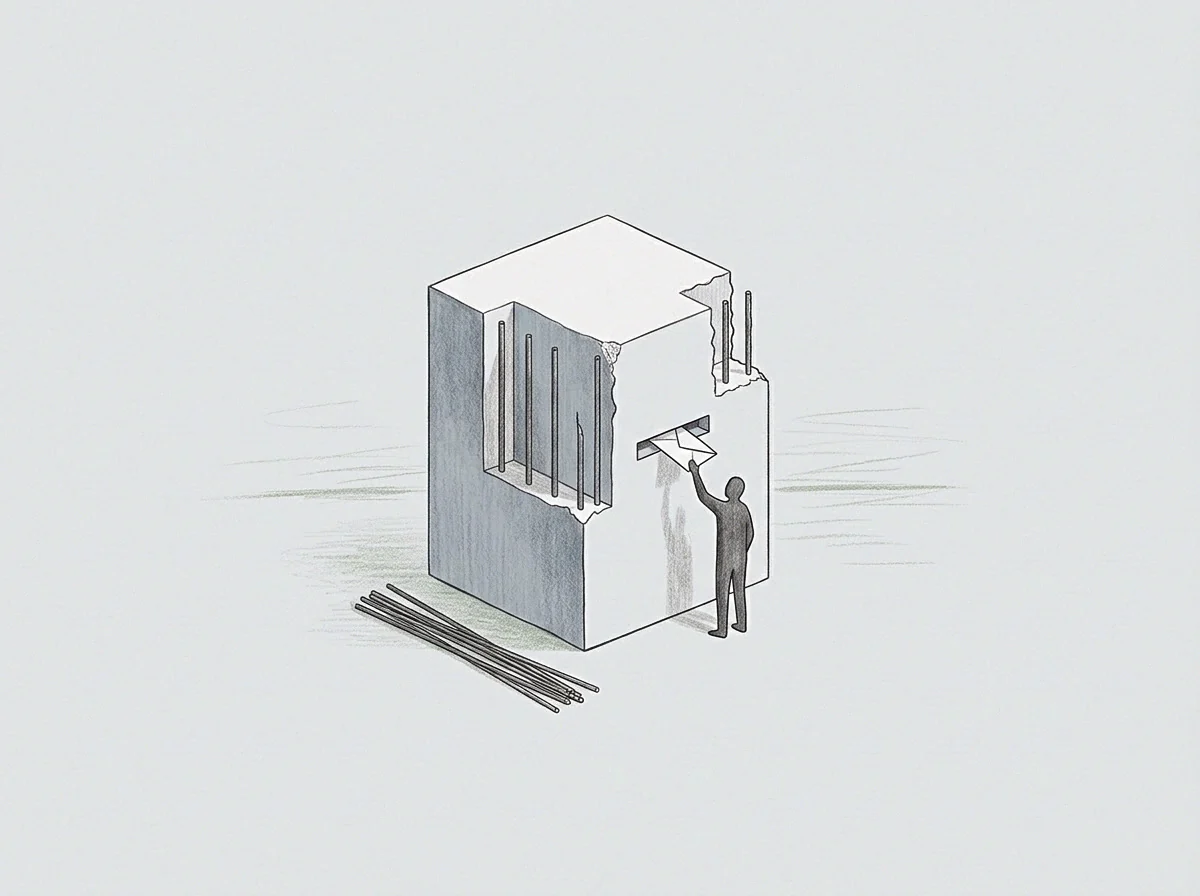
The receptor slot remains blank.
Why Do Unprompted Offers Register As Demands?
A backwards regulator template contains sophisticated machinery for reading, calculating, and soothing the dysregulated states of surrounding people, combined with an absolute sensory blind spot for receiving reciprocal co-regulation. Because the template equates safety with operational mastery and unilateral stabilization, an unprompted offer of assistance registers physiologically as an implicit notification of failure or an attempt to wrest away control. The incoming sensory information hits the boundary of the internal working model and encounters no cognitive or autonomic receptor slot designed to process shared relief.
The operational consequence emerges during critical inflection moments, as summarized across standard relational dynamics:
| Incoming Relational Input | Standard Social Baseline Orientation | Backward Regulatory Template Orientation |
|---|---|---|
| Unsolicited task assumption by a colleague | Reduces prefrontal metabolic load; triggers autonomic settling and immediate gratitude. | Increases vigilance; interpreted as loss of systemic visibility and impending administrative friction. |
| Extended physical presence of an observer | Distributes perceived environmental risk; lowers baseline blood pressure and motor tension. | Maintains acute vigilance; registered as a dependent entity requiring continuous performance containment. |
| Direct inquiry regarding personal capacity | Invites honest disclosure of limits; facilitates prompt reallocation of operational burdens. | Experienced as an extraction attempt; triggers scripted reassurances of boundless capacity and mastery. |
| Unexpected lull in operational friction | Initiates parasympathetic recovery; encourages restorative metabolic restoration. | Prompts anticipatory dread; scanned continuously for hidden systemic anomalies or delayed shocks. |
The table illustrates how identical relational inputs produce diametrically opposed autonomic consequences based on the configuration of the governing model. In the backward orientation, the absence of a receptive regulatory slot transforms restorative relational signals into active cognitive burdens. The person cannot accept what their sensory apparatus has been configured to reject.
The cost of maintaining this protective isolation mounts invisibly across quarters.
If the physiological apparatus fundamentally lacks the receptor architecture to recognize an incoming offer of rest as safe, through what exact sensory channel can an uncorrupted prediction error ever enter the system?
Tether
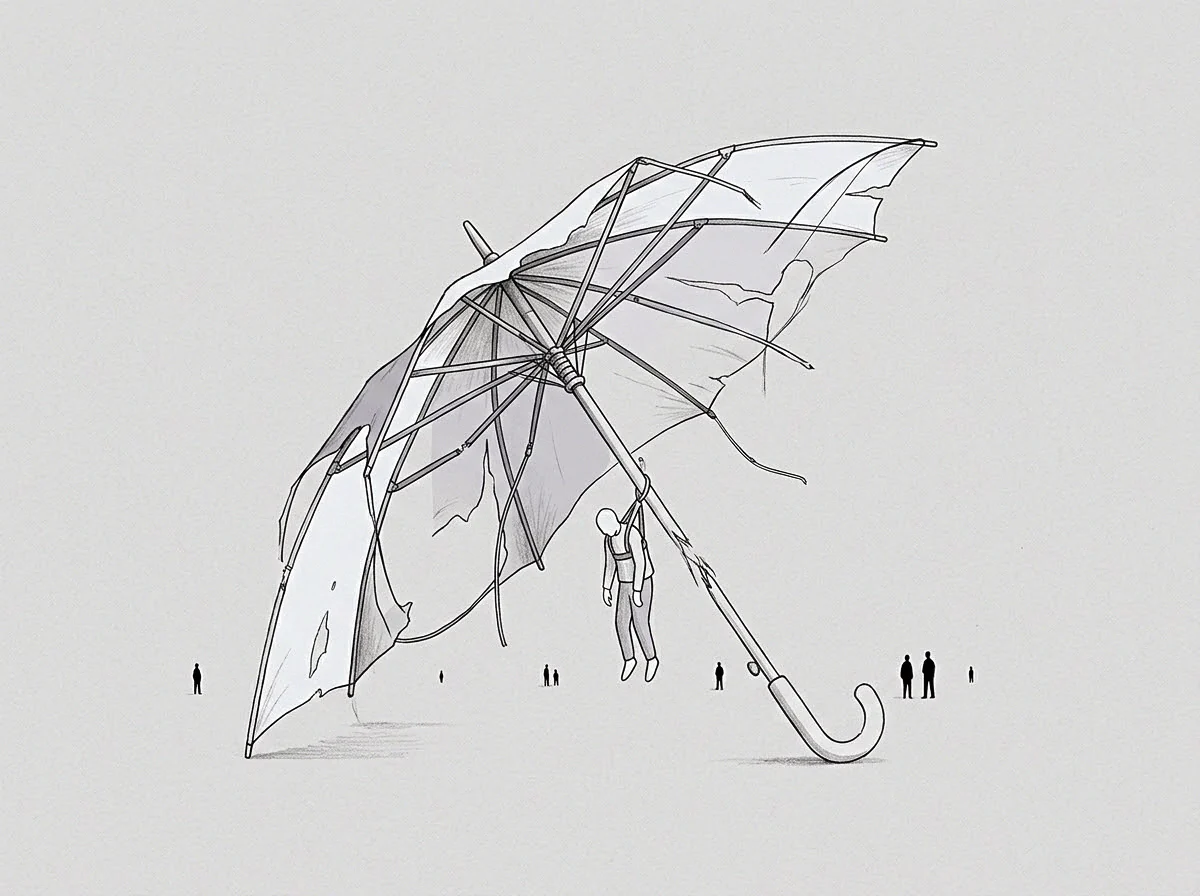
Resolving this perceptual gridlock cannot occur through verbal analysis, reflective journaling, or intellectual insight. An individual can fully understand the cognitive mechanics of their defensive baseline, identify the childhood roots of their backward regulatory template, and deliver lucid explanations of their allostatic overload without altering their autonomic baseline by a single millivolt. The cognitive apparatus operates downstream from the subcortical predictive machinery that regulates autonomic arousal and motor readiness.
Cognitive awareness observes the frozen internal model; it does not rewrite it. Updating a deeply entrenched regulatory prior demands repeated, small-scale physical experiences of disconfirmed threat conducted while somatic arousal remains strictly bounded.
Threat alters prediction depth.
Physical Anchoring Over Intellectual Insight
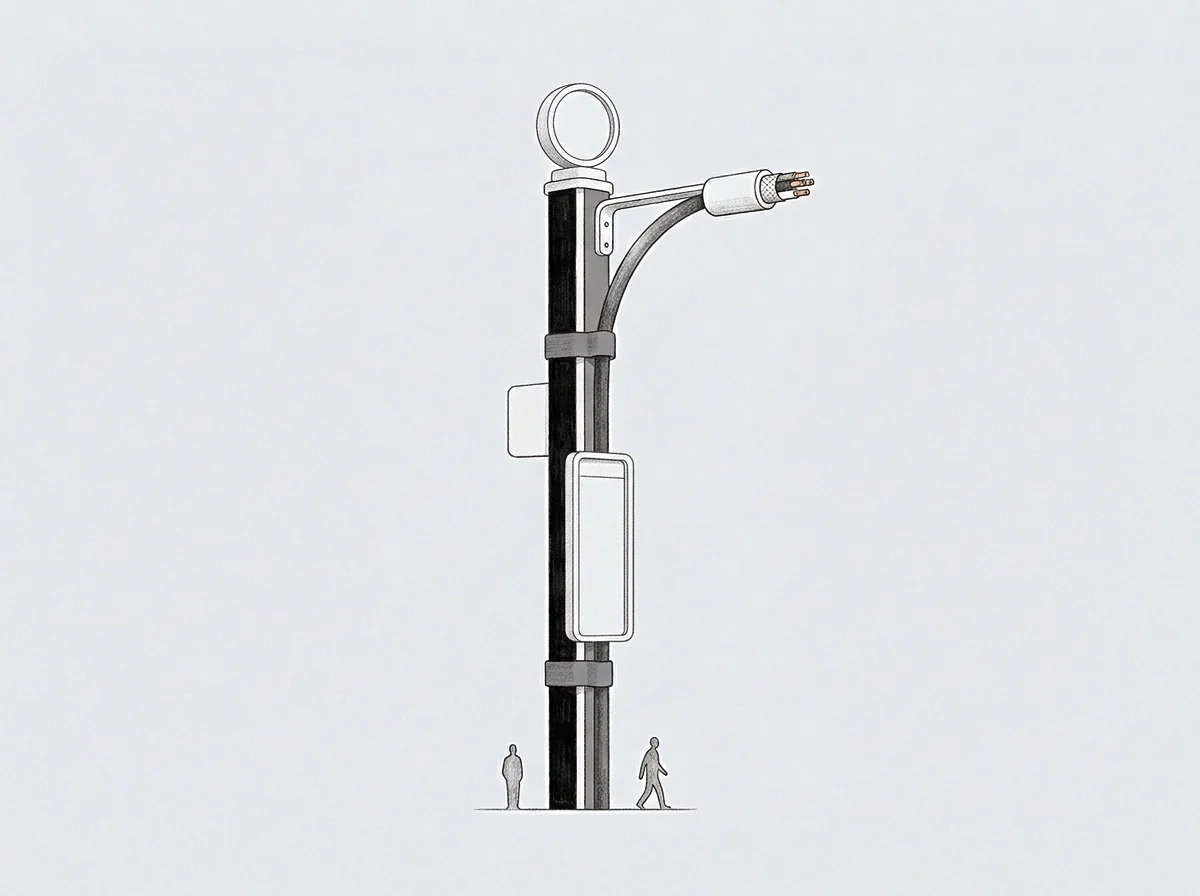
A reliable internal model updates exclusively through lived sensory prediction errors that carry somatic weight. Because verbal interaction in high-threat environments frequently triggers habitual communicative defenses, the initial disconfirming experiences must bypass explicit narrative processing. Physical proximity without communicative performance provides the foundational baseline.
Sitting in a quiet room beside an individual whose nervous system remains genuinely settled, while both parties focus on an external task that demands zero interpersonal management, introduces a subtle, non-threatening discrepancy into the predictive model. The central regulator does not have to perform composure; the companion does not demand stabilization. The nervous system registers the absence of extraction in quiet real time.
This update pathway mirrors the established neurobiology of earned security, where an insecure developmental template reorganizes across adulthood through stable, prolonged contact with an emotionally regulated partner. In operational settings, this dynamic requires establishing a low-load operational container with a trusted peer or specialized operator who meets three uncompromising criteria:
- Absolute metabolic autonomy ensures that the companion possesses independent physiological and professional reserves, preventing them from leaning on the central regulator for emotional stabilization during moments of shared friction.
- Explicit operational competence eliminates the unspoken requirement for supervisory containment, allowing the central actor to drop vigilance without fearing immediate systemic degradation.
- Refusal of performative compliance prevents the arrangement from devolving into an administrative theater where both parties recite scripted reassurances instead of acknowledging real constraints.
The nervous system processes safety as an economic fact rather than a philosophical concept. When an individual discovers that delegating an irreversible commercial decision to a competent colleague does not result in systemic failure, the top-down defensive prior experiences a measurable decrement in precision. The resulting prediction error registers as genuine operational data.
The body settles slowly.
Earned security forms when repeated physical experiences of shared load fail to produce the catastrophic abandonment predicted by the defensive model.
The stated limit, executed in writing and maintained without emotional apology, acts as the primary mechanical lever for forcing this predictive revision. Stating an immutable boundary around working hours, capital commitment, or operational escalation exposes the system to its deepest anticipatory terror: the belief that withdrawing absolute availability will cause the entire social and operational apparatus to disintegrate. When the stated limit holds, and the enterprise adapts without collapsing, the internal working model absorbs an undeniable disconfirming observation that chips away at the omnipotent defensive prior.
The signed covenant that transfers unilateral operational authority over key functions directly changes the structural survival math of the central nervous system.

Revision
Revising an internal working model forged under chronic operational threat demands a protracted temporal horizon. Neurological pathways dedicated to threat detection and defensive containment do not disassemble upon the arrival of temporary stability; they remain primed to reactivate at the earliest indication of environmental volatility. The process of building earned security resembles the slow accumulation of physical mass in load-bearing architecture.
A new predictive baseline must establish deeper structural grooves than the emergency templates that preceded it. The delta across eighteen months reveals the true trajectory of adaptation.
Recovery demands genuine safety.

The Delta Over Time
In the initial ninety days of deliberate model revision, the regulator encounters heightened autonomic distress whenever they decline an incoming crisis or permit an operational thread to dangle unresolved. The predictive brain interprets the intentional reduction in vigilance as negligence, generating intense waves of guilt and anticipatory catastrophe. This phase represents the most fragile interval in the transition.
If the operator misinterprets this acute discomfort as proof that total personal control remains mandatory, they immediately revert to their baseline patterns of total vigilance and backwards regulation. Navigating this threshold requires treating the discomfort as the metabolic friction of structural remodeling rather than an operational warning signal.
Consider two parallel operational units managed across a two-year recovery cycle. Assume both organizations encounter identical shocks: a sudden market contraction that eliminates twenty percent of top-line revenue alongside the unexpected departure of a core engineering director. In the first arrangement, the central operator responds through their legacy template, immediately re-absorbing all operational threads, working twenty-hour shifts, and projecting invulnerable calm while carrying the full emotional panic of their leadership tier.
Within six months, the organization stabilizes its burn rate, but the central operator suffers profound executive exhaustion, makes three disastrous strategic acquisitions driven by cognitive tunnel vision, and alienates their remaining senior staff through micromanagement. The legacy internal model confirms its foundational assumption: survival requires total personal suffering, and nobody else can be trusted with existential weight.
In the second arrangement, the central operator operates from an emerging secondary template built on stated limits and distributed regulation. Upon absorbing the market shock, they call an immediate executive session, define the exact capital deficit, establish clear functional boundaries for each department head, and step away from daily operational firefighting to preserve their executive bandwidth. They schedule mandatory periods of physical disengagement, lean on an independent advisory partner to absorb and process ambient anxiety, and permit minor tactical inefficiencies to resolve without personal intervention.
The team stumbles through several initial operational missteps, but the distributed structure gradually stabilizes the enterprise. Eighteen months later, the organization operates with robust autonomy, while the leader retains clear cognitive reserve, expansive strategic foresight, and an intact capacity for human connection. The predictive model has updated: systemic survival improves when load is genuinely shared.
Silence costs attention.
A second template forms through the accumulation of boring, unremarkable afternoons where nothing broke because someone else held the seat.