
Automated Rules for Moving Tactical Work Away From Overwhelmed Managers
Automated rules move tactical work from managers by evaluating operational requests against deterministic threshold parameters before routing compliant tasks directly to execution engines.
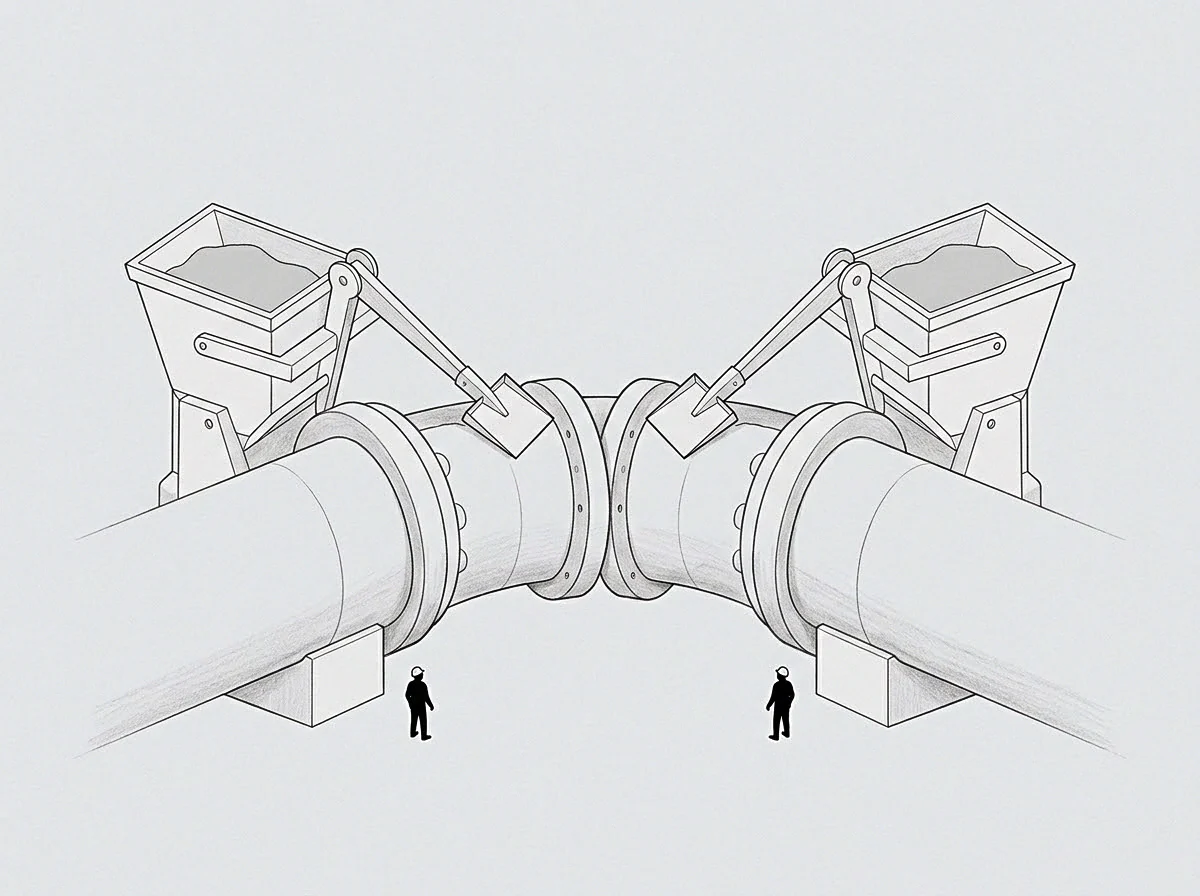
Desk
Fourteen operational requests sit unread in a manager queue at midnight on a Tuesday. Each item represents a low-complexity decision: an invoice approval under five hundred dollars, a minor schedule swap, a routine software permission grant, or a vendor contract amendment. The organization relies on managerial review as a default containment wall for operational variance.
When operational rules lack explicit parameters, tactical tasks flow upward until they land on the highest available administrative seat. The manager becomes a human routing mechanism, consuming finite working hours on low-impact sign-offs while strategic directives stall.
Accumulated tactical micro-decisions create high allostatic load. The stress response system remains continuously engaged, not by major institutional crises, but by constant context switches between disparate operational requests. Cognitive capacity fragments across dozens of open operational loops.
High availability derived from open chat channels and unguarded queues encourages team members to offload routine choices rather than executing established protocol.
Operational tasks default to managerial queues whenever decision parameters remain unstated at the execution level.
The habit of routing routine tasks to leadership shifts structural responsibility away from execution roles. Direct reports lose agency when every operational variance requires supervisor intervention. The organization trades speed for the illusion of control, paying for that illusion with manager exhaustion.
Continuing to use managerial attention as an operational dumping ground systematically erodes managerial retention, degrades decision quality, and ensures that strategic initiatives are consistently displaced by immediate tactical noise.

Filter
Removing operational friction requires substituting explicit, deterministic rules for personal judgment at the point of task origination. Operational tasks fall into distinct structural classes. State-gated tasks depend entirely on objective system variables, whereas decision-gated tasks require subjective trade-off evaluations.
Automated rules operate strictly on state-gated tasks, converting manual manager sign-offs into deterministic algorithmic actions.
A rule engine checks incoming operational requests against predefined parameters before those requests reach a human seat. If a financial requisition falls below a designated capital threshold, meets vendor security compliance standards, and fits within existing departmental allocations, the system executes approval automatically. Human intervention occurs only when an input violates a boundary parameter.
Establishing these deterministic boundaries requires defining clear operational thresholds across four primary dimensions:
- Financial Magnitude defines the maximum monetary value an operational role or automated rule can clear without secondary managerial review.
- Reversibility Index categorizes decisions by the resource cost required to undo an action if the outcome falls outside expected variance.
- Scope of Impact measures the structural blast radius of an operational choice across adjacent teams and external client commitments.
- Protocol Compliance verifies whether a requested action matches established operational procedures and compliance requirements.
The technical deployment of these rule parameters relies on conditional logic embedded within operational workflow tools. Form submissions evaluate inputs instantly. High-frequency administrative items move straight to execution engines, API triggers, or peer-verification queues.
The manager receives zero pings for compliant tasks.
A deterministic rule executes approval instantly when request variables remain within pre-approved parameter ranges.
When an operational request satisfies all established compliance conditions, the system logs the event in an auditable trail and notifies relevant downstream execution engines without alerting leadership seats. The rule bound holds, preventing tactical creep while retaining complete operational visibility through automated telemetry.

Routing
Redirecting tactical work away from managers alters organizational communications. Tasks cleared by automated rule engines flow along predefined programmatic pathways. A software provisioning request routes straight to identity management software.
A travel booking below threshold routes straight to ticketing systems. A shift change request routes to peer sign-off algorithms.
Operational logic determines task destination based on request characteristics rather than manager presence. When a task requires human judgment but remains fundamentally tactical, the system routes the item horizontally to peer operators rather than vertically to leadership seats. Distributed authority structures function efficiently because clear parameters protect operators against organizational liability.

Can Automated Handoff Rules Maintain Operational Accuracy?
Systemic accuracy depends entirely on parameter precision. Automated task redirection increases processing accuracy by removing manual managerial bottlenecks and human oversight fatigue. Managerial review of repetitive administrative items frequently yields rubber-stamp approvals, creating a false sense of governance while introducing delays.
Rule-based redirection enforces precise compliance checks on every transaction without standard human error.
Operational teams occasionally experience anxiety when direct supervisor review vanishes from daily workflows. Operators fear personal responsibility for edge cases or system failures. Clear programmatic rules resolve this anxiety by explicitly transferring decision authority to the protocol itself.
Clear system logic transfers task authorization from manager discretion to deterministic rule structures.
Peer execution models succeed when organizational logic makes task boundaries unambiguous. Systemic failure occurs only when ambiguous requests bypass rule conditions and land in undefined operational channels. Team members quickly learn that direct manager intervention indicates a system failure rather than standard operating procedure, paraphrasing that the rule set is expected to resolve routine tasks independently.

Headroom
Eliminating tactical work from managerial queues restores cognitive capacity and lowers physiological stress markers. Allostatic load decreases when managers cease acting as continuous administrative traffic controllers. Cognitive bandwidth shifts from short-term reactive sorting to deep strategic synthesis, long-term planning, and high-value decision support.
Quantifying headroom recovery involves measuring the absolute reduction in daily managerial context switches. The table below illustrates structural differences between manual managerial review models and automated rule-gated decision topologies across critical operational criteria.
| Operational Criterion | Manual Review Topology | Automated Rule-Gated Topology |
|---|---|---|
| Queue Latency | High (12 to 72 hours) | Zero (Instantaneous API execution) |
| Managerial Context Switches | 30 to 80 daily interruptions | 0 to 5 boundary exception alerts |
| Error Rate Under Load | Elevated due to fatigue | Constant deterministic precision |
| Scalability Factor | Linear cost increase with headcount | Zero marginal administrative cost |
| Operational Auditability | Inconsistent manual logs | Immutable automated audit trail |
Restoring headroom changes how managers interact with operational teams. Free from tactical sign-offs, managers observe organizational performance through systemic telemetry rather than manual approvals. Communication shifts from transactional task permission to structural optimization.
The transition requires disciplined adherence to automated boundaries. Managers experiencing high historical load often feel an urge to re-intervene in routine workflows out of habit. Resisting this operational backslide is necessary to maintain reclaimed cognitive bandwidth.
Cognitive capacity expands in exact proportion to the volume of routine decisions converted to rule-based automation.
Managerial availability becomes a deliberate resource spent on complex strategy rather than a passive target for low-level operational noise. Strategic capacity remains high as long as rule boundaries prevent tactical work from re-entering leadership channels.

Guard
Maintaining automated work offloading requires ongoing structural defense against task relapse. Operational systems naturally experience entropy. Unclear edge cases, new product lines, and organizational changes generate novel administrative tasks that threaten to fill managerial queues once again.
Preserving offloading gains demands permanent governance mechanisms.
Preventing tactical task accumulation relies on a continuous four-step operational enforcement loop:
- System logs monitor incoming manager queue entries weekly to detect novel recurring administrative tasks.
- Operators analyze identified recurring tasks to extract deterministic decision criteria and financial boundaries.
- Engineers program newly defined parameters into automated rule engines to catch future iterations at point of entry.
- Leadership rejects manual exception requests that fail to include proposed rule automation updates.
Sustained rule enforcement changes organizational behavior permanently. Team members stop viewing managers as routine operational permission engines. The administrative wall remains firm because the software engine, not human patience, enforces task boundaries.
A limit stated as a software parameter holds firmly where human verbal requests inevitably collapse under operational pressure.
Organizations that successfully automate tactical work transfer permanently change how authority is structured and exercised. The manager seat transforms from a reactive bottleneck into a focused strategic node. The ultimate stability of this transformation depends on whether the organization can continually refine its rule parameters as its operational complexity grows.