
Structural Drivers of Unsanctioned Operational Workarounds Under Rigid Governance Rules
Rigid governance creates operational latency that forces personnel to use informal workarounds when control delays exceed execution thresholds.

Friction
Four production deployment tickets sit unassigned in an enterprise workflow queue at eleven on a Friday night while an incoming batch processing job stalls. The operator on duty holds a clear delivery deadline set by contract SLA terms. Waiting for Monday morning clearance incurs a twenty thousand dollar contract breach penalty.
Executing a local database script without secondary sign-off violates operational policy section three. The operator opens a direct terminal session, bypasses the approval gate, and runs the update manually.

Operational Latency Inside Formal Clearance Queues
Mandatory approval processes attempt to manage operational exposure by inserting secondary review steps. When administrative review capacity remains fixed while operational volume increases, processing time inside the compliance gate expands. The delay acts as a structural tax on execution velocity.
System capacity drops as requests pool ahead of scarce clearance resources.
The queue holds. Latency accumulates.
Research in socio-technical systems theory, specifically cognitive models of boundary degradation under production pressure, demonstrates that operational rules drift when safety constraints collide directly with efficiency targets. This finding rests on observational studies of high-consequence control room environments, falsifiable if procedural compliance remains constant during severe schedule compression. When control latency exceeds execution windows, operators route around formal gates to maintain throughput.
When clearance delay exceeds the execution deadline, operational personnel bypass formal governance gates to preserve system throughput.
Operational teams prioritize task completion when governance channels introduce unmanageable delays. The friction generated by administrative backlogs drives personnel toward informal alternatives that deliver immediate results. When sign-off delays exceed operational safety windows, teams route around governance gates, leaving risks unmonitored in formal logs.

Queue
Administrative review channels accumulate pending requests whenever decision rights sit centralized above the point of execution. The accumulation rate varies directly with operational volume, while clearance speed remains bounded by reviewer availability. Queue depth increases rapidly during peak processing periods, creating severe operational bottlenecks.
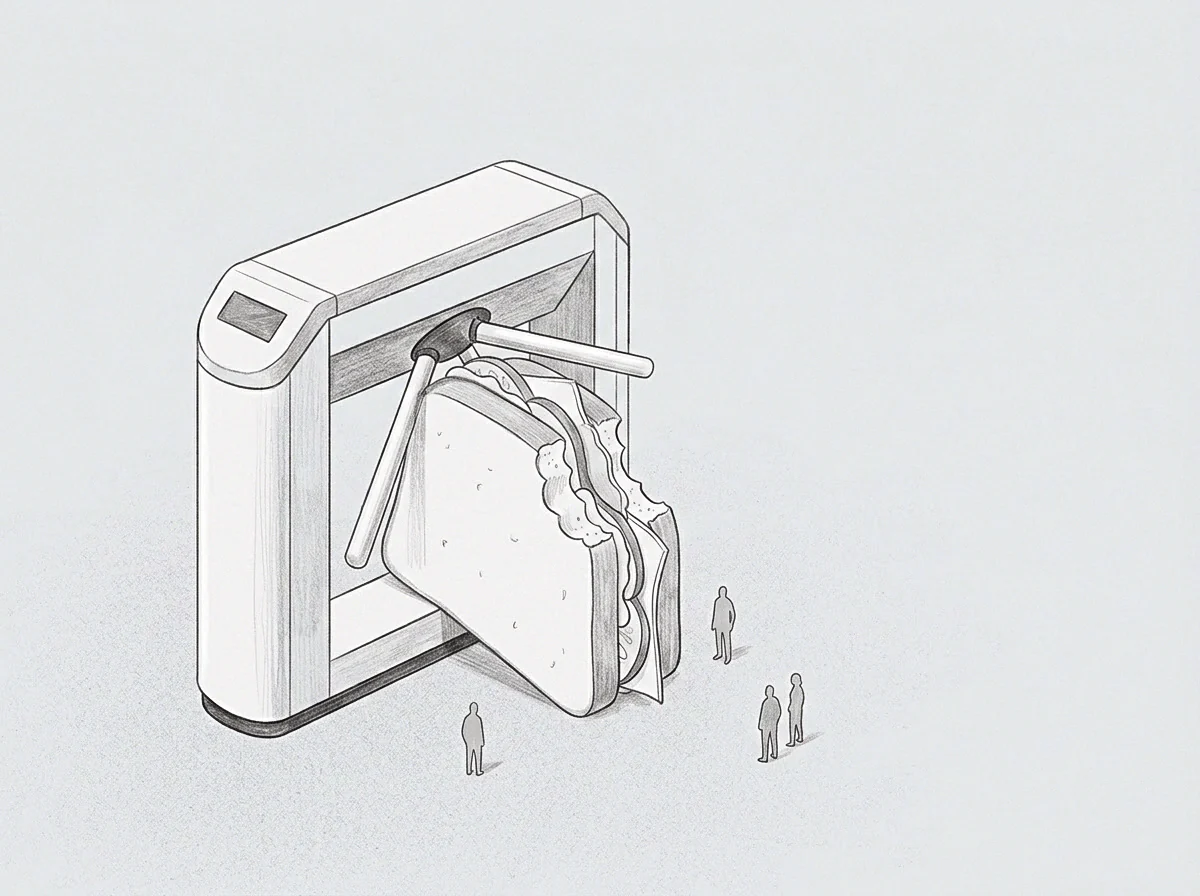
Throughput Mismatch Across Compliance Channels
Processing latency increases when administrative review capacity remains fixed while operational volume expands. The resulting backlogs force local operators to choose between schedule non-compliance and procedural violation. Operational tolerance for delay breaks down once queue wait times exceed active task duration.
Clearance capacity sets the limit.
| Operational Variable | Formal Governance Channel | Informal Workaround Channel |
|---|---|---|
| Processing Latency | High (hours to days) | Low (minutes) |
| Audit Trail Visibility | Complete and centralized | Fragmented or omitted |
| Error Propagation Risk | Low local, high systemic delay | High local, low systemic delay |
| Load Transfer Destination | Shifted to approval queue | Shifted to local operator capacity |
| Decision Authority | Centralized compliance officer | Distributed local operator |

Where Do Unsanctioned Workarounds Transfer Operational Risk?
Local execution moves exposure from schedule adherence to technical safety. Unsanctioned channels handle immediate throughput needs while obscuring operational friction from oversight layers. The formal system shows nominal compliance while actual operations run through informal pathways.
The bottleneck remains. Production pressure moves the boundary.
Management remains unaware of structural friction when informal workarounds successfully absorb processing delays. Because local fixes prevent visible operational failure, governance authorities observe stable output metrics and conclude that rigid control gates impose no material cost on execution.
Operations proceeded through local channels because the central queue offered no estimated time of arrival.

Latch
Physical control devices in early industrial machinery locked execution levers until mechanical interlocks cleared. Modern administrative latches perform the same structural function through software permissions and policy gates. When administrative latches prevent legitimate operational adjustments during emergencies, operators construct physical or digital overrides to release the mechanism.

Production Delays Inside High Consequence Release Environments
Take an enterprise software platform managing continuous payment settlements. The organization mandates three manual sign-offs for software releases, involving risk management, security auditing, and infrastructure engineering. Assume the formal sign-off chain takes forty-eight hours per emergency hotfix, while client SLA terms bill five thousand dollars per hour for settlement processing outages.
During a weekend outage, the lead engineer encounters a stalled database lock. Waiting for the full clearance chain incurs a ninety-six thousand dollar loss.
The log remains blank. Local speed replaces formal sign-off.
The structural sequence that converts rigid controls into unsanctioned workarounds follows a consistent pattern across enterprise operations:
- Immediate Interlock Engagement Formal security rules lock deployment pipelines immediately upon detecting minor schema changes.
- Administrative Queue Stalls Secondary review requests wait in unmonitored ticket queues over weekend processing windows.
- Threshold Breached Accruing financial penalties surpass the perceived organizational cost of policy non-compliance.
- Local Bypass Deployed Operators apply manual database patches through unlogged administrative accounts to restore service.
- Post Incident Silence Service resumes normal function while official logs omit the unauthorized modification event.

Sequential Breakdown Of Informal Approval Loops
When formal channels stall, verbal authorizations and unlogged text messages replace documented compliance sign-offs. These informal communications allow work to proceed while leaving no institutional record of authorization. The burden of risk transfers entirely to the individual operator executing the change.
Unstated approval latency thresholds create silent channels where personnel prioritize immediate execution over procedural compliance.
Cognitive load studies in organizational psychology show that compliance adherence degrades exponentially when administrative overhead exceeds thirty percent of active task time. This measurement relies on controlled laboratory simulations of multi-task monitoring, falsifiable if compliance rates remain stable when administrative burdens double under baseline workloads. High administrative overhead forces operators to adopt cognitive shortcuts that bypass formal documentation steps.
Clause 4.2 of the operational mandate resets sign-off authority to local leads whenever central approval queue latency exceeds two hours.

Bypass
Informal pathways establish parallel operational routes that handle throughput demand when main channels stall. Operators construct these routes using shared administrative credentials, direct database access, or personal messaging channels. Over time, these unauthorized routes become the primary mechanism for meeting delivery targets.
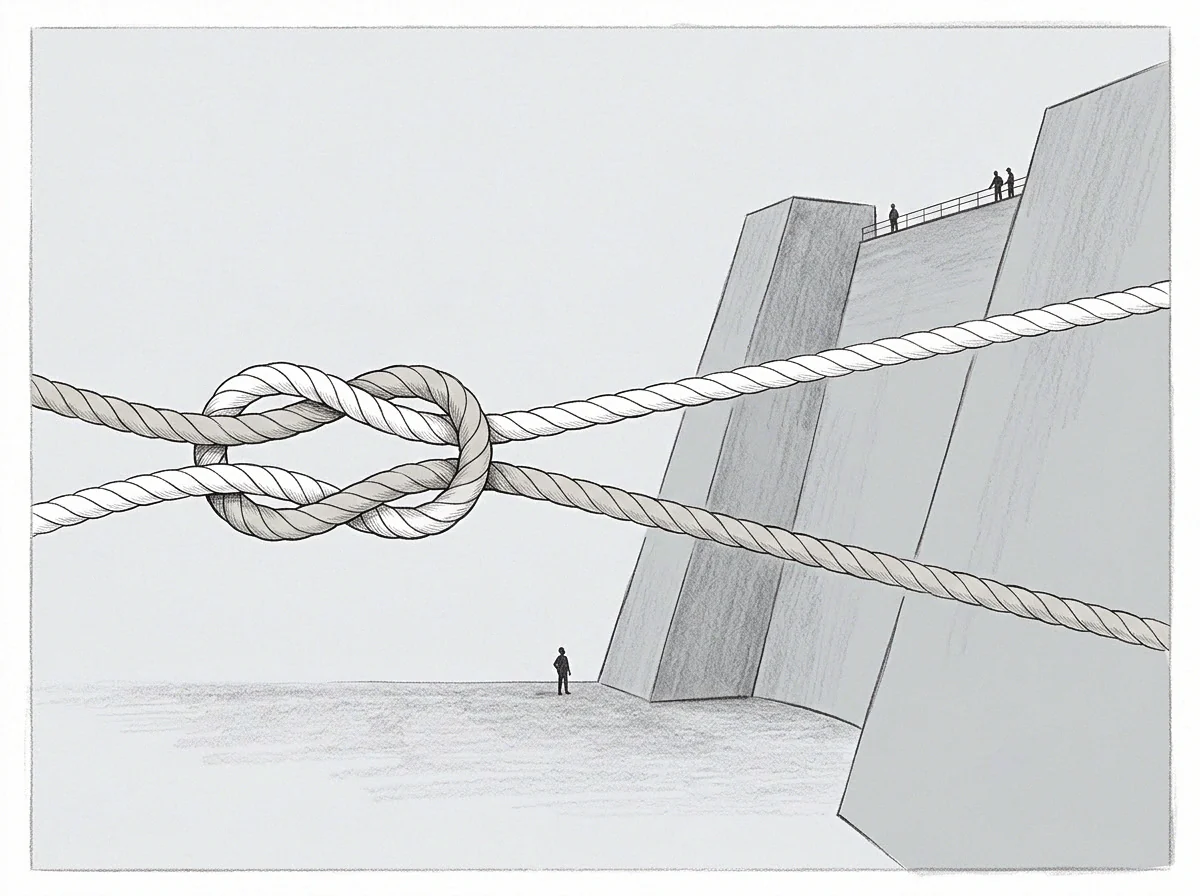
Shadow Infrastructure And Local Risk Isolation
Private communication tools and unmonitored server instances allow teams to execute required tasks away from oversight systems. Shadow infrastructure flourishes wherever centralized IT approval processes fail to keep pace with operational demands. Operating units fund and maintain these informal systems using discretionary budgets.
Systemic operational speed always adapts to match required output velocity regardless of formal governance prohibitions.
The establishment of informal operational pathways follows four predictable stages:
- Operating units identify recurring administrative delays inside mandatory review steps.
- Local personnel establish private communication channels to pre-clear technical changes informally.
- Engineers create secondary access credentials to apply updates without triggering compliance audit logs.
- Parallel operational routines become standard team behavior while formal documentation remains unchanged.
Silence masks the breach. Controls sit unchanged. The SLA penalty accrues.
The field cannot fully determine whether shadow channels increase overall system vulnerability more than formal operational stalls do, because unrecorded bypass events remain absent from public incident databases. An operator under this uncertainty establishes explicit local error logging inside informal workarounds to ensure rollbacks remain possible.
It remains uncertain how long shadow operational databases can run parallel to production ledgers before reconciliation errors cross safety thresholds.

Audit
Oversight routines that examine compliance documentation after execution frequently measure record accuracy rather than actual operational behavior. When formal processes run too slowly for operational reality, logs reflect complete compliance while operational systems run on informal bypasses. Auditors review perfect documentation that describes a non-existent operational reality.

Recalibrating Control Capacities To Real Velocity
Structural drivers of administrative bypasses disappear only when approval clearance speed matches incoming production demands. Governance structures that ignore operational velocity guarantee the proliferation of unsanctioned workarounds. Aligning control capacity with processing volume restores visibility to formal channels.
Workarounds become institutional routines. The audit reveals nothing.
A governance rule that exceeds execution time limits functions as a structural invitation for unsanctioned operational bypasses.
Effective governance balances risk control with execution capacity. When organizations expand regulatory requirements without expanding clearance throughput, frontline personnel preserve operational capability by routing around formal interlocks.
Governance rules hold only when formal processing capacity equals peak operational arrival rates.