
Automated State Gates Shielding Supervisory Personnel Under High Volume Stress
Automated state gates enforce deterministic threshold limits on raw telemetry streams to shield human supervisors from cognitive fatigue during volume spikes.
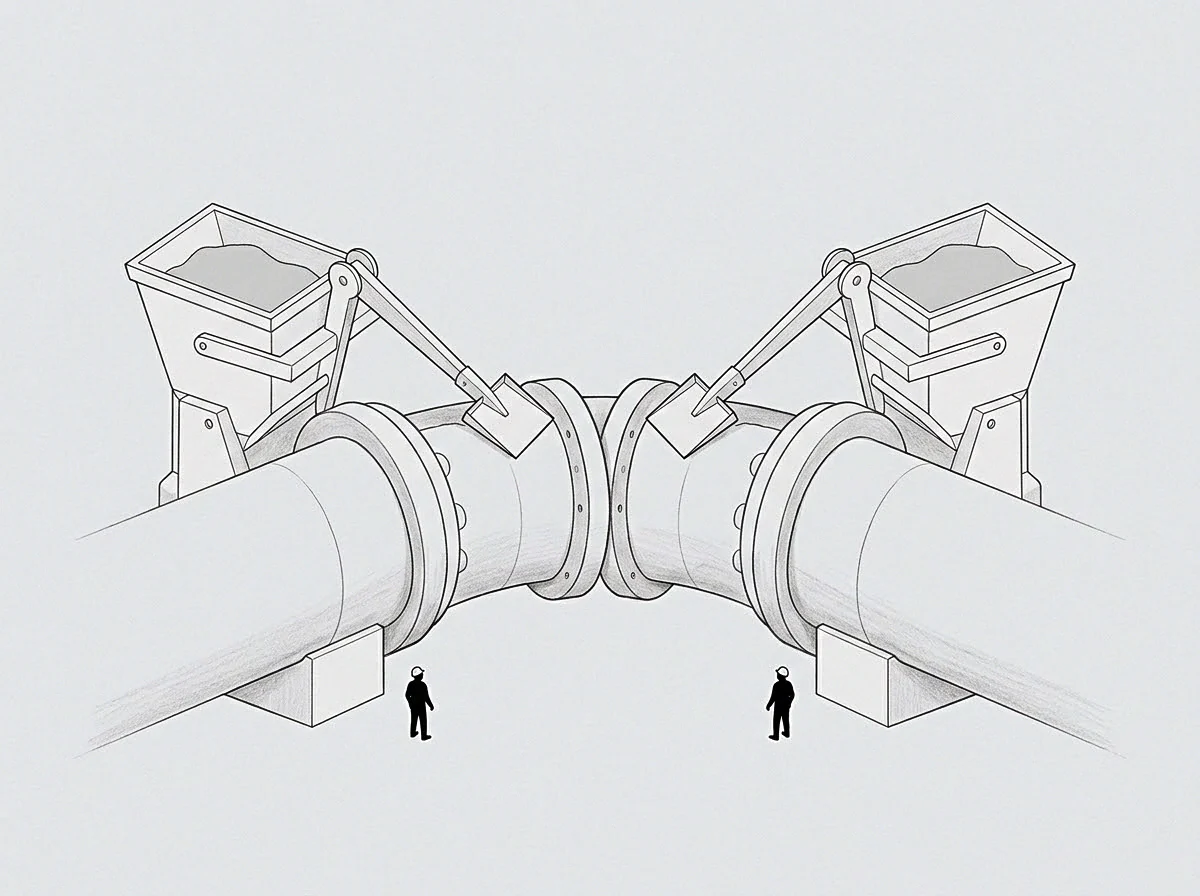
Wall
Operational queues back up rapidly during sudden telemetry spikes. Six escalation threads open simultaneously on an evening when supervisory capacity sits at full allocation. Incoming alerts flood the terminal screen without filtering, and human operators attempt to parse priority by manual inspection.
The system routes every raw request straight to the seat responsible for oversight. That arrangement treats human attention as an infinite load sink. When input rates exceed human processing setpoints, decision throughput collapses, triage errors compound, and critical interventions stall behind routine approvals.
Supervisory personnel absorb unbuffered system noise whenever an infrastructure lacks automated input boundaries. Under high volume stress, raw incoming demands bypass preliminary structural limits and land directly on human operational leads. The push for immediate response forces supervisors into continuous context switching.
Every unmonitored event requires cognitive evaluation, depleting working memory reserve. The system demands continuous choice where it ought to enforce deterministic rules.
System capacity fails predictably whenever manual inspection replaces structural input boundaries during event surges.
A load-transferring environment pushes against a human regulator until that regulator breaks down. Without structural barriers, an organization treats supervisory responsiveness as its primary damping mechanism. The supervisor attempts to compensate through increased vigilance, raising physiological arousal and accelerating cognitive exhaustion.
Short-term triage decisions replace long-term system management. The operational surface turns brittle, and small additional spikes produce complete supervisory paralysis.
Manual intervention under high volume stress introduces cumulative cognitive overhead that degrades supervisory decision accuracy across subsequent operational cycles.
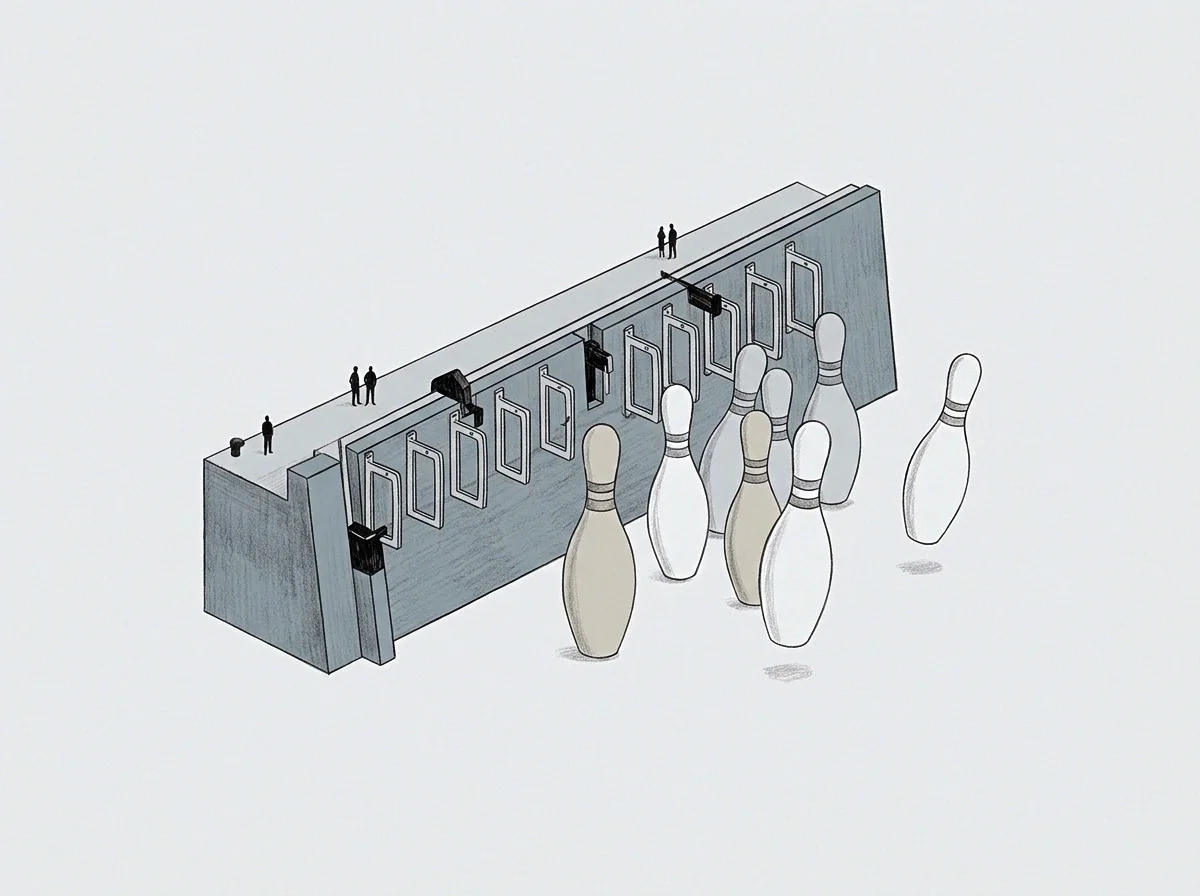
Filter
System state differs fundamentally from supervisor mood. Mood is a transient internal output carrying no actionable structural signal to an external system. State represents the deterministic transfer function that governs how an input transforms into an output, readable through measurable system variables.
Operational infrastructure functions reliably only when incoming load acts upon stated system variables rather than human emotional endurance. An automated state gate acts as a physical filter positioned between high-volume telemetry streams and human supervisors.
Automated state gates enforce input parameters without engaging human judgment for routine requests. These mechanisms evaluate incoming demands against hard operational setpoints before any escalation reaches a supervisory queue. Gates drop, buffer, or divert requests automatically when parameters fall outside acceptable operational bounds.
- Concurrency floor defines the minimum available worker capacity required before the gate permits an escalation to reach a human supervisor.
- Hysteresis band prevents rapid state oscillation by maintaining distinct upper and lower activation thresholds for event throttling.
- Rejection rate limit bounds the maximum number of dropped operations allowed per minute before triggering an automated systemic fallback.
Cognitive switching studies demonstrate that human working memory performance drops significantly when interjected operational tasks arrive at intervals under ninety seconds. That finding rests on controlled dual-task laboratory evaluations measuring visual attention and decision latency under simulated control room conditions. The observed performance drop would cease to apply if operational workflows were restructured to eliminate context switching through batch execution rather than real-time triage.
Operational architecture must therefore decouple request submission from supervisor notification.
An automated state gate drops invalid requests before human attention enters the decision loop.
When an operational environment defines clear numeric parameters for gate rejection, supervisory personnel receive only requests that have satisfied every structural prerequisite.
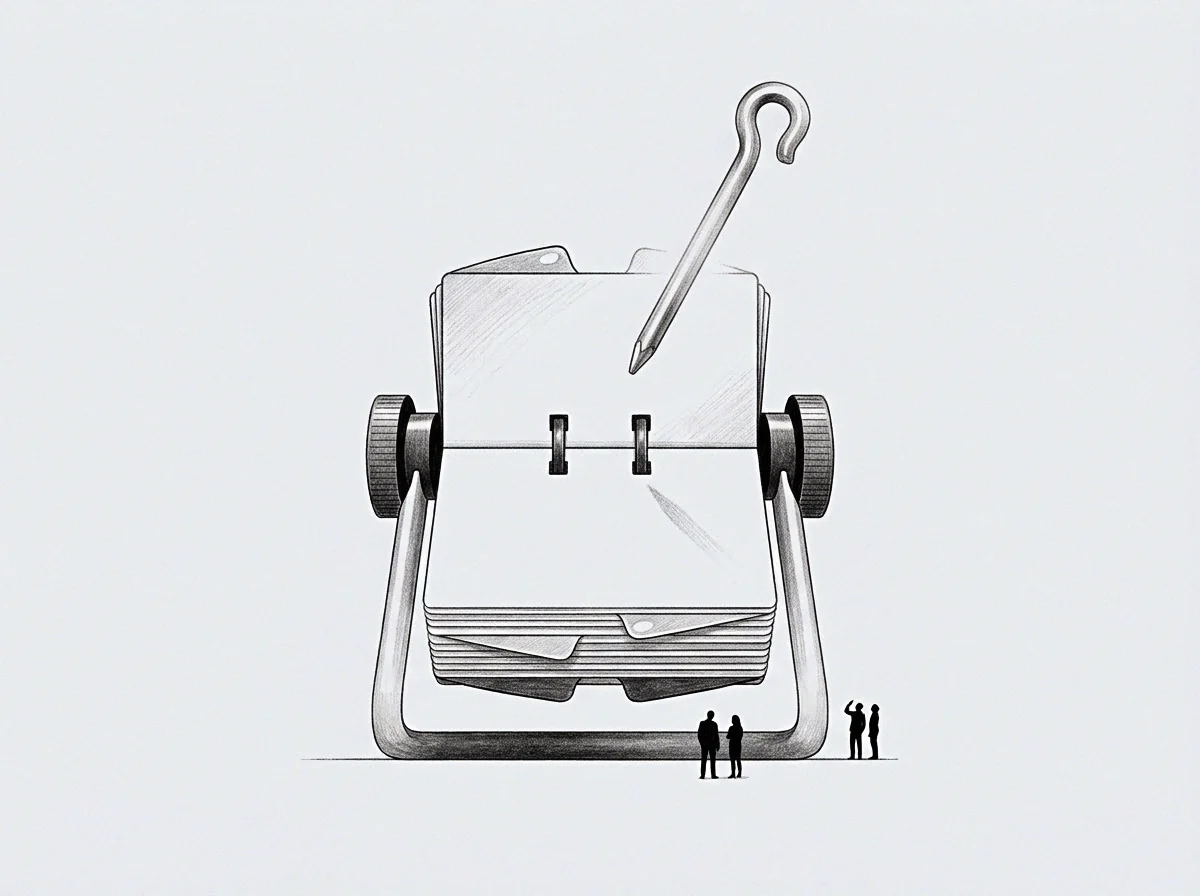
Relay
When Does Automated Throttling Preserve Supervisory Capacity?
State-gated actions execute strictly when systemic variables satisfy predefined operational logic. Decision-gated actions require deliberate human choice to proceed. High-volume stress environments collapse when operational teams mistake state-gated decisions for human judgment tasks.
Routing every routine event to human review saturates supervisory channels. Automated throttling intercepts low-value requests at the perimeter, reserving supervisory bandwidth for genuine anomalies.
High-voltage electrical transmission grids utilize physical relay breakers designed to trip automatically when current inductance surges beyond safe margins. The breaker operates mechanically without waiting for central command dispatchers to analyze line telemetry. That hardware isolation protects expensive transformer sub-assemblies long before human operators perceive the voltage spike.
Automated state gates in software systems perform an identical function, protecting human supervisors from direct exposure to raw operational surges.
Consider an operational team handling continuous deployment pipelines across forty microservices. During a major database migration, concurrent service alerts spike by eight hundred percent within three minutes. Under manual oversight, the operations supervisor attempts to clear each build failure individually while managing the migration status call.
Under automated state gating, the system detects database locks, sets pipeline state to throttled, and automatically queues non-essential deployment requests at the gateway. The supervisor receives a single consolidated summary alert detailing automated actions taken. The system held the boundary.
The supervisor maintained strategic command over the migration.
- Input telemetry exceeds the pre-configured maximum concurrency threshold during an unexpected operational surge.
- The perimeter gate shifts to closed state and rejects inbound non-critical API calls immediately with standard status codes.
- Queued requests enter localized transient storage buffers while system health checks run in the background.
- The gate releases aggregated summary notifications to the supervisor desk only after internal telemetry stabilizes.
Automated gating reserves human intervention for structural exceptions rather than routine telemetry parsing.
State gates hold operational boundaries firm whenever input volume exceeds human processing limits.

Toll
Operational dynamics change drastically when supervisory personnel move from manual request routing to state-gated isolation. Evaluating both approaches requires analyzing system latency, supervisor stress load, and error propagation under peak volume conditions. The comparison reveals the structural costs inherent in unbuffered operational designs.
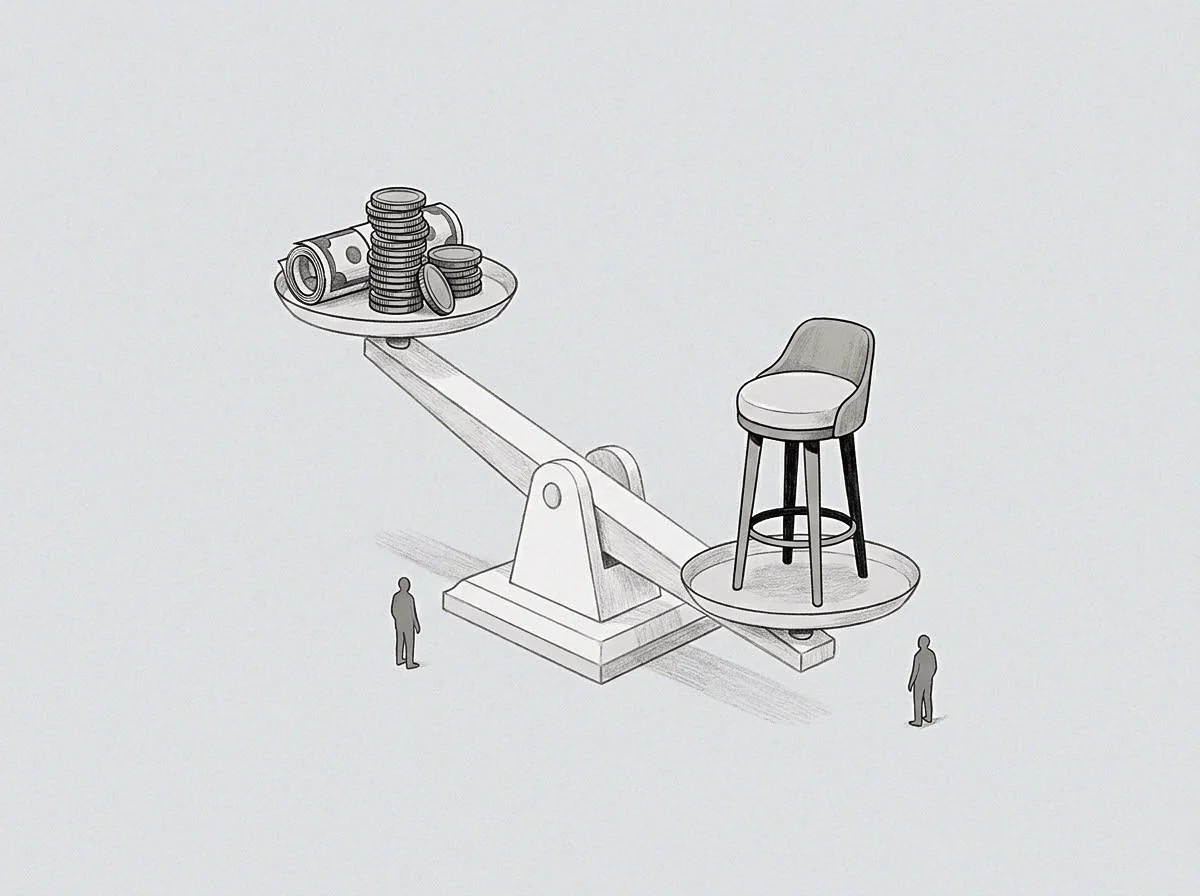
Operational Dynamics Under High Volume Stress
| Evaluation Dimension | Manual Escalation Routing | Automated State Gate Shielding |
|---|---|---|
| Inbound Request Processing | Linear queue backing up behind human review capacity | Deterministic perimeter filtering with automatic rejection |
| Supervisory Allostatic Load | Continuous spike in cognitive fatigue and context switching | Constant baseline load shielded from raw volume fluctuations |
| Error Rate Under Volume Spikes | Escalating human triage mistakes and missed priority alerts | Zero triage errors for pre-filtered routine request types |
| Systemic Recovery Latency | Extended delay while human operators process backlog manually | Rapid recovery upon telemetry normalization via hysteresis |
Determining the exact optimal point between false-positive request rejections and supervisor escalation rates remains difficult across diverse software operations teams. High security environments tolerate higher rejection rates to protect supervisors, while high-availability consumer systems often prioritize open ingress despite supervisory strain. Under this uncertainty, a prudent engineering lead configures tight initial throttling thresholds, measures supervisor interruption frequency over thirty days, and adjusts gate sensitivity incrementally based on verified outage telemetry.
Setting a deterministic state threshold prevents operational volume spikes from causing supervisory capacity failure.
The engineering team expected direct human access for every priority request, but the state gate returned an automated limit response instead.

Silence
Availability is derived rather than announced. External teams infer supervisory availability from system responses, stated operational terms, and communication latency. When an operational channel does not ping continuously, external clients recognize that automated gates are actively filtering requests.
Silent channels signal structural stability rather than supervisory neglect. The absence of continuous notifications indicates that automated subsystems are processing routine events within normal parameter bands.
Shielding supervisory personnel from continuous notification streams preserves cognitive headroom. Supervisors who operate without relentless ping noise maintain the mental capacity required to solve complex, novel incidents when critical failures bypass perimeter gates. Reducing allostatic load across supervisory tiers lowers burnout rates and preserves institutional knowledge within operational units.
State gates transform availability from a continuous personal negotiation into a predictable structural property.
Operational architectures that implement state gates protect both human health and infrastructure reliability. By establishing automated boundaries, organizations transfer high-volume stress away from supervisory personnel and onto deterministic software logic. Supervisors retain clear oversight while operating within sustainable physiological limits, ensuring long-term operational resilience across the entire organization.