
Building Asynchronous Systems To Shield Technical Staff From Constant Interruption
Asynchronous intake queues and explicit latency windows protect technical staff capacity by converting real-time micro-interruptions into scheduled batch sweeps.

Sieve
Four messaging windows sit open across an engineer’s primary display while an operational incident triggers automated alerts in a adjacent tab. A product owner requests an immediate estimate for an unscoped feature, while a peer asks for a brief review of an open pull request. Each incoming message generates a push notification that breaks cognitive focus.
The engineer stops writing complex allocation logic to respond to the instant message, spending seven minutes addressing the query before returning to the codebase. Rebuilding the mental model of the allocation logic takes another fifteen minutes. Attention fragments rapidly.
Cognitive Switching and Setpoint Atrophy
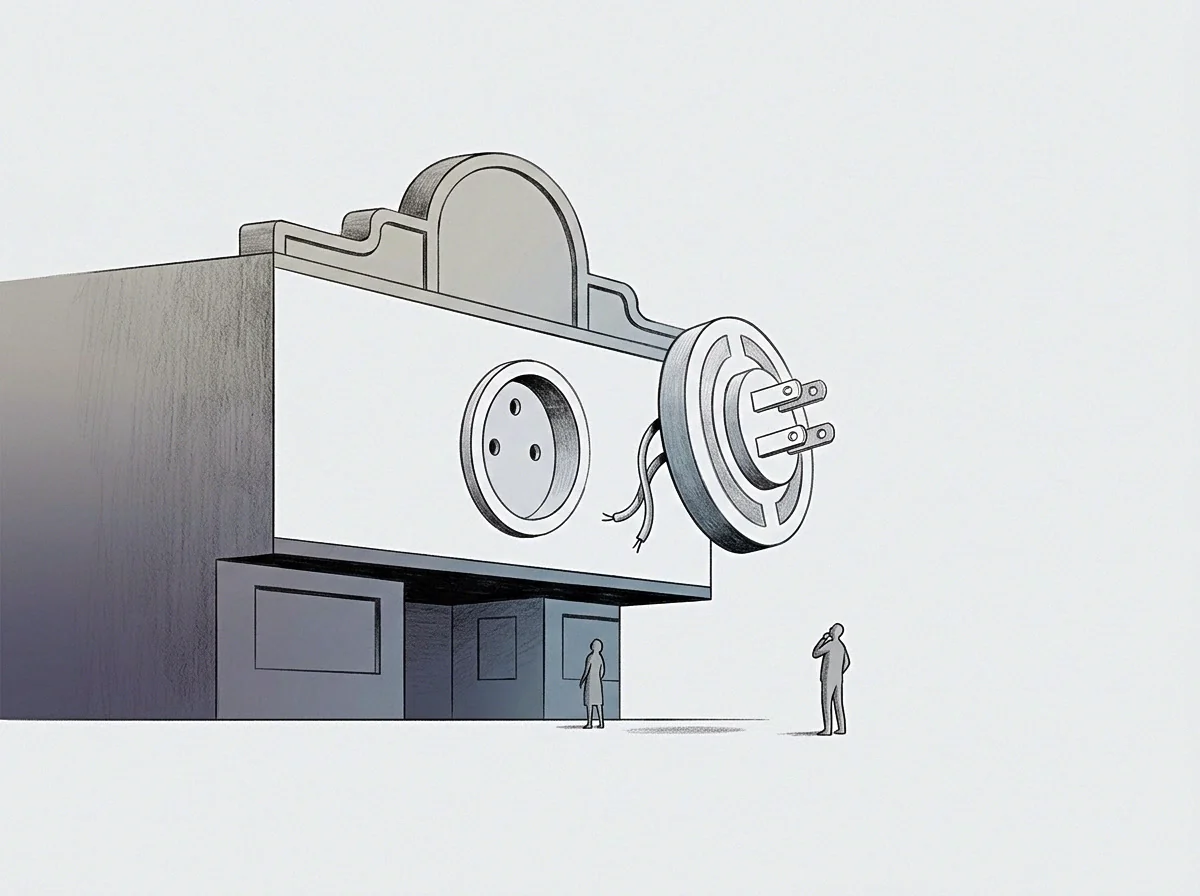
Working memory holds a strictly limited set of variables during complex technical tasks. When an incoming message forces a context switch, the working set collapses, requiring the engineer to reload file paths, variable states, and system boundaries into active memory. Research in cognitive ergonomics demonstrates that recovery from a micro-interruption requires exponentially more energy than the execution of the interrupted task itself.
Continuous micro-interruptions depress daily output while increasing error rates in deployed code.
A technical staff member subjected to continuous real-time queries defaults to reactive triage. Deep continuous work vanishes from the daily schedule, replaced by shallow administrative clearance of incoming notifications. Over time, the organization mistakes high message volume for productive output while code quality declines.
Interrupting an engineer during complex state modeling forces a complete reconstruction of working memory upon resumption.

Load Transfer Dynamics Across Real Time Channels
Real-time messaging channels function as load-transfer mechanisms within an organization. A team member encountering a minor technical block faces a choice between spending twenty minutes reading documentation or sending an instant message to a senior engineer. When real-time channels remain open without explicit intake boundaries, the team member routinely transfers the cognitive load to the senior engineer.
The immediate cost to the sender remains minimal, while the cumulative cost to the recipient destroys uninterrupted focus blocks.
Interrupts cost attention hours. The unthrottled incoming stream converts high-capacity technical staff into real-time routing nodes for the rest of the organization. The organization absorbs this cost through delayed feature deliveries, increased regression bugs, and eventual staff exhaustion when engineers attempt to perform deep work outside standard operational hours.
An organization that permits unrestricted real-time access to technical staff continuously trades high-value continuous focus for low-value administrative immediacy, accumulating systemic delivery debt that eventually forces project timeline revisions.

Fence
Protecting technical capacity requires converting vague personal preferences into structural objects that exist independently of individual personalities. A limit stated as a personal preference invites negotiation, whereas a system boundary defined by operational terms functions as a wall. Engineers create structural fences by defining explicit response windows, document-driven intake channels, and clear escalation terms that separate minor queries from true operational emergencies.

Stated Latency Window as an Explicit Object
Availability is a derived property based on stated response windows rather than continuous presence. When an engineering team declares a four-hour default response latency for internal queries, stakeholders adjust their operational cadence to match that window. The stated latency period establishes a clear zone of protection, allowing engineers to work through multi-hour focus blocks without monitoring incoming channels for routine messages.
The queue absorbs pressure. Defining explicit intake boundaries requires establishing concrete conditions for message processing, categorizing incoming requests by operational impact rather than sender seniority.
- Latency Tiering assigns fixed response windows based on severity, deferring internal administrative queries to designated end-of-day triage blocks.
- Intake Decoupling routes all non-incident technical requests through an asynchronous issue queue rather than direct messaging handles.
- Context Thresholds specify that incoming requests must include reproduction steps and environment logs before reaching an engineer’s intake queue.
- Escalation Gates require automated monitoring systems or designated incident managers to confirm service outages before interrupting on-call engineers.
Establishing explicit four-hour response latencies converts continuous real-time interruptions into predictable asynchronous queue sweeps.

Boundary Conditions for Emergency Escalation
Emergency escalation requires strict definition to prevent stakeholders from misusing priority channels to bypass standard latency windows. An operational emergency involves active production downtime, corrupted customer data, or security compromise. Non-incident requests, regardless of executive origin, remain in standard asynchronous queues until their assigned triage windows arrive.
Focus demands continuity. When an organization strictly enforces escalation boundaries, team members learn to exhaust local documentation and asynchronous logs before escalating a technical issue. The boundary alters baseline organizational behavior, building self-reliance across non-technical departments while preserving technical staff capacity.
A service level agreement for internal communication stating that direct messages will receive responses only during a daily sixty-minute window transforms the direct message channel from a real-time interrupt engine into a slow asynchronous buffer.

Batch
Replacing continuous real-time communication with batch processing stabilizes cognitive load across technical departments. Asynchronous systems decouple the transmission of information from its consumption, permitting senders to deposit requests into structured queues while recipients process those requests in designated time blocks. Batching reduces total context switches from dozens per day to two or three scheduled intake intervals.

Can Batching Scale Without Increasing Incident Latency?
A common operational concern posits that enforcing asynchronous batch processing delays resolution of urgent dependencies. In practice, categorizing incoming work into distinct channels protects incident response speed while isolating routine engineering tasks from routine noise. High-severity incidents bypass batch queues through automated alerts, while standard development tasks process exclusively within scheduled batch windows.
Written state holds value. The implementation of asynchronous queues requires contrasting continuous messaging against structured intake systems across clear operational metrics.
| Evaluation Metric | Synchronous Interrupt Model | Asynchronous Batch Model |
|---|---|---|
| Daily Context Switches | 40 to 60 micro-interruptions | 2 to 4 scheduled sweeps |
| Mean Time to Focus Recovery | 15 to 25 minutes per event | Zero minutes during focus blocks |
| Documentation Trajectory | Ephemeral chat histories | Searchable asynchronous artifacts |
| Load Transfer Direction | Transfers instantly to receiver | Remains with sender until structured |

Structural Decoupling of Communication and Execution
Decoupling communication from execution requires technical staff to store active state in public project repositories rather than in personal memory. When code changes, system architectures, and deployment steps exist as written documentation, external team members access project status without interrupting the engineers building the features. The repository functions as the primary state engine for the project.
Silence signals capacity. When engineers record system updates in structured asynchronous logs, the need for status updates vanishes. Senders inspect the repository to derive progress, leaving technical staff free to execute uninterrupted focus work.
System state stored in searchable project repositories eliminates the need for status update interrupts.
A team that processes incoming queries in two concentrated daily batches completes significantly more deep engineering work than a team maintaining real-time availability across continuous messaging platforms.

Protocol
Sustaining an asynchronous working model requires standardized intake protocols that force the author of a request to articulate context fully before transmitting it. Unstructured text messages demand multiple follow-up clarifying questions, re-introducing real-time feedback loops. Standardized intake forms capture environment data, steps to reproduce, and operational goals in a single submission, allowing engineers to process requests without requesting additional context.

Structured State Documentation Prior to Interruption
Requiring comprehensive initial context shifts the effort of problem formulation back to the requesting party. When a stakeholder completes a structured intake ticket, they frequently discover the solution during the process of framing the problem. For requests that require engineering intervention, the structured ticket contains all variables necessary for immediate resolution during the next scheduled batch window.
Triage precedes execution. Establishing standardized handovers ensures that technical context transfers cleanly between engineers across operational shifts.
- Log current branch states, open pull request links, and deployment pipeline statuses in the shared project ledger.
- Document active blocking issues, explicitly listing missing dependencies and responsible parties for each blocker.
- Publish test coverage outputs and environment configuration details for the current release candidate.
- Update the asynchronous task status board to reflect active, queued, and completed technical work items.

Execution Handover Sequence for Operational Shifts
Handover protocols eliminate the requirement for real-time sync meetings at shift boundaries. By recording technical state, active edge cases, and deployment logs in standard formats, incoming engineers take over operations without verbal debriefs. The system operates continuously across geographical zones, relying entirely on asynchronous documentation to maintain operational momentum.
State lives in artifacts. When documentation holds the complete state of system development, onboarding new engineers or transferring operational tasks requires no real-time alignment calls. The written record serves as the sole source of operational truth.
If the technical ticket lacks environment logs and steps to reproduce, the engineering queue automatically defers processing until the sender attaches the required diagnostic data.

Haven
An engineering organization that successfully shields technical staff from constant interruption creates a sustainable haven for deep work. Protecting cognitive focus preserves working memory setpoints, reduces turnover caused by operational exhaustion, and maintains code quality under expanding delivery timelines. Availability ceases to mean instant responsiveness on chat channels, shifting to mean the consistent delivery of high-value technical systems built upon clear structural terms.
Derived Availability Living in Silence
Silence on internal communication channels indicates that technical staff are actively engaged in complex execution. Management evaluates team capacity through delivered systems and closed queue items rather than chat activity metrics. The organization recognizes that quiet channels represent high operational efficiency, whereas constant chat activity signals fragmented attention and systemic coordination friction.
Latency replaces urgency. By establishing clear intake fences, batch queues, and context-rich protocols, technical leaders protect their teams from continuous organizational demands. The organization shifts from reactive interrupt processing to steady, deliberate feature construction.
Quiet communication channels combined with high repository velocity signal optimal conditions for complex engineering work.
Engineers operating within structured asynchronous systems retain their focus for multi-hour blocks, delivering complex allocation engines and stable platform architectures without spending their daily capacity on continuous message triage.