
Deriving Availability and Operational Setpoints Across Founding Team Allocations
Availability is derived from stated capacity limits rather than calendar declarations when founding allocations shift under operational load.

Signal
Founding team members frequently confuse declared willingness with actual capacity. When an operator announces open calendar availability, the organization treats it as a promise of attention. Operational capacity depends on biological and cognitive headroom, regardless of calendar markers or verbal agreements.
Declaring availability creates false assumptions across the team, prompting people to route unscheduled queries to an operator who lacks the bandwidth to process them.
Real availability shows up in observable behavior. As incoming work arrives, response latency, execution quality, and personal stress reflect actual bandwidth. A founder who maintains a full operational load while fundraising experiences a predictable contraction in daily processing capacity.
Setting a clear capacity limit gives the rest of the team a firm structural boundary.

Announced Intent Versus Derived Capacity
Distinguishing stated availability from actual functional bandwidth requires evaluating measurable output. Calendars show scheduled commitments, but they omit the cognitive recovery time high-stakes decisions require.
Availability decreases when operational limits are calculated from real capacity rather than declared intentions.
When an operator tries to maintain past performance levels on a reduced schedule, the gap between expected and actual output creates operational drift. Communication slows, decision quality drops, and other team members absorb the unallocated work. This tension resolves only when availability is calculated from observed response times and explicit terms.
When a founding agreement defines a half-time role as twenty focused operational hours per week with a forty-eight-hour response window, the rest of the team routes queries to match those terms.
Wire
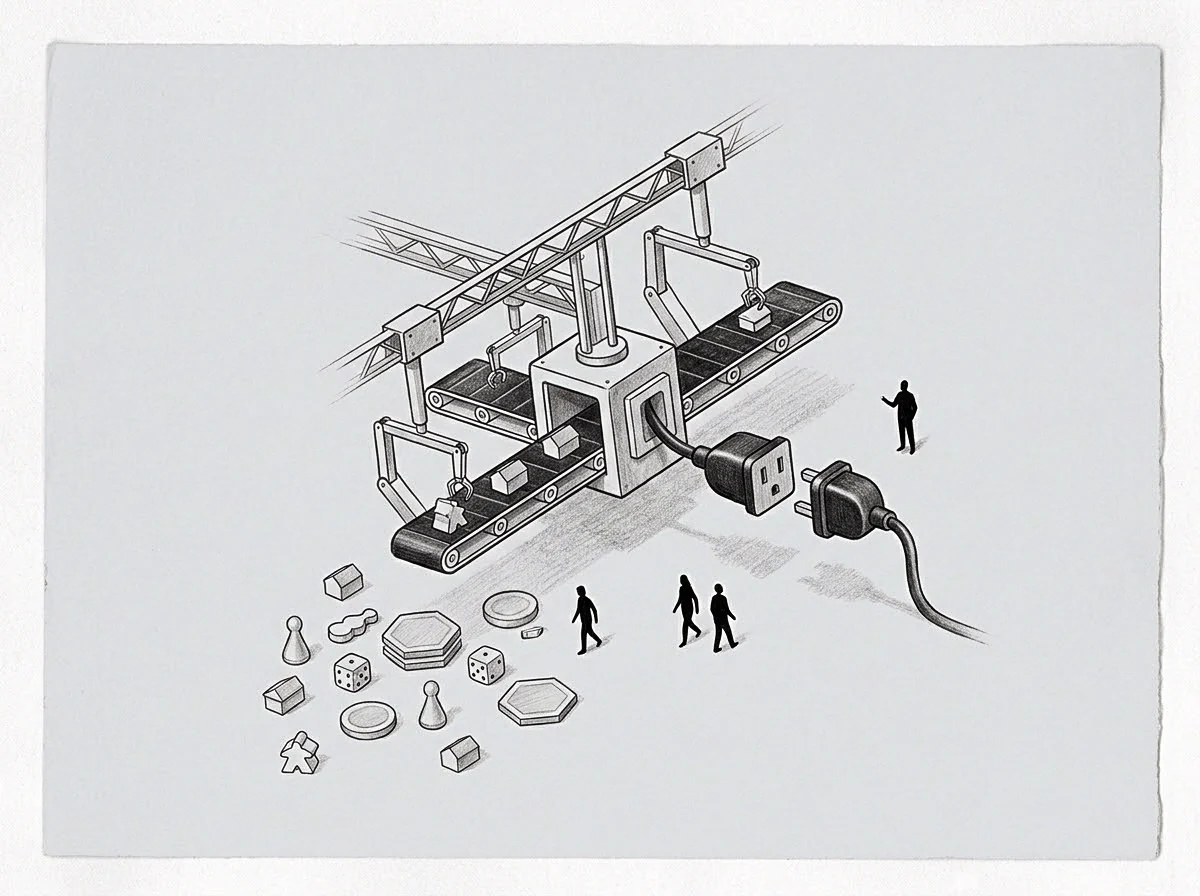
Systemic strain spreads through informal communication channels when formal operational limits are unanchored. If one founder reduces their operational contribution without adjusting authority or setting explicit coverage terms, incoming problems flow toward whoever responds fastest. Work transfers immediately to the remaining operator, because unstated limits default to maximum load.
Social baseline theory shows that people baseline their energy expenditure on the presence and participation of trusted teammates. Research in affective neuroscience confirms that working near a dependable partner reduces the physiological stress of managing external threats. These findings come from laboratory studies measuring neural and autonomic responses during shared tasks under acute stress, assuming team members maintain frequent physical or real-time contact.
On fully asynchronous or remote teams lacking shared presence, this effect weakens, making formal operational terms necessary to replace biological proximity cues.

Load Transfer Dynamics Across Founding Allocations
When operational responsibilities shift, remaining full-time operators face an immediate rise in baseline workload. Requests do not disappear simply because one founder reduces their hours. Without explicit rules on what tasks to drop, the operational burden increases for everyone else.
Unstated operational limits shift system load onto whichever founder responds first to incoming noise.
Unmanaged load shifts follow predictable patterns within a founding team, creating specific operational vulnerabilities in daily execution.
- Unfiltered Inquiry Routing occurs when team members direct urgent decisions to a reduced-allocation founder, causing communication bottlenecks and execution delays.
- Implicit Capacity Assumption emerges when full-time operators absorb administrative duties dropped by a transitioning founder without renegotiating equity or compensation terms.
- Response Latency Compression happens when a fractional founder tries to match past reply speeds, draining cognitive reserves and accelerating exhaustion.
- Cascading Setpoint Failure develops when team members abandon established working hours to handle operational fires caused by unassigned tasks.
Failing to establish structural limits during allocation changes forces remaining team members to operate continuously at emergency levels, degrading long-term capacity and eroding trust across the business.

State
Internal physiological capacity acts as an absolute transfer function, determining how an individual processes external demands. Mood is a transient signal that carries little operational information, whereas state dictates what an operator can execute at a given moment. Decision-gated tasks respond to conscious intent, allowing a founder to select priorities or draft strategy through deliberate focus.
State-gated tasks depend entirely on physical and mental reserves; no amount of willpower can force creative synthesis or steady crisis management once cognitive exhaustion sets in.
When Do Operational Setpoints Shift Under Load?
System performance degrades sharply when cognitive interruptions cross specific density thresholds. Cognitive science research demonstrates that switching attention between complex, open-ended technical tasks creates persistent working memory overhead, reducing overall efficiency by up to forty percent. These metrics stem from controlled dual-task laboratory experiments on healthy adults; in routine administrative workflows rather than novel problem-solving, the observed switching penalty is significantly lower.
Evaluating how allocation levels affect operational thresholds requires comparing performance characteristics across core founding roles.
| Role Allocation Profile | System Latency Setpoint | Load Transfer Boundary | State Gated Capacity |
|---|---|---|---|
| Full-Time Primary Operator | Under two hours for critical paths | Absorbs primary structural load | Sustained strategic synthesis |
| Half-Time Advisory Founder | Twenty-four to forty-eight hours | Strictly limited to named domain | Targeted, episodic review only |
| Fractional Executive Role | Scheduled operational windows | Deflects unassigned tactical queries | Gated by explicit contract terms |
| Transitioning Board Member | Asynchronous weekly cadence | Zero direct execution coverage | High-level governance input |
System latency reveals true capacity. When an operator moves from a full-time role to a fractional schedule, trying to maintain fast response times degrades state-gated performance. Continuous attention fragmentation destroys the deep focus required for architectural execution.
Establishing explicit terms converts implicit friction into clear operational boundaries.
A founder who establishes a twenty-four-hour response latency term secures the continuous deep-work blocks required for complex technical contributions.
A straightforward principle guides long-term performance: operational strain drops whenever individual allocation limits are stated clearly and enforced consistently.

Channel
Consider a founding arrangement involving two partners who built an enterprise software platform over three years without formalizing individual availability limits. Partner A manages client growth and product delivery, while Partner B oversees technical architecture. Assume Partner B requests a transition to a fifty percent allocation to launch a secondary project while retaining equal equity distribution and executive titles.
Partner A agrees in principle, but the team establishes no explicit terms regarding response windows, meeting attendance, or daily operational coverage.
Within thirty days, the operational gap becomes acute. Incoming engineering crises continue flowing to Partner B through instant messaging. Partner B feels bombarded by tactical interruptions during off-site hours, while Partner A carries the full customer-facing workload without relief.
This dynamic mirrors electrical power grids, where localized voltage drops force neighboring substations to compensate immediately to prevent total grid desynchronization. In organizations, adjacent operators absorb excess workload until structural limits disconnect the overloaded path.
Correcting this operational drift requires executing a structured sequence of adjustments to realign performance with actual availability.
- Defining Functional Boundaries requires documenting every operational responsibility previously held by the transitioning founder and explicitly reassigning or sunsetting each task.
- Establishing Asynchronous Communication Terms mandates replacing real-time messaging expectations with structured daily or weekly update logs to protect focus.
- Adjusting Equity Vesting and Compensation Setpoints aligns financial terms with modified operational contributions, removing structural friction between partners.
- Publishing Availability Terms to the Organization informs team members of new communication protocols, preventing tactical queries from reaching off-duty founders.
The secondary founder summarizes the operational reset plainly: “I cannot remain accountable for daily deployment stability while working on a twenty-hour weekly schedule.”

Line
Position precedes availability. Setting a firm operational position requires stating what the operator will deliver, the exact terms of interaction, and the non-negotiable capacity limits required to sustain baseline performance. Stating a position flatly removes the need for continuous renegotiation.

Establishing Terms and Position Boundaries
When an operator states a firm operational limit, the surrounding system tests that boundary through repeated inquiries. Responding to these attempts with consistent enforcement demonstrates that the boundary is structural rather than emotional.
The precise threshold where operational degradation creates irreversible friction remains unquantified in management literature. Given this uncertainty, an experienced operator establishes an explicit ninety-day review term tied directly to observed response latencies and completed deliverables. Setting a periodic evaluation window enables the team to recalibrate equity, compensation, and operational authority based on actual performance rather than initial assumptions.
When allocation changes occur, the founding team must decide how much operational degradation the business can absorb before adjusting executive equity distribution.