
Deriving Sustainable Availability Across Shared Channels After Codifying Relational Governance
Codified governance holds only when shared channel latency becomes an observable cost rather than a personal refusal.

Port
The operating pact was signed on Tuesday, setting out equity percentages, IP assignments, and formal voting thresholds. By Thursday night, eighty-two notifications had accumulated across three shared chat rooms while two partners worked with their screens lit until two in the morning. An operating agreement resolves ownership disputes on paper.
It leaves daily attention entirely undefended against the ambient pull of open digital spaces.
A founder signs a legal document and assumes relational clarity will govern the working week. The opposite unfolds. Shared collaboration software functions as an open intake conduit, converting every micro-anxiety of a co-builder into an immediate audible notification.
When an executive seat experiences friction, the natural impulse pushes that friction into the nearest shared window. Without structural resistance in the software layer itself, codified governance remains an inert text filed in cloud storage.
A shared channel transfers operational anxiety faster than an operating agreement settles authority.
The screen stayed white. When someone writes a operating charter, they state what decisions belong to each title. They rarely state how long a message may sit without an answer before the delay constitutes operational failure.
The omission creates an unstated presumption of instant access. Because the partners now share formal legal risk, each feels entitled to continuous access to the other person’s working hours.

The Friction of Constant Access
Immediate responsiveness feels like teamwork during the first months of building an enterprise. That feeling masks a severe structural breakdown. When an operator answers a query within three minutes, the sender learns that the shared room is a synchronous dispatch terminal.
The channel receives the overflow. The sender stops organizing their own thoughts before transmitting. They dump half-formed inquiries directly into the room, using the co-builder as an external cognitive processor.
Attention operates under strict depletion. When a person switches contexts between strategic work and incoming messages twelve times an hour, metabolic resources burn down rapidly. The physiological cost shows up not as an administrative argument, but as exhaustion, irritability, and degraded executive function.
The team codified their corporate relationship to create order, yet the conduit through which they converse produces chaos.
If you wanted me to stop checking notifications at night, you should have written those specific hours into the operating agreement itself.
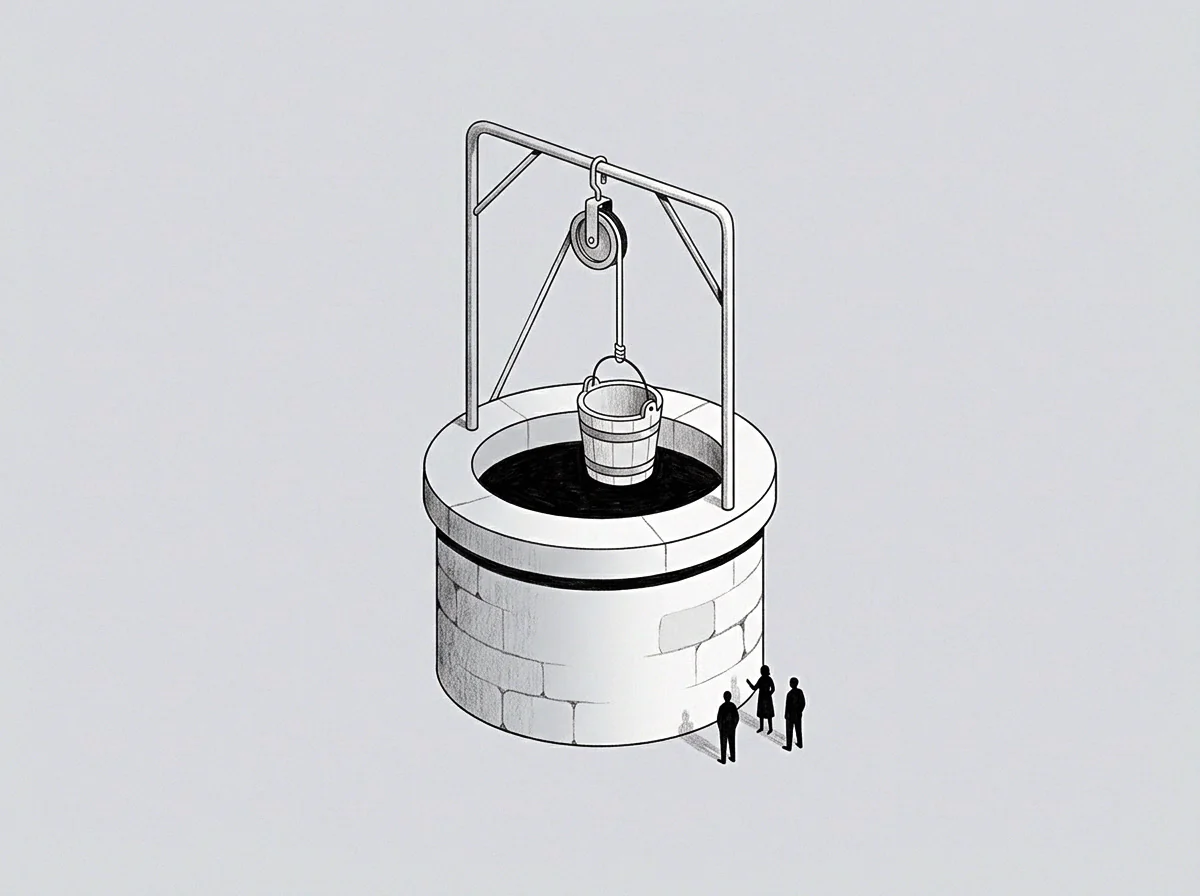
Drift
Unwritten norms erode within forty-eight hours of high operational stress. When customer churn spikes or a technical deployment fails, partners bypass their high-minded governance agreements and revert to default survival behaviors. A load-transferring system pushes against every available surface until it finds where resistance holds.
In an early-stage company, that surface is the founder who answers fastest.
A regulator proven under pressure attracts disproportionate operational weight. In physiological research on stress systems and allostatic load, repeated adaptation to unpredictable demands alters baseline neuroendocrine function over time. This baseline shift relies heavily on laboratory models of acute synthetic stress in young adults, meaning its exact timeline in multi-year corporate partnerships remains unmeasured; observing long-term biomarker drift under startup working conditions would require decade-long longitudinal metabolic tracking that the field currently lacks.
When a partner demonstrates that they can absorb sudden late-night requests without breaking, the other partner transfers unmanaged anxiety into that intake channel automatically. The calm person is interpreted as having excess capacity.
- Unchecked Thread Escalation converts minor status inquiries into multi-hour strategy arguments involving four stakeholders who should be executing tasks.
- Emergency Status Abuse happens when ordinary operational questions receive urgent tags to bypass standard review cycles. The practice destroys organizational predictability.
- Asymmetric Processing Latency emerges when one person answers messages instantly while their counterpart takes two days, creating resentment that eventually fractures the partnership.
The unread badge generates vigilance. When two founders establish equity splits, they believe they have aligned their incentives. What they have actually done is create an unregulated channel of mutual liability.
The channel that stays persistently live forces both operators into a defensive stance, monitoring screens during client meetings, meals, and rest periods.
A partner who absorbs operational turbulence without friction invites additional unmanaged work into their inbox.
State dictates downstream throughput. In computational control theory and behavioral systems analysis, a system state acts as the transfer function determining how incoming inputs convert into outputs. Mood carries no predictive value, representing merely a transient emotional output.
When an operator operates in an exhausted state, their capacity to evaluate tradeoffs drops, regardless of their positive attitude. Codifying governance sets the rules of the corporate entity, but the live messaging platform governs the physiological state of the operators.
Allowing shared communication tools to dictate availability burns through the goodwill established during corporate formation, leaving both partners emotionally reactive and strategically blind.

Valve
Restricting incoming load requires mechanical intervention rather than personal willpower. An operator cannot rely on polite requests for partners to message less often during evenings. The channel itself requires structural dampening.
Stating a limit acts as an external wall against which the load-transferring habits of the organization must crash. When the boundary belongs to the system rather than the person, the push meets an immovable object instead of an emotional dispute.
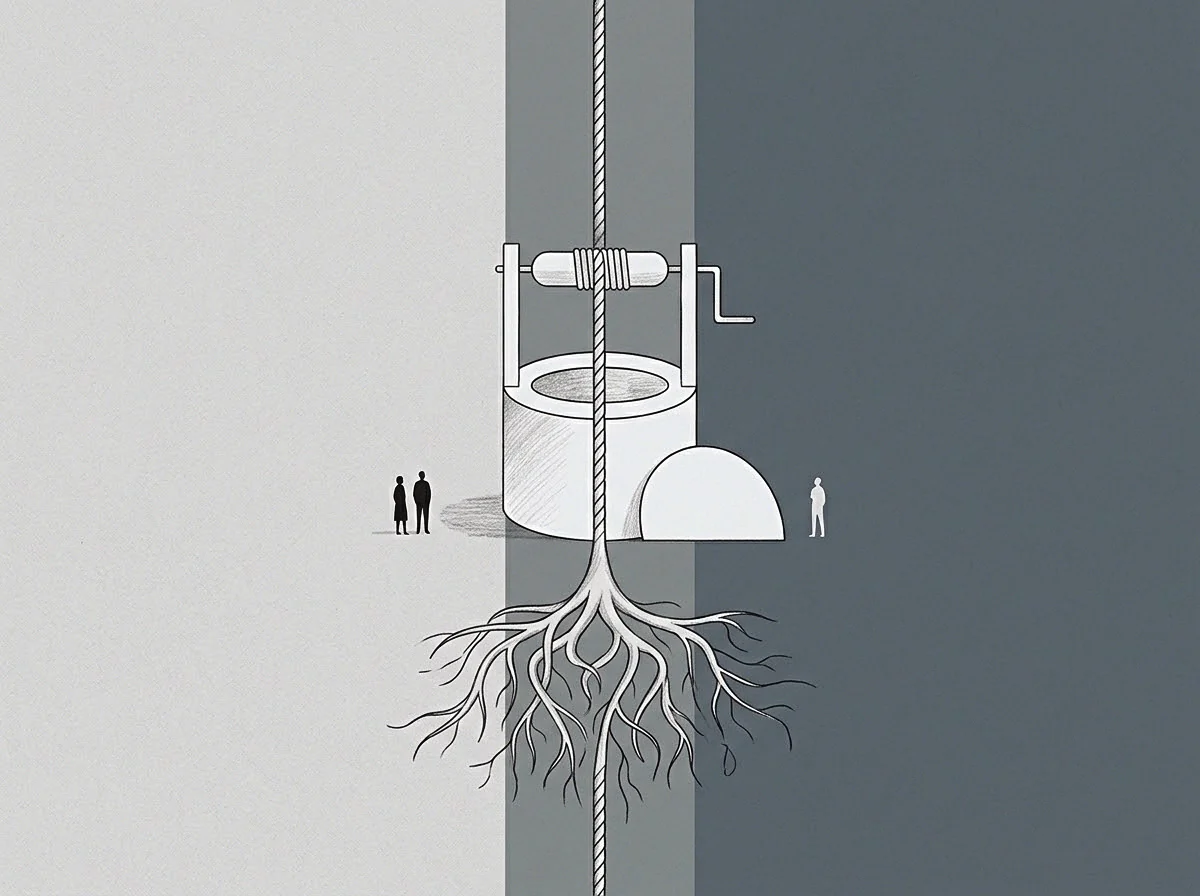
When Does Protocol Yield Defensible Attention Headroom?
Scheduled synchronization windows replace ambient responsiveness with predictable batched communication. Take an enterprise where two co-founders manage twenty engineers across two continents. In an unmanaged setup, shared chat channels hum continuously, fragmenting the working day into six-minute shards.
By installing an explicit operational protocol, messaging moves from an unthrottled firehose to a deliberate metering valve.
| Dimension | Codified Governance Alone | Derived Operational Availability |
|---|---|---|
| Primary Objective | Legal clarity and decision rights | Sustained cognitive capacity and focus |
| Communication Speed | Unregulated and instant by default | Batched intervals based on operational tier |
| Enforcement Agent | Periodic board or partner review | Structural channel configurations and delays |
| Load Distribution | Pushed onto the most responsive actor | Absorbed by asynchronous documentation |
The ping marks active priority. A message sent without latency implies an emergency. In high-reliability organizations, such as offshore drilling platforms or naval watch standing teams, protocol dictates that operators isolate critical control rooms from routine administrative radio chatter to prevent disastrous misdirection of focus.
Shared startup channels demand identical isolation. When every routine query produces a desktop sound, real crises lose their distinct signature.
A stated position regarding response windows creates immediate systemic safety by removing ambiguity from silence.
State-gated tasks demand protected neurological conditions. Drafting technical specifications, negotiating commercial contracts, and evaluating capital allocations cannot happen while an operator reacts to constant message notifications. These actions remain state-gated: no amount of raw discipline produces high-grade strategic work when the brain stays trapped in continuous partial attention.
Conversely, acknowledging receipts or signing standard documents are decision-gated tasks that an operator can execute even under mild fatigue.
The working protocol specifies that shared channels remain muted outside ten in the morning and four in the afternoon, converting spontaneous digital interruptions into an asynchronous memo queue.
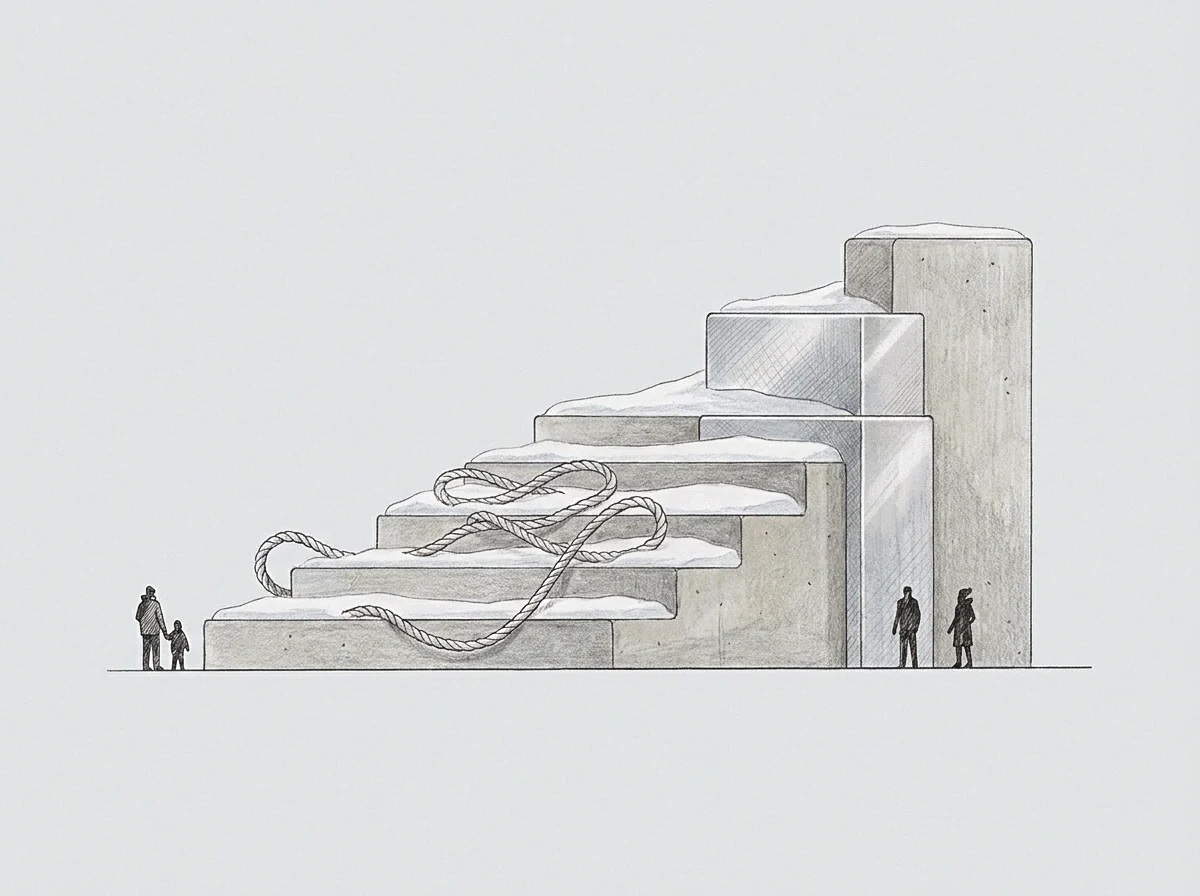
Silence
A silent channel communicates strategic composure. When a partner sends a complex query into a shared room and receives no reply for three hours, their default reaction depends entirely on whether working terms were stated in advance. Without explicit terms, silence feels like abandonment, neglect, or passive aggression.
With explicit terms, silence signals that the partner is doing the exact deep technical work that produces enterprise value.
The wall absorbs the push. When an incoming message hits a stated latency expectation, it meets something that is not the person. It meets an established rule.
The sender cannot personalize the delay because the delay was negotiated, documented, and published before the week began. The load-transferring behavior stops searching for an emotional outlet and begins searching for an internal answer.
Social baseline theory suggests that perceived proximity to competent, predictable partners lowers the physiological burden of navigating threats. Much of this research rests on functional neuroimaging of hand-holding during mild electric shocks within secure domestic dyads; transferring these conclusions directly to early-stage business partners handling cash-flow crises involves an inferential leap that experimental literature has not yet closed. Under this uncertainty, careful founders avoid relying on assumed emotional safety and instead build mechanical predictability into their shared systems.
The position anchors the channel. Availability must be derived rather than announced. When an executive states, “I am unavailable because I am overwhelmed,” they trigger panic and defensiveness in their co-builders.
When an executive sets their status to an asynchronous review block, logs out of the room, and returns four hours later with completed deliverables, availability is derived through consistent operational rhythm. The partner learns through observation that the silence produces output, not paralysis.
- Explicit Latency Stance establishes that non-critical messages receive replies within twenty-four hours, freeing both operators from continuous screen monitoring.
- Emergency Override Protocol designates a physical phone call as the sole valid mechanism for operational crises, instantly silencing routine digital chatter.
- Asynchronous Synthesis Artifacts replace sprawling chat debates with short written documents, requiring contributors to clarify arguments before demanding team attention.
Silence carries informational density. When partners accept that empty channels indicate focused execution, the urge to check notifications at dawn vanishes. The loop stays open when communication remains perpetual.
Closing the loop through structured latency restores cognitive endurance to the entire leadership group.
The true capacity of an executive team appears in how long its members can execute without checking for external validation.
Unanswered pings become tolerable only when past deliveries prove that quiet hours generate commercial traction.
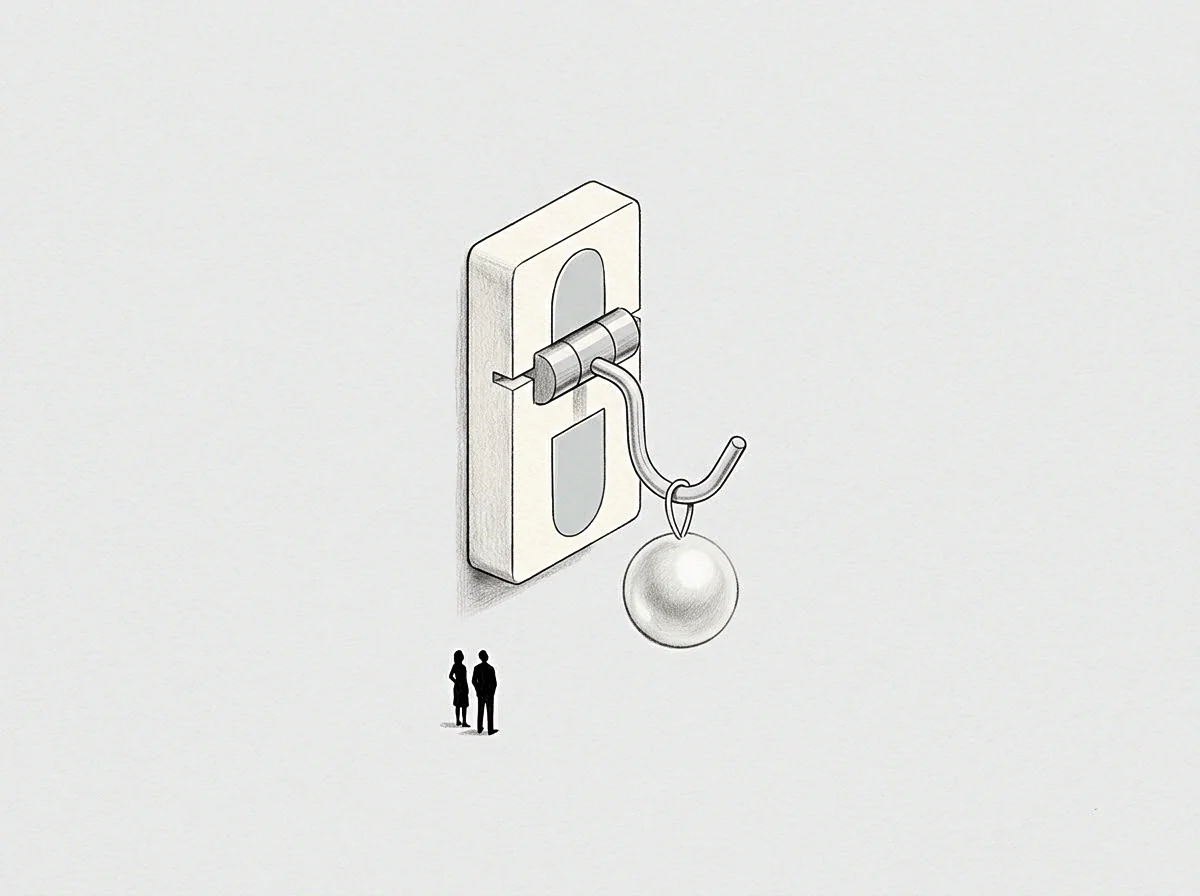
Line
Drawing an operational division between strategic thinking and shared coordination requires constant vigilance. Governance documentation defines who holds the corporate shares, but daily channel management defines who holds the founder’s mental life. An operator who fails to defend their working line ends up running a digital complaint desk while their core strategic responsibilities decay.
A stated term defines capacity. When an enterprise scales, coordination complexity increases geometrically with headcount. If channels remain open conduits without latency gates, the management team spends its entire day servicing internal queries rather than building market advantages.
The push never stops on its own. Systems naturally expand their consumption of resources until an immovable limit stops them.
Response delay registers as friction. That friction is precisely what forces an organization to mature. When a team cannot get an immediate chat reply from the chief executive, they write better internal wikis, train junior staff to make independent decisions, and develop standard operating runbooks.
Derived availability forces the enterprise to decentralize problem-solving, turning a single point of failure into an adaptable operating network.
The text met a wall. Sustainable operational presence across shared channels is not an emotional stance or a corporate virtue. It is the downstream consequence of a rigorously maintained limit that protects the operator from continuous distraction.
The corporate entity survives on the quality of its decisions, not the velocity of its notifications.
Whether an organization can maintain high coordination fidelity while holding eight-hour response windows during an existential funding crisis remains an open question for every founding team.