
Determining Baseline System Capacity Through Fixed Operational Limits
Baseline system capacity is determined by enforcing fixed operational constraints that cap concurrent work and expose true steady-state throughput.
Intake

Unbounded Transmission Across Operating Seats
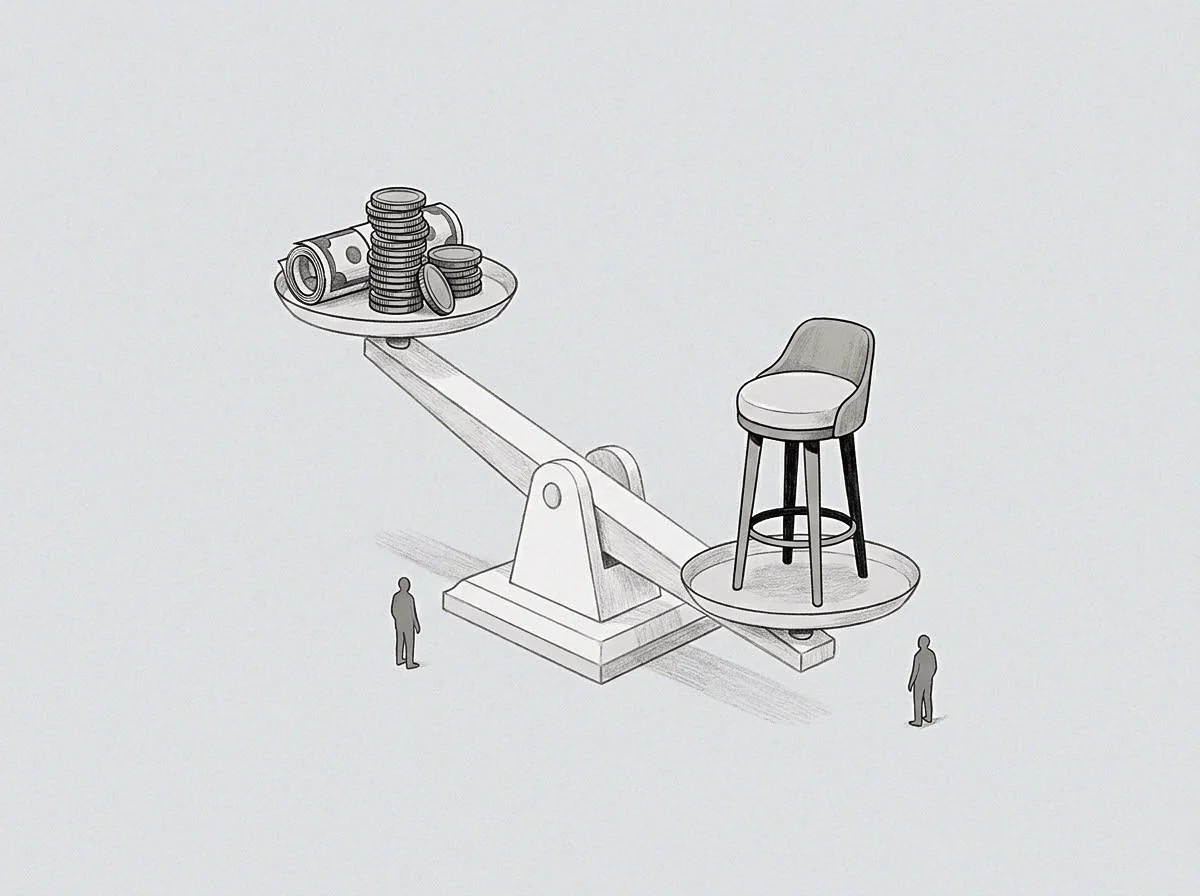
An operating seat absorbs every transmission directed toward it until an explicit barrier stops the flow. When a founder creates an enterprise, counterparties treat that seat as an infinite sink for unresolved friction, questions, and operational variance. The sender experiences immediate relief by transferring urgency across the organizational boundary.
Without a rigid structural perimeter, the recipient attempts to process this incoming volume through discretionary effort and extended working hours. That pattern masks the actual volume of operational demand while steadily exhausting the physiological reserves of the individual in the seat.
Incoming demand expands to occupy the total accessible processing surface. When an operator responds to messages across twenty-four hours, counterparties calibrate their expectations around instant turnaround. The absence of a stated boundary functions as an implicit agreement to absorb arbitrary volatility.
Every unthrottled communication channel invites uncurated inputs, because the sender spends zero energy filtering requests when the receiver processes raw inquiries without penalty.
A transmission channel lacking structural resistance transfers all processing load directly to the receiver.
Operational volume and sustainable throughput diverge rapidly under sustained pressure. A person can maintain an extraordinary processing pace for twenty or thirty days during an initial launch or a severe technical crisis. Sustaining that emergency cadence across consecutive quarters degrades cognitive precision and induces chronic autonomic arousal.
The individual mistakes transient surge processing for sustainable baseline volume, building organizational expectations on an exertion level that leads inevitably to executive exhaustion.
Unchecked processing creates systemic failure across downstream operations. When an operator attempts to manage all incoming variance directly, internal prioritization collapses, strategic initiatives stall in perpetual drafts, and critical commercial negotiations receive fragmented, late-night attention. Uncalibrated capacity turns every operational dependency into an acute bottleneck that impairs organizational execution.
Post
Setting Fixed Thresholds on Daily Commitments
An operational threshold stands as an immovable structural marker within an enterprise. Rather than evaluating capacity through subjective energy or daily enthusiasm, the operator fixes exact limits on concurrent commitments, daily decision blocks, and external response windows. These figures remain constant regardless of ambient pressure, investor requests, or client escalations.
The limit is an operational constraint akin to a machine specification, removed entirely from personal preference or goodwill.
Consider an enterprise where the lead operator manages thirty concurrent client relationships alongside product development. In the absence of stated terms, client requests arrive continuously through direct chat channels, causing twelve context switches per hour. Assume the operator establishes a rigid term: client communications occur exclusively through asynchronous tickets resolved during a single ninety-minute window each afternoon, with a maximum cap of twelve active client implementations per quarter.
The immediate consequence is a sudden reduction in context fragmentation, restoring four uninterrupted hours of daily production time.
| Operational Variable | Variable Absorption Model | Fixed Threshold Model |
|---|---|---|
| Concurrent Active Projects | Expands until executive exhaustion occurs | Capped at four active operational tracks |
| Response Latency Standard | Immediate reply across all working hours | Batch resolution within defined twenty-four-hour windows |
| Decision Surface Area | Unfiltered access to all operational exceptions | Escalations gated by explicit quantitative criteria |
| Cognitive Headroom Allocation | Residual capacity fluctuates near zero | Thirty percent reserve held for strategic variance |
Fixed boundaries establish the real production baseline of an organization. When an operator defines absolute capacity thresholds, the true operational cost of taking on new commitments becomes visible across the entire team. Trade-offs become unavoidable and concrete.
Adding a fifth initiative explicitly displaces one of the four sanctioned tracks, forcing leadership to rank initiatives by tangible commercial return rather than political urgency.
Baseline capacity becomes measurable only when operational volume hits an immovable structural constraint.
A stated limit changes the operational contract from an open-ended personal availability agreement to a defined transactional exchange governed by clear service windows.

Throttle
Controlling Work In Progress to Surface True Throughput
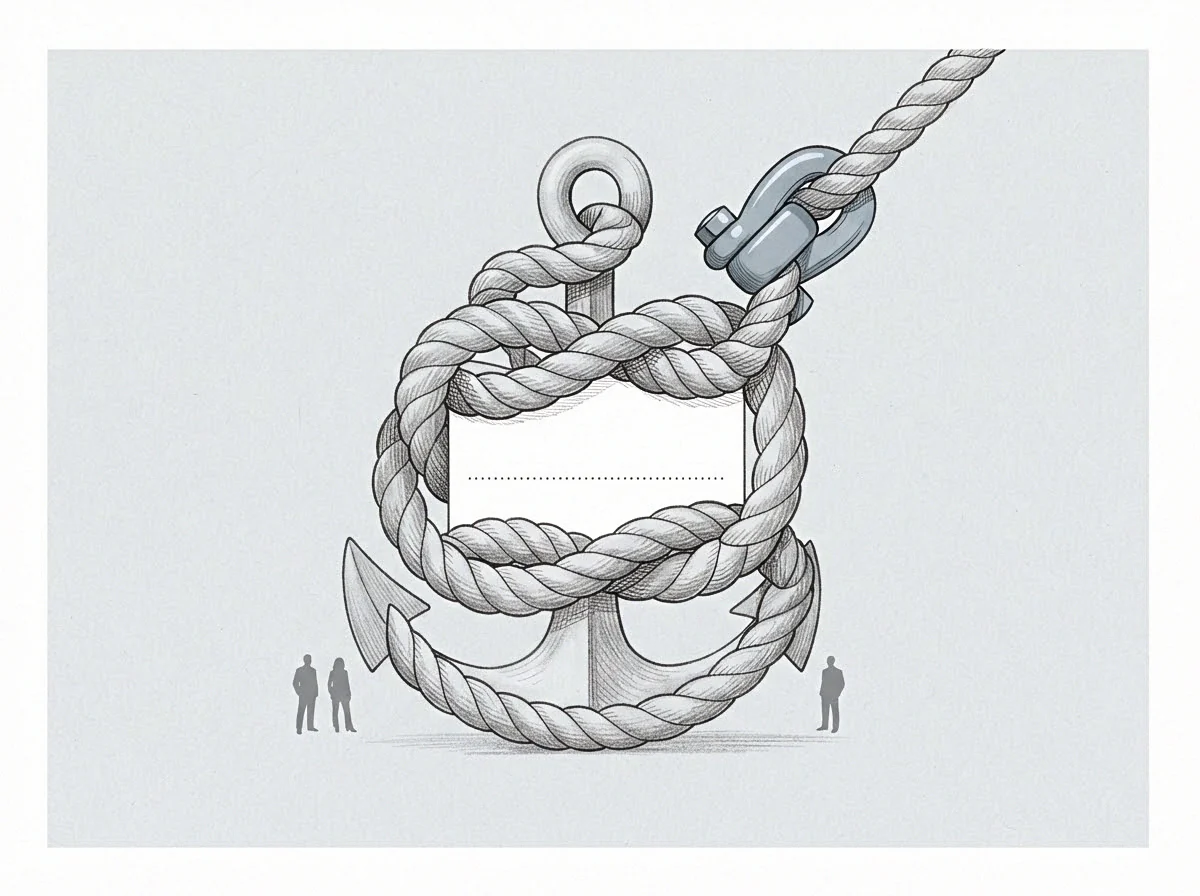
Throughput drops precipitously when active work in progress exceeds the processing capacity of the operational unit. In queuing theory and industrial engineering, packing a production line to maximum density introduces severe transit delays, compounding errors, and massive coordination drag. Human operational systems behave under the exact same physics.
Restricting the flow of active tasks through an enforced throttle reduces cycle time and reveals the true baseline capacity of the operating unit.
- Concurrency caps restrict active strategic projects to a small, non-negotiable number, preventing resource dilution across competing operational priorities.
- Intake batches concentrate inbound project reviews into dedicated calendar sessions, eliminating perpetual context switching across regular working days.
- Escalation gates require standardized documentation before an operational issue reaches the executive seat, turning raw panic into structured analysis.
- Buffer allocations protect twenty percent of weekly working hours from scheduled commitments, absorbing inevitable system volatility without breaking delivery timelines.

Does Operational Friction Expose True Throughput?
Applying an operational throttle immediately produces friction across internal and external relationships. Counterparties accustomed to instantaneous resolution push aggressively against the newly instituted processing gates. This push is a predictable structural reaction as the system attempts to restore its previous zero-cost offloading mechanism.
The operator evaluates system stability by watching whether the constraint holds under sustained pressure.
True operational baseline capacity emerges from steady-state throughput under hard constraints. Measuring performance during an unsustainable seventy-hour work week yields useless data for long-term operational planning. Reliable system capacity represents the precise volume of complex decisions, strategic outputs, and technical oversight an individual can deliver week after week without accumulating cognitive debt or physiological degradation.
A reliable baseline is defined by the volume delivered across consecutive quarters without structural degradation.
Holding the constraint steady over time separates genuine operational bottlenecks from artificial friction generated by poor upstream prioritization.

Strain

Physiological Load and the Mechanics of State Regulation
Human operational capacity is fundamentally governed by allostatic load, the cumulative physiological cost of sustained adaptation to stressors. When an operator functions in perpetual emergency mode, sympathetic nervous system activation remains elevated, driving sustained cortisol and catecholamine elevation. This continuous neuroendocrine state impairs prefrontal cortex function, degrading working memory, risk evaluation, and emotional regulation.
Operational decisions made in this state prioritize short-term relief over structural durability.
State acts as the direct transfer function determining the quality and speed of cognitive output. Mood is merely an uninformative surface byproduct of that underlying physiological reality. Deciding to work harder through willpower alone cannot overcome systemic cognitive depletion, because complex analysis and strategic judgment are state-gated functions.
When system headroom drops below critical thresholds, processing errors compound rapidly, requiring extensive remedial work that consumes further cognitive bandwidth.
Complex cognitive execution remains strictly gated by underlying physiological state.
Prolonged operational strain distorts the operator’s perception of available time and priority. Under chronic fatigue, small administrative disruptions feel like catastrophic interruptions, while massive structural deficits in the business go unaddressed due to lack of sustained analytical focus. The operator mistakes frenetic activity for productive execution, spinning through low-value tactical tasks to create a false sensation of progress while the primary enterprise engine stalls.
Counterparties assume the initial round-the-clock availability is a permanent feature of the working arrangement rather than a temporary concession to get the enterprise started.

Stance
Deriving Availability Through Stated Terms and Costs
Operational availability is derived by counterparties rather than announced through aspirational policy statements. Counterparties deduce real boundaries by observing response latencies, ticket resolutions, and the concrete costs associated with demanding executive time. When an operator establishes clear terms, sets pricing on custom requests, and ignores out-of-bounds communication channels, the entire ecosystem recalibrates around those structural posts.
Silence on an unsanctioned channel communicates position with absolute precision.
The channel that remains silent signals a non-negotiable priority boundary for both sides of the arrangement. If an emergency ping sent through an unofficial platform yields no response until the designated batch processing window, the sender learns that the platform carries zero routing priority. This behavioral feedback loop trains the external system to respect structured interfaces far more effectively than polite verbal requests or repeated policy reminders.
Protecting baseline capacity demands relentless defense of stated operational terms. The temptation to break constraints for prominent counterparties creates immediate structural rot across all operational boundaries. Every exceptional accommodation re-establishes the expectation of unlimited absorption, inviting renewed volume that systematically erodes the operator’s cognitive headroom and destabilizes the enterprise operating cadence.
Whether an operational system can maintain hard operational limits during an existential commercial downturn without reverting to uncalibrated personal absorption remains an open inquiry for growing enterprises.