
Downstream Attention Rationing Protocols Following Silent Threshold Breaches in Executive Operations
Executive threshold breaches trigger automatic downstream attention rationing, shifting cognitive processing depth to protect core physiological setpoints under ceiling load.

Wall
Four operational communication channels sit open simultaneously on a screen late on a Tuesday evening. The founder has spent fourteen hours resolving downstream operational friction, approving budget shifts, and settling cross-functional priority disputes. A fifth notification arrives from an executive lead requesting an immediate decision on product architecture.
Cognitive processing speed drops to zero, yet no external announcement marks the halt. Instead of declaring a capacity stoppage, the founder opens the message, reads the technical prompt, and closes the application window without responding.
This marks a silent threshold breach. When an operations leader reaches an operational ceiling under heavy load, the brain issues no public telemetry to external stakeholders. Physiological setpoints trip silently.
To maintain core stability, the executive shifts into downstream attention rationing, restricting output depth while preserving the appearance of active availability.

Silent Threshold Crossing in High Load Systems
Executive operations require continuous cognitive allocation across competing organizational vectors. Once incoming demand exceeds operational headroom, deliberate strategy gives way to subconscious triage, constrained by physical limits on cognitive capacity.
During early load accumulation, executive processing maintains continuous multi-thread engagement. As allostatic load rises, the operator attempts to compensate by accelerating task turnover and shortening review cycles. This compensation holds until a specific setpoint is breached.
Beyond this threshold, executive headroom vanishes. The individual enters a state of operational conservation where cognitive resources retreat from systemic coordination to bare self-preservation.
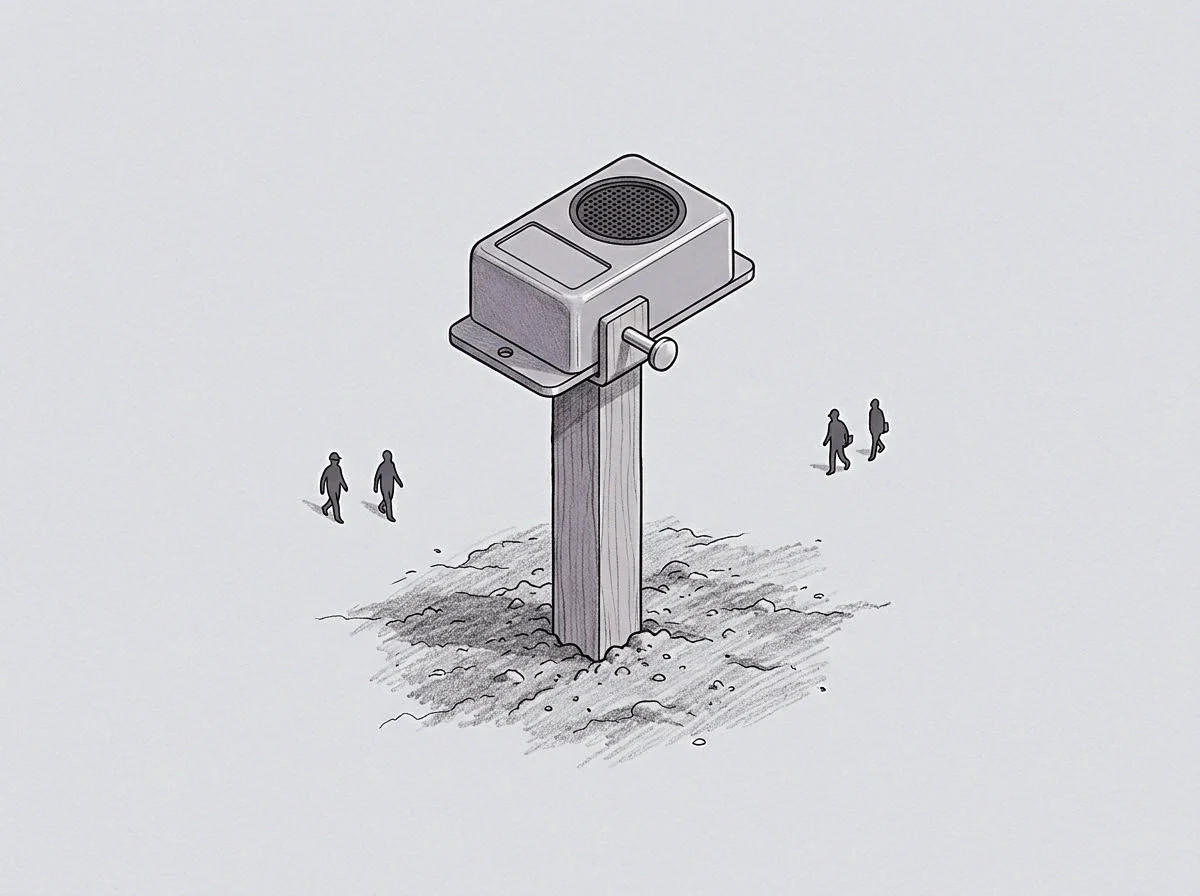
Silent reduction of attention depth operates as an automatic defensive posture when cognitive headroom drops below operational setpoints.
Mechanics of Unannounced Executive Throttling
When physiological setpoints meet unmanaged operational demand, executive functions reduce attention depth. Rather than halting input channels, the executive rations downstream outputs according to implicit, unstated priority rules. High-effort decisions receive delayed engagement or low-fidelity acknowledgement, while low-effort messages receive rapid, superficial clearance.
This rationing dynamic occurs without formal notice to downstream team members. Downstream operators continue to issue high-priority pings on the assumption that executive processing remains fully unconstrained. The discrepancy between assumed capacity and actual headroom creates immediate operational distortion.
Uncommunicated breaches transform legitimate operational capacity limits into interpersonal friction.

Circuit
Feedback loops within an organization continuously evaluate the latency and depth of executive responses. When an executive enters a breached capacity state, downstream actors perceive the change long before any official statement occurs. The signal carries through altered response cadences, abbreviated directives, and extended periods of non-responsiveness across primary coordination channels.
A system operating under load transfers force toward the point of least resistance. Downstream operators rely on executive availability as an anchor for organizational risk. When that anchor silently detaches, downstream units experience heightened uncertainty, triggering defensive behaviors across subordinate operations.

Where Sits the Boundary Between Throttling and Refusal?
Operational participants routinely mistake attention rationing for complete task abandonment. The boundary between state-gated capacity reduction and deliberate operational refusal resides in the underlying transfer function of the executive state. Throttling is an automated systemic attempt to prevent total operational shutdown under ceiling load; refusal is a deliberate choice executed when cognitive capacity remains available.
When attention rationing occurs silently, downstream operators lack the metadata needed to distinguish structural exhaustion from intentional disinterest. They increase ping frequency in an effort to re-establish coordination. This increase in inbound traffic amplifies cognitive load, driving the executive deeper into defensive withdrawal.
Unanswered priority pings force downstream teams to construct shadow operational assumptions.

Signal Degradation Across Operational Channels
Communication channels carry both explicit message content and implicit structural priority. In nominal operational states, executive latency correlates directly with task difficulty. High-priority items receive rapid, detailed processing, while low-priority items wait in queue.
Following an unstated threshold breach, this correlation breaks down entirely. Latency becomes a function of cognitive effort rather than strategic importance. A minor administrative sign-off requiring minimal exertion moves quickly, whereas a high-stakes strategic decision requiring complex synthesis stalls indefinitely.
Downstream teams observing this dynamic misinterpret executive priorities, reallocating regional resources toward trivial tasks simply because those tasks earn faster executive responses. The executive has abandoned the initiative without declaring a formal exit.

Gate
Human cognitive architecture executes action through two distinct operational pathways. Decision-gated acts proceed through conscious evaluation, alignment of intent, and deliberate execution. State-gated acts depend entirely on physical, cognitive, and nervous system capacity, operating beyond the reach of conscious volition.
No amount of deliberate executive decision-making can force a state-gated act when the underlying physiological substrate is depleted.
Executive performance fails when state-gated limits are treated as decision-gated failures. When an operational leader attempts to override physiological ceilings through sheer willpower, the nervous system enforces compliance through automatic cognitive lockout. Attention rationing is the primary symptom of this involuntary lockout.

State Dependent Transfers Versus Decision Gated Actions
Executive actions divide strictly along physiological accessibility lines. When headroom exists, decisions drive outcomes cleanly. When headroom collapses, internal state acts as an absolute transfer function, filtering every incoming input regardless of organizational necessity.
Internal physical state dictates actual output capacity.
Understanding this distinction reframes executive availability. Availability is not a professional preference or an attitude to be adjusted; availability is a derived physical quantity based on current load, past allocation, and recovery speed. Treating an depleted cognitive pool as a personal discipline problem ensures continuous structural failure across downstream projects.
| Allocation State | Systemic Headroom | Attention Latency | Response Depth | Load Transfer Impact |
|---|---|---|---|---|
| Nominal Capacity | High (40-100%) | Predictable (Minutes to Hours) | Analytical / Complete | Absorbs operational variance cleanly |
| Silent Rationing | Low (5-15%) | Erratic (Variable Delays) | Superficial / Selective | Pushes friction to subordinate leads |
| State Lockout | Zero (0%) | Extended (Days or Indefinite) | Minimal / Non-Responsive | Triggers operational paralysis downstream |
| Breached State | Negative (Deficit) | Infinite (Complete Silence) | Truncated / Reactive | Forces structural team fragmentation |
A state gated action remains impossible regardless of executive decision strength when physiological capacity reaches absolute ceiling.
The transition between nominal processing and complete state lockout occurs rapidly once internal setpoints fail. An executive who appears fully operational at noon can enter severe cognitive rationing by late afternoon if continuous incoming demands prevent systemic recovery. Defining an explicit operational ceiling converts an unpredictable attention crash into a predictable capacity term.
Cost
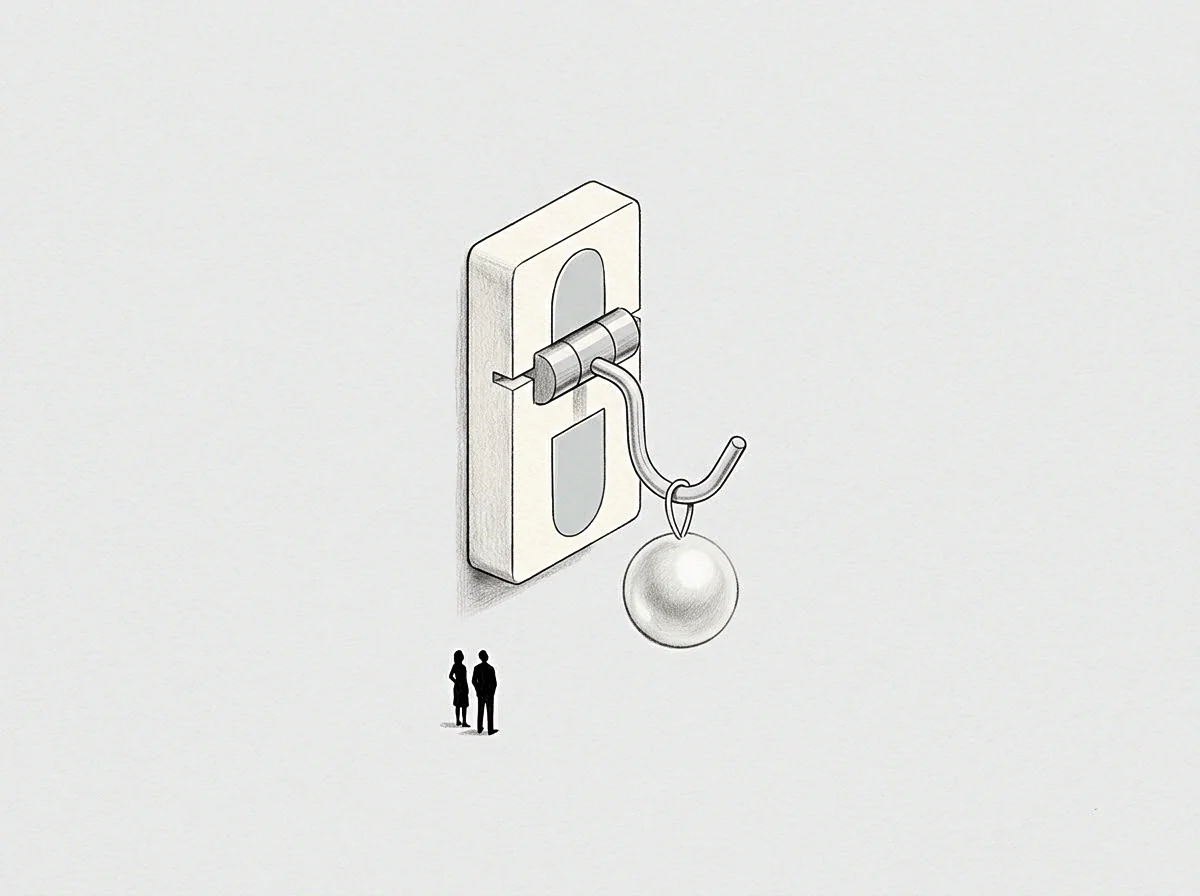
Operational downstream consequences accumulate rapidly when executive capacity breaches internal setpoints without explicit notification. Organizations function as load-transferring structures. When the primary regulator in an organization stops processing inputs efficiently, that unhandled load does not disappear; it distributes downward into subordinate layers, straining team stability and distorting operational focus.
Subordinate team members absorb this unmanaged load through increased anxiety, duplicated work, and uncoordinated decision-making. Lacking clear directives from executive leadership, regional managers construct local interpretations of strategy. These shadow strategies frequently conflict, generating systemic organizational drag.
Downstream Signal Interpretation and Derived Rules
Subordinate operators monitor executive availability to construct internal working models of organizational stability. When silent attention rationing distorts executive output, downstream operators derive implicit rules to navigate the uncertainty through quiet communication channels.
- Latent Priority Derivation occurs when downstream teams stop evaluating strategic roadmaps and begin evaluating executive response speed to determine actual corporate focus.
- Asymmetric Co-Regulation Burden develops when subordinate leads expend attention and hours managing unpredictable executive reactions rather than executing core operational tasks.
- Covert Contract Accumulation arises when team members absorb unallocated operational tasks under the unspoken expectation of future executive compensation or protection.
- Priority Signal Decay happens when repeated high-urgency notifications go unanswered, causing subordinate staff to ignore future operational alerts.
- Silent executive capacity failure degrades downstream task clarity within forty-eight hours.
- Subordinate teams fill operational silence with high-risk defensive assumptions.
- Unclear organizational signals double the cognitive exertion required for basic task completion.
- Systemic load migrates automatically to the most conscientious subordinate team members.
Operational clarity increases when availability is derived from explicit terms rather than inferred from executive silence.
When attention rationing continues unaddressed over extended quarters, key operational staff experience severe capacity fatigue. They lose trust in executive telemetry and stop escalating genuine operational risks because past escalations vanished into silent executive bottlenecks. An unstated limit will be pushed by a load-transferring system until it meets a physical wall.

Ground
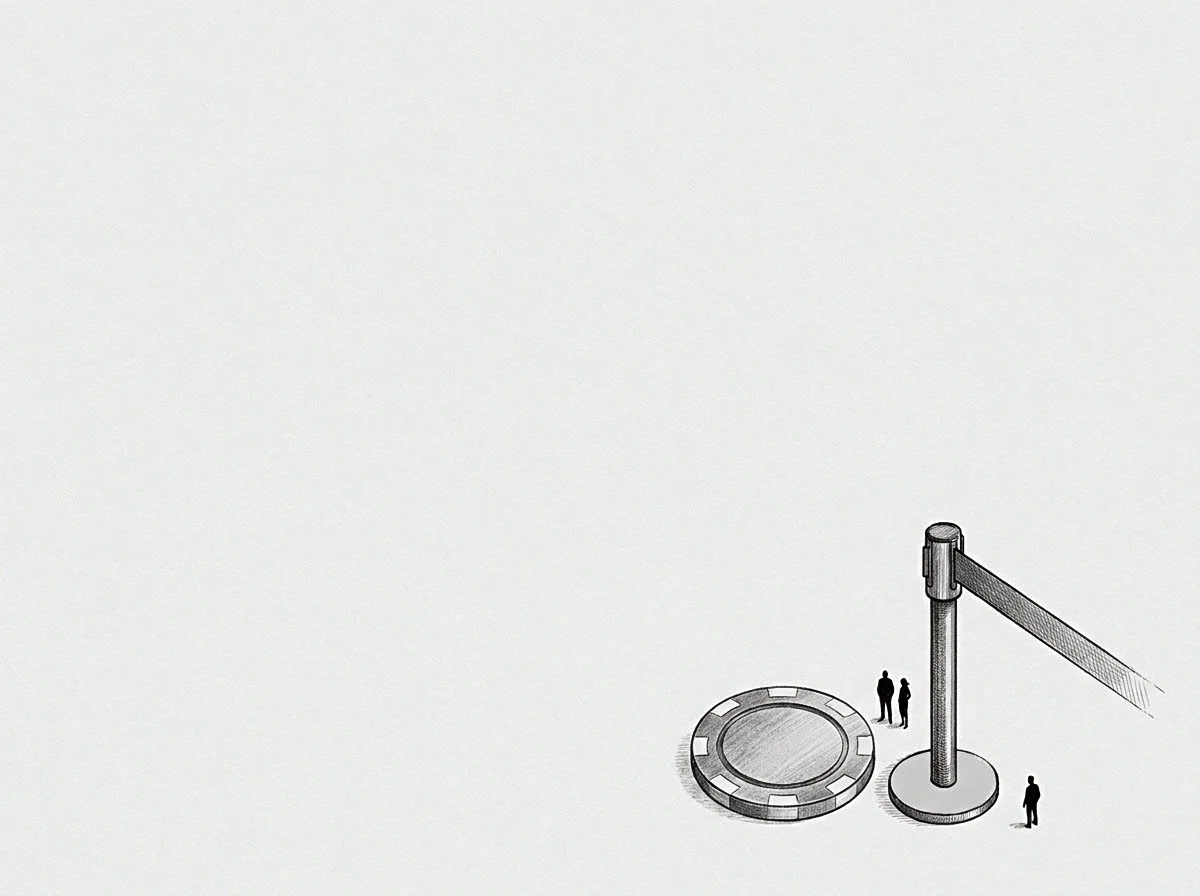
Transitioning from covert attention rationing to explicit architectural limits demands a shift in operational communication. An executive cannot manage capacity through unspoken defensive maneuvers without destabilizing downstream operations. Stating explicit operational limits establishes a structural barrier between incoming demand and cognitive headroom.
A stated limit operates as a physical barrier within an organization rather than a personal refusal. When an executive states terms clearly, downstream teams adjust operational expectations instantly. Uncertainty declines because availability is no longer guessed through silence; availability is calculated through clear, stated positions.

Replacing Covert Rationing With Explicit Terms
Stating explicit positions creates a structural barrier between incoming demand and executive capacity. Instead of allowing operational requests to pile up unanswered in a queue, the executive declares specific processing windows, minimum communication lead times, and hard capacity floors, replacing the silent wall with clear terms.
This conversion protects both the executive and the surrounding organization. Downstream managers gain clear operating parameters, allowing them to make autonomous decisions within defined boundaries rather than waiting indefinitely for central sign-offs. The organization ceases to rely on continuous executive presence, shifting toward distributed operational resilience.

Establishing Derived Availability Mechanics
Availability functions best as a derived value produced by clear positions and explicit costs in attention and hours. An executive who establishes explicit criteria for emergency interruptions and routine reviews eliminates the need for silent attention rationing, making the priority signal visible in advance.
When an operational request arrives outside stated working parameters, the system routes it according to predefined protocols rather than dumping it onto an exhausted leader. The push continues until it encounters a firm structure. The position holds, the cost in time and attention is declared, and downstream attention rationing ceases to operate as a silent defense mechanism.