
Engineering Context Switching and Immediate Interrupt Response Dynamics
Immediate interrupt response dynamics force prefrontal cache eviction, increasing task context restoration latency and degrading engineering execution capacity.
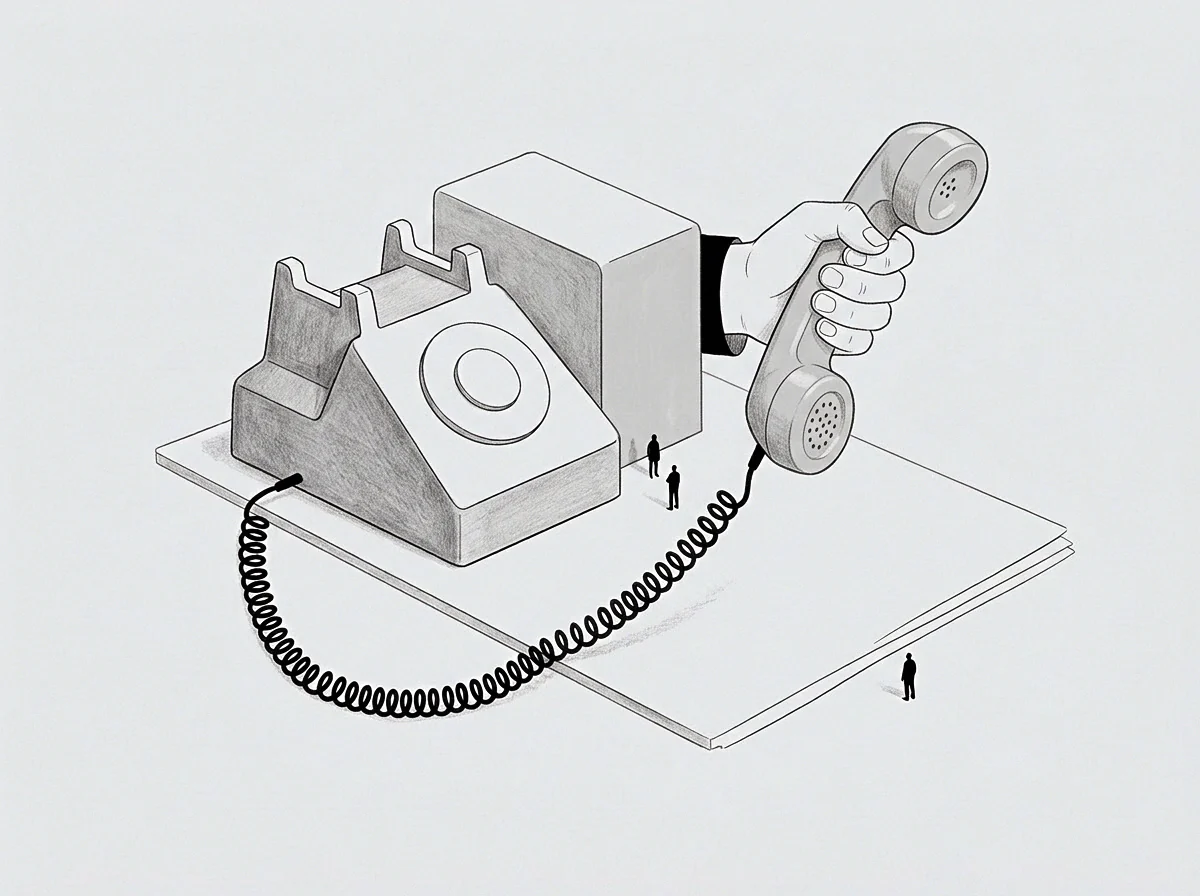
Thread
Four messaging channels flash simultaneously on an engineering lead’s terminal while an operational incident report is mid-sentence. The cognitive stack carrying the root-cause hypothesis collapses in seconds. Rebuilding that precise mental state takes twenty-three minutes of structured context reconstruction.
An immediate response sent within forty seconds yields a three-line acknowledgement, yet the original analytical frame vanishes completely. The environment treats the incoming packet as urgent simply because it arrived on an active channel. Human attention behaves like a single-threaded processor with limited cache restoration speed.
Every forced switch clears working memory, drops pending local variables, and forces a manual reload of task context. When an organization standardizes immediate interrupt response dynamics, it converts deep analytical throughput into shallow packet routing.
The operational cost of context switching stems from the friction of context restoration rather than the brief duration of the interruption itself. Laboratory investigations into task interruption demonstrate that even brief distractions under three seconds double the error rate on pre-interrupt task execution. The brain maintains active mental models through sustained persistent firing in executive prefrontal circuits.
When a real-time signal arrives, executive control shifts away from the primary operational domain to decode, evaluate, and react to the incoming signal. Re-entering the primary task requires reloading the structural map of the problem, recalling active variables, and verifying previous assumptions. That reloading phase creates a silent tax on engineering capacity.
Immediate response patterns create an environment where peripheral noise consistently pre-empts core execution threads. Incoming messages carry an implicit assertion of priority that rarely aligns with real structural importance. A developer writing high-concurrency database migration code operates under high cognitive load.
An incoming real-time ping asking for an operational update forces an immediate context shift. The developer answers the ping to signal baseline responsiveness, but the mental state supporting the complex concurrency safety checks dissipates. Rebuilding that mental state takes ten times longer than answering the question.
Continuous exposure to unbuffered interrupts forces the cognitive system into a state of chronic operational fragmentation.
An unbuffered real-time interrupt clears working memory buffers and forces full primary task context restoration regardless of message length.
Systemic throughput declines as the frequency of real-time context switches crosses an operational setpoint. Organizations observing high response latency often mistakenly diagnose individual low discipline rather than unmanaged channel topology. The primary mechanism driving structural inefficiency is the operational expectation that incoming pings command immediate queue pre-emption.
When an organization adopts a policy where channel ping response times are bounded under five minutes, the continuous context restoration protocol becomes the primary work of the team. The active work shifts from deep execution to message maintenance. Establishing explicit latency tolerances on incoming communication channels restores structural focus by shielding working memory from premature state eviction.
A explicit channel latency agreement designating asynchronous triage as default changes the structural cost of task pre-emption.
Queue
An unmanaged incoming interrupt stream transforms an engineer’s attention from a dedicated processing queue into a high-friction clearinghouse. Interrupt signals land on the recipient without prior priority negotiation. The sender offloads their immediate cognitive payload onto the receiver, transferring internal load across the communication channel.
The receiver accepts the interrupt, halts active thread execution, and absorbs the context reload penalty. Over time, the recipient becomes an institutional buffer for surrounding organizational entropy.
Interrupt Classifications and Queueing Mechanics
Interrupt signals operating across organizational environments fall into structured classifications based on source priority and execution requirements. Managing these signals requires distinguishing between actionable structural alerts and unstructured operational noise.
- Systemic Panic Signals land through automated monitoring triggers that indicate active service degradation requiring immediate thread acquisition.
- Direct Context Inquiries represent unbuffered peer-to-peer questions seeking immediate domain knowledge without prior queue registration.
- Status Update Pings carry low structural urgency but demand processing capacity when routed through real-time communication tools.
- Deferred Operational Requests submit non-blocking work items designed to settle inside scheduled async review windows.
When an active execution queue processes incoming work without priority filters, low-value interrupt signals continuously pre-empt high-value deep execution blocks. The team experiences high continuous activity paired with negligible structural output. Priority inversions occur when routine administrative pings bypass technical execution blocks due to channel availability.
Establishing explicit queueing thresholds protects working memory stacks from low-priority channel intrusions.
Queue depth increases rapidly when individual operators lack explicit authority to drop or defer incoming interrupts. Context reloads slowly. When response expectations demand synchronous acknowledgment, engineers develop compensatory operational habits.
They avoid starting complex, multi-step code refactoring or architecture design tasks during open message hours. Complex problems require continuous blocks of undisturbed executive function. When those blocks are fragmented by recurring pings, operators confine their efforts to shallow, low-risk administrative micro-tasks.
The broader architecture degrades because the structural work requiring high working memory depth never receives sustained context allocations.
When an engineering team permits real-time pings to dictate daily operational priorities, total cognitive capacity drops while defect frequency doubles.

Overhead
The total capacity cost of context switching comprises three distinct physical components: the pre-interrupt execution loss, the explicit processing time spent handling the interrupt, and the post-interrupt context restoration delay. While the immediate processing window may span only ninety seconds, the combined pre-interrupt and post-interrupt overhead regularly exceeds fifteen minutes per occurrence. Across an eight-hour working shift, ten unbuffered interrupts consume more than three hours of operational capacity strictly through context restoration dynamics.
When Does Interrupt Priority Override Working Memory?
Interrupt signals properly override active working memory blocks only when the estimated cost of delayed response exceeds the context restoration penalty of the pre-empted task. In high-concurrency software production environments, true emergencies meeting this standard are rare. Most incoming pings represent uncoordinated coordination requests born from poor asynchronous documentation standards.
Treating every incoming ping as a production incident destroys cognitive headroom.
Consider two parallel engineering teams operating under identical incident rates over a ninety-day operational sprint. Team Alpha operates with real-time response expectations, where all team members keep notification feeds active and respond to incoming pings within three minutes. Team Beta enforces asynchronous channel boundaries, routing incoming requests into a batched triage queue reviewed twice daily, while reserving real-time phone alerts strictly for critical system outages.
Assume both teams possess equivalent technical competence and start with identical architectural backlog items.
| Operational Metric | Synchronous Real-Time Model | Asynchronous Queueing Model |
|---|---|---|
| Mean Context Switch Frequency | 6.4 interruptions per hour | 0.8 interruptions per hour |
| Average Context Restoration Latency | 21.5 minutes per switch | 4.2 minutes per switch |
| Daily Uninterrupted Focus Headroom | 1.2 hours per engineer | 5.8 hours per engineer |
| Defect Rate in High-Complexity Commits | 14.2 defects per thousand lines | 3.1 defects per thousand lines |
Team Alpha experiences continuous working memory eviction. Operators spend forty percent of their daily cognitive energy navigating context switches, reconstructing mental models, and re-reading code blocks to verify lost state parameters. Focus breaks quickly.
Memory stacks collapse. Structural output slows, and subtle logic errors slip through code reviews because reviewers themselves operate under continuous context fragmentation. The continuous ambient pressure to monitor channels elevates biological stress indicators, exhausting operational reserves long before the sprint concludes.
Team Beta maintains clear task context across extended execution blocks. Memory state remains stable. By isolating developers from real-time noise, working memory stacks remain intact, allowing deep logical exploration of complex software boundaries.
When interruptions occur, they land within pre-allocated transition windows where active task context has already been safely saved to physical documentation. The cost of context switching drops drastically when state dump and state restoration operations are performed deliberately rather than reactively.
Batching incoming communication interrupts into scheduled review windows preserves prefrontal cache integrity.
Research in applied cognitive ergonomics indicates that context restoration delay scales non-linearly with the complexity of the pre-empted mental model. Simple routine tasks recover initial speed within seconds of an interruption. Complex abstract tasks involving nested conditional structures, system topology mapping, or high-dimensional mathematical optimization require structured, unhurried context reconstruction.
Forcing real-time interrupt response dynamics onto high-complexity engineering roles guarantees a persistent reduction in output quality.
Channel silence during execution blocks remains the most reliable predictor of deep engineering throughput.

Threshold
Managing the impact of incoming interrupts requires structural mechanisms rather than personal discipline. Individual willpower cannot withstand continuous notification alerts operating against natural human threat-detection systems. The brain is hardwired to attend to immediate environmental novelty.
Expecting an engineer to ignore a flashing channel badge while maintaining deep focus relies on a physiological impossibility. Protection requires building external structural buffers that intercept, filter, and queue signals before they reach human awareness.
An effective context-protection architecture relies on strict operational thresholds to regulate incoming load. The system establishes clear rules defining which traffic patterns earn real-time delivery and which items remain buffered in asynchronous queues.
- Automated alert systems route through dedicated incident management software with escalating threshold conditions.
- Human communication channels defer to personal status indicators that physically suppress incoming audio and visual notifications during focus windows.
- Peer inquiries require a completed structural brief detailing prior troubleshooting attempts before thread transfer occurs.
- Urgent operational escalations require telephone voice calls, raising the friction of real-time pre-emption to filter out low-value inquiries.
When an organization enforces these structural thresholds, incoming request volume drops immediately. The simple requirement to complete a brief brief or make a telephone call deters low-urgency interruptions. The sender evaluates their own request more critically when forced to cross an operational friction barrier.
Task boundaries hold. State decay stops. Many simple inquiries are solved independently by the requester during the time spent drafting the formal ticket, saving engineering capacity across both sides of the relationship.
Raising the structural friction required to issue an interrupt filters out low-urgency communications before context destruction occurs.
Operational headroom vanishes when thresholds break down under pressure. Priority signals fail. When leadership bypasses established filtering mechanics to deliver non-critical requests during deep execution blocks, the team infers that channel boundaries are purely optional.
Response patterns revert to continuous synchronous monitoring. Protecting context protection mechanisms requires consistent enforcement across all hierarchy levels. When leadership respects the structural filter, the organization develops high asynchronous discipline.
At what operational point does an organization’s obsession with immediate communication speed permanently compromise its technical execution capabilities?
Anchor
Long-term engineering reliability requires anchoring team communication mechanics in structural reality rather than social performance. Real-time availability feels productive because it yields fast verbal exchanges and immediate feedback loops. That surface activity masks deep operational erosion.
The primary work of engineering is the construction and maintenance of complex mental states capable of solving structural problems. When communication infrastructure prioritizes sender convenience over receiver context, technical throughput inevitably degrades.
Shifting an organization away from immediate interrupt dynamics requires resetting the default response latency expectations. Silence on a communication channel must be reinterpreted as active processing capacity rather than operational absence. When an engineer refrains from answering pings during a designated focus block, the organization benefits through higher code quality, lower defect rates, and robust system design.
Operational speed stems from deliberate execution, not rapid packet routing.
The system settles. Capacity stabilizes. Engineers who state their terms, set explicit channel latencies, and protect their working memory stacks deliver sustainable technical value over extended operational horizons.
Structuring context switching as an expensive operational event rather than an ambient habit transforms the baseline stability of the entire engineering organization.