
Enterprise Scaling Thresholds During Rapid Organizational Headcount Growth
Rapid headcount expansion increases organizational communication channels quadratically, forcing systemic shifts from informal coregulation to explicit operational terms.
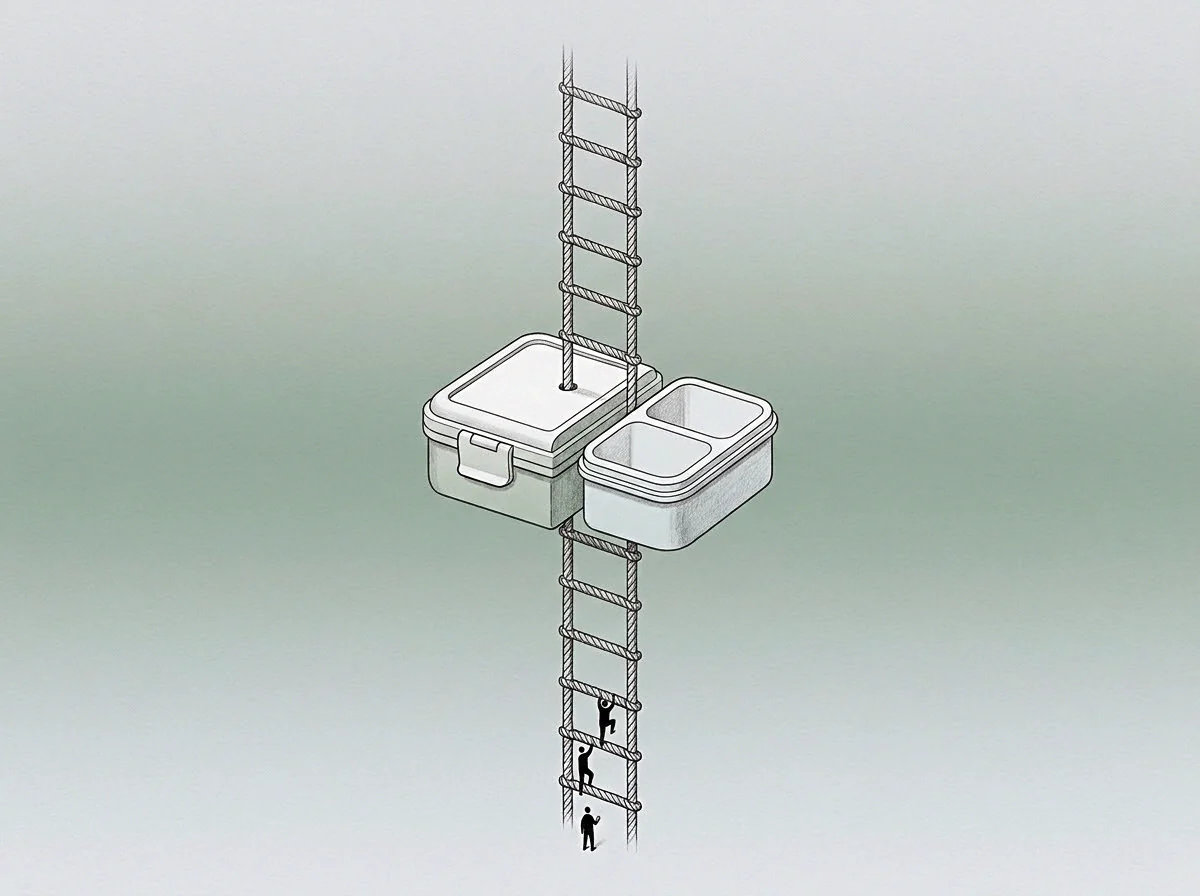
Wall
Headcount growth alters system physics. When an enterprise expands from twelve to fifty employees within two financial quarters, the internal communication network experiences direct geometric congestion. In an organization of twelve individuals, sixty-six potential interpersonal communication pathways exist.
Expanding that headcount to fifty increases the internal pathways to one thousand two hundred twenty-five. The informal coregulation mechanisms that sustained alignment at smaller scales dissolve under this administrative burden.
Early enterprise operations rely heavily on implicit shared context. Founders and early operators maintain alignment through ambient physical proximity, shared real-time channels, and continuous verbal synchronization. This arrangement functions because the incoming cognitive load sits below the processing threshold of the central nodes.
As headcount crosses specific structural boundaries, the volume of incoming synchronization requests overwhelms unstructured processing capacity.
Doubling headcount without changing coordination topology converts operational bandwidth into pure message routing.
The first structural wall appears when the central executive seat becomes an indiscriminate message router. Information processing research demonstrates that direct human attention has strict throughput setpoints. When the density of structural nodes exceeds an operator’s capacity to digest raw operational data, communication latency increases exponentially.
Information fidelity decays across each successive handoff, introducing systematic misalignments between strategic decisions and front-line execution.

Geometric Complexity in Operational Channels
The quadratic expansion of communication channels forces structural adaptations within growing teams. Small organizations maintain coherence through direct coregulation. Everyone hears the same priorities discussed in real time, absorbing operational changes without explicit governance documentation.
This structural efficiency vanishes once the headcount exceeds the capacity for direct daily interaction.
At larger headcount thresholds, unstructured communication creates severe informational noise. Employees spend increasing percentages of their daily capacity seeking clarification, verifying decisions, and reconciling conflicting directives. The administrative friction of tracking open work items multiplies across every added layer of organization.
Organizations encountering this scaling boundary observe immediate degradation in execution velocity. Operational initiatives stall because project owners spend their working hours aligning peripheral stakeholders rather than executing tasks. Central decision nodes suffer high operational friction, resulting in delayed approvals and cognitive exhaustion across executive roles.
The stated limit of human coregulation defines the boundary where informal coordination fails. Implementing formal operational boundaries introduces explicit structural terms, shifting coordination tasks from individual human memory to established institutional conduits. A stated rule requiring written decision logs for all cross-departmental initiatives replaces informal conversations with durable operational artifacts, altering how authority transfers across growing management tiers.

Channel
Informal channels saturate quickly. Enterprise scaling requires structural separation between low-latency operational communications and asynchronous decision logs. Without deliberate channel design, continuous digital messaging platforms default to unstructured real-time interruptions, forcing workers into permanent cognitive fragmentation.
The ping signal serves as an ambient priority indicator across enterprise communication tools. When channel governance remains unstated, incoming messages receive equal baseline priority regardless of operational urgency. High-frequency pings disrupt focus, drawing executive bandwidth away from strategic planning to clear administrative backlogs.
| Coordination Mode | Communication Latency | Information Distortion | Regulator Overhead | Capacity Ceiling |
|---|---|---|---|---|
| Direct Broadcast | Low | High | Extreme | 15 Personnel |
| Synchronous Cascade | Moderate | Moderate | High | 45 Personnel |
| Asynchronous State Log | High | Low | Controlled | Unbounded |
The table illustrates how coordination structures respond to headcount growth. Direct broadcast mechanisms yield low latency in early-stage environments but introduce extreme administrative overhead as headcount scales past fifteen workers. Asynchronous state logs increase response latency while preserving information accuracy and keeping regulator overhead controlled across expanded headcount tiers.

Asynchronous Architecture and State Preservation
Transitioning from synchronous meetings to asynchronous documentation preserves context across expanding enterprise tiers. Synchronous meetings require real-time presence from every participant, locking institutional capacity into scheduling bottlenecks. Asynchronous state logs decouple information transfer from real-time availability, permitting parallel execution across independent business units.
Informational distortion occurs when decisions pass through multiple verbal layers. A directive communicated verbally through three management tiers loses precise contextual boundaries by the time execution begins. Documented decision logs anchor operational context in accessible records, eliminating dependence on verbal translation.
Channels that permit unthrottled pinging force executive roles to act as manual packet routers.
Systemic friction increases when teams mix decision-making channels with general chat channels. Distinguishing high-priority operational signals from baseline conversational noise becomes impossible without clear channel segmentation. High message volume degrades cognitive performance, reducing the accuracy of analytical decisions.
Establishing clear protocol boundaries for digital channels protects operational capacity during headcount surges. Permitting unrestricted real-time inquiries across all channels creates an environment where constant interruption prevents deep analytical work, inflating operational costs and increasing employee turn rates.

Span
Managerial span of control dictates how effectively authority moves through an organizational hierarchy. A single manager maintaining twelve direct reports experiences continuous context-switching, leaving minimal capacity for long-term planning or targeted operational support. As headcount expands, unadjusted management spans force managers into reactive decision modes.
The network capacity fails. Organizational science establishes that optimal direct-report ratios range between five and eight individuals for complex knowledge work. Exceeding eight direct reports split-allocates managerial attention, turning direct interactions into rushed status updates rather than strategic alignment sessions.

What Happens When Delegation Precedes Stated Terms?
Delegating responsibility without defining operational boundaries creates structural instability across expanding management tiers. Newly appointed managers often receive broad titles without explicit guidelines regarding financial expenditure limits, hiring authority, or strategic sign-off thresholds. This lack of clarity forces secondary managers to seek central approval for routine operational decisions.
- Unstated Scope Thresholds where local managers make operational commitments that conflict with central capital allocation priorities.
- Phantom Approval Loops that cause secondary leaders to re-examine autonomous choices due to uncertain executive expectations.
- Informal Escalation Paths which bypass secondary managers entirely, routing routine requests back to central executive roles.
State-gated acts require specific organizational conditions before execution begins. A manager attempting to restructure team assignments without explicit governance rights encounters operational resistance, regardless of personal intent. Decision-gated acts depend on individual choice, whereas state-gated acts rely on formal authority structures embedded within institutional design.
Delegation without terms collapses. Secondary managers operating without documented authority parameters default to defensive behaviors, deferring minor choices upward to avoid strategic error. This dynamic shifts administrative load back to early executive seats, defeating the fundamental purpose of headcount expansion.
When operational boundaries remain unstated, secondary managers frequently report that central leadership continuously overrules local decisions while simultaneously demanding greater autonomous ownership from front-line units.

Locus
Message routing consumes state. The locus of operational decision-making dictates whether an enterprise scales efficiently or chokes on central control loops. In small organizations, central decision locus functions effectively because founders hold complete operational context.
As headcount expands, centralizing all approvals creates severe operational bottlenecks.
State vectors track structural health across expanding departments. Headroom measures remaining cognitive capacity within executive roles; open loops represent unresolved cross-departmental dependencies; incoming load captures aggregate operational requests; and allocation defines operational resource distribution. Monitoring these state variables exposes structural strain long before financial metrics reflect performance decline.
Mood metrics carry minimal diagnostic value for organizational health. Employee sentiment fluctuates based on temporary environmental factors, masking underlying structural friction. Tracking system state variables provides actionable data regarding operational throughput, governance stability, and capacity allocation.
Distributed autonomy functions only when local decision criteria match central state parameters.
Latency escalates with depth. Decision latency increases with every approval layer between front-line operators and executive sign-off nodes. When operational choices require five layers of management review, project timelines double, reducing market responsiveness and frustrating field personnel.

Distributed Autonomy and Boundary Enforcement
Distributing decision autonomy requires embedding operational setpoints within local operating units. Setting explicit spend thresholds, staffing guidelines, and project launch parameters empowers secondary leaders to execute within bounded domains without central intervention. Explicit parameters shift executive oversight from active permission-granting to periodic performance auditing.
Direct access creates latency. Allowing external departments to request immediate custom deliverables from product engineering teams destroys operational focus. Enforcing intake filters and clear priority queues protects production schedules, preserving operational velocity across core technical units.
Load-transferring systems automatically pass administrative friction to unprotected structural nodes. Without clear organizational boundaries, operational demands accumulate around high-capacity managers until localized burnout occurs. Stating formal capacity limits protects key personnel, transferring operational demand back to systematic planning mechanisms.
Operational units maintain maximum throughput when local leaders exercise complete authority within defined operational parameters, seeking central approval only when initiatives exceed established risk setpoints.

Ceiling
Enterprise capacity ceilings represent absolute structural limits imposed by existing governance topologies. An enterprise attempting to operate three hundred employees using early-stage informal coordination tools encounters continuous operational failure. Headcount growth past structural setpoints requires fundamental redesigns of management architecture, reporting lines, and accountability measures.
Routing volume saturates executive bandwidth. Executive seats experience extreme allostatic load when organizational growth outpaces structural delegation. High cognitive load sustained over extended quarters degrades decision quality, increases spatial disorientation regarding strategic priorities, and induces chronic operational fatigue across leadership layers.
Authority requires explicit terms. Implementing state-gated governance frameworks requires formalizing the psychological and operational contracts between executive leadership, mid-tier managers, and operational teams. Stating clear expectations regarding availability, communication protocols, and performance metrics eliminates covert performance expectations, establishing stable baseline conditions for sustained expansion.
Explicit operational terms isolate individual operational capacity from exponential network growth.
Decision volume exceeds processing capacity. System setpoints determine maximum enterprise throughput. Redesigning organizational setpoints allows expanding enterprises to handle increased headcount while maintaining operational control and strategic alignment.
Unstated terms transfer load. Organizations that systematically define operational limits, establish explicit communication protocols, and structure span-of-control ratios successfully navigate rapid expansion threshold crossings. The structural transition from ambient coregulation to explicit governance structures forms the foundation of enterprise operational stability.
Managing rapid headcount expansion demands constant evaluation of operational boundaries against incoming cognitive load. When operational limits are clearly stated and reinforced through structural design, executive capacity remains focused on strategic directives while distributed teams execute efficiently within bounded domains. The enterprise scales through structural terms rather than sheer individual effort.