
Structural Limits For Executive Attention In High Growth
Executive attention in scaling firms hits absolute biological limits when unstructured incoming operational signals exceed working memory processing capacity.

Inventory

The Midnight Concurrency Count
Four direct messages remain unread across two screens at eleven at night, each holding a decision that halts someone else’s labor until dawn. The founder sits in a lit kitchen reading a vendor contract while a product lead asks for an immediate hire approval and a co-founder requests a thirty-minute alignment call before the morning standup. None of these requests stems from negligence or crisis.
They reflect ordinary momentum in an expanding enterprise. The cognitive capacity meeting them is fully consumed. Working memory has hard limits: Cowan’s threshold holds roughly four discrete conceptual chunks at once, and demands beyond that limit slow processing across every concurrent thread.
An enterprise expands by accumulating parallel dependencies. Every added engineer, customer success manager, and regional lead creates a stream of signals requiring resolution, verification, or explicit boundaries. The human nervous system operates under fixed biological constraints, governed by the metabolic limits of the prefrontal cortex and the metabolic costs outlined in allostatic load research.
When incoming operational signals outpace processing capacity, the operator reaches structural saturation.
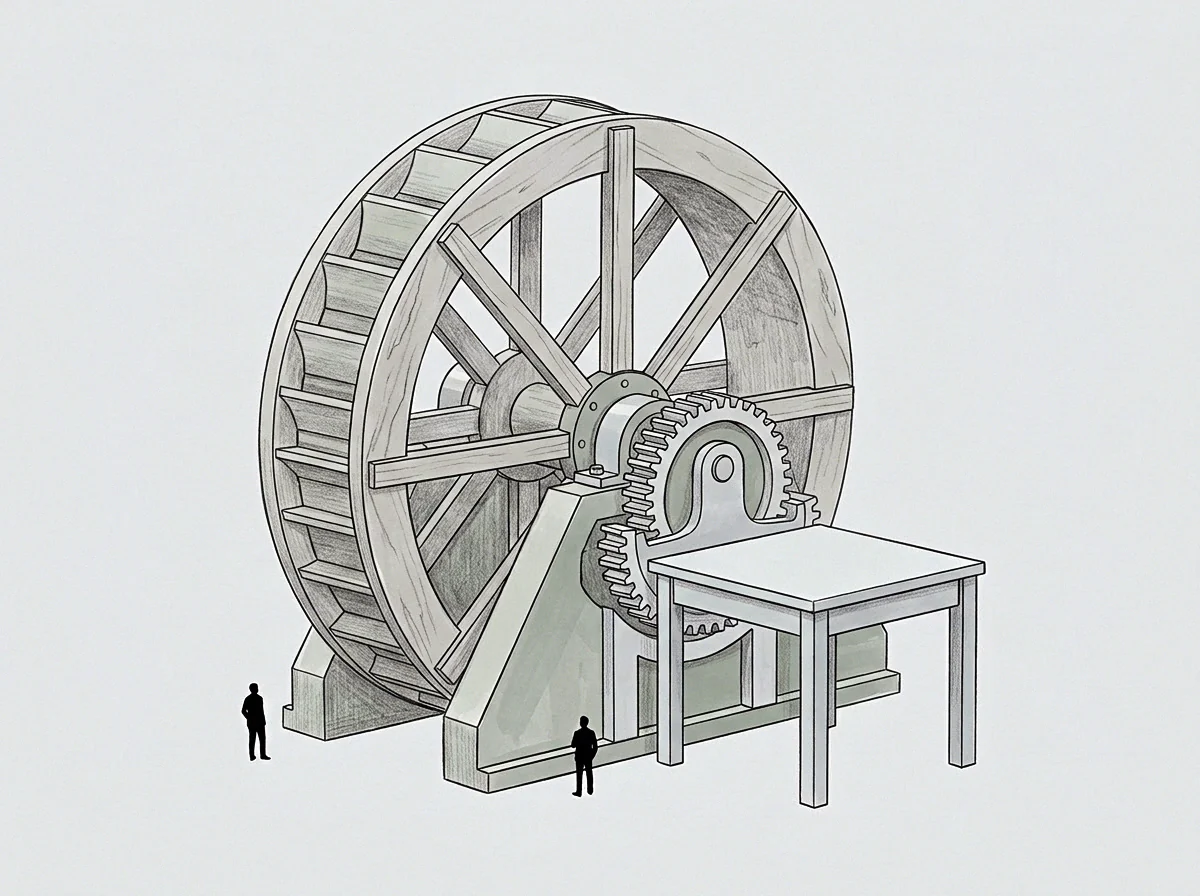
Working memory maintains a firm ceiling of roughly four active operational chunks before processing speed slows across every concurrent thread.
This state carries physical markers. Attention fractures into micro-intervals, physical tension settles in the gut and shoulders, and working memory drops peripheral context to handle immediate demands. Operators often misread this saturation as a personal failure or flagging commitment, while outside observers interpret silence as cold withdrawal or incompetence.
The bottleneck is entirely biological: the organization routes an exponential volume of unresolved choices through a system built for a linear queue.
A saturated prefrontal cortex stops initiating exploratory work. The nervous system protects baseline stability by dropping long-range calculations, leaving only immediate containment active. When a fifth high-stakes question arrives before midnight, the system simply drops it.
Ceiling

Throttling Distinguished From Regulatory Collapse
Occupational psychology and clinical diagnostics frequently conflate executive throttling with depressive withdrawal. A throttled operator continues executing bounded transactions with precision, signing payroll, approving vendor payments, and confirming logistical timelines on schedule. Self-initiated exploration, warmth, and voluntary strategic thinking disappear.
Clinical depression involves widespread loss of capacity across both structured and unstructured contexts. Throttling is a biological conservation response where the regulatory system shuts down expensive, self-directed neural operations to preserve baseline metabolic stability under continuous strain.
Allostatic load represents the cumulative biological cost of continuous adaptation to chronic stressors. When an enterprise doubles head count within two quarters, the founder’s daily regulatory demands multiply by an order of magnitude. Every team member introduces relational variance, competing priorities, and interpersonal friction.
The human organism manages relational strain through co-regulation and energy expenditure. When external demands exceed recovery periods, the system institutes protective throttling. The operator stops generating spontaneous ideas, avoids unscripted conversations, and treats casual inquiries as threats to remaining attention capacity.
Misdiagnosing this state carries high organizational costs. Board members, executive coaches, and peers often prescribe rest routines, retreats, or clinical interventions intended for affective disorders. These leave the underlying architectural bottleneck untouched.
A throttled executive returned to an unthrottled inflow re-enters conservation mode within forty-eight hours.
The regulatory apparatus protects itself by narrowing throughput. It executes structured tasks, shuts down open-ended items, and waits for structural relief that rarely arrives through willpower alone.

Friction

Context Switching and Cognitive Degradation
Cognitive science demonstrates that human attention does not divide; it sequences rapidly across discrete stimuli. Every shift between disparate domains incurs an executive cost termed attention residue. When an executive moves from a sales dispute to a database debate, residue from the first context degrades reasoning in the second.
The brain retains lingering activation from the previous problem, reducing available working memory for the task at hand.
Consider an enterprise growing from twenty employees to eighty over nine months. The founder faces an expansion of distinct problem domains arriving in compressed time windows. A typical morning might present five disconnected operational problems across ninety minutes.
The table below outlines how specific forms of attentional fragmentation degrade executive performance and generate acute allostatic wear.
| Attentional Mode | Operational Mechanism | Biological and Cognitive Tax | Direct System Consequence |
|---|---|---|---|
| Domain Thrashing | Alternating between technical, legal, and relational problems within ten-minute intervals | Severe attention residue and elevated prefrontal glycogen consumption | Superficial evaluations and reliance on blunt heuristics |
| Open-Loop Stacking | Holding unfinalized decisions pending external inputs without stated deadlines | Continuous background monitoring that consumes active working memory slots | Elevated resting cortisol and loss of peripheral information recall |
| Interruptive Polling | Monitoring real-time communication channels for unexpected operational anomalies | Sustained sympathetic activation and disruption of deep retrieval circuits | Inability to construct coherent multi-stage strategic forecasts |
| Relational Buffering | Absorbing lateral interpersonal frictions without institutionalized dispute paths | Acute allostatic load through forced emotional regulation for others | Relational withdrawal and blunt transactional communication |
High domain thrashing progressively degrades decision quality. As cognitive capacity drops under switching costs, the executive defaults to blunt heuristics, binary choices, and delayed approvals. Decisions requiring deep contextual integration get flattened into superficial compromises.
The organization slows down precisely when speed matters most, creating a loop of operational anxiety and escalated oversight.
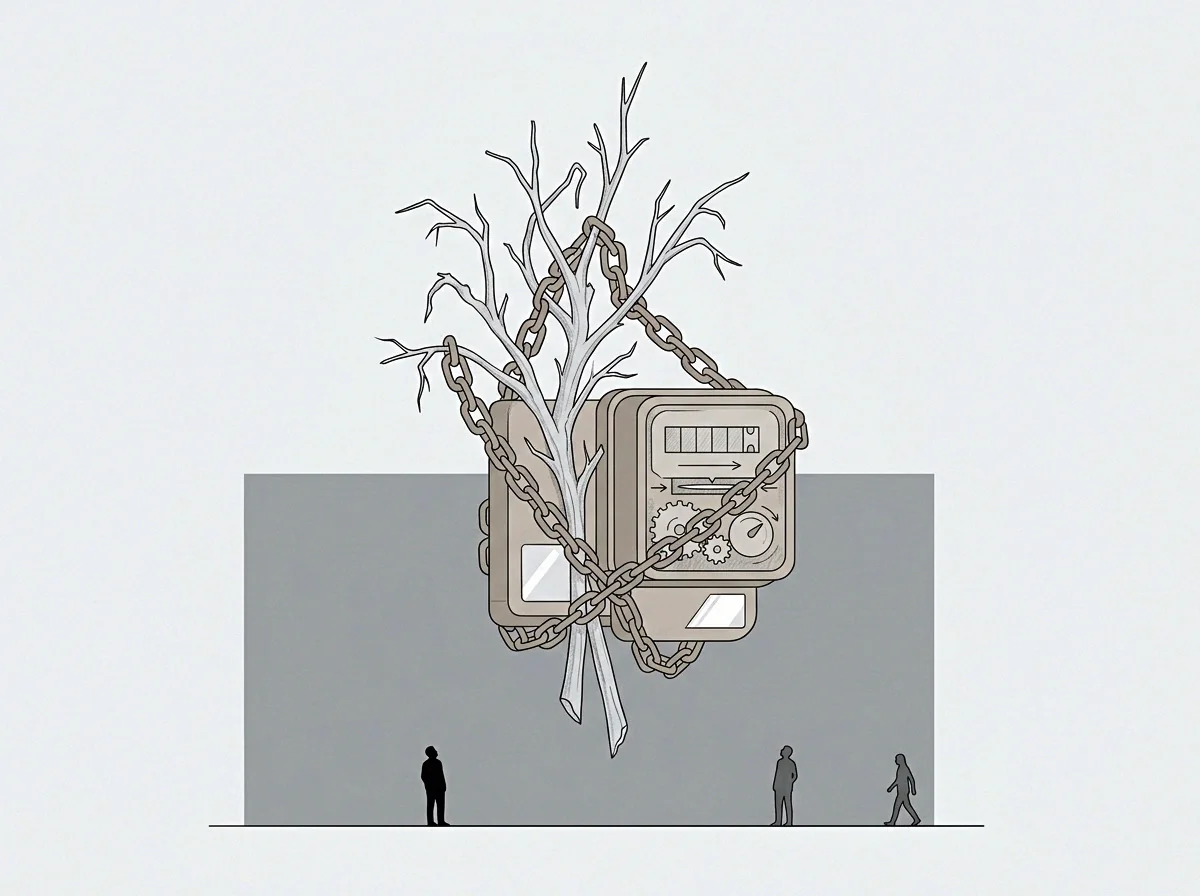
A thread lacking scope, delivery date, and explicit closure conditions occupies an active working memory slot indefinitely.
The organization often interprets this deceleration as a sign that the executive needs more context. Direct reports assemble detailed decks, schedule explanatory meetings, and produce denser documentation. This response amplifies signal density, worsening cognitive residue and accelerating executive exhaustion.
Channel

The Asymmetry of the Incoming Signal
Organizational scaling creates an asymmetric communication structure that targets the executive tier. Collaboration software reduces the effort of initiating a message to zero while leaving the effort of processing and resolving it entirely on the recipient. An engineer or product specialist sends a casual message in three seconds to surface an ambiguous problem.
That quick action offloads uncertainty from the sender and deposits an open loop directly into the executive’s working memory.
Incoming communications fall into two functional categories, alongside structural escalations:
- Gated threads have a bounded scope, an explicit resolution date, and defined acceptance conditions, allowing the operator to park them without active tracking.
- Ungated loops arrive without termination criteria, requiring background monitoring and regular check-ins that consume scarce working memory slots.
- Escalated vacuums emerge when operational ownership is ambiguous, prompting team members to route unresolved tension directly to executive attention.
The accumulation of ungated loops creates chronic cognitive friction. When an executive holds twenty open loops, active working memory is consumed by maintenance overhead. Nothing remains for strategic synthesis, structural evaluation, or planning.
The nervous system registers this state as an unresolved threat, maintaining sympathetic nervous system arousal and elevating baseline allostatic load.
This dynamic operates without malice. Subordinates route ambiguity upward because the executive has historically acted as the main point of resolution. Competence under load attracts unorganized operational tension out of the company and concentrates it into a single biological nervous system.
This structural arrangement remains viable while head count remains under fifteen. Past fifty employees, the model breaks down entirely.

Boundary

Converting Open Loops into Bounded Assets
Resolving this cognitive bottleneck requires structural changes rather than personal optimization. An operator cannot expand working memory, speed up prefrontal metabolic clearance, or manage exponential signal growth through discipline or scheduling software. The intervention targets thread architecture directly, establishing firm parameters before an operational issue reaches executive attention.
Every operational communication presented to the executive must arrive with three components: explicit scope, a definitive decision deadline, and clear acceptance terms. If an incoming issue lacks these, the protocol automatically returns it to the originating tier. This filter converts ambiguous loops into parked assets.
An issue with a future decision date and clear parameters consumes zero working memory slots until that date arrives.
Consider a typical growth scenario. An enterprise operates with forty employees, eight functional leads, and a single founder who historically vetted all commercial contracts, senior hires, and roadmap changes. The founder currently receives eighty-five ad-hoc communications daily across chat channels and inbox threads, operating at maximum cognitive capacity.
The intervention introduces a mandatory operational intake policy:
First, lateral real-time messaging channels to the founder are disabled. Second, operational leads submit structured decision requests once weekly through an asynchronous protocol requiring a bounded risk analysis, three resolution options, and a primary recommendation. Third, the founder provides determinations during a dedicated four-hour block on Thursday afternoons.
Implementing this structural gate alters executive cognitive allocation immediately. The founder’s active concurrency count drops from eighty-five ambiguous loops to eight predictable decision packets. Working memory clears, attention residue dissipates over uninterrupted morning blocks, and baseline allostatic wear stabilizes.
The organization initially experiences friction as functional leads accustomed to offloading immediate tension through quick messages must process operational uncertainty locally.
A structural limit stated clearly provides the first boundary an expanding company encounters that is not the founder’s physical collapse.
This friction drives organizational development. Operational leads build autonomy, the company documents its decision patterns, and the executive recovers the cognitive headroom required to navigate market positioning, capitalization, and enterprise strategy.

Clock

How Does Asynchronous Governance Protect Executive Throughput?
Synchronous operational communication forces an executive to process information in real time while managing live social dynamics. Social baseline theory demonstrates that human beings constantly calculate the metabolic costs of action based on the proximity and perceived reliability of social partners. Real-time meetings, unscheduled calls, and active chat threads demand continuous co-regulation and rapid context switching, multiplying metabolic expenditure across the workday.
Asynchronous governance severs decisions from immediate relational context. When an operational choice moves through written memos, structured documentation, and scheduled evaluation windows, the cognitive system evaluates the problem using deliberative prefrontal networks rather than reactive social circuits. This temporal buffer allows the executive to address problems when cognitive headroom exists, eliminating the acute stress spikes caused by unscheduled operational fires.
This model establishes predictable cadences. Deep thinking occurs in protected multi-hour blocks during periods of peak alertness, while routine evaluations and transaction execution move to lower-energy afternoon windows. The executive stops functioning as an uninterrupted real-time router and becomes a periodic clearinghouse for structured exceptions.
Transitioning to asynchronous governance tests organizational culture. Team members must abandon the notion that instantaneous responses correlate with operational excellence, accepting that ambiguous questions will wait for scheduled evaluation blocks. The consequence of failing this transition is clear: an enterprise that demands real-time executive responsiveness ultimately caps its own growth at the limit of its leader’s biological endurance.
The executive sets the boundary, enforces the intake protocol, and leaves the operational queue to move within its designated track.