
Establishing Enterprise Scaling Thresholds To Maintain Executive Capacity During Rapid Headcount Expansion
Enterprise scaling thresholds preserve executive capacity by delegating decision boundaries and filtering communication channels when headcount expands rapidly.

Lever
Sixty messages arrive before noon across four operational channels during a month where headcount grew by twenty percent. Each message requests executive sign-off, priority clarification, or a direct decision on resource allocation. In a company with thirty people, an executive resolves these requests through brief informal exchanges.
At three hundred people, those same exchanges consume eleven hours of the working day. The physics of organizational expansion dictate that communication pathways increase exponentially while personal cognitive capacity stays flat.
Interpersonal edges within an enterprise scale according to the formula of total nodes multiplied by active links divided by two. Growth in headcount creates a dense web of direct demands on leadership. Without structural gates, every new employee represents a new source of direct operational requests to executive desks.
The non-linear surge in incoming noise degrades executive capacity to perform strategic evaluation, eroding cognitive headroom early.
When communication channels grow without structural gates, message density scales quadratically while executive cognitive capacity stays constant.
A load-transferring system pushes inbound operational requests upward until it meets an unyielding boundary. Executives who rely on personal stamina rather than defined operational limits become systemic bottlenecks. Incoming notifications displace clear signal, continuous interruptions elevate stress markers, and cumulative operational fatigue sets in.
Failure to establish operational scaling limits leaves executive capacity saturated by administrative routing, forcing critical strategic choices into fragmented off-hour periods.

Ceiling
Executive capacity functions as a strict physiological and operational setpoint. The biological baseline of human decision-making limits high-level cognitive choices to a narrow daily band. Rapid headcount expansion subjects that setpoint to continuous stress.
The body manages continuous demand through allostatic adjustments, expending physical reserves to meet incoming pressure. Prolonged high demand depletes executive reserves, reducing analytical accuracy and emotional composure.
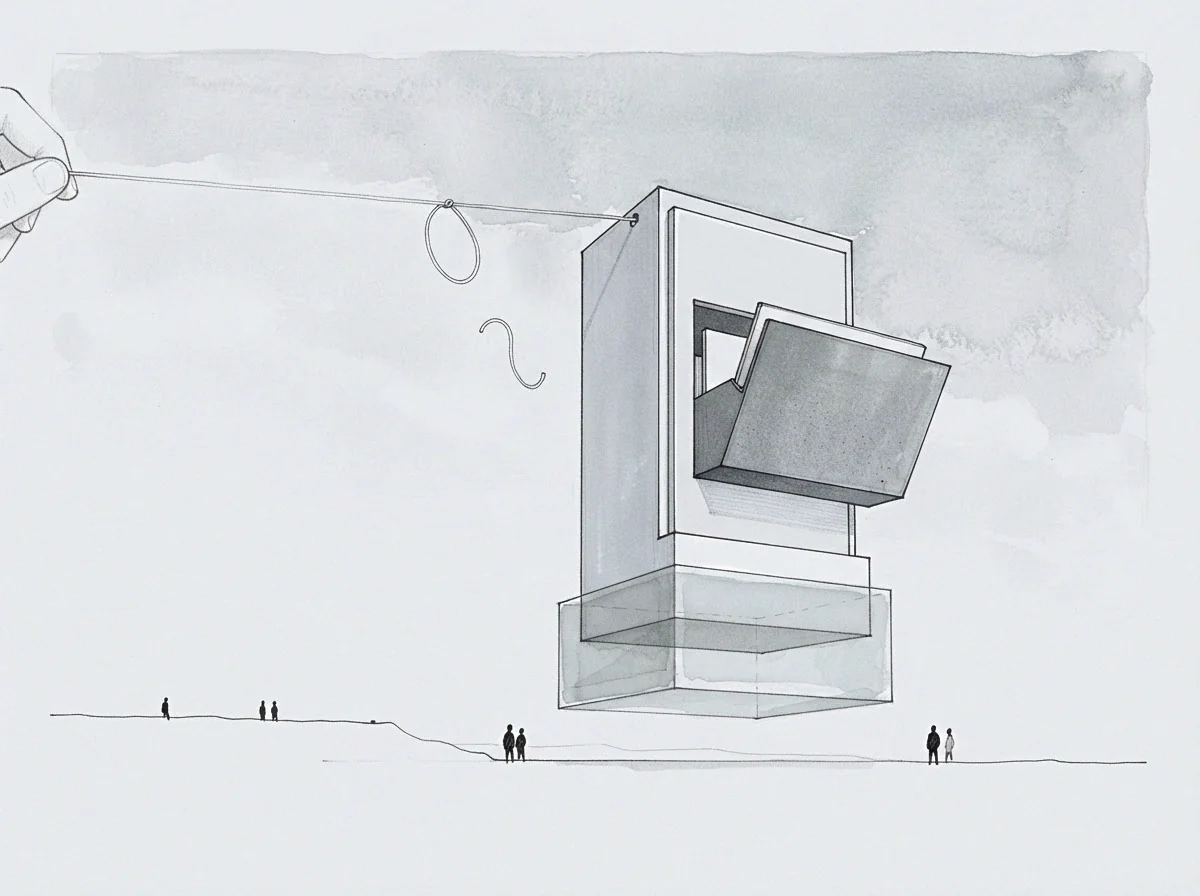
Executive Capacity Limits Under Density Pressures
Systemic overload occurs when operational volume exceeds executive processing limits. When headcount expands rapidly, administrative friction expands alongside it. Information processing shifts from proactive planning to reactive triage, and decision quality drops when executive attention scatters across dozens of minor approvals.
A stated cap on direct report approvals forces operational decisions down to the lowest local node.
Organizations require clear parameters to distinguish centralized choices from autonomous operational actions. A decision-gated act demands explicit executive authorization before execution can proceed. A state-gated act executes automatically once specific operational criteria and financial metrics are met.
Delegating state-gated actions to operational domain leads preserves executive headroom during high-growth periods.
| Operational Criterion | Centralized Routing Architecture | Threshold-Gated Architecture |
|---|---|---|
| Decision Bottlenecks | High concentration at executive layer | Distributed across domain leads |
| Response Latency | Scales linearly with headcount expansion | Stays constant through local execution |
| Executive Allostatic Load | Continuous saturation above baseline | Maintained within baseline daily setpoints |
| Operational Error Propagation | Systemic delays across departments | Isolated locally within bounded thresholds |
Establishing hard operational caps on direct report spans protects executive processing bandwidth. A maximum ratio of six direct reports per executive keeps incoming direct updates manageable. Expanding headcount beyond this limit without intermediate management layers forces executives into continuous context-switching.
Enforcing a hard span limit of six direct operational links restores forty percent of executive decision headroom within thirty days.

Signal
Communication systems in rapidly expanding organizations generate immense ambient noise. Unfiltered access to executive schedules invites continuous interruptions for minor operational questions. Executives who keep open access channels expose their capacity to uncoordinated incoming demands.
Managing inbound communication requires active signal filtering.
Does headcount expansion exhaust decision headroom?
The total volume of operational inquiries scales faster than revenue or headcount growth. Unfiltered digital messaging creates an operational expectation of immediate availability. Immediate availability destroys extended focused effort.
Executives who react to every digital notification trade strategic foresight for immediate availability. Structure absorbs volume.
Defining communication channels by priority isolates critical operational signals from routine business noise. High-growth enterprises require clear rules detailing when direct executive escalation is permitted.
- Channel Silence represents an intentional allocation of priority where silence signifies normal operational flow rather than neglect.
- State-Gated Autonomy transfers decision ownership to domain leads once revenue, cost, or operational metrics cross predefined numerical bounds.
- Priority Thresholds filter inbound communication through explicit metrics, rejecting unstructured escalation requests that lack complete contextual data.
The ping arithmetic of digital communications dictates that instant responsiveness invites higher message volume. When an executive replies to operational questions within minutes, domain leads stop solving problems independently. The channel that pings continuously becomes the default venue for resolving routine operational friction.
Waiting for executive authorization costs more operational capacity than resolving errors locally.

Bench
Managing executive capacity during headcount expansion requires predictable scaling thresholds. Consider an organization expanding from fifty to two hundred fifty employees over twelve months, assuming executive capacity sits at sixty active decisions per week. Without intervention, incoming decision requests escalate from twenty per week to over one hundred forty per week at the two-hundred-fifty headcount mark.
The organization must install tiered operational gates at specific headcount milestones to preserve executive function.
At the fifty-person threshold, executive authority relies on informal alignment and direct daily oversight. Crossing seventy-five employees breaks informal oversight mechanisms, introducing misaligned priorities and delayed approvals. At this stage, the enterprise institutes formal operational policies, defining clear spending limits and project ownership boundaries.
- Establish spending limits for domain managers at the seventy-five headcount mark, granting autonomous sign-off authority up to ten thousand dollars per transaction.
- Introduce middle management layers at the one-hundred-fifty headcount mark, re-routing all routine personnel and operational decisions away from executive desks.
- Implement strict state-gated operational triggers at the two-hundred-fifty headcount mark, granting department heads full authority over hiring within pre-approved budget lines.
Operational delegation functions only when local authority includes financial expenditure limits.
Authority stays static when leaders refuse to relinquish direct control over lower-level approvals. A concurrency limit defines the maximum number of active strategic initiatives an executive layer manages simultaneously. Limiting active strategic initiatives to three at a time prevents resource fragmentation across expanding operational units.
Executive capacity remains uncompromised when decision authority moves faster than organizational headcount expansion.

Brake
Maintaining executive capacity during periods of rapid headcount expansion requires hard operational braking mechanisms. When growth speed exceeds operational control systems, executive capacity suffers first. Strategic planning declines, decision quality drops, and key leaders burn out under relentless administrative demand.
The organization must enforce hard scaling thresholds that throttle expansion when operational systems show signs of distress.
A stated limit serves as an explicit operational boundary designed to protect leadership capacity. Stating a headcount pause when onboarding velocity threatens operational integration provides time to reinforce delegated governance models. Executives who establish clear scaling thresholds maintain the cognitive clarity required to guide enterprise strategy.
Throttling growth to preserve executive function demands discipline from leadership and investors alike. Pausing hiring for a quarter to build decentralized management structures ensures long-term operational resilience. Escalating headcount without establishing structural limits creates systemic operational fragility across every leadership layer.
When headcount growth outpaces governance capacity, the organization trades long-term executive capacity for short-term headcount expansion.