
Long Term Load Redistribution Mechanics Following Executive Capacity Boundary Implementation
Executive capacity boundary implementation shifts systemic operational load from real-time executive regulation to externalized terms and structural channels.

Post
Four communication streams remain open past midnight on a Thursday while executive processing capacity breaches its physical threshold. The person in the executive seat issues a single explicit statement establishing a maximum processing window and declining real-time intervention for operational escalations. This action sets a structural boundary.
Surrounding operational systems immediately encounter a firm wall where elastic availability previously existed. The executive seat historically functioned as an unbuffered shock absorber, taking on excess variance from surrounding operational nodes. Establishing a capacity ceiling changes the fundamental physics of the organization.
Operational load stops flowing inward and begins accumulating at the boundary interface.
Setpoints govern incoming volume. The Wall receives the initial push. The immediate structural outcome of a stated capacity boundary is the conversion of continuous executive intervention into discrete operational terms.
When an executive declares a fixed processing capacity, surrounding systems can no longer rely on real-time executive regulation to absorb procedural errors or decision delays. The capacity limit functions as a mechanical barrier rather than a personal preference. State acts as the primary transfer function determining system processing capability.
Mood carries zero system data. A founder operating with low physiological headroom cannot process incoming escalations effectively, regardless of administrative intentions. When capacity boundaries are established, the system encounters the absolute limits of executive energy reserves.
A load-transferring system pushes against a regulator until it meets an unyielding object. The stated limit is the first structural object that is not the person holding the seat. Prior to boundary declaration, external teams treat executive attention as an infinite resource.
Availability is derived by external actors based on historical response latencies rather than stated conditions. When real-time responses cease, external actors initially double their messaging frequency to test whether the limit is structural or emotional. The push intensified until the system confirms that the boundary holds regardless of escalation volume.
An explicit capacity wall forces surrounding operational nodes to absorb execution variance whenever real-time executive intervention ceases.
Pings signal priority order. Latency reveals structural allocation. Silence communicates an active position.
When an executive holds a stated limit, the immediate operational cost shifts to the surrounding network. Unprocessed operational inputs must find secondary processing locations. Teams accustomed to immediate executive arbitration experience temporary operational stalling.
This stalling period represents the initial phase of systemic load redistribution. The system tests the executive boundary to determine if continuous pressure will restore the old setpoints.
Maintaining unstated processing boundaries while continuing covert real-time interventions forces the executive to absorb infinite systemic variance until total cognitive collapse occurs.

Friction
The immediate response from dependent operational nodes takes the form of intensified escalation signals. Surrounding operational actors interpret the removal of continuous executive regulation as an emergency. The loss of borrowed executive regulation forces external nodes to manage their own operational anxiety.
This dynamic generates acute systemic pushback during the initial period following boundary enforcement. Pressure tests reveal operational setpoints. The system attempts to force the executive back into the co-regulatory seat through urgent messaging and artificial operational crises.
Covert contracts become visible during this phase. An unstated agreement previously existed where the executive absorbed operational complexity in exchange for execution velocity. When the executive boundary breaks this contract, dependent actors experience structural disruption.
The friction is not a sign of operational failure; it is the physical evidence that load is changing its path. Systems seek the weakest node. If the executive boundary wavers under initial resistance, the load-transferring system re-establishes its original baseline.
Holding the boundary requires surviving the initial surge of systemic friction.
- Escalation Signal Compression Surrounding team members condense multiple routine requests into high-urgency notifications to breach the newly stated window.
- Covert Contract Acceleration Operators invoke unwritten historical agreements regarding immediate access, interpreting delayed responses as structural neglect.
- Secondary Channel Proliferation Communication migrates from official direct channels to informal secondary routes in an effort to bypass stated processing limits.
- Responsibility Recoil Delegated decision makers halt autonomous execution at minor branch points, attempting to force executive re-entry through operational gridlock.
The executive seat often experiences intense isolation during this transitional period. Operational friction reaches its maximum intensity between seven and twenty-one days after initial boundary implementation. Surrounding team members continuously test the limit to verify its structural integrity.
The executive must allow operational friction to remain at the boundary interface without stepping in to regulate the emotions of dependent nodes.
A system accustomed to zero-latency executive regulation interprets any response delay as a localized operational emergency.
Allocation precedes actual task execution. Terms replace direct executive intervention. When operational friction peaks, the temptation to re-enter real-time regulation is high.
Re-entering the regulation loop at this stage destroys the boundary credibility. The load-transferring system learns that friction successfully collapses executive capacity limits. Maintaining absolute silence during designated off-line windows communicates that the boundary is a fixed property of the operational infrastructure.
Delayed response times indicate a complete structural refusal to support the operational team during normal baseline operations.
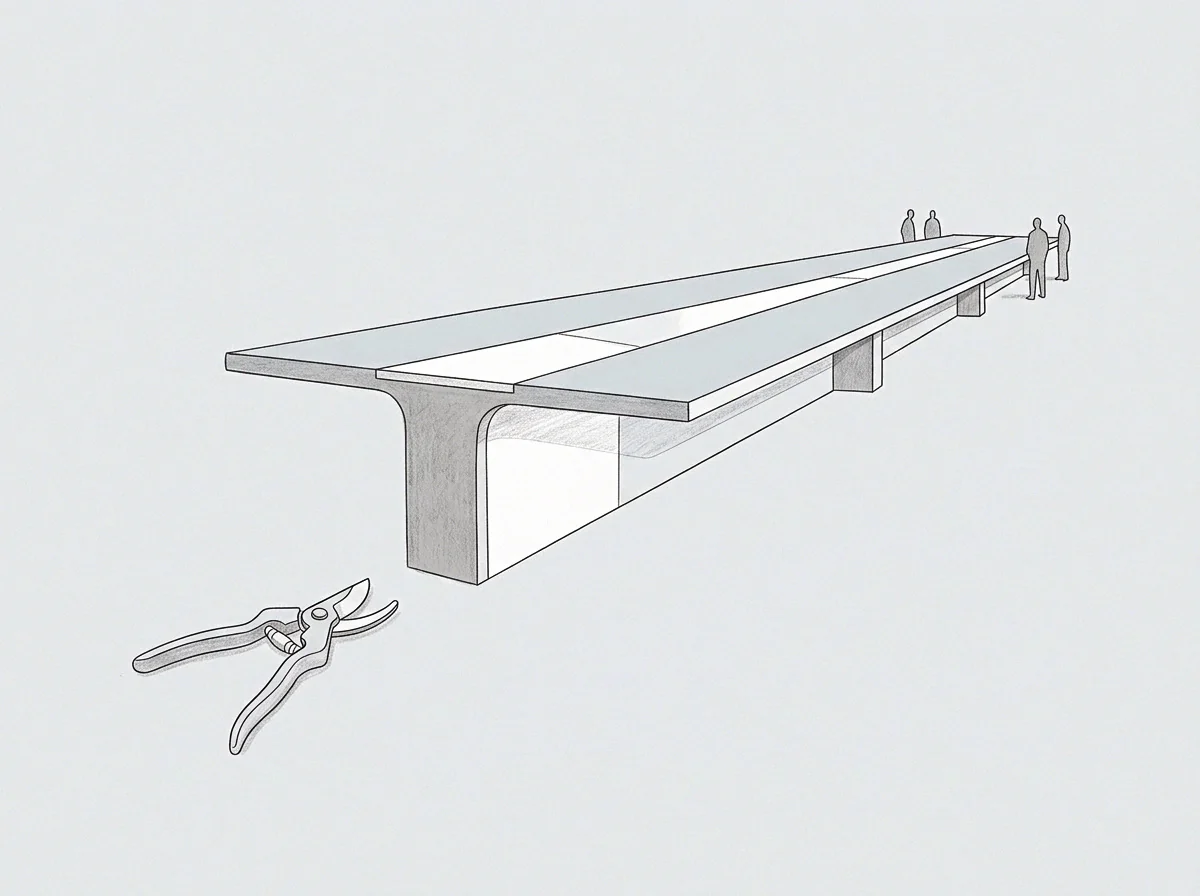
Valve
Long term load redistribution requires established structural channels that move processing weight away from executive cognition. The establishment of capacity boundaries forces the creation of external operational valves. These valves take the form of explicit delegation parameters, standardized decision trees, and hard authority thresholds.
Without concrete structural valves, incoming load simply pools against the boundary, creating operational backlogs that eventually breach executive capacity.
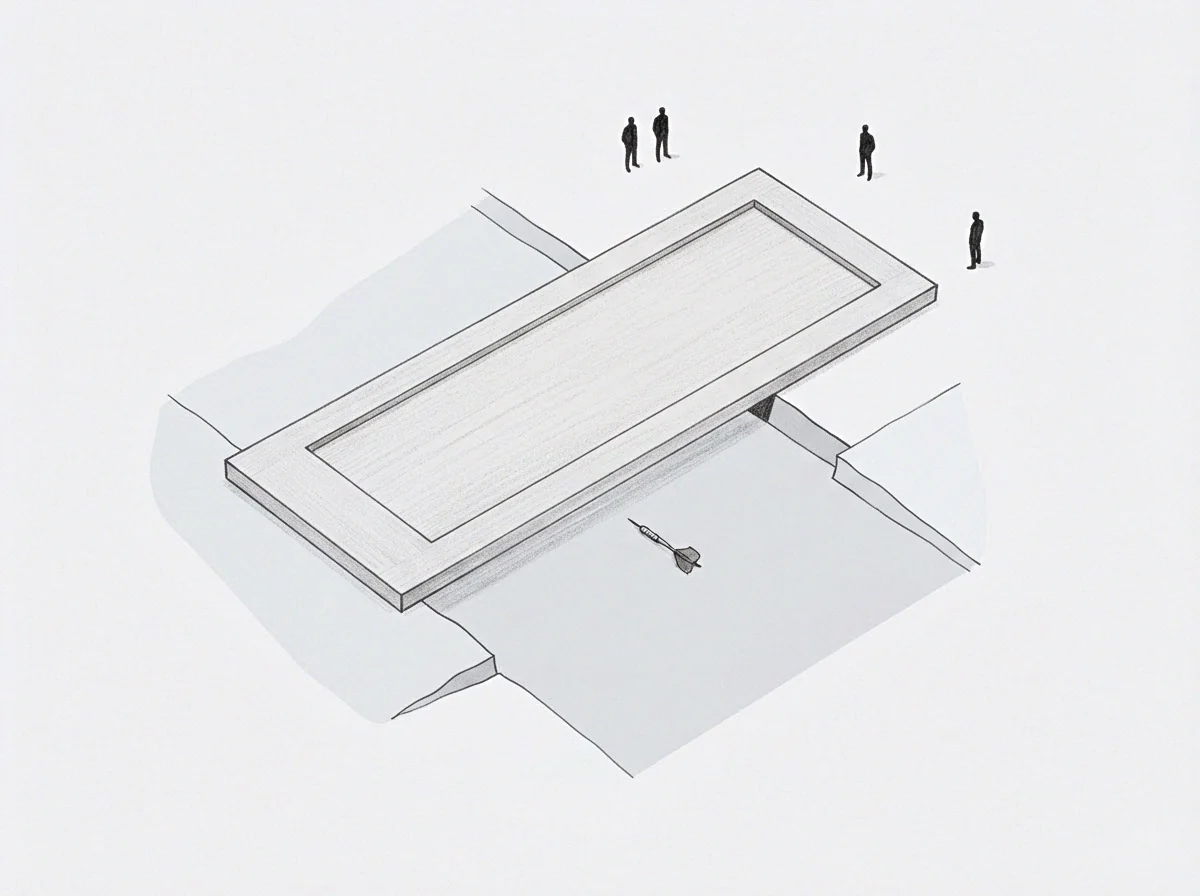
Why Does Delegated Load Return to the Executive Seat?
Operational tasks routinely migrate back to the origin point when clear conditions for execution authority remain unstated. Delegating responsibility without clear authority limits creates an incomplete load transfer. The subordinate node lacks the structural security to execute autonomously and returns the load to the executive seat for final validation.
True load transfer occurs only when the terms of authority are fully externalized and explicitly bounded.
| Operational Variable | Direct Capacity Throttling | Externalized Term Enforcement |
|---|---|---|
| Primary Regulation Mechanism | Time-window restriction and manual message filtering | Pre-defined decision protocols and automated operational gates |
| Systemic Friction Location | Direct interpersonal pushback at the boundary line | Interface boundary between operational nodes |
| Long Term Load Destination | Queued executive inbox backlogs | Autonomous operational resolution channels |
| Executive Energy Expenditure | High continuous boundary defense effort | Low periodic system maintenance effort |
Effective load transfer channels rely on explicit parameters rather than ongoing managerial oversight. The executive defines the boundary conditions, sets the operational budget, and steps back from continuous monitoring. If an operational node encounters a problem within its stated parameters, it must resolve the issue without escalating to the executive seat.
This structural requirement forces secondary nodes to develop internal problem-solving capacity, permanently altering the distribution of cognitive work across the organization.

Structural Routing Mechanisms
Permanent redistribution occurs only when processing rules are embedded directly into operational artifacts. Routing mechanisms operate as automated sorting systems for incoming decisions. Standardized operational protocols process low-variance inputs, while clear financial thresholds govern discretionary spending.
The executive seat remains entirely uninvolved in routine operational loops. Capacity determines long term survival.
When operational authority is bound to explicit metrics rather than personal approval, execution continues without executive involvement.
Unstated limits default to max capacity. When structural valves are correctly designed, executive workload decreases dramatically over a sixty to ninety-day horizon. The remaining incoming queries consist exclusively of strategic anomalies and high-severity edge cases.
The executive seat shifts from an operational traffic controller into a specialized strategic processor. Surrounding nodes assume full operational ownership, supported by the clear terms of the redistribution architecture.
Implementing an explicit execution clause that grants total decision authority for expenditures under twenty thousand dollars transfers eighty percent of daily operational micro-decisions away from executive review.
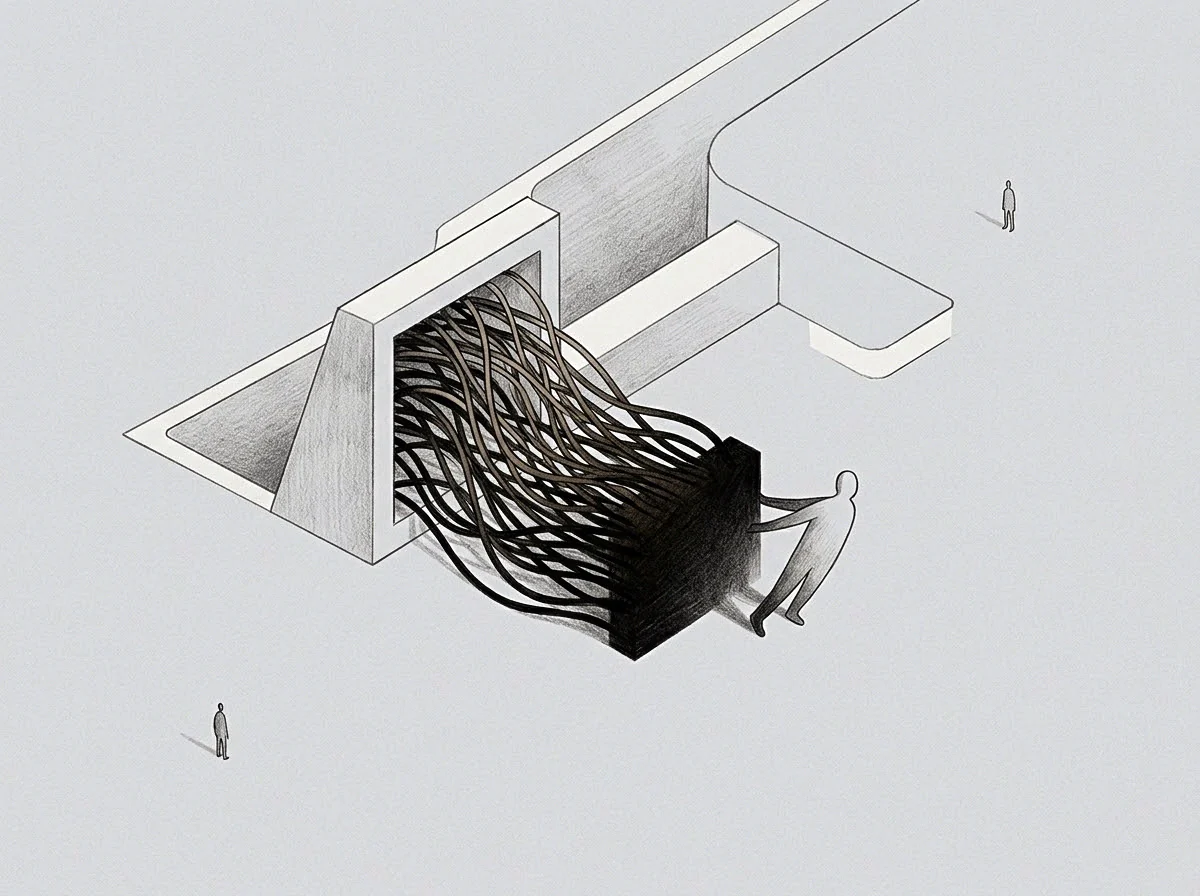
Drift
Physiological adaptation following boundary enforcement unfolds over extended timeframes spanning multiple months. Allostatic load, the cumulative physiological wear and tear on the body under sustained stress, does not instantly clear when a boundary is declared. The nervous system maintains an elevated baseline state for weeks after operational inputs decline.
Baseline stress responses remain active as the physiological system anticipates boundary failure or sudden operational crises.
Long term allostatic recovery follows a predictable timeline as internal setpoints recalibrate to lower baseline stress levels.
- Initial baseline physiological stress levels remain elevated during the first thirty days as the system anticipates boundary collapse.
- Cognitive processing headroom expands between days thirty and ninety as incoming messaging volume stabilizes at lower setpoints.
- Surrounding operational nodes establish autonomous co-regulation mechanisms after ninety days of uninterrupted boundary enforcement.
Consider physical endurance stress or sleep debt recovery, where physiological systems require weeks of consistent low-intensity conditions before autonomic setpoints reset to resting baselines. Operational systems behave under identical biological constraints. An executive who has operated at maximum capacity for years cannot instantly restore nervous system headroom upon issuing a capacity statement.
Biological drift toward baseline balance requires prolonged exposure to stable operational boundaries.
Research in social baseline theory demonstrates that proximity to reliable co-regulating partners reduces metabolic energy expenditure during threat processing. This physiological finding rests on neuroimaging experiments tracking hypothalamic responses under immediate physical threat conditions. Applying these findings to remote organizational environments assumes that explicit operational terms substitute effectively for physical proximity in dampening autonomic threat activation.
Should empirical longitudinal studies reveal that remote operational terms fail to attenuate hypothalamic stress markers without direct physical presence, current models of systemic load distribution will require structural modification.
Systemic setpoints recalibrate to match established walls only after repetitive testing yields consistent resistance across time.
Energy deficits force state gating. As physiological drift proceeds, the executive recovers deep processing capacity. The brain stops allocating cognitive resources to continuous environment scanning and operational monitoring.
Headroom accumulates. The executive seat regains the physiological reserves required for creative synthesis, long-range planning, and high-stakes decision making. The physical baseline settles into a stable, sustainable operational setpoint.
True capacity restoration occurs when the baseline expectation of immediate availability is replaced by confidence in predictable structural channels.

Grid
The stabilized operational state relies on derived availability and strict ping arithmetic. The operational network learns to calculate executive availability based on established terms rather than real-time presence. Silence from the executive seat ceases to represent an operational bottleneck; it signifies that secondary nodes are successfully managing system variance.
The organization transitions from a hub-and-spoke model dependent on executive regulation into a distributed grid operating on pre-set structural parameters.
Ping arithmetic measures the structural health of the network. A healthy operational grid exhibits low ping frequency to the executive seat, paired with high resolution depth at secondary nodes. When a ping reaches the executive seat, it arrives through structured channels carrying complete context, options, and recommended moves.
The executive seat acts as an execution gate rather than a real-time discovery engine. Acts become state-gated or decision-gated. State-gated acts depend entirely on available physiological headroom and cannot be forced through raw willpower when biological reserves are exhausted.
Decision-gated acts, conversely, execute immediately once formal criteria are met. The stabilized organization respects these boundaries, aligning task routing with the appropriate gate type. The executive seat remains protected by the grid architecture, ensuring that high-value cognitive capacity is reserved exclusively for system-critical interventions.
What structural parameters will govern executive load distribution when organizational scale introduces unprecedented operational complexity remains a subject requiring ongoing empirical observation.