
Structural Decoupling of Delegated Authority Systems Under Extended Executive Allostatic Exhaustion
Extended executive exhaustion decouples formal delegation charters from practice as depleted biology replaces institutional trust with defensive control.
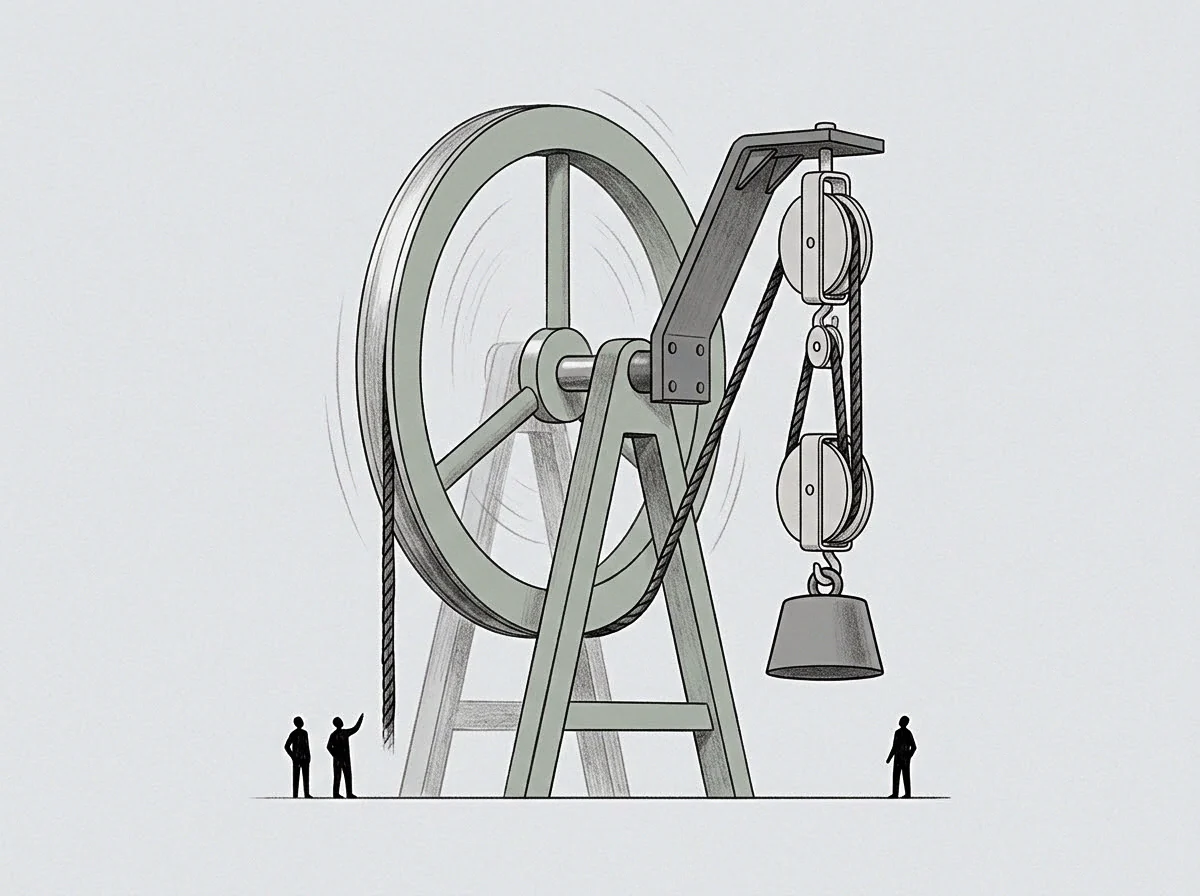
Fault
Four unread operational threads sat open on a screen at midnight while six direct reports waited for sign-off on capital allocations. The founder stared at a procurement approval for thirty-two minutes without registering the vendor name or the line items. Formal company charters assigned complete purchasing discretion up to fifty thousand dollars to the operating leads.
The actual operating reality contradicted the paperwork: staff members had learned through months of stalled initiatives that moving without an explicit nod brought retroactive executive reversals. The signed document sat in a drawer. The operational pipeline choked at the desk.
The formal chart says nothing.
When chronic stress saturation depletes executive reserves, the administrative governance of a company drifts away from its formal instruments. Organizational literature records this phenomenon as structural decoupling. In administrative science, decoupling describes the formal creation of institutional policies alongside everyday practices that disregard them.
Stress physiology demonstrates why the rift occurs. Prolonged elevation of neuroendocrine mediators alters prefrontal cortical functioning, dampening working memory, selective attention, and cognitive flexibility while elevating reflexive threat sensitivity. The biological organism reacts to ambiguity as physical exposure.
Decisions formally handed to others suddenly feel like unmonitored hazards. The founder therefore reclaims control through unspoken bottlenecks, late vetoes, and informal surveillance, even as official company announcements proclaim autonomous divisional leadership.
Under sustained allostatic overload, an executive system withdraws operational trust while preserving the external vocabulary of delegation.
The separation between written policy and daily behavior creates an invisible tax on working hours. Subordinates recognize that executing assigned duties according to written authority triggers founder alarm. They compensate by seeking preliminary alignment meetings, drafting defensive memoranda, and routing simple inquiries through backchannels.
The organization develops parallel circuits: one public track conforming to board expectations, and one defensive track designed to prevent executive surprise. The operational tempo decelerates. Initiatives stall in perpetual review cycles.
When governance charters pretend authority has transferred while physiological depletion compels the person at the centre to hoard every lever, the enterprise bleeds operational momentum until capital reserves dissolve.
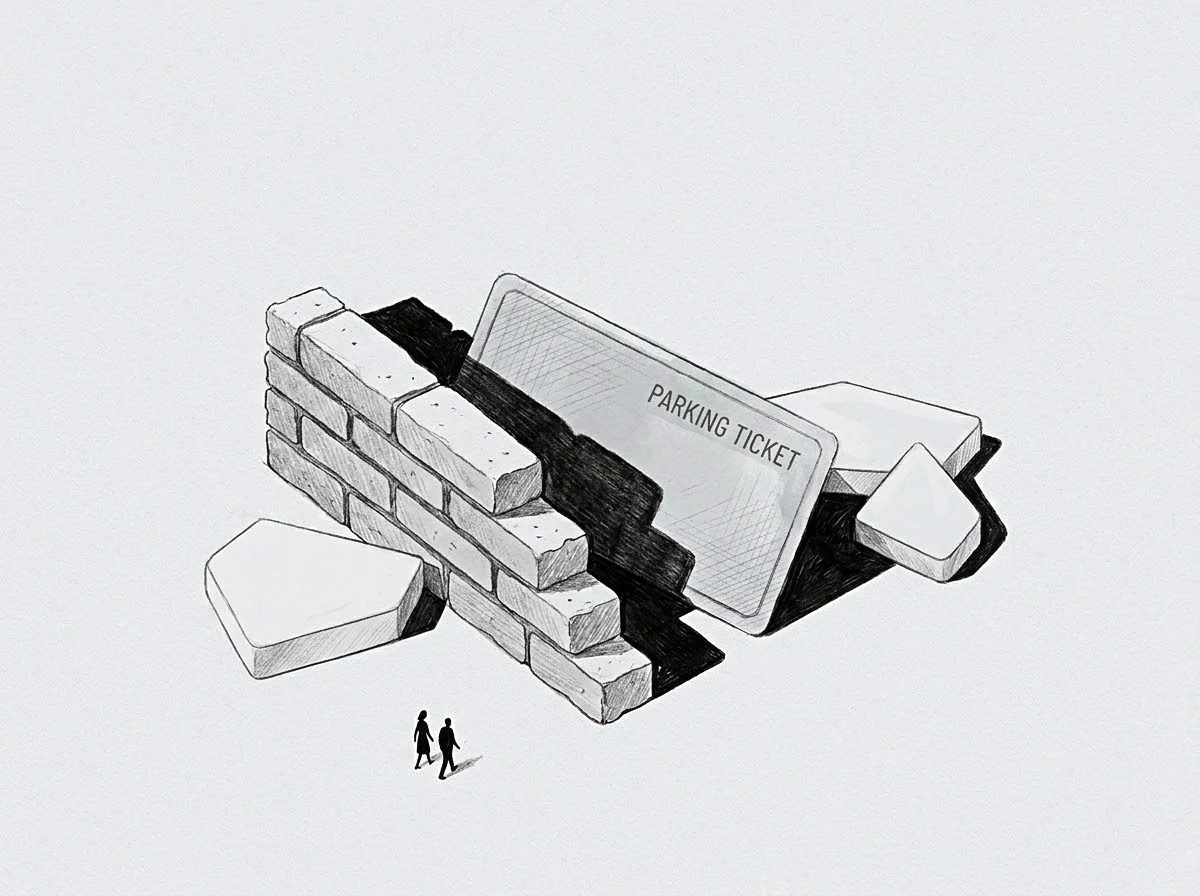
Wire
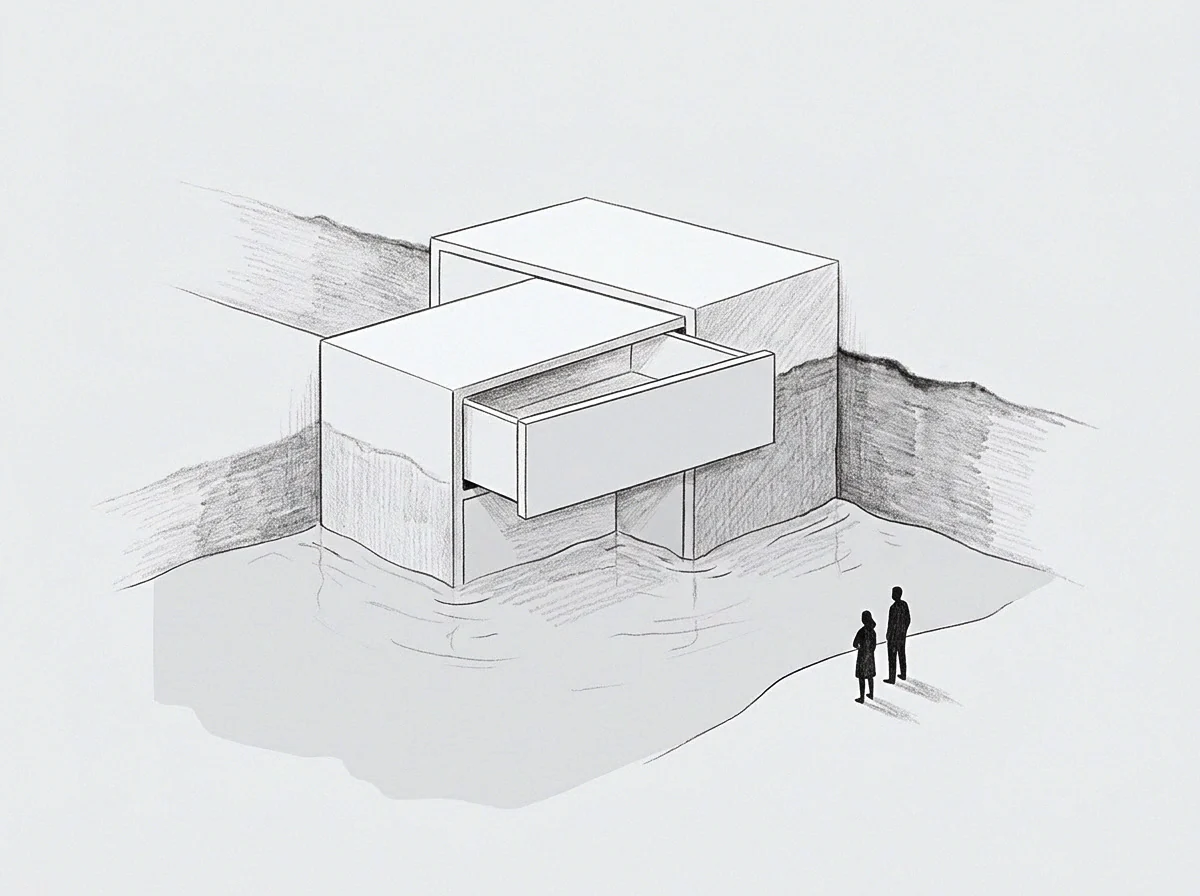
Transmission Pathways Under Depletion
Information travels through an organization along explicit circuits or informal channels. The formal charter specifies that divisional managers approve project specifications, negotiate supplier terms, and distribute quarterly budgets. Under severe cognitive depletion, the informal channel usurps the formal circuit.
The person at the top ceases reading weekly operational packets because processing dense data loads imposes an intolerable energetic demand. The calendar reflects the exhaustion.
A silent proxy steps into the vacuum.
This proxy is typically a long-tenured chief of staff, an executive assistant, or an early collaborator who possesses informal social access to the founder during off-hours. Subordinates quickly notice which inquiries receive answers. A formal memorandum submitted through proper project channels sits unacknowledged for twenty days.
A text sent through the proxy yields a binding decision in twenty minutes. The transmission path has moved off the chartered line. Staff members who wish to complete their weekly duties abandon the governance protocol and court the proxy.
- The shadow gatekeeper intercepts incoming divisional requests to filter operational stress before text reaches the executive desk, converting personal access into discretionary institutional power.
- The covert review loop runs parallel to scheduled executive committee sessions, settling strategic expenditures in private corridors prior to formal assembly.
- The dead-letter channel absorbs documented staff filings while generating zero operational movement, serving solely to fulfill regulatory compliance standards.

Will Nominal Charters Survive Prolonged Executive Depletion?
Written charters do not survive prolonged central exhaustion because human systems route work around silence. When an executive ignores structured delegation tools, staff stop relying on explicit limits. The following assessment outlines how structural channels diverge when executive reserves drop below operational baseline.
| Operational Dimension | Functional Delegated Governance | Decoupled Depletion Pattern |
|---|---|---|
| Decision Gateway | Chartered threshold based on fiscal risk | Informal access based on executive mood |
| Signal Routing | Explicit departmental documentation | Off-line messaging through designated proxies |
| Resource Allocation | Predictable schedule tied to strategy | Sudden impoundment driven by acute threat appraisal |
| Accountability Vector | Pre-established performance criteria | Retrospective fault allocation after reversals |
The divergence between the documented pathway and the actual pathway corrupts the organizational chain of command. Mid-level managers find their formal authority contested by lateral peers who secure private founder sanction. Department heads spend their mornings parsing ambiguous chat messages rather than executing corporate strategy.
Silence absorbs the request. The operator who has sat in these operational cross-currents for twelve months eventually articulates the reality: nobody here knows what they are allowed to approve until someone gets yelled at for spending fifty dollars on software.

Load
Biological systems under prolonged stress face metabolic trade-offs that dictate decision performance. The human nervous system maintains physiological equilibrium through allostasis, allocating hormonal, cardiovascular, and neural resources to meet external demands. When an executive runs at maximal operational expenditure for eighteen consecutive months without recovery, allostatic load accumulates into systemic exhaustion.
The body registers the strain. Neural imaging and clinical endocrinology demonstrate that sustained corticosterone exposure induces dendritic retraction in medial prefrontal regions alongside hypertrophy in the amygdaloid complex. This biological shift alters how a leader processes risk.
The reserve runs dry.
A decision is not merely an intellectual computation. It is a state-gated biological expenditure. In conditions of high physiological headroom, a founder evaluates a delegated team initiative by calculating market odds, structural dependencies, and capital returns.
In conditions of allostatic exhaustion, that same initiative registers as an uncontrollable error signal. The depleted nervous system treats autonomy granted to others as dangerous entropy. The individual attempts to suppress this systemic discomfort by demanding impossible reporting granularity, inserting redundant approval steps, and second-guessing completed staff actions.
A biological system operating at the ceiling of metabolic strain treats distributed autonomy as an unmanageable hazard.
Consider two organizations operating in the enterprise software sector with identical headcounts of forty engineers and twelve commercial leads. In the first firm, executive physiological reserves remain stable; delegation thresholds operate smoothly at twenty-five thousand dollars, allowing departmental leads to deploy feature updates every Tuesday without executive involvement. In the second firm, the founder has worked eighty-hour weeks across two years; delegation documents remain identical to the first firm, yet every feature update requires central sign-off at midnight.
Releases stall for seven weeks. The engineering team slows ticket resolution rates to match the executive choke point. The founder complains about staff passivity while rejecting staff autonomy.
The load transfers outward.
The field draws these findings from clinical samples of chronic occupational burnout and rodent models of prefrontal neuroplasticity under sustained restraint stress. The biological mechanism rests on reproducible glucocorticoid receptor downregulation and catecholamine dysregulation. What would challenge this finding is empirical demonstration that corporate leaders under verified long-term neuroendocrine depletion retain identical risk tolerance, delegation follow-through, and prefrontal cognitive control as baseline cohorts.
Organizational observation suggests no such resilience exists. How many months of severe operational exhaustion can a distributed management structure absorb before informal delegation workarounds permanently fracture the formal corporate governance architecture?

Rift
Operational divergence creates relational estrangement across the entire leadership team. When delegated authority decouples from institutional reality, working agreements become covert tests of endurance. Subordinates face a structural dilemma: exercise their formal authority and face executive reprimand for overstepping unstated boundaries, or hold work until the founder consents and face reprimand for lack of initiative.
The workforce chooses self-protection.
Capacity drops to zero.
In municipal water systems during heavy rainfall, operators divert untreated effluent into auxiliary basins to prevent pipe ruptures, accepting chemical contamination downstream to protect the physical pumping plant. Human organizations perform an identical compromise under executive strain. Staff divert real decisions away from the exhausted leader to protect the leader from decompensation, while absorbing massive downstream friction in daily operations.
Teams construct elaborate justifications for simple purchases. Managers withhold negative performance indicators from quarterly dashboards to avoid triggering panic. The actual business operates in the shadows while executive meetings deal with sanitized fabrications.
Authority leaks into informal channels.
This dynamic alters social baseline expectations. In social baseline theory, the human brain incorporates familiar social partners as bioenergetic resources; proximity to reliable counterparts reduces neural vigilance and metabolic conservation costs. Under chronic executive depletion, the opposite occurs.
The founder stops functioning as a co-regulatory anchor and transforms into a source of unpredictable environmental variance. The executive seat, instead of absorbing organizational ambiguity, generates systemic friction. Staff withdraw emotional investment and perform nominal compliance.
Distributed teams conceal operational operational realities when central leadership lacks the emotional bandwidth to absorb bad news.
The distance between governance theory and operational practice eventually becomes unbridgeable without external intervention. On this specific point, current organizational scholarship contains genuine disagreement: one camp asserts that tired leaders can deliberately reset delegation boundaries through cognitive reframing, while this desk holds that exhausted nervous systems cannot restore distributed autonomy through voluntary intention alone. When physiological reserves fall below the operational threshold, no amount of leadership seminars or motivational alignment documents restores delegated authority.
The founder who cannot sleep will keep grabbing the steering wheel.

Latch
Structural recovery requires mechanical barriers rather than goodwill. When an executive experiences extended allostatic exhaustion, appealing to trust, delegation training, or cultural values produces zero operational change. The organism cannot trust when its physiological baseline registers ongoing emergency.
Authority must be removed from central reach through explicit corporate instruments that operate independent of executive emotional state. The fence protects the seat.
The terms define the outcome.
To repair decoupled systems, an enterprise converts subjective managerial discretion into hard structural stops. An effective mechanism is the irrevocable treasury authorization: board-approved banking controls that permit department heads to disburse allocated budget without secondary executive signatures, paired with hard limits on founder visibility into minor transactions. When an executive cannot physically review receipts under fifty thousand dollars, the urge to micromanage meets an impersonal mechanical wall.
The operator assumes operational control.
- The statutory circuit breaker strips the central office of veto rights over product releases that satisfy predetermined quality metrics, delegating ultimate sign-off to lead technical architects.
- The communication blackout fence severs founder access to primary tactical chat streams, restricting executive input to weekly structured summary briefings.
- The escrowed operating budget places twelve months of departmental funding into independently managed accounts, removing the possibility of sudden fiscal impoundment by depleted executives.
The signal stops cold.
A second clinical observation reinforces this requirement. Medical stress research reveals that prefrontal metabolic recovery requires sustained reductions in sympathetic arousal across ninety-day intervals. If the executive retains nominal emergency override powers, cognitive load never resets.
The person remains on duty in their own nervous system. By constructing non-negotiable structural latches, the board or partnership insulates the enterprise while giving the depleted leader a bounded container where cognitive rest becomes physically possible. The founder experiences the structural fence as an initial shock, then as an energetic relief.
Work stops at the edge. The operating cadence changes.
The contract sets the boundary. Under the revised governance charter, any operational veto issued by the executive office on matters falling within departmental thresholds becomes legally void unless countersigned by two independent board directors, rendering informal interventions functionally powerless.