
Structural Intakes and Routing Parameters for High-Load Executive Systems Under Persistent Operational Ingress
Executive systems manage high operational ingress by configuring strict intake parameters, throttling queues, and enforcing state-gated routing boundaries.

Buffer
Four unread communication streams update on an executive terminal late on a Tuesday evening. Ingress channels deliver requests faster than the operator can evaluate, process, or route them. Direct messaging applications, operational management dashboards, email, and automated alert systems fire simultaneously.
Intake capacity operates on hard biological and cognitive boundaries. When incoming volume exceeds that threshold, unprocessed items accumulate in working memory and secondary queues. The system encounters high input pressure without an active intake throttle.
Standard administrative responses often attempt to handle volume through execution speed alone. Accelerating output fails when arrival rates exceed processing velocity. An executive trying to clear a saturated queue manually creates an open feedback loop that invites further messages.
Senders who receive immediate replies view the terminal as constantly available, driving up signal volume. Processing speed alone cannot clear an unthrottled queue.

Queue Saturated Input Processing
System design determines whether incoming demands accumulate in memory or drop at the boundary. An unbuffered intake mechanism exposes working memory directly to external operational variance. Every incoming ping forces an immediate context shift or consumes bandwidth through active inhibition.
Suppressing incoming notifications drains executive headroom even when messages remain unread.
When input processing exceeds execution bandwidth, secondary queues absorb operational signal until memory limits fail.
Operational ingress requires an explicit queuing architecture with defined arrival parameters. Without clear routing, high-priority operational signals mix directly with routine administrative chatter. The executive seat becomes a bottleneck, holding hundreds of unresolved loops across disparate domains.
Systemic saturation occurs when inbound task creation stays higher than systemic resolution over seventy-two hours.
Asynchronous Intake Mechanisms
Incoming items require structural sorting before reaching the executive seat. Asynchronous intake separates the arrival of operational signal from processing. Direct channels that alert the executive in real time force continuous micro-evaluations, which consume metabolic resources and degrade decision quality across subsequent operational hours.
Structuring intake as a batch mechanism turns chaotic arrival patterns into predictable processing cycles. An executive who processes ingress at fixed intervals retains control over cognitive allocation. External teams adapt to batch processing windows when turnaround parameters are explicitly stated.
Routing parameters define which signal categories bypass batching for immediate escalation. Whether an unthrottled intake system can ever stabilize without an explicit hard drop parameter remains unproven across continuous high-load operations.

State
The transfer function of an executive system determines what output a given operational input yields. That function varies based on internal operational headroom, active open loops, and incoming load velocity. When headroom sits near zero, an identical operational request produces passive delay or erratic decisions.
System state dictates execution capability regardless of professional intention or strategic alignment.
Mood represents a surface emotional output carrying no structural information about underlying execution capacity. Executive management frequently misinterprets capacity collapse as a temporary mood fluctuation. Treating systemic state depletion as an attitude issue leads to forced effort strategies that accelerate total capacity breakdown.

State Against Mood Operational Variables
Evaluating executive systems demands precise measurement of structural capacity variables rather than subjective emotional self-reports. Tracking these variables reveals where intake parameters break down.
- Headroom Saturation occurs when open loops consume available working capacity, leaving no margin for fresh operational signal.
- Loop Accumulation creates continuous background processing overhead that reduces execution speed across all active tasks.
- Ingress Velocity measures the arrival rate of incoming demands relative to the rate of task resolution over a fixed operational window.
When these variables cross critical thresholds, executive capacity degrades predictably. Decisions deferred under high state depletion generate operational confusion across subordinate teams.
Capacity Gating and Decision Latency
Certain operational acts depend entirely on available executive state and cannot execute through volitional choice alone. Complex strategic trade-offs, hard resource reallocation, and high-stakes conflict resolution represent state-gated actions. Attempting to force a state-gated action during physiological or cognitive depletion results in low-quality operational choices or complete decision latency.
Setting an operational term converts passive load absorption into explicit capacity evaluation.
Decision-gated acts, by contrast, rely on pre-established protocols and execute regardless of real-time state variance. High-performing executive systems convert frequent state-gated decisions into standardized protocols. Standardizing operational parameters protects executive state for non-routine strategic interruptions.
An executive who treats incoming demand as a personal obligation rather than a system input exhausts processing capacity long before operational ingress slows down.

Gate
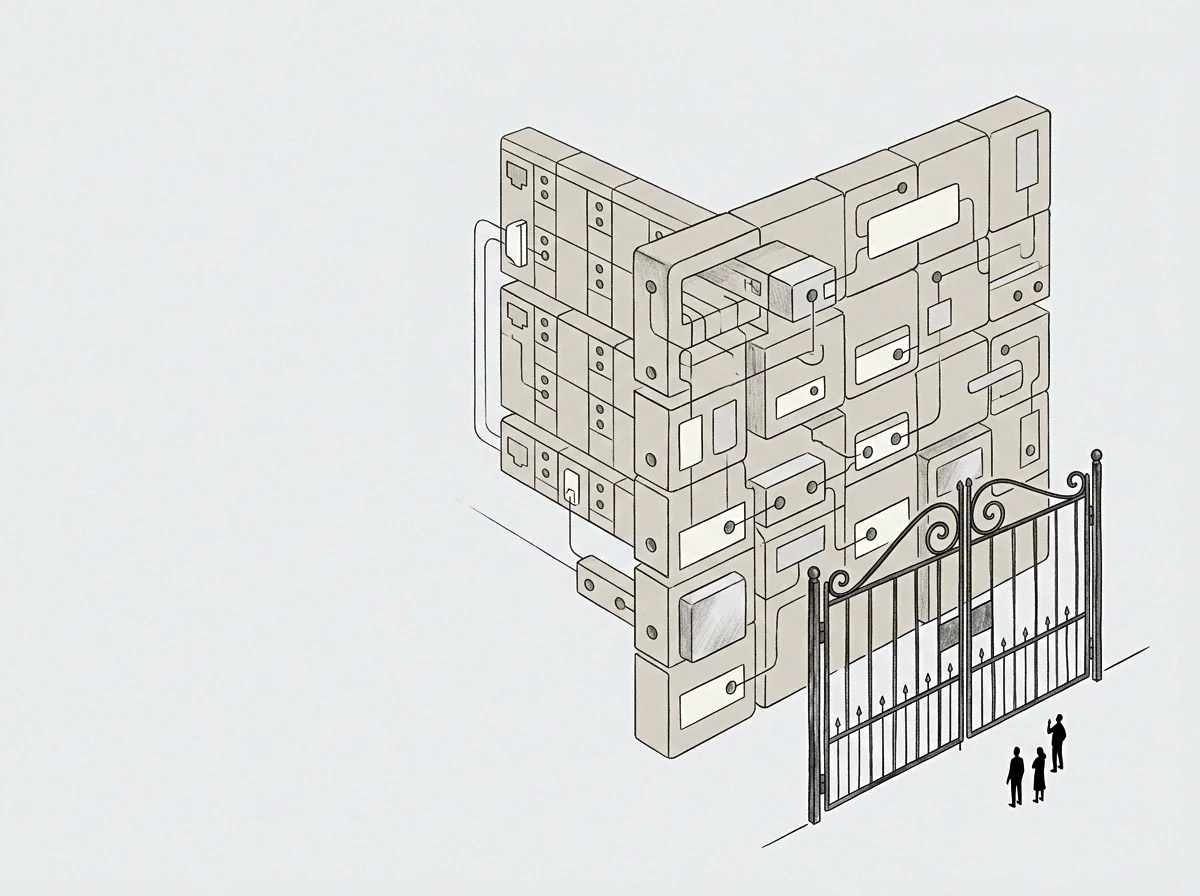
Filtering incoming volume requires physical and procedural barriers ahead of the executive terminal. A gate acts as a structural parameter that validates incoming items against explicit routing criteria. Unvalidated signal drops at the perimeter or diverts to secondary operational owners.
The gate transforms intake from a continuous pull model into an explicit push protocol with clear admission standards. Without an active gate, the executive seat operates as the default landing page for every operational ambiguity across the enterprise. Establishing functional gates requires clear institutional terms defining what constitutes a valid executive escalation.

Can Intake Throttling Preserve Executive Bandwidth?
Throttling intake volume protects executive capacity by enforcing strict queue limits and signal criteria. Implementing intake throttling creates initial friction with external partners accustomed to instant access, demonstrating that executive availability represents a scarce, high-cost operational resource.
| Routing Architecture | Latency Profile | State Allocation Cost | System Failure Mode |
|---|---|---|---|
| Synchronous Direct Routing | Zero immediate latency | Maximum continuous expenditure | Executive cognitive collapse |
| Asynchronous State-Gated Routing | Bounded batch latency | Conserved dedicated allocations | Queue overflow at perimeter |
| Delegated Tiered Routing | Variable triage latency | Minimal executive expenditure | Secondary team queue saturation |
Throttling protocols establish deterministic intake rules. Operational items failing signal quality standards return to the sender for refinement before entering the queue.
Routing Parameters for High Velocity Signal
Managing high-velocity ingress requires clear classification parameters applied at the intake boundary. Implementing structured triage protocols prevents low-priority administrative tasks from saturating executive channels.
- Intake Quota Stated defines the maximum volume of operational items accepted per processing cycle.
- Signal Filtering Applied routes incoming operational items based on pre-established classification parameters rather than urgency cues.
- Hard Drop Executed closes the processing channel once maximum queue depth is reached.
Enforcing these routing steps keeps executive processing focused on high-leverage strategic objectives. Failing to establish a physical parameter for intake routing forces the executive system to rely on continuous emotional regulation, incurring high physiological costs and eventual decision failure.
Signal
Communication channels carry structural signal regarding operational priority and system health. The volume, timing, and frequency of incoming messages generate a mathematical pattern. Ping arithmetic measures incoming request frequency against resolution capacity over operational time blocks.
An unthrottled channel characterized by continuous high-frequency pings signals structural chaos in underlying operations. Senders ping repeatedly when task ownership, status tracking, or escalation parameters lack institutional clarity. Responding to every ping reinforces that underlying deficiency.

Ping Arithmetic in High Velocity Channels
High ping velocity drains cognitive focus and breaks deep work allocations into micro-intervals. Calculating the ping ratio reveals whether a communication channel functions as an operational asset or a structural drain. A high ratio of inbound requests to actionable decisions indicates improper intake parameter configuration.
Silence on an unthrottled channel indicates operational saturation rather than structural refusal.
Tracking ping source distributions exposes team dependencies and broken operational delegation pathways. When a single operational node generates a disproportionate share of intake volume, the underlying delegation architecture requires structural redesign.
Derived Availability and Channel Silence
Availability is derived by external parties based on observed executive responsiveness rather than formal announcements. Announcing restricted availability while continuing to reply to late-night messages creates conflicting operational signals. External senders test stated limits by pushing messages through open channels.
Silence on an unthrottled channel communicates capacity exhaustion rather than strategic refusal. Establishing clear position parameters allows channel silence to function as a predictable system state. External partners learn to read channel silence as a signal that executive intake has reached capacity limits for the current processing window.
The operator assumes that silence across open communication channels reflects personal detachment rather than structural intake overload.

Tether
Executive systems do not operate in complete isolation from the surrounding organizational structure. The tether represents the operational and structural coupling between the executive terminal and secondary operational units. Structural load transfer occurs continuously across this connection.
When secondary units lack execution capacity or clear parameters, operational load migrates upward to the executive seat.
Unclear organizational boundaries cause operational ambiguity to flow toward the highest level of authority. The executive becomes the structural dumping ground for unowned operational problems. Preventing upward load migration requires establishing firm operational terms and explicit delegation parameters.

Structural Load Transfer Across Operations
Transferring operational load back to secondary units requires clear structural boundaries and consistent term enforcement. An executive who routinely absorbs secondary operational tasks weakens subordinate accountability and exhausts personal processing capacity. Secondary units must maintain capacity to resolve operational ambiguities at the local level.
Co-regulation across organizational units depends on predictable intake and output behavior at every node. When executive intake parameters fluctuate wildly based on mood or pressure, secondary units lose the ability to align intake expectations. Predictable executive parameters create stability throughout the surrounding operational network.

The Term as Structural Wall
A stated term operates as a physical wall against upward load transfer. The term specifies exact operational boundaries, turnaround times, decision criteria, and intake quotas. Stating terms once eliminates the need for continuous personal negotiation over incoming operational items.
A system without a stated term transfers load to the person holding the seat.
The term stands as an objective system object rather than a personal refusal. When operational ingress hits a stated term, the sending unit must resolve the item locally, hold it in a secondary queue, or reallocate necessary resources. Setting structural terms protects executive state and preserves operational integrity across the wider organization.
When a contract incorporates an explicit daily intake cap of three operational escalations, incoming pressure redirects away from the executive seat toward secondary intake layers.