
The Governance Boundary Where Rapid Operational Expansion Irreversibly Destroys Executive Attentional Reserves
Rapid operational scaling creates exponential exception escalations that destroy executive attentional reserves unless bounded by rigid governance filters.

Spike
Four operational messaging channels flash simultaneously on an executive display past eleven in the evening. Each message arrives from a different department lead with a problem framed as an urgent exception requiring senior intervention. The executive sits before the screen, processing inputs when personal cognitive reserves are already depleted.
Operational expansion across three regions doubled transaction volume within ninety days, doubling the rate of inbound exceptions reaching the center. The organizational apparatus keeps pushing decisions upward because no structural wall stops the transmission.
When operational expansion moves faster than authority can be codified, the executive seat becomes a default load-transfer destination. A load-transferring system routes friction along the path of least resistance, which in early-stage enterprise architecture leads straight to the founder. The immediate cost is an acute surge in attentional consumption, drawing on finite cognitive bandwidth that previously sustained long-range governance and capital allocation.
The rate of inbound operational exceptions expands exponentially whenever organizational headcount outpaces the formal codification of decision limits.
Attentional capacity acts as a fixed physiological currency. A decision-maker operates under strict setpoint boundaries governing processing speed, working memory, and emotional regulation. When incoming operational signals exceed processing capacity, the system enters perpetual cognitive overload.
The brain responds to sustained overload by elevating cortisol and baseline sympathetic arousal, triggering allostatic load. Over time, high allostatic load degrades executive function, narrowing the attentional field to immediate threats while disabling long-horizon evaluation.
The core mechanism is a subtle operational erosion. As daily interruptions increase, deep work periods compress into fragmented intervals of fewer than ten minutes. Task-switching costs consume up to forty percent of effective attentional capacity, leaving the executive perpetually reactive.
Inbound signals arrive without filtering, forcing the executive to evaluate routine vendor disputes alongside existential capital decisions. The enterprise continues to scale its external footprint while its central processing unit undergoes rapid operational degradation.
Continued operation above this capacity setpoint causes structural decay across the executive layer, bringing delayed governance decisions, increased decision fatigue, and systemic organizational paralysis.

Attentional Reserves Under Scale Pressure
Scale pressure alters the input stream reaching the executive seat. In a small enterprise, the founder maintains direct ambient awareness of operational context, allowing rapid decisions with minimal cognitive friction. Expansion breaks ambient awareness.
As operational surface area grows, context must be explicitly communicated through text, metrics, or verbal reporting, taxing executive working memory far more heavily than direct observation.
An enterprise frequently mistakes executive responsiveness for operational capacity. When an executive answers late-night queries promptly, team members learn that the central node remains available to absorb friction. This dynamic creates a positive feedback loop: elevated executive availability encourages more exception routing, which increases attentional drain and deepens systemic reliance on the central node.
The organization consumes its executive attentional reserves to make up for missing governance boundaries.

Drift
Gradual erosion of operational boundaries occurs long before structural collapse becomes visible to external board members. Without explicit decision thresholds, operational authority slips upward into the executive suite through an unmanaged migration of accountability. Middle management, seeking to mitigate personal risk in a fast-changing environment, escalates standard operational choices under the guise of cross-functional alignment.
The executive layer absorbs these choices without recognizing the shift in baseline responsibilities.
This upward migration creates systemic organizational latency. Decisions sit in executive queues for days, stalling frontline execution while attentional reserves burn down. The executive operates under the illusion of control while the organization experiences severe operational drag.
The capacity to distinguish high-priority strategic threats from routine operational noise disappears under the weight of continuous queue processing.
Organizational behavior under sustained attentional exhaustion manifests through recognizable failure states across operational lines:
- Unfiltered Escalation occurs when direct reports pass unresolved operational choices straight to the center without preliminary filtering or recommendations.
- Priority Inversion develops when urgent minor operational fires routinely displace high-impact strategic initiatives on the executive agenda.
- Cognitive Throttling appears when the executive delays reviewing complex proposals due to raw exhaustion, creating enterprise-wide execution bottlenecks.
- Covert Centralization emerges when middle managers stop exercising implicit authority altogether, assuming the executive prefers direct oversight of all variables.
The system operates in continuous reactive adjustment. High-volume, low-complexity tasks consume the early hours of the day, leaving complex governance challenges for late evenings when cognitive capacity reaches its lowest point. Strategic error rates increase sharply during these late-hour windows.
The enterprise pays for this structural deficit through degraded decision quality and compounding operational debt.
Unstated Setpoints and Operational Spill
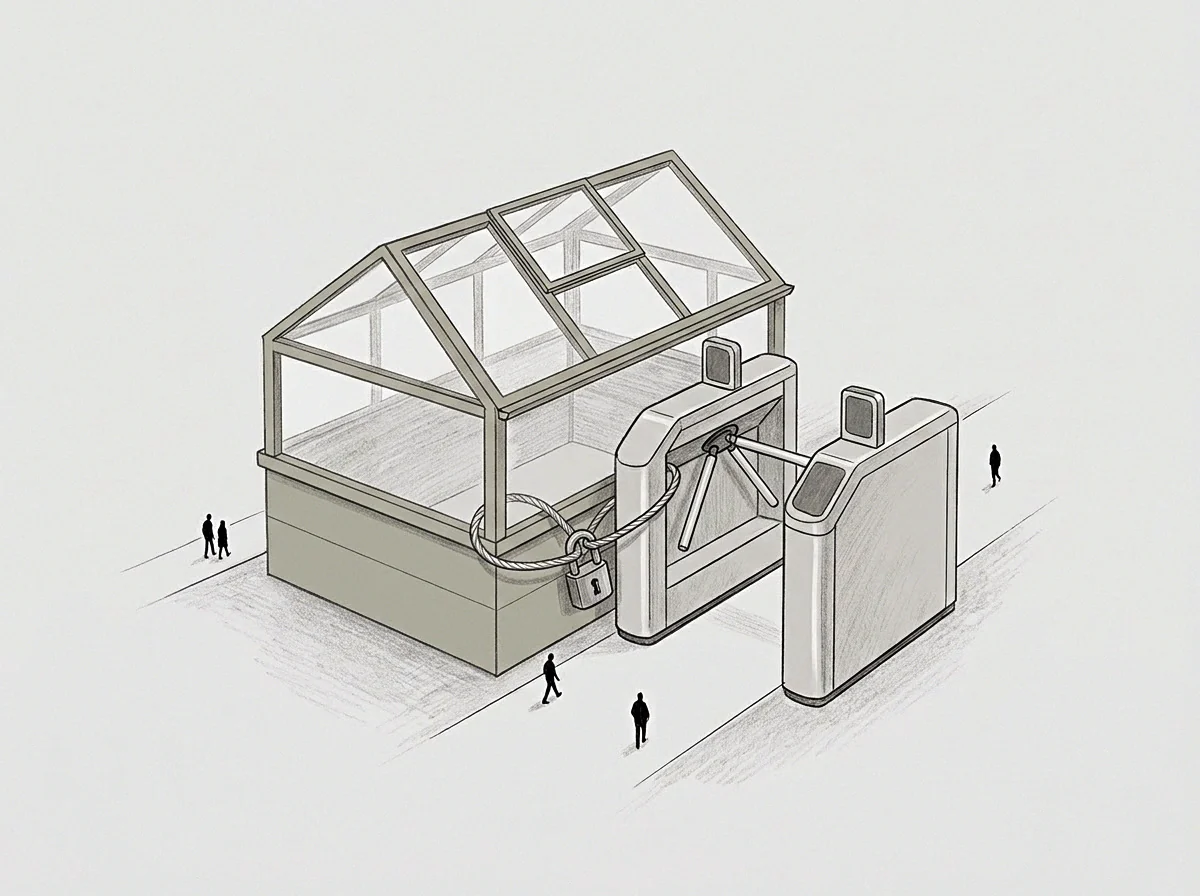
Every operational system functions around setpoints, whether stated or implicit. When an executive fails to state explicit boundaries around personal availability and authority levels, the system defaults to continuous access. The operational queue expands until it hits a physical wall, usually the physiological collapse or complete withdrawal of the person in the seat.
Operational spill describes the condition where unresolved line-item problems overflow designated channels and inundate governance forums.
Mitigating operational spill relies on establishing rigid structural barriers rather than relying on individual discipline. An executive cannot simply resolve to ignore incoming messages while the underlying governance architecture encourages upward escalation. Unclear decision rights force prudent managers to escalate issues to protect their own standing.
Governance architecture must specify exact monetary, operational, and strategic boundaries where authority sits firmly within line management.
The central leadership team feels isolated, exhausted, and burdened by a staff that appears incapable of taking independent initiative.

Filter
Structural gating separates functional executive seats from operational bottlenecks. An effective concurrency limit restricts the number of active, high-priority initiatives an executive carries simultaneously. Without hard concurrency limits, rapid operational expansion spreads executive attention across dozens of open loops, ensuring that no single project receives sufficient cognitive focus to reach completion.
Implementing structural filters alters the flow of information across the organizational chart. Rather than acting as an open processing hub, the executive seat transitions into a low-frequency, high-impact governance node. Information passing upward meets strict entry criteria, requiring lower-tier operational nodes to fully process, contextualize, and offer recommendations before an exception enters the executive queue.
| Governance Dimension | Reactive Availability Regime | State-Gated Throttling Regime |
|---|---|---|
| Exception Routing | Direct escalation to executive queue upon operational friction | Mandatory resolution attempt at line level with documented options |
| Decision Rights | Implicit, highly centralized at the founder seat | Explicit financial and operational thresholds per role |
| Channel Architecture | Continuous real-time messaging across multiple unmonitored apps | Asynchronous governance updates with fixed ping windows |
| Capacity Impact | Exponential attentional depletion and systemic queue backlogs | Bounded attentional expenditure and predictable execution pace |
| Primary Failure Mode | Executive burnout and strategic drift | Localized operational friction during boundary enforcement |
Adopting a state-gated throttling regime forces lower-level management to develop operational competence. When line managers realize that immediate upward escalation is structurally unavailable, they begin exercising authority within their domains. The organization converts former escalation pathways into internal skill-building opportunities, strengthening middle management while protecting executive capacity.
Executive capacity stays protected only when the cost of escalating an unresolved problem exceeds the local cost of making an imperfect decision.
The primary barrier to implementing structural filters sits inside executive psychology. Executives often derive personal validation from high operational visibility and constant problem-solving. Stepping back from real-time operational fires feels like losing control of the enterprise.
This hurdle leads executives to resist hard limits, preferring personal exhaustion over structural detachment. Successful scaling demands overriding this emotional bias in favor of rigorous governance design.

Structural Limits and the Ping Threshold
Communication protocols govern executive attentional reserves. The modern enterprise environment relies on low-friction digital channels that treat every inbound message with equal urgency. A continuous stream of pings fractures executive attention into micro-intervals, making sustained analytical processing impossible.
Establishing an explicit ping threshold protects executive deep work blocks from routine operational chatter.
A ping threshold defines the conditions under which real-time interruption is permitted. Emergency escalations require strict criteria: immediate financial loss above a defined dollar figure, core infrastructure downtime, or severe legal exposure. All other operational communications route to asynchronous daily or weekly summaries.
By enforcing this distinction, the organization builds a protective buffer around executive attentional reserves, preserving high-value cognitive capacity for strategic governance.
Governance frameworks hold firm only when boundary violations carry predictable operational friction.

Tally
Quantifying attentional drain requires tracking the balance between cognitive inputs and available recovery bandwidth. Consider an enterprise scaling from twenty to two hundred employees over twelve months. At twenty employees, the executive handles approximately five direct escalations daily, requiring two hours of total attention.
At two hundred employees, without structural intervention, escalations scale linearly or quadratically, reaching fifty daily interruptions that demand ten hours of direct involvement.
Assume the executive possesses an absolute ceiling of four hours of high-quality cognitive focus per day. When daily escalation demand reaches ten hours, a cognitive deficit of six hours occurs daily. The executive attempts to bridge this gap by extending work hours, cutting sleep, and working through weekends.
This survival response yields diminishing returns, as cognitive output per hour drops sharply under chronic sleep deprivation and elevated allostatic load.

At What Capacity Ceiling Does Delegated Authority Fail?
Delegated authority breaks down when line managers lack clear operational parameters or sufficient context to execute choices independently. When an executive delegates authority without transferring context, lower-tier managers make choices that conflict with overarching strategic intent. These conflicting choices trigger operational fires, which inevitably escalate back to the executive seat for correction.
The failed delegation cycle consumes significantly more executive attention than retaining direct control would have drawn initially.
To avoid this failure trap, context transfer must precede authority transfer. The executive explicitly states the strategic assumptions, financial constraints, and risk tolerances within which delegated decisions must occur. Once these boundaries sit firmly in place, the executive enforces a stated limit on upward escalations, refusing to override line decisions except during catastrophic threshold breaches.
The transition from direct management to delegated governance requires calculating the operational cost of managerial errors against the cognitive cost of executive intervention. In almost every rapid expansion scenario, small operational errors made by line managers cost significantly less than destroying the executive’s strategic capacity through continuous micromanagement. Accepting localized operational noise remains a necessary trade-off for preserving central executive capacity.
Establishing clear decision-gated acts clarifies which choices require central review and which belong entirely to local operational units. Decision-gated acts demand explicit executive sign-off due to high capital risk or strategic impact. All other operational choices fall under local authority, where line managers hold full autonomy and accountability for results.
Applying an explicit threshold clause transforms delegated governance from a theoretical concept into a binding operational constraint.
Shift
Transitioning an organization away from executive-centric execution requires shifting fundamental governance structures. The process demands moving from continuous reactive availability to structured, periodic governance touchpoints. This operational shift alters how information flows across the enterprise, forcing department heads to build local problem-solving capacity rather than leaning on executive intervention.
Executing this transformation follows a predictable sequence of structural adjustments:
- Define explicit financial and operational decision limits for every managerial tier across the corporate hierarchy.
- Establish asynchronous communication as the primary channel for routine project updates and operational status reporting.
- Implement a strict gatekeeping mechanism that screens all upward escalations for complete context and preliminary line-level recommendations.
- Restrict executive real-time availability to pre-scheduled governance blocks and high-severity emergency situations.
- Audit operational escalation pathways monthly to identify and eliminate emerging sources of attentional leak.
Implementing these operational changes creates initial friction within the organizational chart. Line managers, long accustomed to immediate executive answers, experience anxiety when forced to exercise independent authority. Some operational choices will fail, generating temporary local disruptions.
The leadership team must resist the temptation to step back into micromanagement during these adjustment periods.
Structural governance holds firm only when executive leadership consistently declines to answer operational questions that fall within local management authority.
The shift also impacts executive daily physiology. Chronic sympathetic nervous system activation, driven by constant interruption, gives way to parasympathetic recovery periods. As baseline stress levels drop, working memory recovers and long-range strategic processing capacity returns.
The executive recovers the mental headroom necessary to analyze market shifts, evaluate capital allocation options, and navigate strategic risks.

Physiological Caps and Executive State
Human physiology sets absolute limits on executive performance that no amount of willpower or ambition can override. A state-gated act refers to complex cognitive tasks, such as long-term strategic framing or high-stakes negotiation, that cannot be executed effectively when physiological reserves sit in a depleted state. Operating under severe cognitive exhaustion invalidates decision quality, regardless of the executive’s experience level or intellectual capability.
Recognizing physiological caps changes how executive schedules are designed. High-value strategic work sits at the beginning of the operational day, protected from incoming noise by structural barriers. Routine operational reviews, if conducted at all, move to afternoon blocks when baseline cognitive bandwidth has naturally declined.
Respecting physiological setpoints ensures that critical strategic decisions receive peak cognitive focus.
What structural governance measures remain effective when rapid revenue scaling simultaneously expands systemic complexity beyond original projections?
Lock
Long-term organizational stability depends on locking in governance boundaries through rigid structural mechanisms that survive leadership shifts and market pressures. A stated boundary that relies on continuous manual enforcement will eventually fail under extreme operational stress. Structural lock-in embeds boundary rules into the enterprise operating software, compensation incentives, and formal corporate bylaws.
Locking the boundary requires shifting the internal cultural narrative around availability. In high-growth enterprises, constant availability is frequently celebrated as a badge of commitment. This cultural habit incentivizes continuous communication and rewards managers who create attentional noise.
Rebuilding the operating system demands framing attentional protection as a primary professional duty, where respecting organizational bandwidth ranks alongside protecting corporate capital.
Protecting central cognitive capacity represents a fiduciary requirement for sustaining long-term enterprise value during expansion.
The final stage of governance boundary implementation establishes a permanent operational buffer between central leadership and daily execution channels. The executive seat operates behind strict screening protocols, receiving synthesized governance reports rather than raw operational chatter. Lower-tier operational units gain true autonomy, developing robust internal problem-solving mechanics that operate independently of central oversight.
Sustained operational expansion without attentional destruction relies on this structural separation. As the enterprise continues its growth trajectory, the governance architecture automatically scales its internal filtering mechanisms, insulating central executive capacity from expanding operational complexity. The organization achieves durable operational velocity while preserving the attentional reserves of its executive leadership.