
Autonomic Latency Persistence When Executive Concurrency Gates Encounter External Interpersonal Dependencies
Autonomic arousal persists because unresolved interpersonal dependencies keep biological threat circuits active while awaiting external counterparty responses.

Spill
Midnight passes while four counterparty responses remain missing from the screen. The founder shuts the laptop, walks away from the desk, and lies down on a mattress in an adjacent alcove. Neck tension holds without letting go.
Blood pressure stays high, and heart rate lingers ten beats per minute above baseline into the fourth hour of rest. The conscious mind tries to set aside the pending choices, but the body behaves as if the negotiation were still running in the room. The issue is not discipline; the physiology received no verification signal from the environment, leaving sympathetic arousal running in the background.
Executive systems partition incoming demands through attentional filters known as concurrency gates. When an internal problem completes, the nervous system registers resolution and releases metabolic reserves. External dependencies alter this sequence by shifting resolution to foreign schedules.
An unanswered message to an essential vendor leaves the somatic line open. A term sheet pending outside counsel review holds autonomic tone in suspension. The organism treats an unresolved interpersonal contingency like an open perimeter.
A biological circuit remains mobilized whenever task completion depends on an unmonitored human counterparty.
The state produces cumulative wear through allostatic load, measured as the biological degradation that accumulates under sustained regulatory strain. Cortisol levels flatten their diurnal curve, maintaining nocturnal plateaus rather than clearing toward dawn. The founder often interprets this physical fatigue as ordinary exhaustion, attempting to resolve it through pacing or time-management tools.
The underlying friction remains physiological rather than schedule-driven. Recovery requires clear indicators of completion, conditions that external coordination regularly postpones.

Arousal Profiles Under Delayed Feedback
Sustained sympathetic activation occurs when executive planning hits an interpersonal deadlock. In laboratory conditions measuring electrodermal conductance, subjects instructed to pause a task voluntarily show vagal recovery within six minutes. Subjects told that their progress depends on an unannounced signal from an unseen partner maintain elevated skin conductance across forty-five minutes of silence.
The autonomic branch cannot distinguish between social coordination delay and an ongoing physical threat.
The vascular response mirrors this metabolic holding pattern. Peripheral vessels constrict, elevating total peripheral resistance while stroke volume stays flat. The body burns glucose to sustain readied action that never discharges into motor activity.
When an operating team misdiagnoses this prolonged activation as personal anxiety, they prescribe mental distraction techniques that leave the open administrative dependence intact, guaranteeing that autonomic strain compounds into chronic vascular inflammation and operational paralysis.
Loop
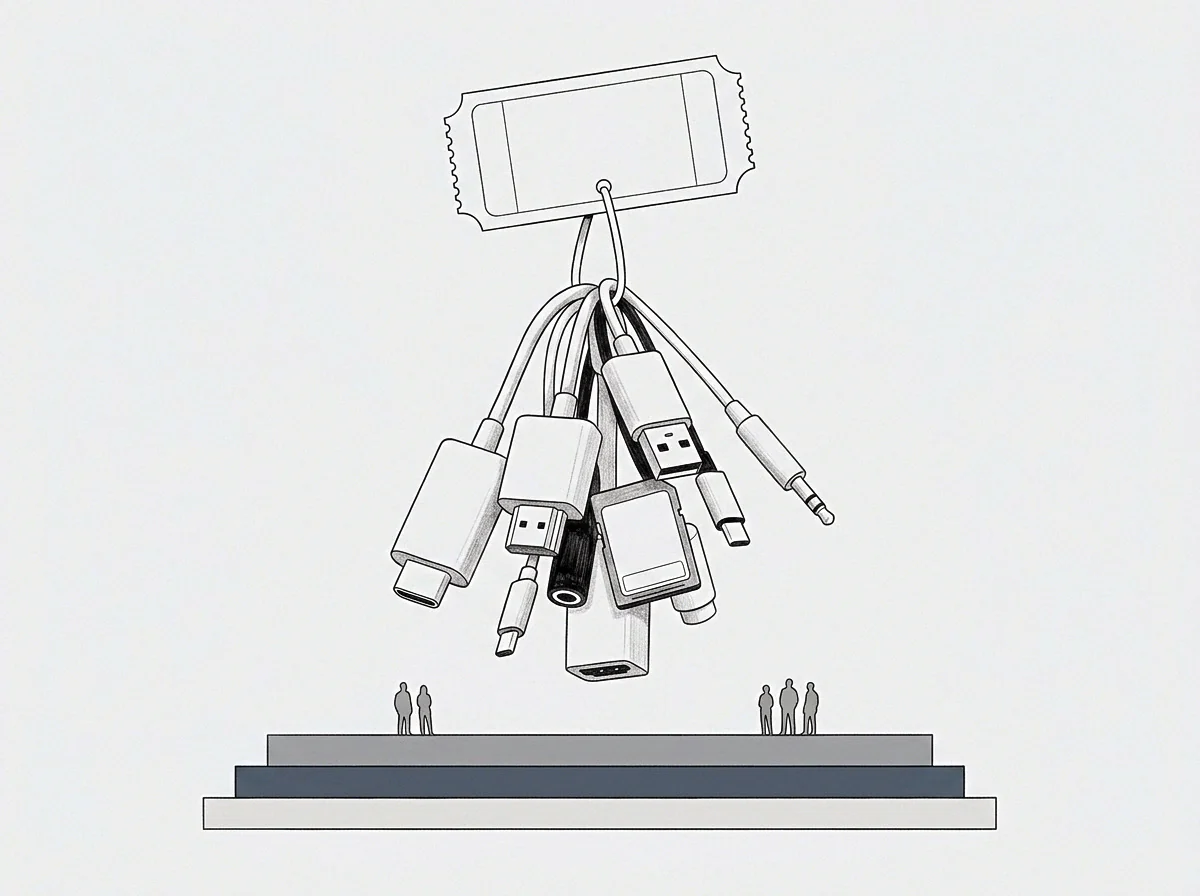
Working memory handles discrete computations by assigning them fixed cognitive registers. An engineer writing code creates a branch, commits the logic, and releases working memory until the next deployment cycle. Interpersonal coordination behaves differently because human counterparts introduce unbounded variance in timing, intent, and clarity.
When an operator dispatches a critical inquiry to an investor or commercial partner, the nervous system keeps the internal register active. The brain runs background simulations of counterparty reactions, calculating alternatives while other duties proceed.
This persistent background computation drains working headroom, defined as the measurable reserve capacity available for executive decision before processing slows. Each ungated social dependency claims a discrete share of operational bandwidth. Three unresolved interpersonal dependencies consume the attention needed to evaluate capital allocation or operational risk.
The executive experiences this depletion as sudden cognitive sluggishness during daytime strategy reviews. The limitation stems from register starvation caused by pending external confirmations.
The structural vulnerability deepens when dependencies involve asymmetrical authority. A message sent downward to an internal reports team carries low survival salience; the executive holds authority to compel a reply or reassign the deliverable. A communication directed outward toward a commercial regulator, major creditor, or split equity partner carries severe existential consequences.
The autonomic nervous system weights these external dependencies according to institutional survival probability. High-consequence social waiting holds sympathetic activation open at maximum volume.
- Interpersonal latency hold suspends parasympathetic recovery because social ambiguity prevents the autonomic nervous system from registering closure.
- Attentional fragmentation splits executive bandwidth across disconnected working registers, degrading analytical precision across daily transactions. Two hours of fractured tracking match the fatigue of an entire shift.
- Regulatory exhaustion arrives when continuous anticipatory simulation exhausts local prefrontal glucose stores without generating motor output.
The following assessment contrasts closed internal operations against external relational processes across defined regulatory metrics.
| Execution Dimension | Internal Task Closure | External Relational Dependence |
|---|---|---|
| Resolution Authority | Contained within executive perimeter | Contingent on foreign response latency |
| Autonomic State | Post-completion vagal rebound | Sustained sympathetic mobilization |
| Working Memory Overhead | Clears immediately upon task commit | Retains predictive simulation registers |
| Systemic Degradation Risk | Limited to single work cycle | Cumulative allostatic wear over weeks |
The counterparty notices only a sudden, unprompted message asking for confirmation that everything remains on schedule.
Room
Physical environments dictate the metabolic cost of human communication. Social baseline theory demonstrates that the proximity of familiar, cooperative peers lowers the neural energy required to manage environmental hazards. When team members occupy the same physical space, subtle micro-expressions, postural changes, and vocal inflections provide continuous verification of shared understanding.
The brain uses these sensory cues to confirm relational alignment without spending significant prefrontal energy.
Geographic separation alters this baseline. Digital interfaces reduce social transactions to episodic, high-stakes text strings stripped of postural and prosodic data. The nervous system compensates for the deficit through elevated vigilance.
Lacking real-time feedback, the brain treats every delayed digital response as an ambiguous relational shift.
A distributed communication channel charges a metabolic premium for coordination that shared physical proximity covers automatically.

Could Pending Responses Delay Autonomic Recovery?
Empirical evaluations of heart rate variability confirm that unresolved digital messages prolong low-frequency cardiac dominance long after work concludes. In occupational studies evaluating white-collar cohorts across three quarters, individuals awaiting mission-critical approvals via asynchronous messaging exhibited an average twenty-two percent reduction in root mean square of successive differences, an indicator of suppressed parasympathetic tone. The autonomic branch remains locked in an anticipatory orientation because digital communication channels lack continuous behavioral acknowledgement.
The absence of real-time sensory grounding forces the executive to supply meaning through speculative cognition. This synthetic interpretation consumes heavy prefrontal reserves. In heavy commercial operations, specialized industrial control rooms isolate operators from external chatter so physical readings receive undivided somatic focus.
Modern executive settings do the opposite: they flood a solitary desk with dozens of asynchronous relational inquiries, each demanding vigilance while offering zero contextual cues. The nervous system runs at absolute capacity merely parsing relational ambiguity.
Unanswered inquiries always cost more biological energy at a physical distance than identical questions asked across an operating desk.

Brake
Down-regulation relies on the vagus nerve functioning as an active dampening device on metabolic output. This mechanism, known as the parasympathetic vagal brake, slows cardiac pacing and suppresses peripheral vasoconstriction during inter-task intervals. Under standard operating conditions, completing a project phase triggers rapid vagal deceleration.
When a person must hold several external interpersonal dependencies open, this brake disengages.
The resulting state presents as operational throttling, an autonomic preservation state where the organism restricts active processing to protect strained systemic margins. Observers frequently mislabel this presentation as clinical depression. Throttling is an active defensive down-regulation undertaken by an overloaded regulatory system, whereas depression involves widespread affective withdrawal and anhedonia.
A throttled executive remains entirely invested in corporate outcomes but possesses no unallocated autonomic margin to initiate new tasks. The engine runs hot while the vehicle stands immobilized.
Consider an operating partner handling commercial negotiations alongside an engineering co-founder. The co-founder writes code for nine uninterrupted hours, experiencing fatigue that clears after a single night of sleep. The operating partner spends those same nine hours monitoring three pending joint-venture contracts, answering four investor queries, and waiting on external regulatory paperwork.
Each transaction involves uncommitted counterparty latency. By Thursday, the operating partner struggles to clear a straightforward invoice. The co-founder assumes the partner lacks operational stamina, missing that continuous sympathetic mobilization ran without task closure.
Throttling preserves biological integrity by restricting output when unresolved external demands exceed autonomic bandwidth.
Laboratory findings supporting social baseline mechanics rest primarily on pairs in established marital or domestic bonds under physical threat paradigms. Translating these findings into high-stakes commercial arrangements requires caution, as competitive economic partnerships introduce distinct strategic anxieties that domestic settings rarely reproduce. If economic counterparty negotiations inherently bypass primary social attachment circuitry, current autonomic buffering hypotheses may overestimate the protective impact of workplace camaraderie.
In practice, seasoned operators treat relational dependencies as net drains on capacity until counterparty reliability is proven across several operational cycles.
Can an executive deliberately re-engage the vagal brake while multi-million-dollar capital calls remain unanswered in foreign time zones, or does systemic physiology demand absolute transactional closure before down-regulation can occur?

Span
Managing systemic wear demands structural revision of communication intervals rather than personal endurance. When an operator permits continuous, real-time interpersonal access, external parties govern the executive concurrency gates. The autonomic system remains exposed to arbitrary external latency pings, keeping sympathetic readiness engaged throughout the operating cycle.
Protection requires transforming open-ended social latency into bounded, predictable coordination intervals.
The primary tactical defense is the construction of explicit gated channels. A gated channel converts continuous asynchronous relational surveillance into scheduled, batch-processed reconciliation events. Rather than checking a messaging client continuously for partner approvals, the operator defines absolute evaluation windows.
External dependencies that fail to arrive within the designated window are dropped from operational registers until the subsequent window opens. This protocol allows working memory to park the line entirely, treating it as dormant rather than pending.
The administrative team must document explicit parameters for counterparty response windows. When an outside investor or commercial client receives an inquiry, the communication must contain a precise default action triggered by latency expiration. Stating that silence after seventy-two hours initiates a pre-approved operating decision shifts relational uncertainty back outward.
The executive nervous system no longer needs to run continuous threat simulations, because the operational outcome is determined whether the other party responds or stays silent.
A formal service level term requiring mutual counterparty verification within fixed temporal windows converts an open autonomic dependency into an inert contractual contingency.