
Capital Deployment Controls During Executive Allostatic Fatigue Transitions
Excluding fatigued executives from unilateral capital disbursement preserves institutional solvency while neuroendocrine systems recover baseline capacity.

Outlay
At two in the morning, an unhedged wire transfer of four million dollars leaves the operating account because an exhausted chief executive wants an open negotiation off their desk. The documentation sits half-reviewed on a tablet screen beside cold coffee. A vendor contract carrying aggressive milestone penalties gets countersigned without legal revisions simply because the email thread has pinged seven times in four hours.
The physiological engine driving that signature is not commercial courage. It is systemic exhaustion seeking relief from cognitive drag.
When chronic regulatory demand exceeds an operator’s biological capacity to adapt, the central nervous system down-regulates deliberate analysis to conserve glucose. Neuroendocrine wear shifts executive processing from prefrontal cortical networks to dorsal striatal habit loops. Complex risk evaluation collapses into immediate threat avoidance.
In commercial operations, an unresolved capital allocation problem functions physiologically as a persistent threat. Signing the document terminates the stimulus. The disbursement functions as an expensive sedative.
Under chronic neuroendocrine saturation, unhedged capital disbursements operate as biological escape hatches from sustained attentional demand.
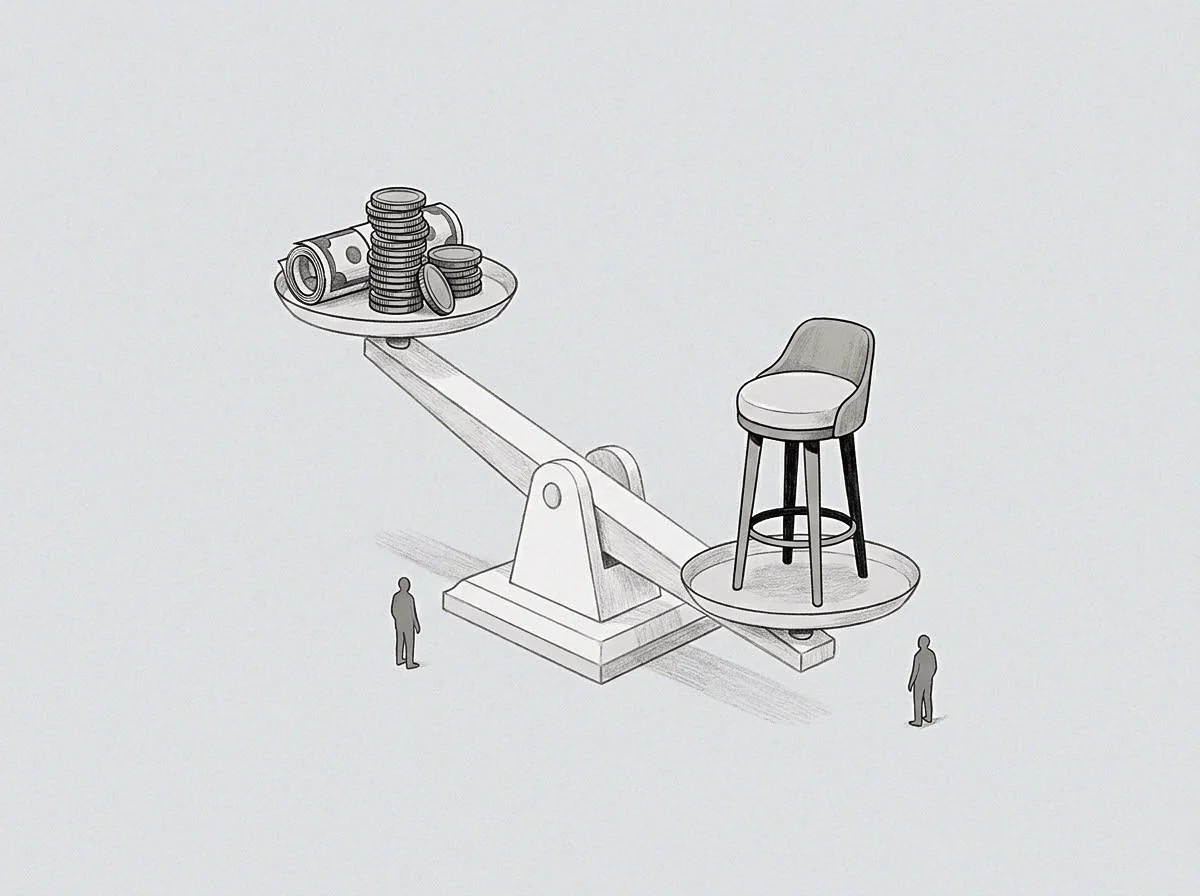
Terminal Authorization Under Depleted Physiological Reserves
Sustained operational pressure forces biological compensation. Cortisol rhythms flatten over months of uninterrupted crisis management, dulling sensitivity to financial exposure. Sympathetic nervous system tone remains elevated, which shrinks working memory capacity and limits the number of variables an executive can weigh simultaneously.
Capital transactions that involve layered liabilities, deferred purchase adjustments, or debt service covenants require high cognitive headroom. Under allostatic wear, that headroom vanishes.
The operator ceases evaluating probabilistic downside. The brain demands closure instead. Cash leaves the balance sheet to silence an external counterparty whose persistence registers as physiological friction.
The executive interprets this impulse as decisive leadership. Board members praise the speed of execution. The balance sheet absorbs an unhedged operational liability that an alert officer would have rejected within five minutes of review.
The transaction went through without amendments because the founder could no longer tolerate the sound of the phone ringing.

Valve
Protecting corporate liquidity during executive exhaustion requires mechanical barriers placed between signature authority and banking conduits. Relying on an overtired founder to recognize their own biological boundary fails every test of stress physiology. Internal self-monitoring is among the first executive faculties disabled by chronic sleep restriction and elevated catecholamines.
Controls must exist external to the executive consciousness, operating as non-negotiable legal friction.
Commercial institutions install operational valves by splitting authorization into chronological phases. A single officer never controls the release of capital above specified enterprise thresholds when working hours cross physiological baselines. Restricting bank authority preserves liquidity without public announcements of executive distress.
The machinery runs on structural friction rather than subjective stamina.

Statutory Friction and Staged Transfer Gates
Institutional architecture protects treasury reserves through structured latency. Introducing time into disbursement protocols stops reactive financial decisions before funds move. When a fatigued operator initiates a capital release, secondary governance layers engage automatically.
- Dual-custody verification threshold removes unilateral disbursement powers for all outbound wires exceeding fifty thousand dollars by binding execution to an independent operations director.
- Mandatory chronological latency window enforces a forty-eight-hour pause on unbudgeted balance sheet commitments, allowing cortisol levels to recede before funds clear the institution.
- Covenant inspection protocol directs third-party legal counsel to verify subordination agreements and indemnification terms before any signature binds the enterprise.
Latency cools reactive panic. The delay breaks the feedback loop between biological exhaustion and liquidity destruction. During the waiting interval, secondary reviewers examine cash flow projections against seasonal accounts payable commitments.
Errors caught during enforced intervals save the firm from catastrophic technical defaults.
A mandatory pause on capital releases severs the connection between executive panic and permanent balance sheet impairment.
The enterprise agreement stipulates that unbudgeted expenditures above one hundred thousand dollars require unanimous consent from the audit committee whenever executive medical leave triggers or key-man coverage notices activate.

Dial
Graduating treasury restrictions requires measurable thresholds rather than emotional judgments. Setting capital deployment gates according to clinical indicators prevents corporate paralysis while protecting asset value. Allostatic load accumulates predictably along physiological channels.
Heart rate variability suppression, persistent sleep latency disruptions, and executive working memory degradation signal severe central nervous system fatigue long before commercial performance figures show decline.
When biological systems run near failure, risk perception warps. An operator overestimates immediate gains and underestimates structural liabilities. Tracking functional stability provides objective justification for restricting financial authority without personal recrimination.
Quantitative metrics replace subjective assessments of competence.

Calibrating Physiological Degradation Against Solvency Risk
Executive fatigue directly distorts capital allocation behavior across predictable operational vectors. The enterprise must adjust authority limits as biological reserves decline.
| Evaluation Dimension | Regulated Executive State | Allostatic Fatigue Transition State |
|---|---|---|
| Due Diligence Horizon | Full contract audit across multi-year operational cycles | Superficial inspection prioritizing swift transaction closure |
| Downside Assessment | Probabilistic modeling across three market scenarios | Binary risk denial paired with acute cognitive avoidance |
| Disbursement Velocity | Deliberate release matched to milestone completion | Accelerated capital transfers to terminate counterparty contact |
| Debt Covenant Scrutiny | Rigorous analysis of default triggers and liquidity ratios | Passive acceptance of predatory acceleration terms |

Which Triggers Enforce Capital Quorums During Depletion?
Governance instruments link signature permissions directly to enterprise stability indicators. When quarterly audit reviews identify an executive working seventy consecutive eighty-hour weeks while processing three major commercial litigations, the corporate charter should adjust treasury limits automatically. Fiduciary quorums activate.
Solo sign-off authority drops to zero. Independent directors step into the review channel, shielding the balance sheet from somatic impulses.
Fatigued operators resist these adjustments. They view structural protections as personal challenges to their capability. The corporate structure absorbs this tension by codifying controls long before fatigue arrives.
Clear policy converts contentious governance debates into automated compliance checkpoints.
Capital deployed in haste leaves the firm permanently, while structural delays merely consume patience.

Bench
Standing secondary governance bodies hold the line when principal leaders cross the allostatic ceiling. An exhausted founder cannot design capital preservation protocols in the middle of a nervous breakdown. The alternative authority structure, often called the proxy committee or treasury bench, must exist prior to operational emergencies.
This body exercises fiduciary oversight without creating operational gridlock.
The bench comprises non-executive directors, legal officers, and seasoned operating partners who do not participate in daily fire-fighting. Their nervous systems remain unburdened by operational trauma. They view capital deployment through historical cash conversion cycles rather than urgent emotional relief.
When an executive falters, the proxy panel absorbs authorization responsibilities smoothly.

Proxy Fiduciary Panels and Delegated Signatures
Structuring the proxy bench requires explicit legal lines of succession and clear operational remits. Ambiguity during executive exhaustion causes organizational chaos.
- Unilateral emergency expenditure ceilings limit individual operating managers to minor maintenance expenses during periods of primary executive incapacity.
- Autonomous secondary review panels convene within four hours to evaluate strategic asset purchases, debt restructuring terms, and major vendor commitments.
- Prescheduled operational suspension triggers freeze discretionary capital projects when key financial ratios breach safety corridors established in peacetime governance charters.
Failing to establish a functional proxy bench allows a depleted founder to bleed cash reserves into speculative turnarounds. Desperate leaders double down on failing strategies to justify previous expenditures. They sell valuable equity at steep discounts to secure emergency bridge loans carrying punitive terms.
The enterprise collapses under the weight of unhedged rescue financing executed by a leadership team whose cognitive bandwidth was completely exhausted.
Depleted leaders left without structural constraints will liquidate corporate reserves to purchase temporary emotional calm.
Circuit
Decoupling an enterprise’s liquidity from the biological stamina of its founder constitutes the ultimate corporate safeguard. Human bodies wear down under prolonged market turbulence. Cells exhaust their mitochondrial efficiency; sleep deficits accumulate into clinical impairment; nervous systems shift into survival posturing.
An enterprise whose survival depends on the ceaseless physiological resilience of one individual is structurally defective.
Capital deployment controls function like circuit breakers in high-voltage industrial machinery. When the electrical current surges beyond the physical carrying capacity of the copper wiring, the switch flips open, breaking the circuit and preserving the facility from fire. Treasury protocols must perform the same function for executive physiology.
When biological load surges, financial current stops flowing through the single damaged node.
A resilient balance sheet never relies on an unexhausted human nervous system for its survival.

Structural Decoupling of Solvency from Biological Capacity
Sustainable firms build deep institutional cushions into their cash management policies. Treasury controls operate regardless of whether the executive is fully rested or entering the fourth week of an allostatic crisis. Multi-tier signature matrices, statutory waiting windows, and active proxy committees protect the company from somatic impulses.
The organization remains solvent because capital movements require institutional consensus rather than solo bravado.
Building these mechanisms requires corporate modesty during periods of market expansion. Leaders must admit their biological limits while their vitality remains high. Implementing capital deployment controls during peak operating health prevents governance structures from failing when allostatic fatigue inevitably arrives.
At what exact threshold of sustained biological overload does an executive signature on a corporate obligation cease to be a valid exercise of commercial intent and become an actionable breach of institutional governance?