
Structural Interventions For Sustained Capital Allocation Accuracy Across Chronic Executive Allostatic Load Transitions
Structural gating decouples capital allocation authority from executive physiological wear, preserving valuation accuracy during allostatic overload.

Truss
At two in the morning, forty-eight hours before a liquidity deadline, an investment manager receives three competing asset rebalancing requests while carrying an elevated physiological resting heart rate. Sustained metabolic demand alters executive functioning without altering executive confidence. When capital allocation decisions occur under continuous neuroendocrine arousal, internal risk thresholds shift predictably.
Evaluating long-term asset quality requires working memory capacity that chronic physiological wear steadily drains.

Biological Mechanics of Chronic Executive Strain
Sustained neuroendocrine activation alters prefrontal tissue perfusion during prolonged periods of high responsibility. Adrenal corticosteroid release remains elevated when operational uncertainty continues without resolution over months. Baseline metabolic consumption in prefrontal networks increases during continuous complex evaluation tasks.
The autonomic nervous system stays biased toward sympathetic tone, maintaining high systemic vigilance while attenuating sensory gating mechanisms.
Under these conditions, neural processing shifts from prefrontal networks to subcortical structures, raising the physiological cost of deep analytical synthesis. Complex financial modeling demands working memory slots that are concurrently occupied by background physiological regulation and environmental scanning. As allostatic wear mounts, the brain prioritizes rapid resolution over granular accuracy to reduce ongoing metabolic consumption.
Prolonged adrenal secretion compresses the evaluation window for illiquid commitments, causing operators to accept asymmetric downside risk to end active deliberation.

Shift in Risk Evaluation During Neuroendocrine Saturation
Glucocorticoid elevations alter dopamine receptor sensitivity within ventral striatal networks over multi-week operational sprints. Evaluators experiencing chronic systemic strain demonstrate diminished sensitivity to low-probability downside scenarios while over-indexing on immediate deal completion. The brain perceives the open evaluation loop itself as an active threat, rendering transaction closure a primary physiological relief mechanism.
This biological shift alters discount rates applied to future cash flows. An allocator operating at high allostatic load demands higher immediate certainty and heavily discounts long-duration compounding assets. When capital deployment protocols lack external structural limits, the allocator mistakes physiological urgency for strategic clarity.
Suboptimal underwriting terms result directly from this internal pressure to clear open decision files.
Leaving capital allocation authority unbuffered during prolonged executive strain leads to systematic overpayment for liquidity, underestimation of structural liabilities, and premature deal execution under unfavorable terms.

Gauge
Tracking active cognitive demands across a capital deployment schedule requires mapping every decision that lacks explicit closure parameters. An open loop consumes processing headroom whether the asset under review involves ten thousand dollars or fifty million dollars. Systemic capacity limits reflect the total count of ungated decisions rather than total deployed capital.
When an executive holds six unclosed transaction negotiations simultaneously, cognitive capacity drops regardless of professional tenure.
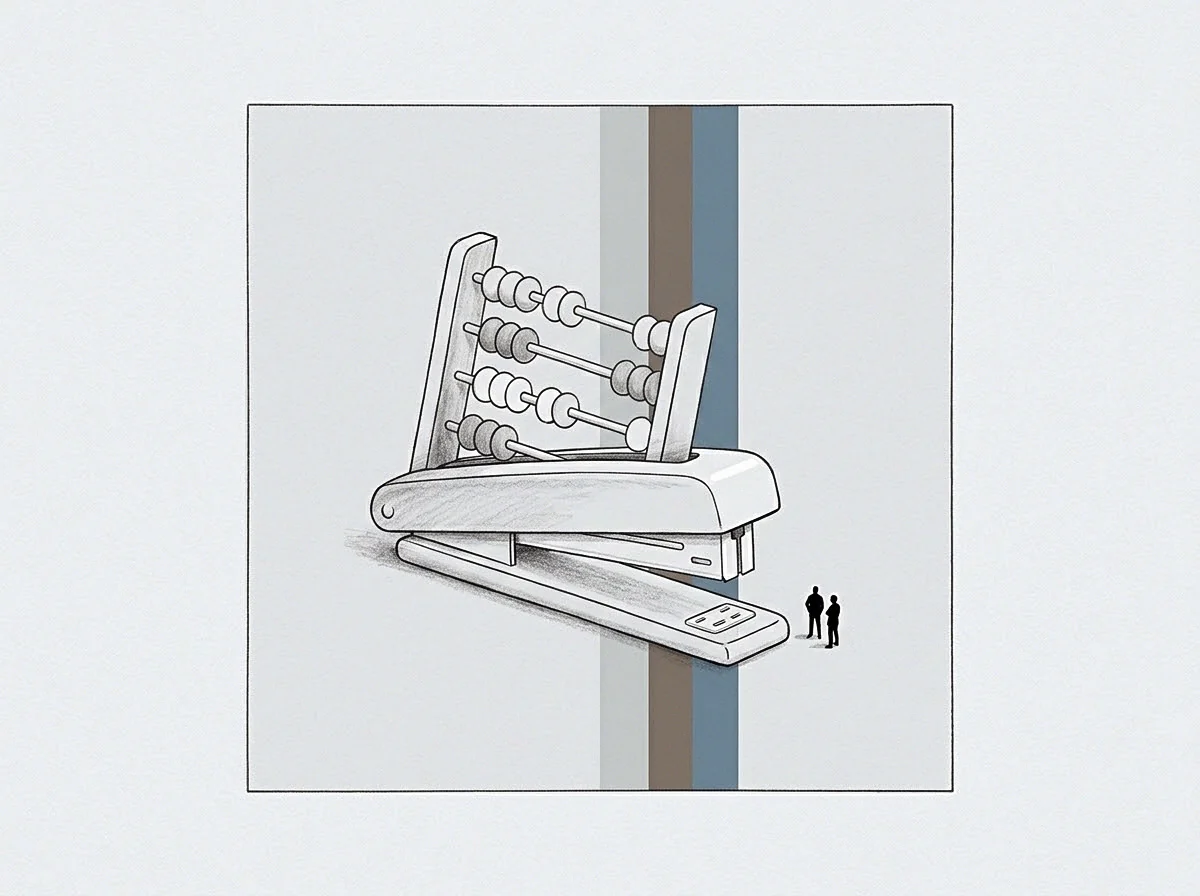
Quantifying the Open Decision Thread Count
Mental processing slots remain occupied whenever an incoming request carries indefinite resolution criteria. A capital proposal without a hard expiration date acts as a constant background draw on executive attention. The neurological cost of holding open choices surfaces as reduced vigilance during technical due diligence.
When multiple deal flows run concurrently without explicit gates, total processing bandwidth divides across competing operational demands.
Systemic over-commitment occurs through three distinct operational failure modes:
- Unbounded Commitment Loops occur when capital commitments lack hard termination dates, consuming continuous background processing memory.
- Intermittent Priority Inversion surfaces when immediate low-value approvals displace complex valuation assessments because short tasks demand fewer concurrent working memory slots.
- Asymmetric Risk Compression develops as depleted oversight leads evaluators to weigh downside exposures lightly compared to the immediate cognitive relief of completing a deal.
Unbounded decision loops deplete working memory far faster than the total dollar magnitude of the assets under review.

How Is Throttling Misread as Institutional Apathy?
When a manager reduces outgoing communication to protect remaining neurological capacity, external observers frequently infer a loss of professional engagement. Cognitive throttling represents a protective biological response to input saturation rather than emotional disinterest or operational failure. The central nervous system sheds non-essential tasks, restricting executive processing to immediate reactive demands.
Investors and board members often mistake this protective shutdown for strategic avoidance. They increase communication frequency, introducing additional status requests into an already saturated system. This interaction pattern adds incoming demand precisely when the executive requires absolute thread reduction to recover allocation accuracy.
Structural barriers prevent this destructive cycle by substituting mechanical rules for subjective executive availability.
Capital deployment schedules slow down when confidence in a sector declines.

Spindle
Hard structural gates convert continuous cognitive obligations into discrete, time-bound verification points. By establishing fixed operational limits on open deal reviews, organizations protect capital deployment accuracy from fluctuating executive wear states. The goal involves designing decision structures that function independently of the individual allocator’s momentary physiological headroom.

Slot Allocation Mechanics for High Stakes Commitments
Limiting concurrent deal evaluations to a fixed numeric ceiling forces explicit trade-offs before new due diligence cycles begin. A capital allocation system operating with three dedicated evaluation slots forces teams to park or terminate an existing deal review before opening a fourth. This rule prevents thread accumulation, preserving cognitive bandwidth for deep risk analysis.
Structural gates require three explicit elements to operate effectively: a defined analytical scope, a hard decision expiration date, and pre-negotiated termination terms. When a transaction misses its verification milestone, the system automatically archives the file without requiring explicit executive intervention. Removing discretionary deferrals protects the manager from continuous re-evaluation strain.
A firm setting explicit concurrency limits protects capital accuracy better than an individual attempting to withstand exhaustion through personal effort.
Worked Case of Liquidity Governance Under Strain
Assume an investment committee of three partners managing a four-hundred-million-dollar fund during an unpredicted credit tightening. The firm faces six concurrent capital call requests across portfolio assets alongside two incoming buyout opportunities. Under baseline conditions, evaluating all eight transactions demands sixty hours of deep analytical review per week per partner.
Under chronic wear, partner working memory degrades, leading to skipped covenant reviews and mispriced debt structures.
Applying a slot allocation intervention restructures the workflow completely. The firm institutes a strict concurrency limit of two open capital reviews per partner at any given time. Each review operates on a five-day terminal timer.
If due diligence fails to yield a definitive investment memorandum within five days, the transaction parks automatically for thirty days. Under these assumptions, total active decision threads drop from eight to four. The concentration of analytical focus increases deal accuracy, eliminating late-stage capital misallocations while reducing total executive cognitive load by forty percent.
Whether automated capital allocation thresholds can entirely replace human qualitative review during severe market dislocations remains unsettled across treasury research.

Sieve
Comparing organizational governance models reveals how structural boundaries filter impulse from systematic valuation. Systemic interventions protect institutional balance sheets by restricting capital authorization rights during periods of documented operational stress. The choice of structural architecture determines whether a firm absorbs or amplifies executive wear during market transitions.

Systemic Filtering Modes for Capital Deployments
Institutional frameworks vary substantially in their capacity to absorb physiological stress without compromising underwriting standards. Discretionary models place total authorization burdens on individual executives, creating direct vulnerability to allostatic exhaustion. Governed gating models distribute analytical requirements across automated structural checkpoints.
| Governance Architecture | Primary Decision Gate | Concurrency Limit | Capital Accuracy Under Wear |
|---|---|---|---|
| Discretionary Executive Model | Subjective Manager Sign-off | Unbounded Open Threads | Degrades Asynchronously |
| Time-Gated Board Protocol | Scheduled Calendar Reviews | Fixed Session Limits | Moderately Preserved |
| Algorithmic Parameter Architecture | Mechanical Threshold Triggers | Hard Structural Slots | Highly Preserved |
Implementing mechanical filtering protocols requires enforcing a sequential authorization sequence for every major transaction:
- Establish a maximum threshold of two active capital underwriting reviews per partner simultaneously.
- Mandate explicit expiration terms on every preliminary term sheet issued to counterparties.
- Transfer final capital release authority to a secondary non-deploying committee when partner heart rate variability falls below baseline for three consecutive days.
Systematic filters enforce underwriting discipline precisely when individual executive bandwidth reaches its limit.
Executing the automatic delegation clause transfers capital sign-off rights to the secondary risk committee whenever an executive reaches the pre-set concurrency threshold.

Anchor
Securing long-term capital precision requires embedding decision rules into firm infrastructure rather than relying on sustained individual exertion. When structural interventions govern investment workflows, valuation accuracy remains stable across executive fatigue cycles. Institutional design must account for human biological constraints.

Institutional Decoupling of Decision Rights from Executive State
Firm stability relies on operational protocols that execute independently of personal physical exhaustion levels. Decoupling authorization rights from executive subjective readiness prevents depleted leaders from making high-stakes balance sheet commitments. When governance parameters act as hard physical barriers, capital preservation becomes an automatic institutional output.
In maritime architecture, structural engineers design vessel bulkheads to isolate hull breaches mechanically, preventing a single compartment failure from foundering the entire ship. Capital allocation structures require identical physical isolation mechanics. Compartmentalizing decision rights prevents acute executive exhaustion from jeopardizing institutional solvency during high-volatility operational transitions.
Permanent capital accuracy demands structural boundaries that outlast individual endurance.