
Managing Open Relational Loops During High Execution Load
Open relational loops consume cognitive headroom during execution load, elevating allostatic wear unless structural gating freezes active demand.

Conduit
Four messaging channels sit unread on a screen at midnight during a release cycle. Each message contains an implicit relational bid: a partner asking for reassurance, an early hire seeking career trajectory confirmation, an investor probing personal commitment, and a peer needing conflict resolution. None of these messages contain immediate operational emergencies, yet each represents an unclosed loop.
Processing capacity remains locked in active software deployment and capital allocation. The cognitive system attempts to hold operational priorities alongside unresolved interpersonal expectations. Four conversations remain open.
The switch cost accumulates.
Working memory maintains a finite number of active processing slots. Research in cognitive science demonstrates that unclosed tasks exert a continuous draw on executive function, occupying attentional units even when attention is consciously directed elsewhere. When operational execution load reaches maximum ceiling, the presence of ungated social threads creates severe attentional fragmentation.
Every unreturned prompt acts as a background process, consuming working capacity that would otherwise support direct operational reasoning.

Relational Capacity Under Ceiling
In high-pressure execution environments, working capacity operates at absolute limits. Attentional resources spent monitoring relational ambiguity directly reduce the capacity available for technical and operational decision-making. The human nervous system processes social uncertainty as an active biological signal, elevating physiological vigilance.
Headroom depletes rapidly under simultaneous technical and relational demands.
Relational dynamics depend on continuous signal exchange to maintain perceived alignment. When operational load forces a sudden drop in communication frequency, external counterparties often interpret the reduction in output as personal withdrawal or dynamic friction. The person carrying high execution load experiences inbound relational requests not as neutral information exchange, but as direct competing demands on an exhausted regulatory substrate.
The capacity drops.
Relational load rises exponentially when an incoming query carries unspecified timeframes and unresolved emotional terms.

Allostatic Demand of Ungated Attention
Biological systems adapt to chronic regulatory strain through allostasis, maintaining stability through physiological change. Allostatic load represents the cumulative wear sustained by organ systems exposed to prolonged neuroendocrine responses. High operational demands combined with unresolved relational tension produce sustained elevations in cortisol and sympathetic nervous system activity.
The biological cost accumulates continuously, independent of subjective emotional awareness.
Throttling occurs when an biological system restricts output to prevent structural damage under excessive operational strain. In execution environments, cognitive throttling manifests as reduced verbal responsiveness, shorter social interaction windows, and flattened affect. External observers frequently misclassify this protective throttling state as clinical depression or intentional disengagement.
The physiological reality reflects a biological system protecting core processing operations by shedding non-essential social exchanges.
The unreturned message meant that the operational priorities mattered more than the relationship.

Tether
Managing open relational loops demands precise categorization of inbound attention requests. Structural classification separates background noise from action-bearing inputs. Without clear structural boundaries, every incoming message claims equal priority within active working memory.
The ceiling is absolute. Ungated communication channels allow external actors to consume processing headroom without operational friction.
Relational threads vary significantly in their cognitive overhead. Simple informational requests demand minimal processing once clear parameters exist. Unstructured social bids lacking clear deadlines or explicit terms impose high regulatory costs because the receiving brain constantly calculates potential interpersonal fallout.
Categorizing open loops by structural type enables systematic gating strategies.
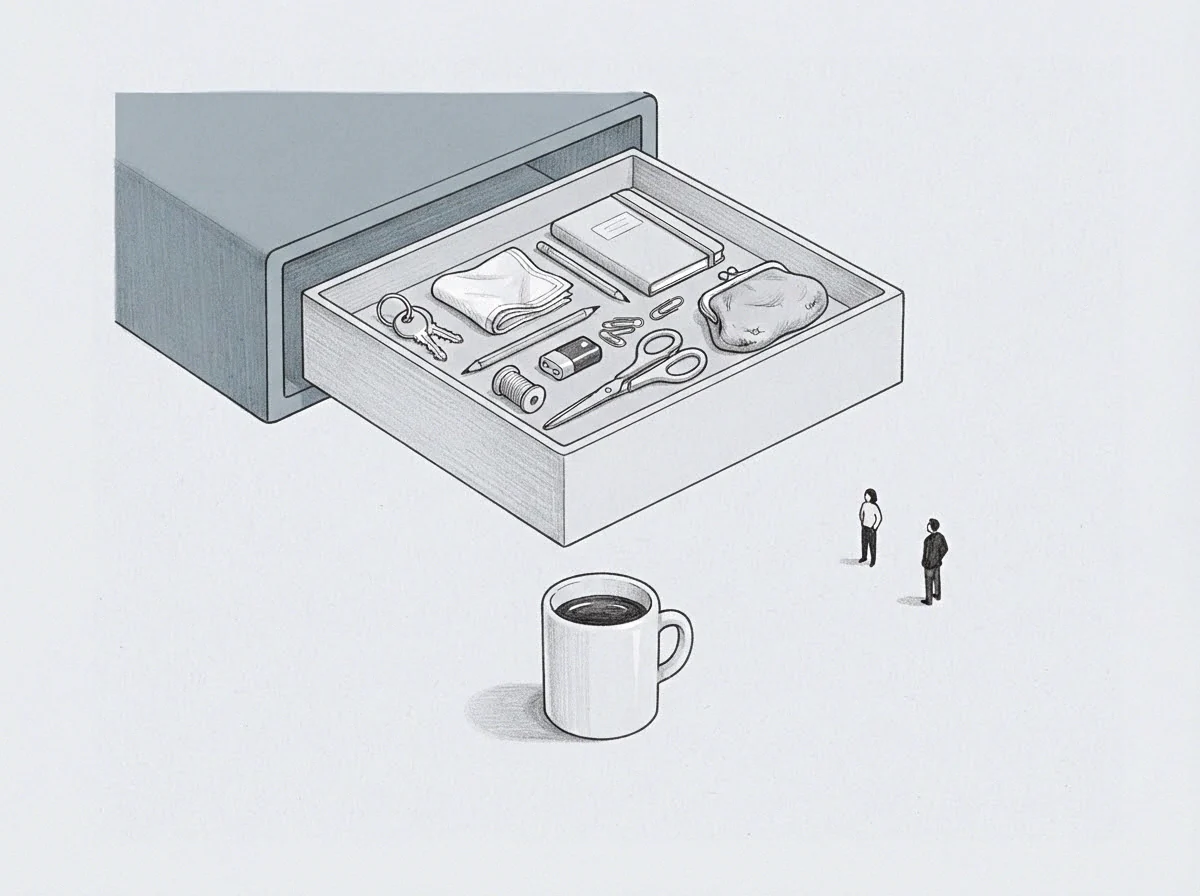
Classification of Unresolved Operational Strings
Inbound social and operational requests group into distinct categories based on structural clarity and emotional velocity. Identifying the specific loop category dictates the required gating mechanism.
- The open validation request arrives as an unstructured query seeking continuous emotional reassurance without defined project boundaries.
- The ambiguous status probe demands general operational updates without specifying required decisions or concrete parameters.
- The lingering peer dispute involves unresolved interpersonal friction carried across multiple execution cycles without clear resolution criteria.
- The unanchored scope extension introduces expanded operational or relational expectations without modifying existing timelines or allocation caps.
Systematic loop management requires comparing communication mechanisms across clear structural dimensions. Direct comparison illustrates how structural gating protects processing headroom while preserving counterparty expectations.
| Handling Strategy | Cognitive Slot Usage | Switch Cost Magnitude | Relational Friction | Allostatic Burden |
|---|---|---|---|---|
| Ungated Availability | Maximum continuous drain | Severe continuous interruption | Low initial friction, high volatile breakdown | Elevated neuroendocrine wear |
| Time-Bound Gating | Moderate predictable usage | Low scheduled interruption | Moderate clear friction | Controlled baseline strain |
| Explicit Slot Allocation | Minimal bounded usage | Zero unexpected interruption | Initial structural friction, stable alignment | Low physiological toll |
Unmonitored loop accumulation degrades decision precision and drains available headroom before operational objectives land.

Hinge
Take two partners running a critical capital raise while deploying a core product architecture. Assume both individuals built the company for three years without formalizing explicit communication limits during high-load execution windows. Partner A manages external capital relationships and technical deployment, working sixteen-hour days.
Partner B leads product design and team operations, noticing Partner A becoming increasingly silent, abrupt, and unresponsive on non-immediate messaging threads. Partner B interprets this reduced communication frequency as a personal breach of trust and a sign of political realignment. Partner B increases the volume of messaging probes to regain connection, sending eight unstructured check-ins across two days.
The slot closes.
Partner A receives these incoming messages while debugging critical production code under tight investor deadlines. Each notification forces an immediate cognitive context switch. Partner A lacks the processing capacity to compose nuanced relational responses while holding complex software architecture in active memory.
Partner A responds with one-word answers or leaves threads unread for twenty-four hours. The biological system in Partner A enters cognitive throttling, reducing verbal output to protect execution bandwidth. Partner B reads this throttled state as hostile stonewalling, escalating the tone of subsequent messages.
Execution Stress Within Shared Operations
The situation escalates rapidly due to asymmetric loop interpretation. Partner A views Partner B’s messages as intrusive operational interruptions that destabilize critical technical focus. Partner B views Partner A’s silence as an existential threat to the partnership structure.
Neither party explicitly defines the operational parameters governing communication during the high-execution window. The absence of explicit terms converts operational pressure into structural relationship wear.
Silence carries an operational meaning. In this scenario, the unmanaged relational loop consumes significant processing headroom for both individuals. Partner A spends attentional resources dreading inbound notifications, while Partner B spends cognitive energy analyzing subtle shifts in punctuation and response latency.
The operational execution slows, bug rates increase, and investor communications lose precision.
An unstated operational boundary causes the receiving party to interpret regulatory throttling as interpersonal withdrawal.

Operational Strain and Misattributed Signals
Resolving this friction requires introducing clear terms that isolate execution windows from ongoing relational processing. Assume Partner A and Partner B introduce a formal operational pause clause during acute deployment cycles. The agreement specifies that during designated 72-hour execution windows, non-emergency relational queries drop to zero priority, with daily 10-minute synchronous alignment calls replacing continuous messaging.
The implementation of explicit terms changes the structural dynamics completely. Partner B no longer interprets silence as interpersonal disengagement because the silence operates under a mutually agreed parameter. Partner A gains full cognitive availability during execution hours, knowing background threads carry no immediate relational penalty.
The thread stays open. The switch cost drops instantly once parameters exist.
The explicit freeze clause fixes the evaluation window and prevents ongoing relational queries from consuming execution slots.

Bench
Converting open relational loops into gated threads requires explicit slot allocation. Executive function operates most efficiently when tasks occupy structured blocks rather than continuous background processes. The limit holds.
Gating mechanisms transform unstructured emotional queries into predictable, time-bound operational inputs.
Setting explicit boundaries requires clear parameters regarding scope, date, and terms. Without defined parameters, counterparties default to continuous probing behavior, re-opening closed threads through secondary channels. Systematic gating establishes clear operational boundaries without generating secondary interpersonal conflict.

Slot Allocation and Scope Fixation
Implementing effective loop gating follows a structured sequence designed to minimize cognitive overhead while maintaining operational clarity.
- State current execution limits directly to primary counterparties.
- Convert open relational queries into scheduled asynchronous updates with fixed time boundaries.
- Define terms of engagement that isolate execution windows from inbound social requests.
- Park unassigned relational discussions on an explicit holding schedule with direct reactivation dates.
Terms fix the scope. Gating inbound queries protects active processing capacity from random external interventions. When counterparties know precisely when and how their topics receive attention, inbound message volume drops significantly.
A relational loop gated by fixed terms consumes zero active working memory.
Execution requires full processing. Structuring communication channels ensures that high operational execution cycles complete without generating sustained relational debt. The boundary holds.
Gating inbound queries by fixed terms preserves processing capacity for core priorities.
Vault
Long-term execution capability depends on preserving the underlying regulatory substrate. Biological systems subject to perpetual allostatic load eventually suffer structural degradation, resulting in chronic fatigue, impaired working memory, and severe decision distortion. Wear follows unresolved demand.
Preventing permanent regulatory depletion requires treating relational capacity as a strictly finite operational asset.
Organizational environments frequently demand continuous social availability, misinterpreting structural boundaries as a lack of cultural alignment. Leaders and operators who survive long execution phases learn to decouple professional performance from continuous interpersonal responsiveness. Protecting cognitive headroom requires maintaining hard limits on active open threads regardless of external social pressure.

When does open relational load convert to structural wear?
Transitioning from temporary cognitive strain to permanent systemic wear occurs when recovery windows disappear entirely. When an operator holds multiple open relational loops across consecutive execution cycles without resolution, neuroendocrine parameters remain chronically elevated. The count reaches four.
Biological systems adapt by downregulating receptor sensitivity, reducing overall stress tolerance and processing sharpness.
Sustained operational excellence demands periodic structural resets. Closing open loops through direct resolution, explicit termination, or formal gating restores baseline headroom. The capacity to execute high-complexity tasks depends directly on the systematic elimination of continuous background demands.
Operational focus drops rapidly when personal background threads remain unaddressed during high-pressure cycles.
It remains uncertain whether long-term regulatory capacity recovers fully once chronic execution strain subsides.