
Measuring executive allostatic load during rapid cross-functional organizational scaling
Executive allostatic load during cross-functional scaling increases as neuroendocrine compensation covers structural organizational communication friction.

Wire
Midnight passes while seven disparate operational channels remain active on a single screen. Finance queries an unapproved hiring expansion, product demands clearance on an altered delivery target, and legal requests redlines on an enterprise sales warranty. The founder answers each query within minutes, maintaining an external affect of measured calm.
That steady posture carries a measurable biological surcharge. The physical body mobilizes glucose, elevates blood pressure, and activates the sympathetic nervous system to sustain alertness across distinct functional contexts. Colleagues perceive continuous operational capability.
The internal regulatory machinery operates near its structural limit.
Cross-functional expansion forces an executive to switch cognitive context repeatedly without recovery intervals. Moving between engineering resource discussions, marketing customer acquisition metrics, and board capitalization arrangements incurs an immediate metabolic expense. Laboratory measures of heart rate variability show sharp parasympathetic withdrawal during rapid context transitions.
The vagal nerve reduces its brake on cardiac activity, allowing heart rates to rise and blood pressure to climb. When organizational headcount doubles within three quarters, the volume of cross-functional handoffs increases exponentially. Each handoff introduces operational ambiguity that lands on the executive desk.
A biological system running at maximum regulation maintains apparent operational performance while depleting reserve metabolic capacity.
The operational layer misidentifies this physiological state. Observers track completed milestones, answered communications, and strategic approvals, interpreting swift responses as evidence of executive resilience. Stress physiology identifies a distinct phenomenon: allostatic load, the cumulative wear inflicted on organ systems by prolonged neuroendocrine activation.
The executive continues to produce acceptable work outputs while biological systems pay for adaptation through elevated nighttime cortisol, sustained peripheral vascular resistance, and fragmented slow-wave sleep. High performance masks physiological degradation until the regulatory margin vanishes entirely.
The finance lead noted that the chief executive seemed completely on top of every operational detail during the entire expansion phase.

Axis
Neuroendocrine regulation relies on the hypothalamic-pituitary-adrenal cascade. When cross-functional operational demands multiply, the paraventricular nucleus of the hypothalamus releases corticotropin-releasing hormone, prompting the anterior pituitary to secrete adrenocorticotropic hormone into the bloodstream. The adrenal cortex responds by synthesizing cortisol.
Cortisol mobilizes energy reserves by stimulating gluconeogenesis, elevating blood sugar, and suppressing non-vital biological functions such as digestion and immune surveillance. Acute stress encounters resolve when systemic cortisol binds to glucocorticoid receptors in the hippocampus and pituitary, establishing an inhibitory feedback loop that returns hormone concentrations to baseline. Rapid cross-functional growth prevents this restoration.

Cellular Receptor Desensitization Under Chronic Work Volume
Prolonged neuroendocrine activation impairs the sensitivity of glucocorticoid receptors. Constant cortisol saturation causes receptor down-regulation in hippocampal tissue, weakening the negative feedback mechanism that terminates stress hormone secretion. Baseline salivary cortisol rises, while the cortisol awakening response flattens.
Concurrently, sympathetic nervous system activity maintains elevated plasma catecholamines, sustaining vasoconstriction and elevating ambulatory systolic blood pressure. Biomarker profiling of individuals managing rapid operational expansion reveals elevated systemic inflammation, demonstrated by increased circulating interleukin-6 and high-sensitivity C-reactive protein concentrations. Cellular repair pathways down-regulate to conserve metabolic currency for operational processing.
Physiological research across occupational cohorts confirms that chronic multi-domain regulation elevates cumulative allostatic scorecards. Researchers calculate these scorecards by tracking biomarkers across neuroendocrine, cardiovascular, metabolic, and immune domains. An executive maintaining oversight of product, revenue, customer support, and administrative infrastructure routinely scores in the upper quartile of clinical wear metrics.
Biological tissues absorb the friction of rapid expansion. Resting pulse rates rise by six to twelve beats per minute over a six-month scaling cycle. Serum triglycerides climb as metabolic efficiency drops.
Chronic biological compensation alters physical health long before organizational metrics indicate executive fatigue.
Elevated systemic inflammation and blunted diurnal cortisol rhythms occur months before project delivery timelines slip.
Whether chronic receptor desensitization in high-velocity operating settings reverses fully upon workload reduction remains an open scientific question.

Drift
Operational complexity generates specific cognitive and physiological failure sequences. When organizational layers expand from two tiers to four tiers, lateral communications fail to resolve without executive arbitration. The person in the executive seat becomes the universal routing mechanism for departmental disputes.
Sales makes delivery promises that engineering cannot fulfill; finance imposes budget controls that stall talent acquisition; product introduces feature specifications that strain client onboarding teams. The executive absorbs these conflicting demands, holding competing representations of reality simultaneously in working memory.

Which Marker Tracks Regulatory Exhaustion First?
Behavioral adaptation follows an orderly sequence of progressive constriction:
- Interpersonal withdrawal manifests as an executive converts real-time collaborative working sessions into abbreviated asynchronous directives to reduce conversational cognitive load.
- Decision latency elongation occurs when multi-variable resource allocation choices require three to five days instead of immediate same-day determination.
- Selective responsiveness develops as the executive triages incoming messages, abandoning secondary cross-functional alignments to protect primary survival functions.
- Emotional blunting emerges through an absence of enthusiasm or frustration during high-stakes operational disclosures.
This progressive behavioral constriction represents throttling, an involuntary regulatory defense mechanism. The nervous system reduces operational bandwidth to protect internal physiological homeostasis. Observers frequently misinterpret throttling as clinical depression, operational disengagement, or executive incompetence.
Throttling constitutes a biological governor restricting output to prevent sudden organ failure or total cognitive collapse. The system executes necessary maintenance while shedding non-essential discretionary tasks.
Sleep architecture deteriorates in parallel with behavioral throttling. Polysomnographic tracking in high-stress operational leaders shows reductions in stage three slow-wave sleep and frequent micro-arousals during rapid eye movement cycles. Cortisol elevation at 03:00 hours interrupts restorative cellular replenishment.
The executive wakes unrefreshed, relying on exogenous stimulants to initiate morning cognitive processing. Adenosine clearance remains incomplete, accumulating baseline neurological fatigue across successive operational weeks.
Failure to detect behavioral throttling results in abrupt operational paralysis, catastrophic decision errors, and sudden medical departures from the executive seat.
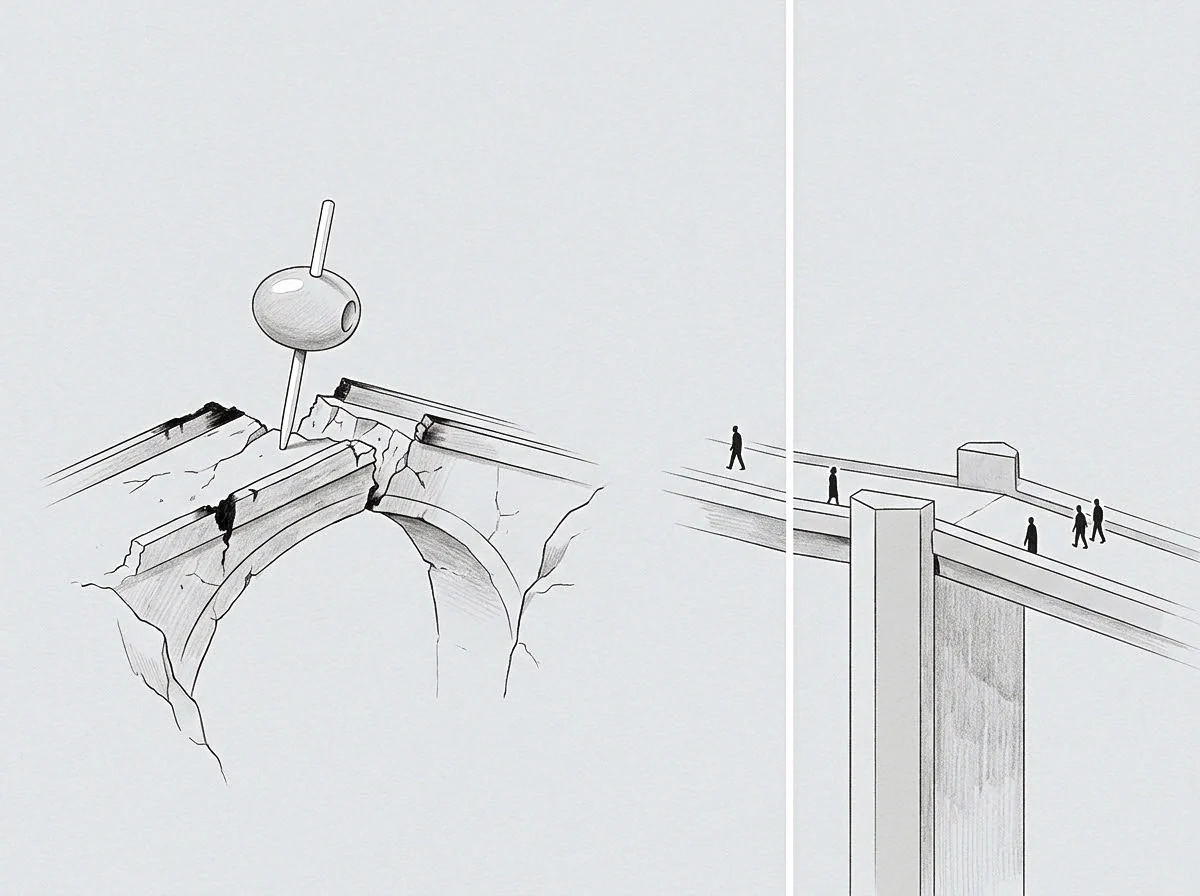
Split
Tracking executive strain requires distinguishing physiological biomarker deterioration from observable operational indicators. Scaling organizations routinely monitor business outputs while ignoring biological indices, mistaking sustained revenue performance for sustainable executive capacity. Measuring allostatic load requires concrete parameters across both domains.
| Measurement Category | Early Strain Phase | Compensated Throttling Phase | Decompensated Breakdown Phase |
|---|---|---|---|
| Cardiovascular Marker | Elevated evening resting heart rate | Loss of heart rate variability; daytime systolic drift | Sustained ambulatory hypertension |
| Endocrine Profile | Exaggerated morning cortisol spike | Flattened diurnal slope; elevated night cortisol | Adrenal exhaustion; hypocortisolemia |
| Inflammatory State | Transient elevation in interleukin-6 | Persistent high-sensitivity C-reactive protein | Systemic immune dysregulation |
| Decision Pattern | Accelerated, impulsive triage | Analysis paralysis; avoidance of complex tradeoffs | Erratic reversals and abdication |
| Communication Mode | Rapid, hyper-responsive messaging | Fragmented, delayed asynchronous notes | Complete communication cessation |
The data demonstrates that internal biological breakdown precedes operational disruption by twelve to eighteen weeks. During the compensated throttling phase, conventional operational metrics appear acceptable. Revenue targets hit expectations, departmental hiring continues, and external stakeholders receive polite progress reports.
Beneath that stable exterior, the executive maintains performance through maximum autonomic compensation. Biomarkers reveal vascular strain and endocrine flattening while company dashboards remain entirely green.
A stable performance dashboard frequently coexists with advanced biological system exhaustion.
A formal employment contract containing mandatory quarterly biomarker assessments and non-negotiable operational delegation thresholds changes executive retention from guesswork into an exact operational science.

Valve
Mitigating allostatic accumulation during rapid expansion requires structural mechanisms rather than subjective intentions. The organization must install concrete operational governors that restrict cross-functional signal transfer to the executive desk. An executive cannot manage an open biological loop; untracked responsibilities consume continuous metabolic resources even when dormant.
Structural intervention alters the flow of demands, protecting executive biological reserves.

Establishing Structural Operational Governors
Implementing concrete operational constraints reduces allostatic load by capping ungated functional inquiries:
- Domain delegation covenants transfer absolute budgetary, hiring, and technical trade-off decisions to departmental officers without executive escalation privileges.
- Asynchronous decision windows enforce specific four-hour temporal blocks for cross-functional deliberations, terminating real-time communication interruptions during deep cognitive focus.
- Explicit operational limits define the precise volume of cross-functional strategic initiatives permitted to run concurrently across the company.
The primary regulatory intervention consists of creating structural gates. A structural gate requires incoming requests to contain fixed scope, predefined deadlines, and explicit trade-off parameters before reaching executive review. Inquiries arriving without these defined components return automatically to departmental leadership for refinement.
This architectural hurdle eliminates half of secondary operational chatter, freeing mental processing slots and allowing sympathetic nervous activity to decline.
Cross-functional scaling creates an expanding volume of unresolved ambiguity. If an executive serves as the universal dampener for organizational conflict, personal physiological reserves absorb corporate friction until the body breaks. Installing structural boundaries preserves both the executive nervous system and the company itself.
When operational demands scale faster than structural boundaries, the executive body always pays the difference.