
Modeling Prefrontal Exhaustion Thresholds in Continuous Real Time Control Architectures
Continuous real time control saturates prefrontal glycogen reserves, forcing a transition from deliberate executive regulation to reflexive striatal heuristics.
Seat
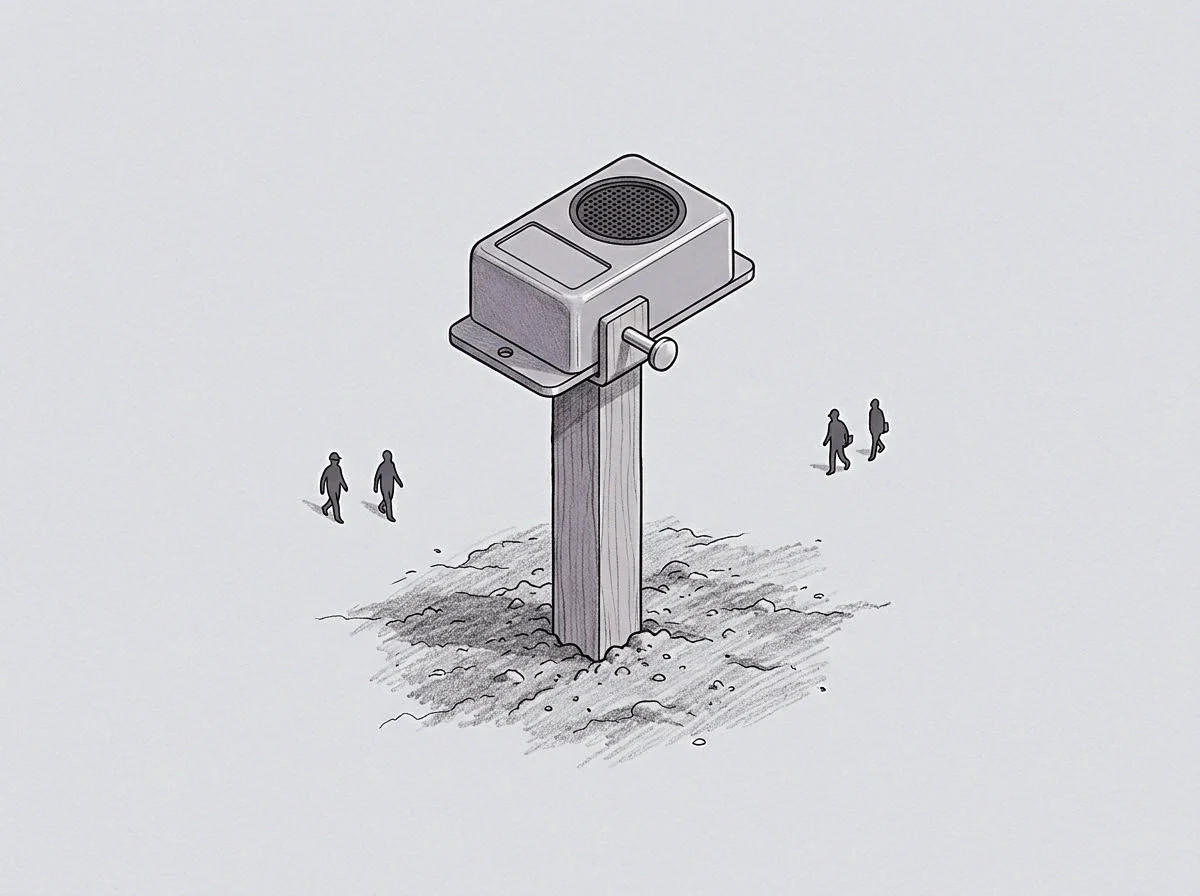
Four communication channels remain active at midnight while operational telemetry signals a critical latency spike. In the primary dispatch chair, the operator tracks incoming incident alerts, balances competing triage choices, and monitors downstream dependencies at once. Biological control systems under continuous demand follow definite saturation kinetics rather than collapsing outright.
The prefrontal cortex distributes executive resources across active representations through recurrent excitatory loops in working memory circuits. When incoming signals arrive faster than synaptic clearance rates, cognitive control shifts into automated heuristic selection. The human nervous system maintains allostatic load as the cumulative physiological price of ongoing adaptation to these continuous stressors.
Supervising real-time systems forces high-frequency prioritization without pause. Executive function depends on finite metabolic substrate in lateral prefrontal regions. Sustained continuous monitoring without rest intervals depletes local glycogen stores and drives extracellular adenosine accumulation.
This metabolic depletion shifts neural firing patterns from goal-directed prefrontal regulation toward reflexive striatal pathways. The transition happens quietly, leaving the operator unaware of the drop in decision quality.
Under sustained high frequency triage, prefrontal networks degrade into reflexive automated choices before operational monitors detect performance drop.
Supervisors often mistake this physiological saturation for emotional surrender or sudden personal disengagement. Observers outside the control loop interpret the halt in proactive intervention as depressive withdrawal. The biological reality is an unmitigated throttling state, where the neural architecture restricts novel compute cycles to preserve baseline homeostasis.
The system remains operational, yet it discards secondary inputs to prevent catastrophic failure.
Managing four simultaneous diagnostic dialogues during an escalating production failure exhausts every available working slot. One open dialogue about rollback validation locks executive focus entirely. The second dialogue regarding executive communication drains whatever attentional reserve remains.
The third conversation detailing infrastructure failover runs largely unmonitored in peripheral awareness, while the final thread with external stakeholders stalls completely. That fourth dialogue occupied the overflow slot.
When the operational window extends past continuous control capacity, prefrontal networks drop prospective planning routines altogether.
Buffer
Executive control maintains stability by storing temporary state variables across active task domains. Working memory capacity operates under a strict physical concurrency limit that bounds simultaneous computational threads. Storing uncommitted variables creates direct biological drag across associative cortical networks.
A task with defined termination parameters requires minimal background maintenance, whereas an unresolved operational ambiguity continuously extracts metabolic reserves.
The metabolic expenditure of holding unresolved loops scales nonlinearly with environmental uncertainty. Continuous real-time architectures demand unbroken sensory sampling, hypothesis generation, and motor inhibition. Each active branch in a decision tree occupies finite prefrontal synaptic assemblies.
Without formal gating criteria, these distributed representations persist indefinitely, degrading signal fidelity across adjacent cognitive circuits.

Predictive Control Saturation
Continuous monitoring environments present uninterrupted input streams that bypass normal resting-state consolidation cycles. In laboratory paradigms, executive depletion shows up as prolonged reaction times and higher error rates on response inhibition assays. In high-consequence live operations, this exhaustion prompts premature commitment to suboptimal remediations.
The prefrontal network prioritizes loop termination over optimal outcome selection simply to relieve local metabolic strain.
A decision loop with explicit scope and termination criteria consumes negligible standing reserve compared to an open operational ambiguity.
The table below summarizes operational transitions across increasing levels of prefrontal demand within continuous control environments.
| Operational State | Prefrontal Neural Dynamics | Executive Capacity | Observable Behavioral Output |
|---|---|---|---|
| Nominal Monitoring | Sustained prefrontal phase locking with low striatal interference | Three open task allocations available | Systematic hypothesis testing with prospective contingency planning |
| Saturated Regulation | Local adenosine accumulation with sporadic prefrontal dropouts | Zero spare task allocations | Rule based heuristic selection with reactive error patching |
| Protective Throttling | Striatal dominance with suppressed lateral prefrontal activation | Negative capacity under forced load shedding | Stereotyped action sequences and total peripheral input neglect |
System designers frequently assume continuous human vigilance scales linearly with interface simplification. This assumption ignores the non-zero cost of ongoing sensory inhibition and context retention. An operator seated before an uncluttered interface still expends prefrontal energy suppressing irrelevant motor impulses and anticipating latent failure modes.
The biological machinery burns substrate continuously while waiting for anomalies.
Neglecting the physical boundaries of working memory during critical operations reliably produces severe command latency.

Drift
Degradation in biological control follows observable physiological progressions rather than arbitrary psychological trajectories. Sustained sympathetic activation increases circulating glucocorticoids, altering dendritic morphology within prefrontal pyramidal neurons over prolonged operational cycles. This structural remodeling diminishes cognitive flexibility while strengthening habit circuits in the dorsolateral striatum.
The shift represents an adaptive conservation strategy run by the central nervous system under unyielding load.
The pace of neural exhaustion depends heavily on task-switching frequency. Rapid toggling between incongruent control paradigms forces repetitive prefrontal reconfigurations. Each context change flushes working memory buffers and demands de novo synaptic assembly synchronization.
This switching overhead depletes localized astrocytic glycogen far faster than sustained concentration on a single complex problem.
Repeated context toggling empties localized glycogen reserves faster than prolonged focus on a single deep anomaly.
The operator experiencing acute prefrontal exhaustion exhibits distinct functional signatures:
- Working Memory Truncation restricts the active task horizon to immediate sensory feedback while abandoning forward branch projection.
- Attentional Tunneling locks gaze and deliberate analysis onto single telemetry parameters despite broad system alarms.
- Inhibitory Failure permits reflexive default actions to execute ahead of systematic verification protocols.
- Affective Flattening preserves remaining metabolic substrate by suppressing emotional valuation circuits.
When the central nervous system reaches its thermal and metabolic thresholds, it simply declines to process incoming anomalies.

Coil
Extended operational pressure compresses executive capacity into an ever tighter kinetic loop. Metabolic recovery in lateral prefrontal regions requires uninterrupted periods of suppressed sensory input. In continuous command architectures, such rest cycles rarely occur organically.
The biological substrate remains permanently coiled, accumulating structural wear across multiple hormonal and autonomic axes.
Consider an operational team running a critical data migration over forty-eight continuous hours without predefined shift handovers. The primary engineer holds seven active incident branches in immediate memory. By hour twelve, the engineer begins issuing repetitive terminal commands without waiting for execution acknowledgments.
By hour twenty, the engineer ignores peripheral database latency warnings entirely. The technical failure that ensues originates in prefrontal synaptic fatigue rather than baseline architectural flaws.
Outside observers regularly mischaracterize this structural failure as motivational drift. Stalled decisions are interpreted as a drop in commitment or technical competence, while the person in the control seat perceives the paralysis as an inexplicable loss of clarity. The underlying mechanism remains purely thermodynamic and physiological.
Demands for immediate resolution continue while the operator sits before the terminal without striking a key.
Partition
Protecting human control components requires structural isolation of executive tasks from continuous sensory telemetry. Control architectures must incorporate hard chronological limits and automated state preservation to relieve prefrontal strain. Designing explicit boundaries around operational shifts prevents the compounding of metabolic fatigue.
When task state parameters transfer cleanly to persistent storage, the operator drops active working memory loops without fear of data loss.
Introducing structural intervals where incoming operational signals are filtered creates vital restorative headroom. The human brain rapidly clears extracellular metabolic byproducts when relieved of immediate response requirements. Sustained performance across weeks and months depends upon these micro-recovery windows.
Removing continuous vigilance demands restores prefrontal monoamine balance and replenishes regional glycogen.
System reliability emerges from respecting biological operating boundaries rather than demanding endless heroic vigilance. The physical reality of prefrontal exhaustion sets an inviolable ceiling on continuous human control. Architectures designed around real-time human oversight succeed solely when they decouple human executive intervention from raw stream velocity.
The operational protocol establishes mandatory handover intervals every four hours, terminating all active loops at the boundary.