
Prefrontal Cortex Receptivity Under Chronic Hypothalamic Pituitary Adrenal Downregulation
Chronic HPA axis downregulation starves prefrontal pyramidal neurons of glucocorticoid signals, retracting dendritic spines and shifting control to habit.
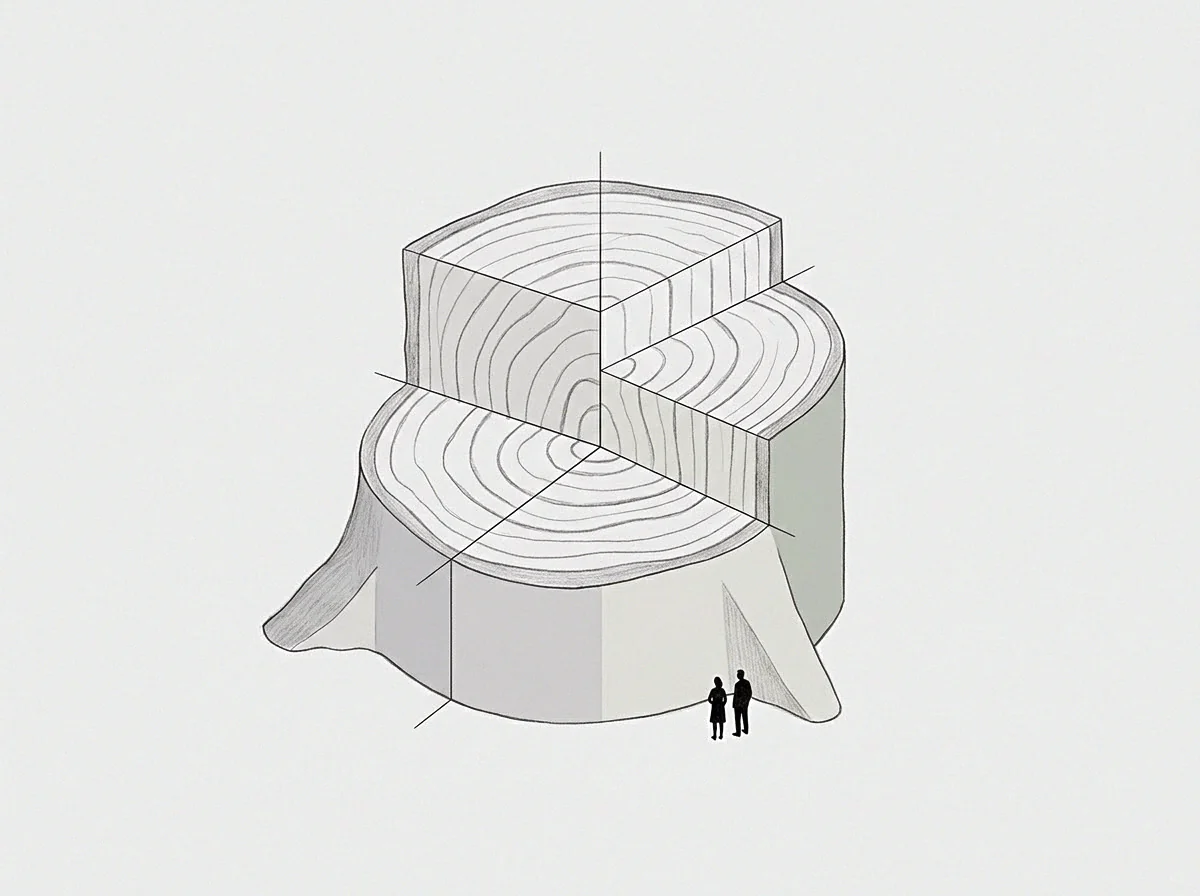
Signal
The alarm stops ringing after six months of constant exposure. In the third year of building an enterprise, a founder discovers that intense operational pressure no longer produces an adrenaline surge or a racing pulse. The physiological response flattens.
Cortisol output, measured across the circadian cycle, drops below standard reference baselines during the morning peak and remains flat through the afternoon. The system operates in a state of hypocortisolism, brought on by sustained neuroendocrine overstimulation. The hypothalamic-pituitary-adrenal axis protects peripheral tissue from steroid toxicity by reducing adrenocorticotropic hormone synthesis and downregulating corticotropin-releasing factor receptor sensitivity in the anterior pituitary.
Systemic output drops.
This suppression alters the neurochemical environment of the cerebrum. The prefrontal cortex relies on calibrated glucocorticoid and catecholamine concentrations to sustain synaptic connectivity in layer III pyramidal neurons. Working memory, attention gating, and task valuation depend on this hormonal tone.
When endocrine production drops into an allostatic trough, high-order cortical processing loses its primary metabolic permissive signal.
A flattened diurnal cortisol curve degrades prefrontal synaptic gain long before peripheral tissue shows clinical exhaustion.
Working memory degrades under these parameters. A operator sitting before a screen at dusk attempts to synthesize three commercial contracts into a single governance policy. The text remains readable.
The individual sentences parse without error. The capacity to hold all three contractual structures in working memory simultaneously to identify cross-liability breaches disappears. The data slip out of immediate registration.
Complex relational synthesis stalls.
Clinical observers unaccustomed to neuroendocrine wear misdiagnose this state as a depressive episode. The diagnostic criteria for mood disorders capture the observable deficit while missing the regulatory adaptation that produced it. When an exhausted nervous system downregulates steroid output, the intervention strategy designed for affective illness fails, leaving the underlying neuroendocrine suppression unchecked and deepening the loss of executive capacity.

Wall
Glucocorticoids penetrate the blood-brain barrier to bind two distinct receptor populations within the cerebral tissue. High-affinity mineralocorticoid receptors remain occupied under basal conditions, maintaining fundamental cellular homeostasis and baseline neuronal excitability. Lower-affinity glucocorticoid receptors become occupied during circadian crests or acute stress encounters.
Layer II and III pyramidal assemblies in the dorsolateral prefrontal cortex express both variants in high density. Sustained systemic depletion of circulating cortisol alters the relative saturation of these sites.
Under prolonged suppression, low circulating cortisol levels leave the lower-affinity glucocorticoid receptors unoccupied. Basal mineralocorticoid binding continues without the complementary secondary signaling cascade. This receptor imbalance disrupts protein kinase signaling within dendritic shafts.
Cyclic adenosine monophosphate activity rises without the structural braking typically supplied by moderate glucocorticoid activation. The molecular machinery holding the internal representation of an incomplete project begins to disassemble.
- Mineralocorticoid occupancy maintains baseline ion channel stability while lacking the capacity to coordinate rapid changes in prefrontal network gain.
- Glucocorticoid receptor clearance triggers protein kinase cascades that destabilize dendritic spine heads in layer III pyramidal neurons within seventy-two hours.
- Glutamate clearance attenuation prolongs synaptic dwell times in the medial prefrontal microcircuit, elevating background neurochemical noise and eroding signal resolution.
- Downregulated receptor expression reduces the speed of genomic transcription cycles necessary for replenishing synaptic vesicle stores after continuous high-demand cognitive operations.
Dendritic spines regress along the distal branches of prefrontal pyramidal neurons. The structural consequence is a literal loss of physical contact points between associative microcircuits. In rodent models, three weeks of sustained allostatic demand reduces apical dendritic branching in the medial prefrontal cortex by twenty percent.
Spine loss occurs disproportionately on thin, highly plastic spines responsible for rapid working memory updates. Stubby and mushroom spines, which encode older automated behaviors, remain intact.
This morphological change explains why an operator running under chronic hypocortisolism can execute established operational routines while struggling to evaluate novel market threats. The neural infrastructure supporting flexible synthesis has physically retracted. The baseline capacity of the cognitive workspace contracts.

Where Does Receptivity Break Down Under Glucocorticoid Depletion?
Receptivity in prefrontal microcircuits requires a tight signal-to-noise ratio maintained by adequate catecholaminergic and corticosteroid delivery. Dopamine D1 receptor stimulation and alpha-2A adrenergic receptor activation shape the response field of prefrontal neurons, sharpening receptive fields for relevant inputs while suppressing irrelevant ambient signals. Cortisol acts as an endocrine gatekeeper for this neuromodulatory balance.
When systemic cortisol output flatlines, hyper-sensitized alpha-1 adrenergic and beta-adrenergic signaling takes control of the local network, driving intracellular cyclic AMP levels above optimal thresholds. Hyperpolarization-activated cyclic nucleotide-gated channels open. The open channels shunt incoming excitatory inputs straight out of the dendrite before the electrical signal reaches the soma.
Uncalibrated catecholamine signaling shunts excitatory currents through open dendritic ion channels before the prefrontal soma can process incoming data.
The desk cannot fully defend whether this dendritic spine retraction represents permanent microstructural damage or a reversible state of allostatic preservation in human operators. Longitudinal imaging data on founders undergoing prolonged endocrine suppression remain sparse, forcing practitioners to infer human structural reversibility from non-human primate recovery curves. An operator navigating this ambiguity must treat current cognitive capacity as an inflexible, bounded quantity rather than an obstacle solvable through sheer willpower.
The field leaves open the question of whether pharmacological restoration of cortisol rhythms can rebuild retracted dendritic architectures once downregulatory adaptations have become consolidated over multiple fiscal quarters.

Switch
Cognitive control shifts toward subcortical structures as prefrontal synaptic strength weakens. The dorsolateral prefrontal cortex relinquishes behavioral governance to the dorsal striatum and the basolateral amygdala. This functional migration alters how a person processes incoming challenges.
Striatal dominance prioritizes reflexive, habit-based selections over deliberate, goal-directed calculations. The nervous system preserves metabolic resources by falling back on automated routines developed during early career stages.
Complex decision matrices require prospective mental simulation. The operator must project alternative corporate actions across multi-year intervals, weighing counterparty motives, capital constraints, and technological obstacles. This simulation demands high prefrontal receptivity and sustained metabolic support.
When the prefrontal cortex becomes unresponsive, mental simulation collapses. The person defaults to immediate stimulus-response behaviors.
- Working memory fragmentation restricts immediate information holding capacity to two concurrent items. Complex trade-offs fall out of the analytical frame entirely.
- Striatal pattern matching replaces deliberative evaluation with automated historical responses. Novel threats are treated as familiar routines, leading to systemic mispricing of commercial exposure.
- Inhibitory gating failure permits intrusive operational anxieties to bypass prefrontal sensory filters, capturing attention and locking cognitive focus onto trivial inputs.
Consider an engineering founder responsible for enterprise architectural decisions alongside executive financing duties. The founder maintains five separate active negotiation lines while managing unexpected infrastructure outages. Under normative endocrine regulation, the prefrontal cortex alternates smoothly between long-range corporate planning and acute technical troubleshooting.
Under chronic hypothalamic-pituitary-adrenal downregulation, the switch between tasks incurs severe metabolic penalties. Attention lingers on the prior problem. New inputs arriving through administrative channels produce immediate, reactive decisions rather than structured analysis.
The third open line occupied the evening slot. The founder spent four hours approving server configurations because infrastructure maintenance is a well-rehearsed procedural habit. The capital allocation model, which required prospective simulation and uncommitted working memory, sat unread.
The physical capacity to evaluate ambiguous numerical data had vanished.
A machine tool operator experiencing hydraulic pressure loss notices the cutting head slow down before the motor burns out completely. The human central nervous system performs an identical protective degradation. Subcortical circuits take over the movement of the machinery while higher planning centers go dark.
When investors or partners observe this shift, they misinterpret the sudden operational rigidity as emotional detachment or disinterest. The founder appears disengaged, hostile to novel operational concepts, and stubbornly anchored to outdated practices. The partner assesses the change through a behavioral lens, concluding that the founder simply does not care about the firm anymore.

Wear
Allostatic load represents the cumulative physiological degradation experienced by an organism under chronic regulatory demand. When hypothalamic-pituitary-adrenal activation persists without cyclical recovery, the cost transfers from temporary functional adjustments to permanent tissue wear. The metabolic investment required to sustain attention rises exponentially as neural efficiency drops.
The system consumes disproportionate quantities of glucose and oxygen to accomplish identical cognitive workloads.
This wear pattern manifests distinct biological profiles depending on whether the system experiences acute hyper-activation or chronic exhaustion. Clinical literature frequently conflates chronic downregulation with primary affective disease. The physiological markers diverge significantly when evaluated through neuroendocrine parameters.
| Variable | Chronic HPA Downregulation | Melancholic Depression |
|---|---|---|
| Morning Cortisol Peak | Blunted below normal baseline | Elevated above normal limits |
| Circadian Diurnal Slope | Flattened curve across daytime | Exaggerated or erratic curve |
| Prefrontal Dendritic Tone | Selective spine retraction | Broad volumetric atrophy |
| Behavioral Architecture | Rigid habit dominance | Generalized psychomotor retardation |
| Recovery Latency | Rapid on complete sensory decoupling | Protracted despite structural relief |
| Attentional Capacity | Throttled to singular lines | Diffuse cognitive disorganization |
The distinction carries functional implications. In melancholic depression, systemic cortisol hyper-secretion promotes continuous neurotoxic exposure, damaging hippocampal and prefrontal fields via excessive glucocorticoid receptor activation. In chronic HPA downregulation, the damage stems from insufficient steroid signaling, starving prefrontal networks of the minimum endocrine tone needed to maintain synaptic connections.
The observable symptom appears identical: executive dysfunction, affective blunting, and low drive. The underlying biological state is diametrically reversed.
A throttled nervous system operates at maximum capacity within a restricted bandwidth rather than failing to initiate effort.
This structural claim rests on cross-sectional endocrinology studies evaluating endocrine markers in institutional shift workers and chronic fatigue cohorts. A randomized controlled trial subjecting healthy operators to sustained, years-long administrative overstimulation cannot ethically take place. If subsequent human trials reveal that central nervous system corticotropin-releasing factor concentrations remain elevated while peripheral cortisol remains suppressed, the model shifts toward localized neuroendocrine dissociation rather than total axis downregulation.
The cost lands when an operator treats this state as a moral failure. The person attempts to resolve executive unresponsiveness by forcing additional hours at the desk, demanding higher focus through caffeine and stimulants. Stimulants elevate catecholamines without restoring glucocorticoid balance.
Dendritic channels open wider. Internal noise intensifies. Executive capacity degrades further.
When an operating contract lacks a mandatory sabbatical clause that enforces absolute operational disconnection, the neuroendocrine axis remains locked in downregulatory suppression indefinitely.

Slot
Prefrontal capacity behaves like a hardware register with fixed slot availability. Under chronic neuroendocrine downregulation, available slots contract from five or six flexible channels down to one or two. High cognitive performance under these constraints requires rigid structural governance of incoming inputs.
The operator must cease treating capacity as an elastic resource that expands to accommodate incoming demand.
Every active operational process occupies a distinct slot in working memory. An unclosed administrative query, an unresolved employee disagreement, or an ambiguous investor note demands continuous background surveillance. Even when not actively reviewed, these ungated lines consume neural processing margin.
Prefrontal networks maintain low-level vigilance states to track open obligations, siphoning energy away from primary analytical tasks.
Mitigation requires translating open-ended loops into tightly gated structures. Gating involves three components: defining an explicit operational scope, establishing a firm resolution calendar date, and executing unambiguous contractual terms. A process bounded by clear parameters releases its hold on prefrontal attention registers.
The slot clears immediately.
The afternoon slot freed up entirely once the licensing dispute was deferred to quarterly arbitration. The operator stopped checking communication channels every thirty minutes. Cognitive headroom returned.
An operator holding a throttled neuroendocrine system protects their prefrontal capacity by converting unmanaged relational flows into discrete mechanical transactions. Unscheduled interruptions must meet a definitive structural filter. If an operational demand cannot provide a documented scope and a non-negotiable delivery date, it does not cross the threshold of the working day.
A person whose regulatory capacity is running at ceiling protects their remaining cognitive processing power by rejecting all incoming obligations that lack bounded terms.