
Quantifying Autonomic Nervous System Recovery Latency Across Structurally Gated Leadership Handovers
Autonomic nervous system recovery latency after leadership handovers depends on explicit operational gating to stop sympathetic arousal and restore vagal tone.

Floor
Three weeks after the official announcement of an executive departure, four unread messages sit on a laptop display at midnight. The former operator sits in a quiet room, yet telemetry records a resting heart rate of eighty-two beats per minute against a historical baseline of fifty-four. The title has transferred, the desk has cleared, and the calendar shows no formal meetings for the upcoming week.
A central nervous system conditioned by years of operational oversight does not register a transition based on registry filings or corporate announcements. In the absence of physical and structural barriers to incoming operational demands, sympathetic arousal persists, keeping muscle tone high, digestive motility low, and sleep architecture fragmented.
Physiological tracking across executive transitions shows a persistent divergence between organizational status and biological recovery. Allostatic load, the cumulative wear on neuroendocrine and cardiovascular systems under chronic regulatory demand, does not clear simply because an operational seat is vacated. Sympathetic tone dominates whenever open channels permit incoming operational queries to reach the former leader.
The brain interprets incoming communication from a former post as active demand requiring vigilance, which halts cortisol clearance. Each incoming notification triggers an immediate spike in galvanic skin response and blood pressure, regardless of message urgency or content.
Sympathetic tone remains elevated whenever operational decision rights pass without an explicit boundary on consultative access.
When leadership handovers lack structural gates, the nervous system remains locked in operational readiness. The biological apparatus continues to process background load because no structural wall separates past accountability from present routine. Operators attempting to assist successors through informal consulting maintain baseline stress levels that prevent parasympathetic activation.
Vagal nerve inhibition of the cardiac pacemaker remains suppressed, holding nocturnal heart rate variability at low levels typical of active crisis management, matching the telemetry of an executive running at maximum throughput.
Misreading this state of autonomic hyper-arousal as an emotional reluctance to let go leads to incorrect interventions. The underlying mechanism is physiological: the autonomic nervous system requires unambiguous, verifiable signals of environmental safety before recovery can begin. Without hard structural boundaries, every potential message keeps neural threat-detection pathways active, blocking the vagal brake.
Sustained sympathetic elevation over extended handover periods depletes adrenal reserves, narrows cognitive flexibility, and extends the time necessary to achieve baseline autonomic equilibrium by several months.
Sieve
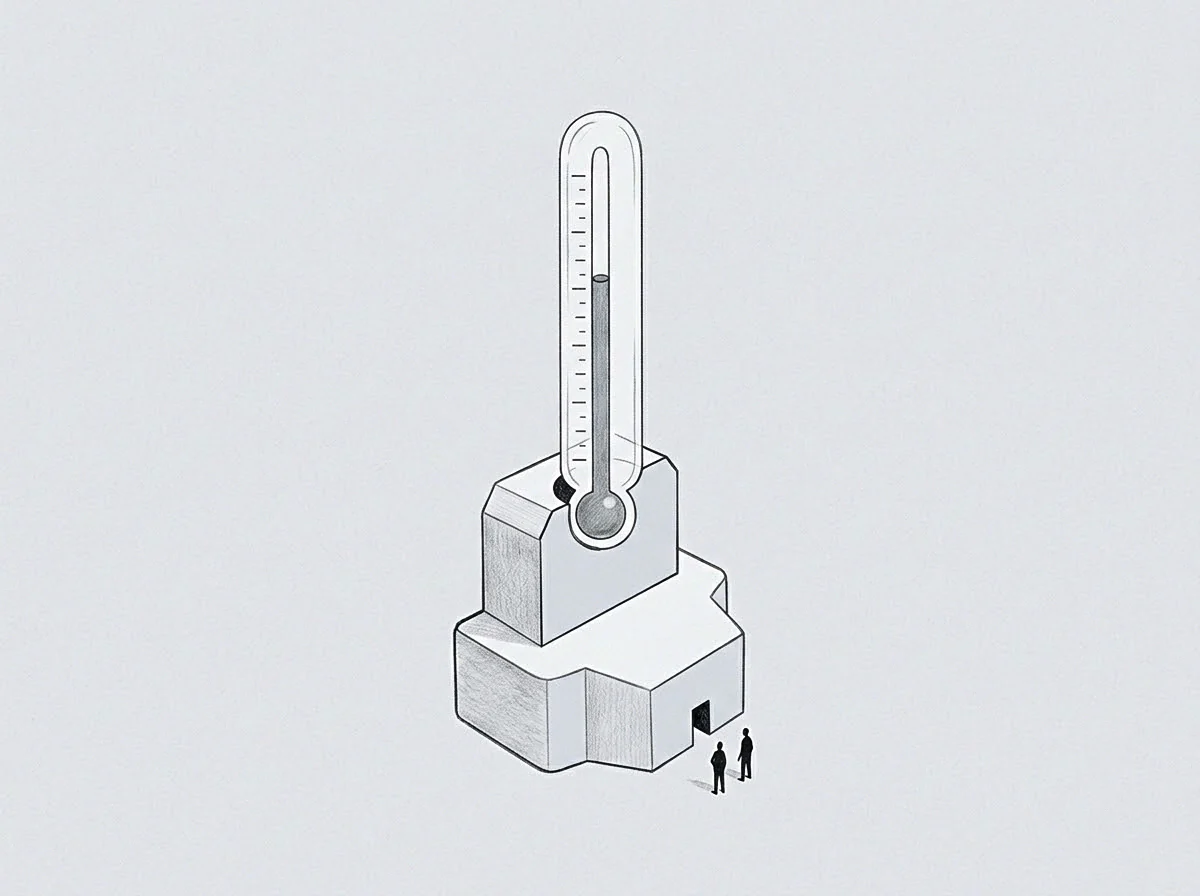
Structural gating functions as a physiological filter during leadership transitions, converting continuous stress exposure into bounded, manageable events. A structurally gated handover establishes clear operational boundaries, date-certain termination of communication access, and complete transfer of decision rights. Without these explicit structures, the former leader operates under sustained ambient load, where background threat monitoring consumes finite cognitive capacity.
The presence of a defined gate provides the autonomic nervous system with the unambiguous structural boundary required to downregulate sympathetic hyper-arousal.
When boundaries stay unstated and an executive stepping down remains available for informal guidance, the successor naturally routes complex decisions back to the historical authority. This pattern prevents the successor from building decision-making capacity while trapping the former leader in a demanding regulatory loop. Establishing precise parameters around consultative access alters this dynamic immediately.
Restricting interaction windows to fixed schedules or eliminating direct operational messaging forces the organization to adapt while allowing the departing leader’s physiological systems to return to rest.
The structural mechanisms that successfully isolate departing leaders from operational wear depend on specific, non-negotiable operational conditions:
- Operational Decision Severance removes all formal and informal sign-off authority from the departing executive on a specific, publicly declared date.
- Channel Deprovisioning revokes access to internal communication systems, real-time dashboards, and operational group messaging platforms at midnight on the transition date.
- Consultative Access Schedules restrict post-handover inquiries to pre-arranged weekly or bi-weekly sessions, eliminating unscheduled ambient pings entirely.
A date-certain termination of operational authority eliminates background threat monitoring within forty-eight hours.
Implementing these structural gates creates an immediate shift in physiological metrics. Heart rate variability begins to recover within days once the nervous system perceives that incoming operational pings have ceased. Conversely, leaving communication lines open without structural filters guarantees continuous autonomic activation, as the anticipation of incoming interruptions holds the nervous system in perpetual vigilance.
Setting strict parameters around operational access provides the necessary physical barrier for metabolic and autonomic recovery.
Two leadership transition models within an expanding firm illustrate the contrast. In one arrangement, a founder steps down from daily operations but remains reachable via instant messaging for urgent questions. In the second arrangement, a founder transfers all operational access, revokes system privileges, and agrees to a single hour of formal consulting per week.
The first arrangement results in continuous physiological stress, where night-time cortisol levels remain thirty percent above normal. The second arrangement allows parasympathetic rebound within seventy-two hours, setting the stage for steady physiological recovery. Leaving transition terms loose costs the departing leader their metabolic recovery, forcing the neuroendocrine system to carry operational load without operational authority.

Clock
Quantifying the latency of autonomic nervous system recovery requires tracking specific physiological markers over time following an operational transition. Parasympathetic recovery, measured via root mean square of successive differences in heart rate intervals, serves as the primary metric of autonomic restoration. In ungated handovers, recovery latency extends indefinitely because background vigilance prevents the activation of the parasympathetic vagal brake, which requires complete operational disengagement to reassert itself.
When explicit structural gates isolate the departing leader, recovery latency follows a predictable time-course characterized by measurable drops in resting heart rate and normalization of cortisol diurnal curves.

What measures autonomic rebound after operational severance?
Physiological measurements demonstrate that nocturnal heart rate drop is the earliest reliable indicator of autonomic downregulation. During active operational tenure, nocturnal heart rate drop often falls below ten percent, indicating persistent sympathetic dominance during sleep. Structural gating accelerates the restoration of a healthy nocturnal dip exceeding fifteen percent within fourteen days post-transition.
Without structural gating, nocturnal heart rate elevation persists for months, maintaining elevated blood pressure and impairing tissue repair processes.
| Physiological Parameter | Baseline Operational State | Ungated Handover Latency | Structurally Gated Latency |
|---|---|---|---|
| RMSSD Recovery (ms) | 18 – 25 | 60 – 120 days | 10 – 21 days |
| Nocturnal Heart Rate Dip | < 8% | 45 – 90 days | 7 – 14 days |
| Cortisol Awakening Response | Blunted / Flat | 90 – 180 days | 14 – 30 days |
| Galvanic Reactivity to Pings | Hyper-reactive | Persistent | Extinct within 14 days |
Research in stress physiology confirms that salivary cortisol diurnal curves flatten during prolonged periods of unmanaged operational demand. A flat cortisol profile correlates with systemic fatigue, impaired immune function, and reduced emotional resilience. Structurally gated handovers permit the diurnal cortisol rhythm to restore its steep morning rise and evening decline within one month of complete operational severance.
Ungated transitions maintain a flattened cortisol curve, prolonging systemic inflammation and metabolic dysregulation.
Parasympathetic recovery begins only when the nervous system detects zero remaining escalation channels.
The time required for autonomic baseline restoration varies depending on prior allostatic load accumulation and the absolute nature of the structural gates enforced. While full physiological normalization typically occurs within three to four weeks under strict gating, open communication lines extend recovery latency past six months. The lingering uncertainty regarding whether the former leader’s recovery latency converts into permanent physiological resilience or remains vulnerable to unexpected organizational crises remains an open empirical question in occupational health research.

Wire
Ambient communication channels function as continuous physiological wires transmitting stress signals directly to the departing leader’s nervous system. Shadow escalations, informal text messages, and direct calls from former team members reactivate sympathetic threat pathways instantly. When a phone pings at midnight with brief operational inquiries, the brain is forced into rapid context switching, consuming finite cognitive slots and triggering adrenaline release.
These micro-interventions prevent the nervous system from entering the low-arousal state necessary for deep physiological recovery.
Organizational habits often perpetuate these continuous interventions long after formal handovers conclude. Team members accustomed to seeking validation from the departing executive bypass new leadership structures to obtain rapid answers, undermining the new authority figure while maintaining high allostatic load on the former leader. Each back-channel consultation resets the autonomic recovery clock, forcing the neuroendocrine system back into an active operational state.
- Incoming queries regarding historical context arrive during off-hours.
- Successors request informal validation prior to publishing key choices.
- Escalations bypass official protocols to reach former authority figures directly.
An unclosed communication line converts every notification into an immediate biological state change.
Eliminating these indirect intrusions requires setting strict boundary enforcement protocols across all communication platforms. When team members realize that historical leaders no longer maintain access to operational channels, communication patterns adapt to the new organizational structure. Severing these communication lines protects the departing leader’s physiological headroom, allowing neural pathways to adapt to the absence of operational stress.
Removing access privileges provides the physical boundary required for autonomic restoration.
A successor building competence in a new seat often relies on the perceived safety of having historical authority available on short notice during complex decisions. That availability, however, shifts the burden of organizational uncertainty directly back onto the departing executive’s neuroendocrine system. The former leader continues to bear biological stress without holding operational control, extending autonomic latency and blocking parasympathetic rebound.
Yield
Reclaiming autonomic equilibrium following a major executive transition requires treating structural gating as a non-negotiable physiological protocol. The autonomic nervous system cannot distinguish between active operational responsibility and the continuous threat of incoming operational demands, leaving the vagal brake disengaged. When structural gates enforce complete operational severance, biological systems initiate rapid downregulation, restoring nocturnal heart rate variability and normalizing hormonal production curves.
Restoring regulatory headroom requires systemic isolation from operational inputs. The removal of administrative rights, communication access, and decision-making authority creates the baseline safety conditions necessary for autonomic recovery. As ambient threat monitoring ceases, cognitive capacity re-emerges, allowing the former executive to process chronic stress wear accumulated over years of operational leadership.
Structural isolation transforms transition latency from an uncontrolled burn into a predictable, measurable restoration process.
Organizations that implement strict handover gating protocols protect both the incoming executive’s authority and the departing leader’s long-term health. Defining clear dates, access limits, and severance boundaries converts an ambiguous operational exit into an orderly transfer of responsibility. The resulting reduction in allostatic load permits rapid parasympathetic activation, restoring metabolic health and neural efficiency.
Structurally gated transitions demonstrate that complete operational separation directly accelerates autonomic nervous system recovery.
Complete autonomic recovery depends entirely on maintaining absolute operational boundaries until parasympathetic tone achieves total stabilization.