
Quantifying Neural Residue and Cognitive Loop Volume Boundaries in Distributed Systems Control
Neural residue accumulates across concurrent unclosed tasks, saturating working memory capacity and forcing peripheral telemetry shedding in human operators.

Trace
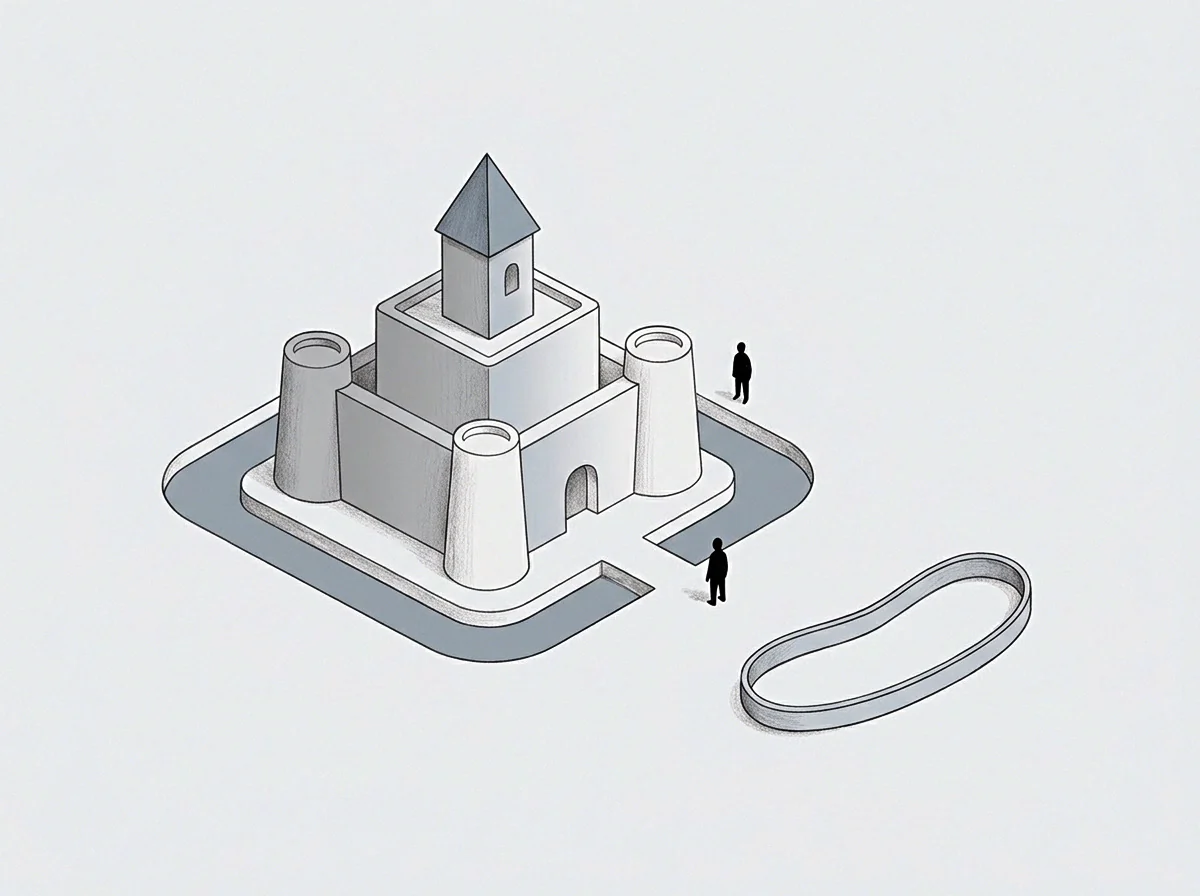
When an operator switches between distributed control planes, biological activation stays behind on the vacated interface. Attention does not snap clean across operational contexts. This neurological state, termed attention residue, persists as active working memory traces that degrade executive processing speed on subsequent tasks.
If a distributed system signals an anomaly across concurrent message streams, the brain retains semantic and prospective tags from the interrupted channel, maintaining metabolic expenditure on the prior state even while sensory input focuses on the incoming alert.
A distributed system dividing human attention across concurrent streams forces metabolic processing to continue on the vacated operational plane.
Measurements of executive function during concurrent event handling show that neural decay rates follow an asymptotic curve rather than resetting instantly. In laboratory studies of task transitions, an unclosed operational problem maintains partial retrieval activation in the prefrontal cortex for minutes after sensory detachment. That lingering activation reduces the cognitive capacity available for diagnostic reasoning on the active terminal.
Cognitive Residue Accumulation Rates
Because interruption frequency governs residue density, an incident forcing context switches at intervals shorter than ten minutes causes residual activation from earlier alerts to overlap with active processing of current signals. The latency to achieve full semantic coherence on an unfamiliar service topology grows with each unparked event.
The operational penalty shows up in latency and falling diagnostic accuracy, because the working memory buffer remains occupied by residual parameters from preceding alerts. Operators misinterpret telemetry traces, skip secondary verification steps, and apply remediation patterns derived from a previous context to an entirely different failure mode.
Shelf
Every operational seat has a finite volume for simultaneous unresolved processes. In distributed control operations, an open loop is an active operational thread lacking deterministic termination criteria. A service degradation without a confirmed root cause, an unacknowledged pull request blocking deployment, and a fluctuating error budget consume working memory in the same manner as an active incident.

Working Memory Depletion Under Concurrent Control
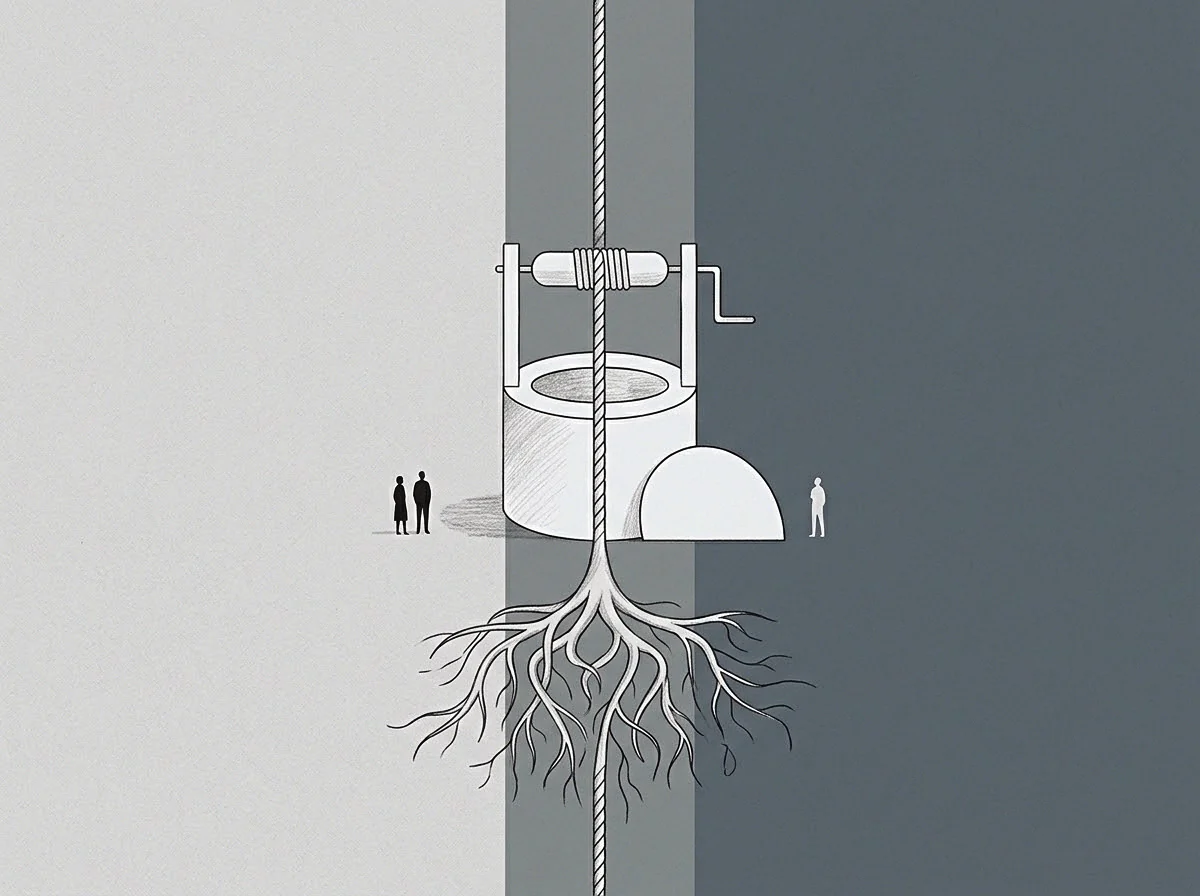
Working memory functions like a physical shelf with fixed dimensions. Cognitive load theory divides this capacity into intrinsic, extraneous, and germane demands. Holding five distributed system alerts without automated state reconciliation saturates intrinsic capacity, leaving no processing volume to generate diagnostic hypotheses.
The nervous system compensates by shedding perceptual fidelity.
Unresolved operational anomalies occupy executive processing slots regardless of active monitoring status.
The human supervisory control model defines limits for human-in-the-loop oversight. An individual managing distributed cloud infrastructure experiences performance collapse when ungated concurrent threads exceed working capacity.
The system operator maintains four distinct categories of cognitive loops:
- Active diagnostic threads require continuous semantic processing and rapid telemetry correlation during live incidents.
- Suspended triage states consume prospective memory by demanding periodic status verification against arbitrary completion timers.
- Uncertain delegation paths drain executive reserve through persistent tracking of unconfirmed handoffs between engineering groups.
- Passive telemetry baselines demand low-level pattern recognition that degrades rapidly as ambient alert volume increases.
Resting capacity returns only when unclosed tasks receive explicit termination conditions.

Spill
Exceeding cognitive loop volume boundaries forces an unmanaged shedding of supervisory control. Under severe allostatic load, the central nervous system throttles input channels without conscious prioritization. Rather than failing uniformly across all components, the human control layer drops sensory telemetry from peripheral distributed nodes to protect immediate central responses.

Telemetry Degradation and Cognitive Shedding
Throttled supervisory states display clear behavioral markers distinct from clinical exhaustion. The operator retains full logical capability within a narrowed domain while completely ignoring adjacent warnings. Telemetry channels outside the immediate focus ring experience complete signal omission, as the brain treats ancillary instrumentation as noise to preserve the central operational thread.
| Attentional Load Tier | Concurrent Unclosed Loops | Mean Context Switching Latency | Peripheral Anomaly Detection Rate |
|---|---|---|---|
| Nominal Control Baseline | One to two loops | Fourteen seconds | Ninety-two percent |
| Elevated Supervisory Demand | Three to four loops | Forty-eight seconds | Sixty-seven percent |
| Throttled Saturation Level | Five to seven loops | One hundred ninety seconds | Twenty-one percent |
| Systemic Overflow State | Eight or more loops | Four hundred twenty seconds | Four percent |
Physical exhaustion arrives through sustained allostatic compensation. Neuroendocrine markers confirm elevated cortisol and catecholamine secretion during periods of high concurrency. Operators experience this physiological wear as acute peripheral detachment and reduced spatial awareness when viewing distributed architecture diagrams.
Biological throttling protects immediate diagnostic capacity by eliminating peripheral telemetry intake.
Recovery requires total cessation of ungated telemetry streams. Introducing an explicit backpressure agreement halts incoming interrupts until active diagnostic threads clear.

Check
Mitigating residue accumulation demands rigid interface gating rather than human endurance. Cognitive boundaries require structural protection comparable to circuit breakers in distributed software architectures. When incoming task volume surpasses human loop boundaries, the control environment must reject or queue additional context transfers.

Determinism in Operational Boundaries
Deterministic loop termination removes speculative load. An unverified alert represents an expensive operational liability. Requiring every telemetry alert to contain an automated expiration timestamp, an explicit escalation path, and a bounded verification checklist converts an open cognitive loop into a parked record.
The working memory shelf clears because prospective retention requirements disappear.
Control engineers structure interface handovers through explicit contractual state machines. A thread passed between operators carries a bounded diagnostic scope and definitive ownership marks. Without these structural boundaries, distributed systems control degenerates into biological saturation.
A control room operates reliably when incoming attentional demands match biological processing boundaries. Establishing deterministic interfaces converts arbitrary operational chaos into structured, sequential throughput.