
Structural Differences Between Allostatic Downscaling And Clinical Major Depressive Pathology
Allostatic downscaling gates voluntary effort to protect high-load systems, whereas major depressive pathology reflects primary synaptic and circuit impairment.

Drain
Adaptive Capacity Gating in Throttled Biological Systems
Two distinct operational states produce reduced behavioral output, flattened emotional expression, and social withdrawal in high-responsibility environments. The first state involves an adaptive protective reduction in energy expenditure, governed by stress physiology when chronic regulatory demand reaches systemic limits. The second state involves a structural malfunction within brain circuits regulating reward processing, stress responses, and cognitive control, operating independently of current environmental tasks.
Misinterpreting protective throttling as clinical depression leads to clinical interventions that fail to resolve underlying operational overload. Conversely, mistaking a primary mood disorder for simple exhaustion delays necessary medical care while clinical pathology progresses.
In human stress physiology, chronic load forces the central nervous system to reallocate biological resources. When an individual maintains multiple unresolved commitments across extended periods, neuroendocrine signals enforce a baseline reduction in voluntary energy output. Biological systems enforce strict limits.
This energy conservation strategy limits cognitive expenditure on optional tasks while preserving vital metabolic functions. Systemic demand forces intentional throttling. The person in this state experiences severe friction when initiating unscripted work, yet maintains the ability to execute highly structured routine tasks when forced by immediate external demands.
Clinical major depressive pathology presents a different biological profile. Synaptic density in prefrontal microcircuits declines, ventral striatal responses to reward inputs diminish, and diurnal signaling along the hypothalamic-pituitary-adrenal axis undergoes baseline structural alteration. Energy allocation follows metabolic rules.
The resulting drop in motivation occurs regardless of whether immediate environmental demands are light or severe. Removing tasks from a patient with major depressive pathology does not automatically restore metabolic baseline or cognitive drive, because the intracellular machinery responsible for signaling and neural plasticity remains impaired.
When an operator operates at high regulatory capacity for extended periods, the central nervous system prioritizes biological survival over voluntary expansion. Load determines the available rate. The physiological system throttles voluntary output to prevent tissue damage, systemic inflammation, and cell death.
The presence of clear contextual responsiveness, where system performance recovers when unmanaged tasks are removed, marks the boundary where adaptive physiological downscaling ends and primary depressive pathology begins.
Assay
Neuroendocrine Indicators Across Stress Axes
Objective measurement of biological markers separates physiological adaptation from clinical disease. Systemic wear accelerates without rest. Cortisol rhythms provide a clear window into these internal state changes.
In healthy systems, cortisol peaks shortly after waking and declines steadily across the day. Under early to moderate chronic load, overall cortisol output rises, creating a steep diurnal curve that drives constant alertness. Prolonged exposure to high regulatory demands eventually flattens this curve, producing low morning baseline levels alongside elevated evening concentrations.

Cortisol Slopes and Cortico-Striatal Drive
Clinical major depressive pathology often features hyper-cortisolemia driven by impaired glucocorticoid receptor gene expression within the hippocampus and prefrontal cortex. Cortisol rhythms flatten over time. The hypothalamic-pituitary-adrenal axis loses negative feedback sensitivity, causing continuous adrenal activity even during quiet sleep cycles.
Salivary cortisol sampling collected across 48-hour observation periods confirms that flattened diurnal cortisol curves in downscaled operators revert to normal baseline rhythms within six weeks of terminating open operational loops, whereas depressed clinical cohorts maintain abnormal hypothalamic-pituitary-adrenal dysregulation despite stressor removal.
- Diurnal Cortisol Secretion reflects the baseline sensitivity of central glucocorticoid feedback loops under continuous load.
- Inflammatory Cytokine Titer tracks circulating levels of interleukin six and tumor necrosis factor alpha, which rise during physical cellular strain.
- Brain-Derived Neurotrophic Factor measures systemic neuroplastic potential, showing steep drops in clinical depression but relative stability during adaptive stress downscaling.
- Ventral Striatal Reactivity quantifies neural response magnitude to unexpected reward signals during functional neuroimaging tasks.
Inflammatory markers further clarify this physiological boundary. Systemic inflammation rises under both conditions, yet the underlying cytokine cascades follow different pathways. Adaptive downscaling elevates circulating interleukin six as a direct consequence of sympathetic nervous system signaling and sleep fragmentation.
Cortisol signaling remains partially capable of suppressing inflammatory tissue damage once environmental stressors subside. Clinical depression involves persistent neuroinflammation where microglial activation in the anterior cingulate cortex continues independently of peripheral stressor presence.
Downscaling preserves underlying neuroplastic capacity under stress, whereas primary depressive pathology displays persistent microglial activation that survives task removal.
Reward processing hardware displays distinct operational signatures under objective brain imaging protocols. Functional magnetic resonance imaging demonstrates that individuals in an allostatically downscaled state maintain normal ventral striatal activation when presented with high-value unexpected rewards, provided those rewards require zero immediate cognitive processing. The slot stays occupied indefinitely.
Individuals meeting clinical criteria for major depressive disorder show blunted striatal signaling regardless of task complexity or potential reward magnitude. Reserve capacity drops under continuous demand. The core computational machinery of reward prediction error remains functional during simple metabolic downscaling, whereas depressive pathology impairs the basic signaling pathways of dopamine processing.
What remains unresolved in stress biomarker research is the exact duration of unmanaged allostatic downscaling required to trigger irreversible epigenetic modifications within hippocampal glucocorticoid receptor promoters.

Grid
Concurrency Limits and Cognitive Load Accounting
Cognitive architecture operates under strict physical limits. Processing capacity depends on the number of active, unmanaged operational loops currently held in working memory. An unmanaged loop is an open commitment without explicit boundaries, defined terms, or scheduled execution dates.
Each open loop reserves a portion of prefrontal processing capacity, reducing the remaining headroom available for new problem solving. Biological capacity dictates task limits.
Holding four unmanaged operational loops consumes available prefrontal working memory capacity. Demand exceeds immediate processing limits. The operator in this condition exhibits behavioral signs that look identical to clinical psychomotor slowing: delayed response times, executive dysfunction, and emotional blunting.
The underlying state, however, is a resource allocation bottleneck. The underlying neural architecture remains intact, but available processing slots are fully occupied by background monitoring tasks. Closing two unmanaged loops instantly frees processing capacity, restoring voluntary task initiation without clinical intervention.
The table below delineates the functional and biological differences separating allostatic downscaling from clinical major depressive pathology across core clinical dimensions.
| Dimension | Allostatic Downscaling | Clinical Depressive Pathology |
|---|---|---|
| Primary Biological Cause | Protective energy conservation under high regulatory load | Structural prefrontal and monoaminergic circuit dysfunction |
| Contextual Responsiveness | Capacity returns rapidly when open loops close | Persistent cognitive impairment despite task removal |
| Task Execution Profile | Routine structured protocols execute; novel initiation fails | Systemic failure across routine and novel tasks |
| Diurnal Cortisol Curve | Flattened profile that normalizes upon load removal | Fixed hyper-cortisolemia with loss of negative feedback |
| Neuroplastic Headroom | BDNF levels maintained near normal baseline ranges | Significant neurotrophin depletion and synaptic loss |

Which Indicators Separate System Throttling From Pathological Anhedonia?
Anhedonia defines the clinical inability to experience pleasure from previously rewarding activities. In primary mood pathology, anhedonia reflects damaged dopamine synthesis, impaired transport, or reduced postsynaptic receptor availability within mesolimbic circuits. The depressed individual gains no subjective satisfaction from task completion, social connection, or physical rest.
The reward processing apparatus fails to generate positive affect even when positive stimuli are directly presented.
System capacity drops predictably when open commitments consume baseline processing slots.
In allostatic downscaling, what appears to be anhedonia is actually defensive selective gating. Open loops consume active headroom. The human organism conserves limited metabolic energy by suppressing interest in activities that carry unpredictable energy costs.
When presented with low-cost, highly structured rewarding events that demand no decision-making, the downscaled organism experiences normal subjective satisfaction. Throttling preserves underlying cellular machinery. The distinction rests on load sensitivity: downscaling suppresses pleasure selectively based on computational cost, whereas depression erodes pleasure universally across all operational domains.
Misapplying psychiatric labels to capacity-gated operators leads to incorrect structural decisions. Prescribing monoaminergic reuptake inhibitors to a system operating at its physical concurrency limit fails to reduce the number of open commitments consuming working memory. The medication alters neurochemistry without altering the external demand load, leaving the operator in a state of chemical stimulation while background processing capacity remains completely exhausted.
The operational cost of this misdiagnosis is extended system burn-in, where the operator continues running high-load operations under artificial neurochemical stimulation until biological systems suffer permanent structural damage.
Sluice

Reversibility and Load Elasticity Dynamics
Capacity recovery patterns demonstrate the structural divergence between regulatory downscaling and clinical pathology. An allostatically downscaled system exhibits structural elasticity. When unmanaged commitments are systematically identified, bounded by clear terms, and assigned explicit execution windows, prefrontal headroom returns in direct proportion to the load removed.
Capacity returns when loops close. The speed of this recovery tracks the removal of active computational tasks rather than the slow timeline of cellular tissue repair.
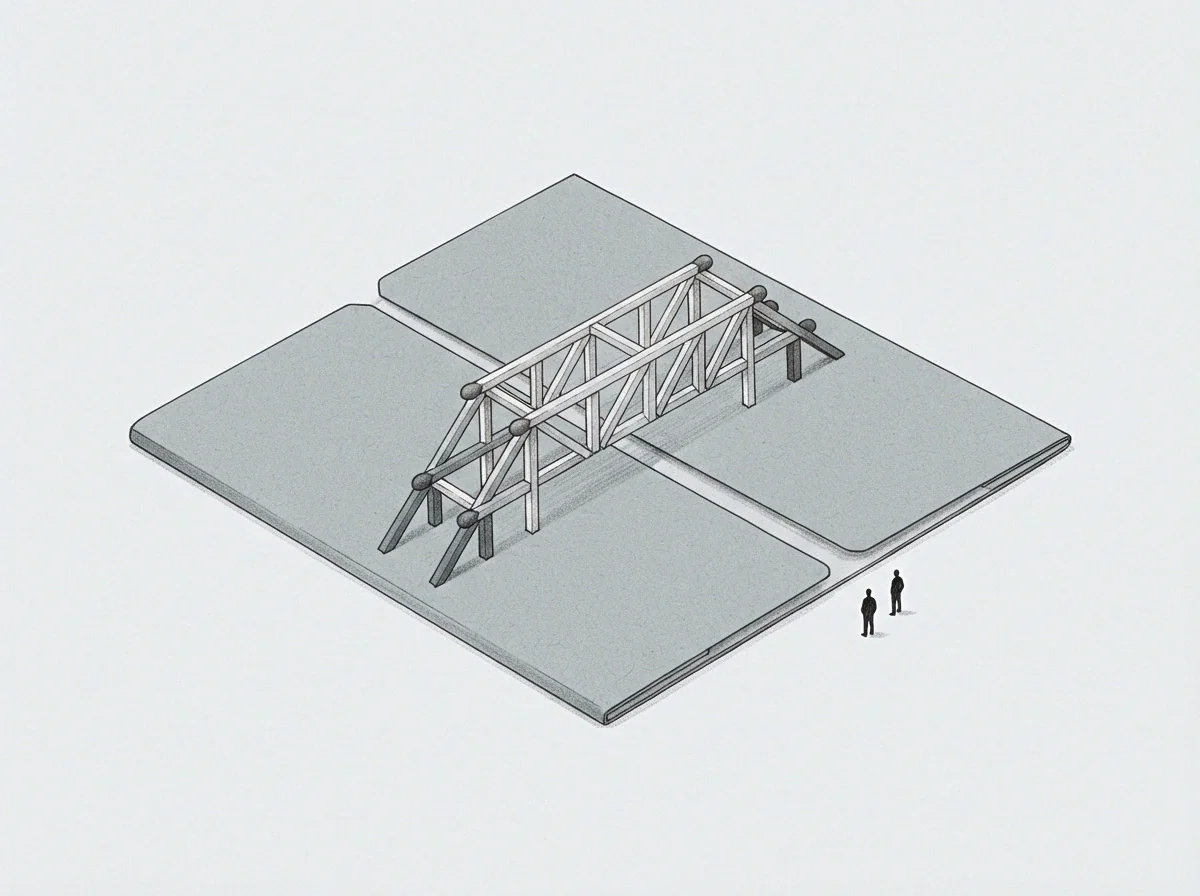
Consider municipal water infrastructure during severe storm events. Sluice gates open automatically to redirect excess volume into retention basins, preventing structural failure of main distribution channels. The system intentionally restricts throughput to downstream delivery pipes until total volume drops below safety thresholds.
The reduction in downstream delivery is an engineered safety mechanism rather than a pipeline failure. Expecting normal delivery rates during peak volume events causes pipe ruptures, just as demanding continuous creative output from an overloaded human system causes biological tissue breakdown.
Clinical major depressive pathology lacks immediate structural elasticity. Structural damage resists simple rest. Synaptic density reductions within the dentate gyrus and prefrontal cortex take months to recover even after systemic stress hormones normalize.
Neural circuit reconstruction demands sustained cellular plasticity, neurotrophin production, and microglial stabilization. Removing operational demands from a clinically depressed individual provides necessary relief from acute strain, but it does not produce immediate functional recovery because the underlying cellular machinery requires biological repair time.
Removing open operational loops restores functional capacity in downscaled systems without requiring medical intervention.
Systematic load reduction in human operational environments requires a clear, explicit sequence of actions to decouple open loops and restore cognitive capacity.
- Identification of every active project lacking explicit completion criteria or firm review dates.
- Unilateral suspension of optional communication channels to stop incoming demand signals.
- Formal conversion of open-ended responsibilities into bounded contracts carrying fixed terms.
- Enforcement of mandatory zero-input rest windows to clear residual prefrontal background tracking.
Longitudinal tracking of post-exit corporate founders shows that recovery of voluntary initiation capacity requires complete termination of operational liability for a minimum of twenty-one continuous days, provided no secondary mood disorders are present. This recovery latency reflects the time necessary for central glucocorticoid receptors to up-regulate and clear circulating inflammatory cytokines. If an operator remains unresponsive to total load removal after eight weeks of verified rest, the probability shifts heavily toward primary clinical pathology requiring specialized therapeutic intervention.
The partner observing an overloaded operator often remarks that the person has become completely detached from shared long-term goals while remaining capable of arguing about immediate operational details.

Trench

Structural Remediation and Boundary Enforcement
Protecting human operational capacity demands rigorous load engineering rather than psychological self-soothing. The primary structural move involves setting fixed limits on active commitments. Operators must treat working memory slots as finite physical assets.
When an environment demands continuous adaptation without providing structural boundaries, the human system defaults into protective downscaling to survive the demand environment. The count determines systemic wear.
The organism protects its core assets by downscaling voluntary output long before structural tissue damage occurs.
Field observation suggests that holding more than four unmanaged operational loops simultaneously triggers automatic neuroendocrine downscaling in high-reactivity individuals, though prospective clinical trials validating this precise threshold across diverse populations remain incomplete. Operators must treat four open threads as an operational limit. Exceeding this boundary reliably initiates defensive throttling, regardless of individual psychological resilience or subjective motivation levels.
Effective management of operational load requires distinguishing between project count and open loop count. A project carrying defined scope, explicit deadlines, and clear terms costs minimal working memory because its execution path is predictable. An open-ended project with ambiguous expectations, undefined terms, and frequent unexpected notifications consumes a complete operational slot continuously.
Converting ambiguous commitments into explicit contracts with defined boundaries frees cognitive headroom, allowing the nervous system to disengage defensive throttling mechanisms naturally.
A reliable rule of thumb holds that system capacity recovers when open commitments carry fixed termination dates.