
Structural Dynamics of Authority Thresholds Under Continuous Asynchronous Telemetry Strain
Continuous asynchronous telemetry streams force executive authority thresholds to degrade by converting ambient operational visibility into implicit approval loops.

Pulse
Four asynchronous status feeds update simultaneously on a late evening desk while three operational authorizations sit unexecuted in a messaging queue. An executive assigned to sign off on a routine procurement variance scans an automated system notification, a live project dashboard, an urgent direct message about server load, and a customer support alert. None of these incoming streams explicitly requests intervention, yet each displays an active operational variable in real time.
Continuous telemetry changes how decision rights operate. In traditional organizational design, operational data moves upward in periodic batches structured by summaries and scheduled reviews. Asynchronous telemetry replaces those reports with an uninterrupted stream of micro-signals, eroding the implicit cognitive buffer that protects high-level decision capacity.
When an authority holder receives real-time operational updates, monitoring a system and governing it become hard to separate.
The constant presence of operational telemetry converts quiet capacity into monitoring overhead.
Every unread telemetry ping creates an open cognitive thread. The nervous system interprets continuous operational visibility as ongoing exposure to environmental demands. A system sending fifty automated updates an hour keeps executive attention engaged in passive triage; even when an operator acts on very few updates, the cognitive effort of evaluating whether to intervene remains constant.
The stream continues without pause. Over time, the volume of incoming telemetry exceeds the processing headroom of the executive seat. Rather than ignoring the stream, authority holders frequently adapt by lowering their threshold for intervention, taking micro-control of routine operations simply because the telemetry makes those operations visible.
Drift
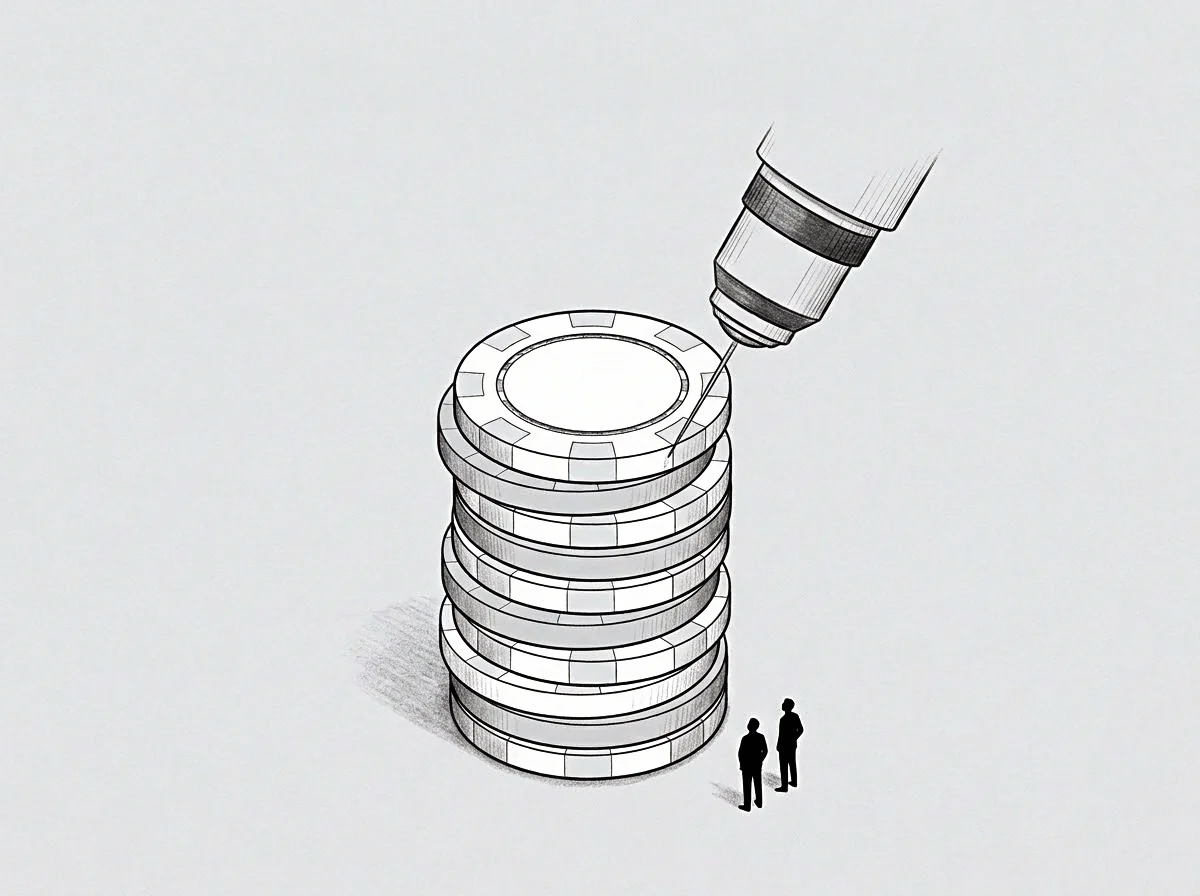
Authority thresholds rarely collapse in a single catastrophic failure. They drift through small incremental adjustments driven by telemetry exposure. When subordinates know that an executive sees every status change in an asynchronous workspace, their willingness to exercise autonomous authority decreases.
Autonomous execution carries personal risk, whereas leaving a project status visible on a shared telemetry board creates implicit shared risk.

Mechanism of Ambient Approval Seeking
In an operational setup where an engineering lead holds signing authority for architecture modifications under fifty thousand dollars, an organization might move from weekly project reviews to continuous asynchronous telemetry via deployment dashboards and open project channels. Within six months, the engineering lead stops executing standard architecture modifications without tagging the chief technology officer in the stream. The formal authority threshold remains fifty thousand dollars, but the effective threshold drops to zero.
Continuous visibility creates its own structural incentives. A subordinate posts an operational plan into the asynchronous telemetry stream. If the chief technology officer views the update or leaves it unacknowledged for two hours, the subordinate treats the absence of a negative signal as tacit approval.
The chief technology officer, carrying a full load of strategic tasks, sees the notification pass across the screen and does not intervene, but processing the alert still consumes working memory.
Routine operational choices migrate upward not through formal re-delegation, but through telemetry-enabled passive clearance. While formal governance documents state that the engineering lead holds full authority, daily practice drifts until the chief technology officer becomes an involuntary bottleneck for minor decisions.
Continuous operational visibility transforms autonomous delegation into passive sign-off.
When this pattern persists for several quarters, authority hysteresis sets in—the lag between removing a telemetry feed and restoring autonomous decision-making. Once teams adapt to operating under continuous executive visibility, turning off the telemetry feed does not immediately restore independent execution. Subordinates continue to seek explicit validation, having lost the muscle memory of unmonitored responsibility.
Subordinates frame this dynamic in predictable terms during operational retrospectives, noting that direct executive visibility into open work boards makes independent action feel like operating behind an executive’s back.

Gate
Protecting authority thresholds under continuous asynchronous strain requires structural gating mechanisms. A gate is a formal parameter that filters telemetry before it reaches the executive processor. Without hard gating, authority boundaries automatically decay toward the lowest threshold of intervention.

When Does Telemetry Invalidation Force Authority Escalation?
Telemetry invalidates delegation when automated alerts bypass the operational hierarchy and deliver raw operational exceptions directly to executive seats. When a system pings an executive about a minor operational failure before the unit manager has investigated the issue, the executive experiences an immediate impulse to step in, overriding the manager’s authority threshold.
Effective gating structures apply three strict parameters to every incoming asynchronous feed: scope, date, and terms. Scope defines the precise domain of metrics visible to a seat. Date establishes the explicit operational intervals at which telemetry is processed, replacing real-time feeds with batch releases.
Terms state the quantitative limits that must be breached before an exception triggers an executive notification.
- Unfiltered Alert Cascades system notifications that route low-severity operational errors directly to executive feeds without passing through frontline resolution layers first.
- Continuous Operational Dashboards persistent visual telemetry metrics displayed in central workspaces that encourage executive micro-monitoring during routine operational cycles.
- Open Tagging Protocols workplace messaging rules that permit any employee to tag executive authority holders in granular project threads without managerial filtering.
- Passive Escalation Channels shared channels where project updates sit without clear ownership, forcing executives to review every message to avoid dropped handoffs.
Telemetry dampening replaces raw data streams with gated exception reports. When a system enforces these parameters, operational signals remain contained within the appropriate authority tier. The executive seat regains processing headroom, while frontline managers retain clear decision rights without ambient executive interference.
A contract clause specifying that executive intervention occurs exclusively upon a formal written threshold breach restores functional delegation.

Drain
The physiological and cognitive wear imposed by uninterrupted telemetry monitoring follows a documented biological trajectory. Allostatic load measures the cumulative physiological wear and tear on the body resulting from chronic exposure to ongoing regulatory demands. In an executive context, continuous asynchronous telemetry represents an uninterrupted regulatory demand; the processor never enters a fully offline state because incoming signals arrive at all hours without predictable boundaries.
Cognitive science demonstrates that holding ungated threads open in working memory creates continuous switching costs. Each ping forces a rapid task switch, even if reading the message takes only three seconds. The switching cost goes beyond time lost: it depletes the executive capacity required for high-order analytical tasks.
Overloaded operators enter a state of throttling. Throttling is an active system response to structural overload where the processor intentionally drops low-priority tasks, delays approvals, and limits response breadth to preserve core viability. Throttling is routinely misread by colleagues as operational incompetence, executive fatigue, or emotional withdrawal.
Throttling represents systemic protection against structural overload rather than a failure of executive intent.
The operational progression of authority threshold decay under un-gated telemetry strain follows four distinct stages:
- Continuous exposure to real-time asynchronous telemetry feeds degrades executive processing headroom across all operational domains.
- Subordinates perceive ambient executive monitoring and silently default to seeking passive clearance for routine operational decisions.
- Executive capacity limits force the seat into systemic throttling, delaying critical authorizations and stalling routine operational workflows.
- The organization misinterprets executive throttling as operational friction, introducing additional tracking telemetry that further amplifies the strain.
When an organization responds to operational friction by adding more monitoring tools, it accelerates the drain on executive authority, leading to higher error rates and complete decision paralysis across senior management.

Span
The architecture of an organization telemetry network determines the viable span of authority an executive can maintain. Broad authority spans require low-density telemetry feeds. When telemetry density increases, effective authority span contracts, regardless of what formal organizational charts show.
| Telemetry Architecture Model | Telemetry Delivery Cadence | Authority Threshold Impact | Allostatic Load Profile | Effective Span of Authority |
|---|---|---|---|---|
| Continuous Unfiltered Telemetry | Real-time notifications and open streams | Decays rapidly toward micro-approvals | Severe chronic elevation | Severely contracted (1-3 direct areas) |
| Gated Exception Telemetry | Batch alerts upon threshold breach | Holds firm at assigned parameters | Low baseline with acute spikes | Wide authority span (7-12 direct areas) |
| Scheduled Summary Telemetry | Daily or weekly aggregated reports | Static with formal revision loops | Predictable cyclic load | Optimal strategic span (5-10 direct areas) |
| Ambient Passive Telemetry | Continuous dashboards without alerts | Drifts slowly through covert monitoring | Moderate continuous drain | Moderate compressed span (3-6 direct areas) |
A firm operating under continuous unfiltered telemetry cannot maintain wide authority spans because the cognitive cost of processing the raw feed consumes all available operational hours. The executive becomes trapped in a narrow operational locus, reviewing minor line-item variances while strategic choices sit unattended.
Wide authority spans require high-friction telemetry filters to shield executive headroom.
Gated exception models enforce telemetry friction. By requiring an operational metric to breach a predetermined statistical boundary before triggering an alert, the system converts raw telemetry into actionable intelligence. The executive processor remains disengaged until an intervention is structurally required.
How long can a rapidly growing organization maintain functional authority delegation before continuous telemetry feeds force a complete consolidation of minor approvals at the founder level?

Clamp
Restoring authority thresholds requires structural dampening moves that sever the continuous telemetry loop. Organizations cannot rely on personal discipline or individual focus management to resist ambient telemetry strain; they must redesign the technical and operational channels that convey signals to executive seats.

Operational Moves for Telemetry Isolation
The primary move is the implementation of asynchronous batching intervals. Asynchronous batching isolates executive communication channels, routing all non-emergency telemetry into scheduled release windows. Instead of receiving continuous status updates throughout the workday, the executive receives two consolidated telemetry packages at fixed times.
The second move involves explicit authority boundary re-anchoring. The organization reviews all operational delegation thresholds and doubles the financial and operational limits required for executive sign-off. Simultaneously, the organization institutes an absolute ban on executive CCing and ambient channel tagging for decisions sitting below the new threshold.
The third move is channel isolation. Operational telemetry feeds are removed entirely from executive messaging applications and restricted to specialized monitoring software accessed exclusively during scheduled review hours. When messaging feeds are separated from operational dashboards, the passive urge to intervene in routine execution subsides.
Gated parameters protect capacity while clear delegation limits keep operational decisions where they belong.