Meaning
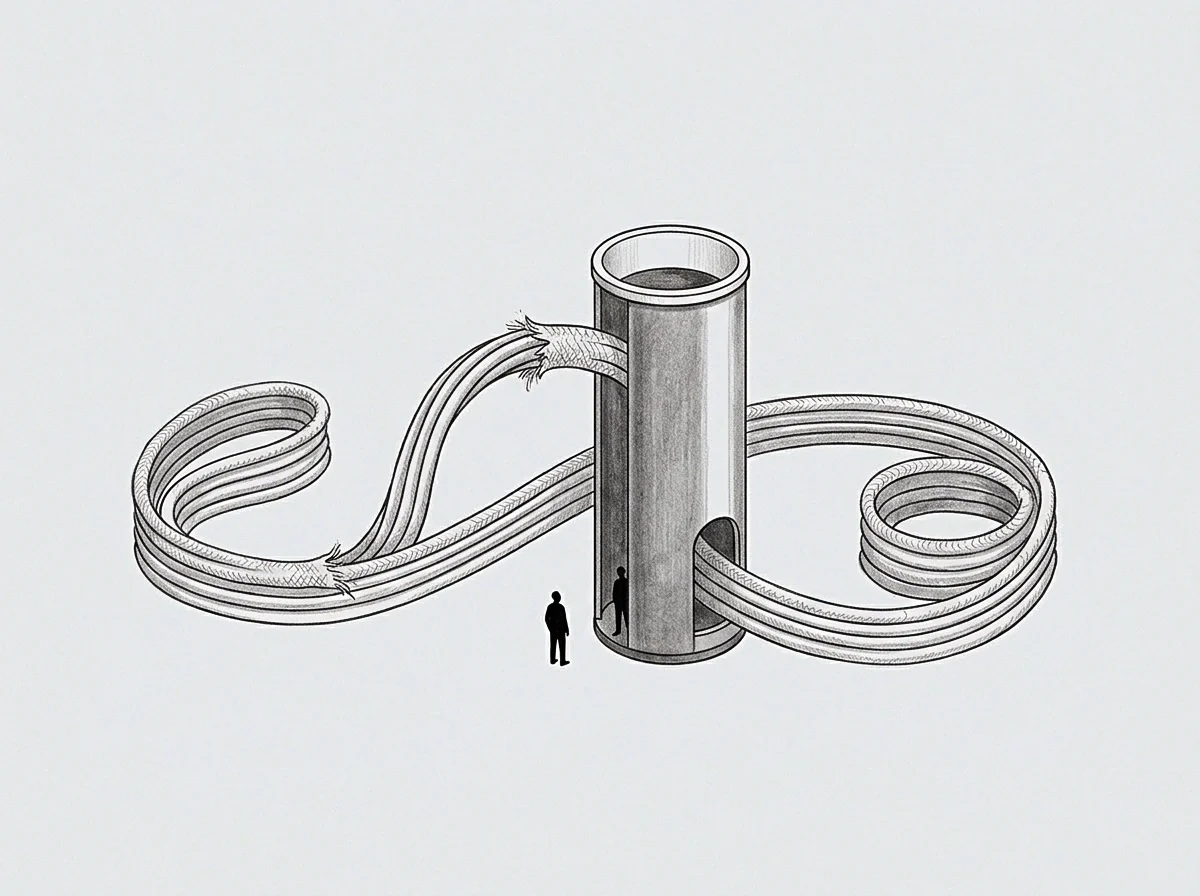
A security configuration involves the complete physical isolation of a sensitive system or network from any external connection, including the internet and other local area networks. The air gap prevents the unauthorized transfer of data by ensuring that no electrical, wireless, or optical path exists between a protected environment and a less secure one. Access to the isolated system is strictly limited to direct physical proximity, necessitating manual data transfer methods such as removable media.
This measure defines the highest level of network security where the risk of remote compromise is unacceptable.
Operational Barrier
Physical separation limits the vectors through which a system can be attacked or monitored. An air gap functions as a hard stop against lateral movement by an adversary who has gained access to peripheral networks. Maintenance of this state requires rigorous controls over hardware ports and signal emissions.
Transfer Protocol
Information exchange across the gap occurs through a highly regulated process known as sneakers or manual bridging. Personnel must carry data on physical storage devices that undergo scanning for malicious code at the boundary. The cost of this process is measured in significant human attention and delayed processing times.
High security systems rely on these manual checks to maintain the integrity of the isolated core.
Security Boundary
Total isolation ceases to be effective if wireless signals or acoustic channels are left unshielded. Electromagnetic interference can leak data even without a wired connection. This vulnerability demonstrates that a physical gap is only one part of a comprehensive isolation strategy.