
Translating Somatic Breakdown Into Enterprise Risk Metrics For Primary Shareholders
Somatic breakdown converts into enterprise risk metrics by mapping cognitive degradation directly to key person operational latency, volatility, and governance loss.
Shock
The human nervous system registers systemic overload long before an audit committee detects operational decay. Tremors in the hands during an afternoon capital call, forty consecutive nights of fragmented sleep, and an inability to retain complex technical sequences indicate biological exhaustion. These events remain sequestered inside executive offices because corporate reporting treats the body as private property, creating an unmonitored vulnerability for invested capital.
The primary operator functions as the central clearinghouse for strategic ambiguity, technical trade-offs, and critical debt allocations. When that clearinghouse experiences autonomic collapse, executive function degrades instantly. As working memory contracts, threat detection overrides capital allocation logic.
The company continues to project momentum through public statements while its core administrative engine enters erratic, survival-driven volatility.
Primary shareholders evaluate portfolio companies through capital efficiency, customer acquisition costs, and milestone velocity, rarely monitoring the physical asset executing those calculations. The biological substrate of the operator remains an unpriced externality until sudden hospitalization, erratic public statements, or catastrophic litigation exposes the deficit. Somatic collapse does not arrive unannounced; biological systems yield early telemetry.
Heart rate variability compresses over months, while endocrine balance skews under prolonged sympathetic tone, flattening emotional regulation and degrading risk appraisal. The operator begins treating routine governance queries as hostile incursions. Decisions that previously required hours take weeks, or occur in impulsive bursts aimed solely at shedding friction from an overloaded nervous system.
The enterprise absorbs this turbulence as strategic delay, attributing missed projections to market shifts rather than physical exhaustion.
When biological capacity drops below operational load, executive decisions index for nervous system relief rather than enterprise value creation.
A corporate entity depends on reliable input processing. The founder acts as an irreplaceable node in early and mid-stage firms; if that node begins dropping packets, misinterpreting signals, and accumulating latent operational friction, the entire architecture destabilizes. Shareholders often dismiss early physical tremors as transient stress inherent to scaling, an assumption that ignores basic systems biology.
Chronic hyper-arousal degrades the prefrontal cortex, elevating error rates in legal, technical, and financial decisions. Unaddressed physical collapse transforms what should be an orderly corporate evolution into a disorderly emergency rescue.

Metric
Translating Biological Telemetry Into Corporate Exposure
Institutions require quantitative vocabulary to price uncertainty. Somatic failure registers on an individual level as migraine patterns, visceral spasms, or cognitive stalls. For an investment committee, those physical manifestations mean key person insolvency, administrative paralysis, and sudden operational drag.
Translating somatic signals into enterprise risk metrics converts physical strain into material exposures that fall under legal and fiduciary duties of care.
| Physiological Collapse Marker | Cognitive Transfer Function | Enterprise Risk Translation | Material Corporate Exposure |
|---|---|---|---|
| Persistent prefrontal hypometabolism | Impaired scenario planning and working memory deficit | Strategic Volatility Risk | Capital misallocation during funding rounds and unvetted acquisition terms |
| Systemic sympathetic tone saturation | Elevated threat reactivity and defensive withdrawal | Key Person Operational Latency | Unilateral contract rejections and high turnover among direct reports |
| Severe circadian phase disruption | Delayed reaction time and degraded ethical evaluation | Compliance Oversight Vulnerability | Missed regulatory disclosures, defective filings, and signing of unauthorized guarantees |
| Somatic dissociation and panic response | Executive processing freeze during operational friction | Execution Stoppage Exposure | Single point of failure during crisis interventions and financing renegotiations |
The conversion table establishes how biological degradation directly impairs asset value. Consider an operator managing five hundred million dollars in committed enterprise value. If sleep deprivation induces cognitive slowing equivalent to blood alcohol intoxication, that operator signs binding commercial leases with degraded discernment.
Primary shareholders would intervene immediately if an executive appeared intoxicated in board meetings, yet they remain indifferent when equivalent cognitive deficits stem from sixty consecutive eighty-hour operational weeks.
Corporate risk officers categorize exposure under financial, operational, strategic, and compliance vectors. Physical collapse spans all four divisions simultaneously. When the nervous system breaks, the capacity to arbitrate conflicting demands evaporates.
The executive creates informal holding patterns, delaying essential capital expenditure decisions while micromanaging trivial administrative items to regain an illusion of control. Direct reports recognize the instability and withhold negative news to avoid defensive volatility, leaving the board with sanitised metrics until sudden executive absence exposes operational insolvency.
A stated limit on operational load operates as an engineered firewall protecting enterprise asset value from biological collapse.
Enterprise risk quantification demands concrete assessment criteria. A single founder carrying institutional memory, technical architecture, and investor relations represents a structural single point of failure. When that person exhibits somatic exhaustion, the company incurs an unrecorded operational discount.
Creditors, sophisticated acquirers, and secondary markets detect this drag long before primary equity sponsors identify the source, leaving open the question of whether institutional investors possess the diagnostic capacity to quantify biological insolvency before equity value permanently impairs.
Wire
Operational Transmission Channels For Physical Breakdown
The transmission of nervous system breakdown through an operational fabric follows clear causal chains. When an operator redlines, communication architecture warps. Routine emails receive combative responses or go unacknowledged for days as incoming messages become an unbearable cognitive load.
The team adapts by creating workarounds, routing decisions around the founder, or stalling progress entirely to avoid volatile confrontations, slowing operational tempo to a crawl.
The enterprise network experiences structural friction when boundaries are absent. Consider a firm where two co-founders have operated for four years without formal operational limits. When the chief executive experiences adrenal depletion and cognitive exhaustion, that breakdown cascades across the executive suite:
- Interpersonal Withdrawal manifests as cancelled executive committee sessions, unread investor updates, and complete tactical silence during critical contract negotiations.
- Impulsive Delegation occurs when an overwhelmed executive suddenly transfers core strategic responsibilities to unprepared subordinates without institutional context or handover protocols.
- Defensive Micro-Management develops as a nervous compensation mechanism, trapping the executive in trivial typographic errors while multi-million dollar vendor agreements sit unsigned.
- Governance Distortion emerges when the operator treats regular board inquiries as personal attacks, deliberately omitting negative operational figures from board packages.

What Triggers The Formal Governance Disclosure?
Corporate disclosure obligations operate on materiality thresholds. A physical collapse becomes legally material when it impairs an officer’s ability to fulfill statutory fiduciary responsibilities. Fiduciary duties of loyalty and care demand functional capacity; if an operator cannot process board materials or conduct regular governance, key person disclosure clauses activate.
Primary shareholders require clear contractual triggers rather than casual observational judgments.
When key person provisions link executive capacity strictly to catastrophic events like death or formal clinical disability, they miss the broader reality of creeping somatic deterioration. During this phase, the company bleeds value. Competitors seize market share while the founder struggles through daily nausea and panic episodes, and primary shareholders remain insulated in quarterly meetings until the executive fails to appear for a debt refinancing session.
Observable physical exhaustion frequently goes unaddressed at the board level because directors treat operational fatigue as a matter of personal autonomy rather than a governance risk.
Audit
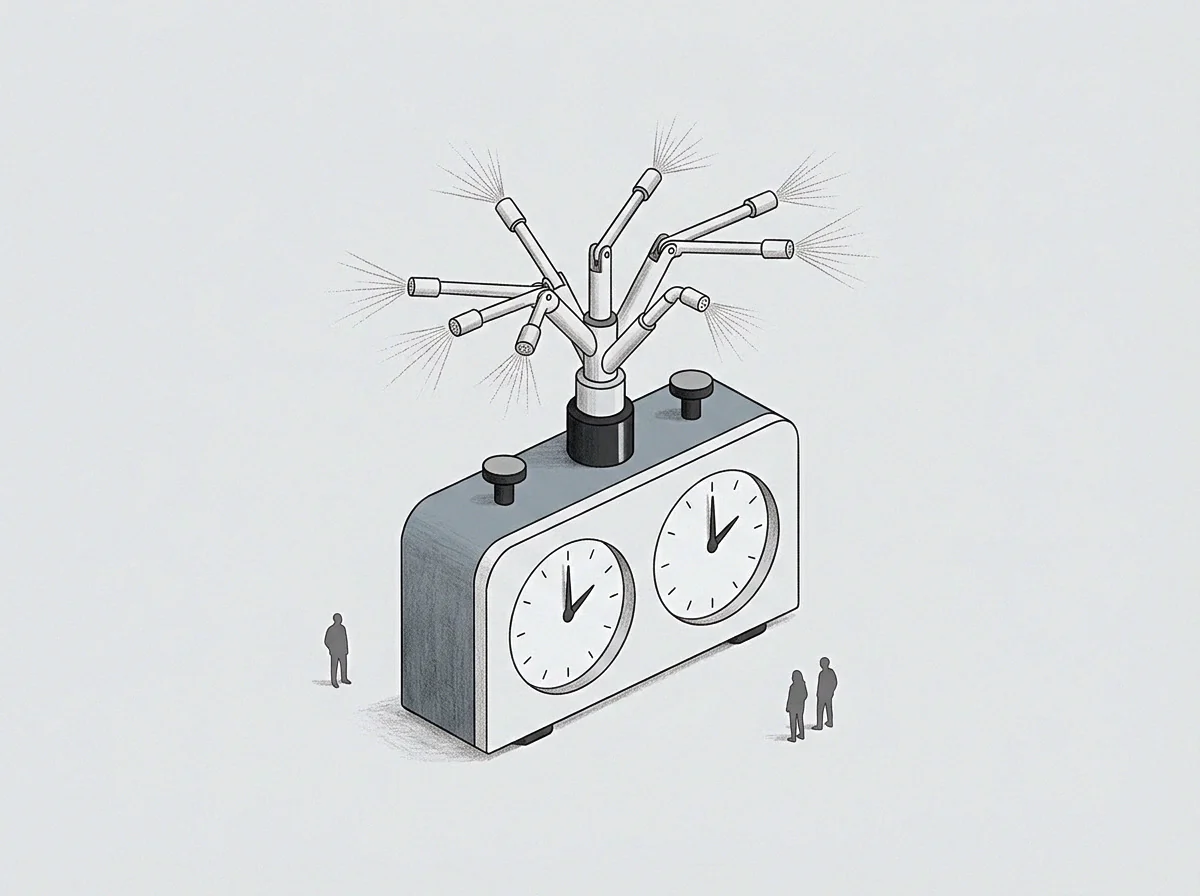
Traditional board oversight relies on backward-looking financial metrics. An audit committee inspects balance sheets, cash burn, and compliance registries, none of which identify an executive operating on twenty percent prefrontal capacity. Managing this enterprise risk requires non-invasive operational telemetry to track systemic capacity without intruding on medical privacy, focusing entirely on performance throughput.
Response latency on critical governance functions offers clear diagnostic evidence. When an operator routinely takes three weeks to execute standard shareholder resolutions, the governance pipeline is obstructed. Sharp drops in external strategic touchpoints, combined with spikes in late-night tactical communications, signal that an individual is relying on nocturnal quiet to compensate for daytime cognitive fragmentation.
Unpriced biological extraction converts long-term equity upside into sudden key person liquidation events.
A structured operational audit bypasses psychological assumptions and examines system outputs directly, checking decision pipelines, key dependency concentrations, and leadership continuity plans. If every major system branch terminates at a single deteriorating individual, the risk profile of the capital structure surges. Somatic failure must be treated identically to technical infrastructure outages, as both degrade throughput and destroy capital.
Sustainable governance matches operational architecture to biological constraints without relying on executive self-sacrifice.
Term

Constructing Contractual Limits For Key Person Sustainability
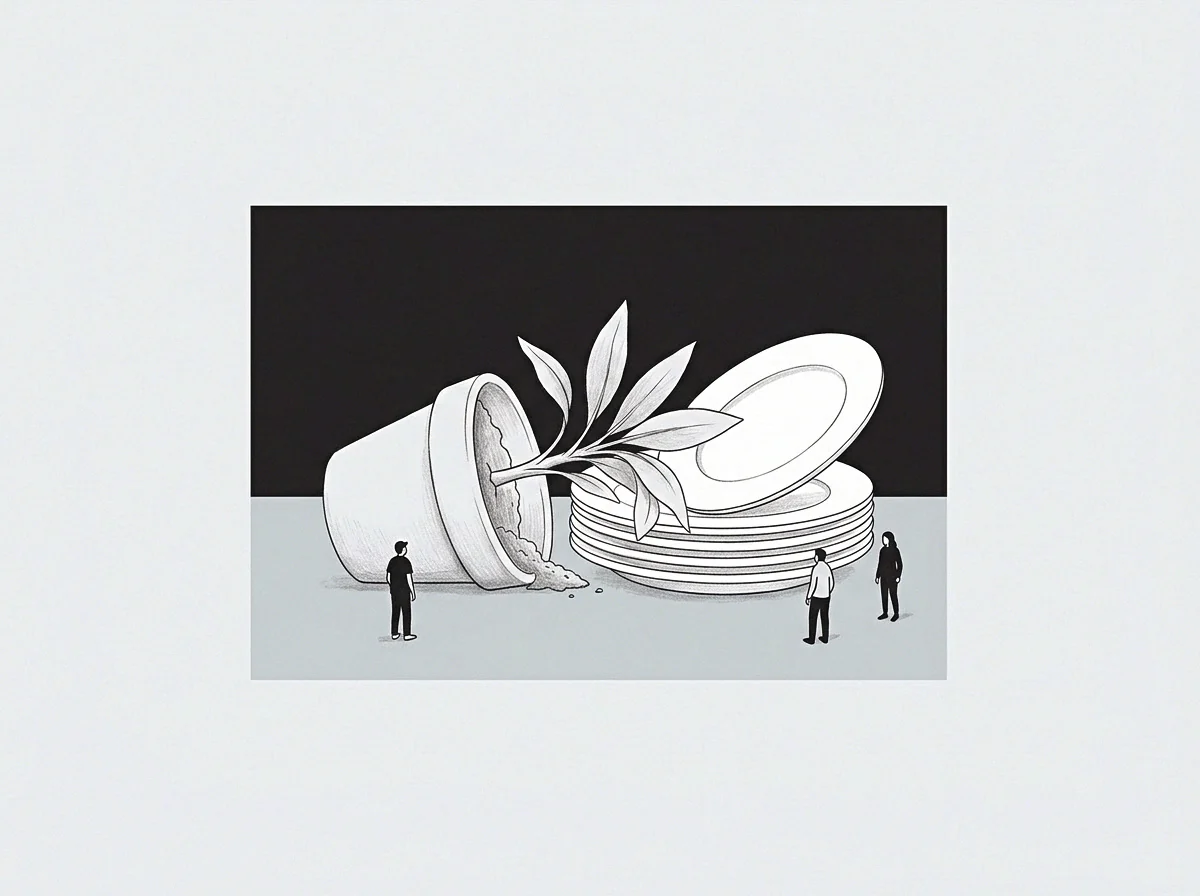
Resolving key person somatic fragility requires legal and governance architecture rather than reliance on personal willpower. Systems push human operators until a rigid barrier intervenes, and the effective barrier in corporate governance is a contractual term. A stated limit provides an institutional surface that the load-transferring system cannot bypass.
Primary shareholders protect asset value by embedding biological circuit breakers into shareholder agreements and employment contracts. These terms define operational thresholds that automatically trigger secondary delegations. When an executive experiences prolonged incapacitation, governance protocols must distribute operational authority without attaching stigma or declaring formal breach, removing the fear that drives exhausted founders to conceal physical collapse.
The operational air gap functions as a mandatory institutional buffer, forcing the creation of a secondary executive layer capable of absorbing key functions. When an operator encounters somatic limits, authority shifts through predetermined channels to maintain velocity and protect capital while the executive recovers baseline neurochemical function without triggering market panic or investor litigation.
A mandatory ninety-day executive sabbatical covenant triggered by sustained governance latency metrics shifts systemic load away from biological capacity toward institutional redundancy.