Meaning
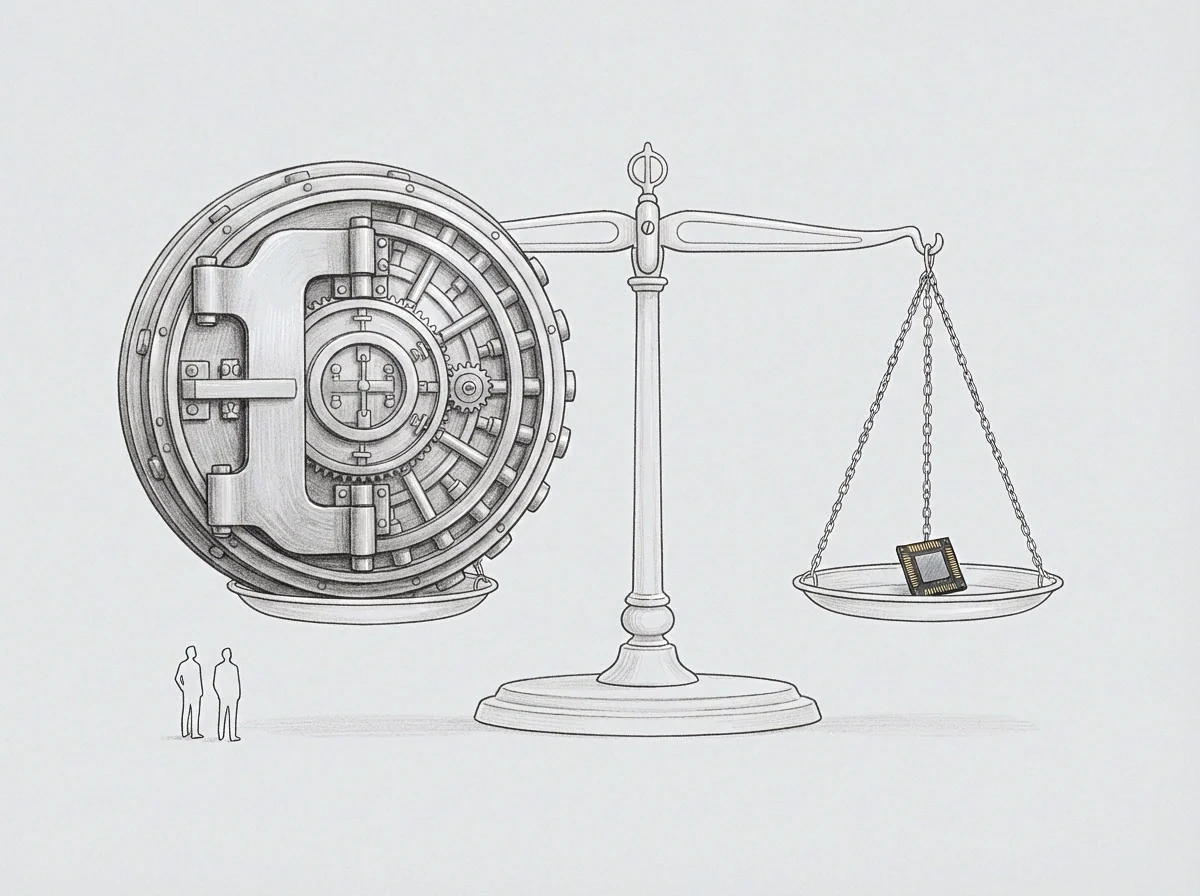
Physiological synchronization between a founder and a primary stakeholder group establishes a shared autonomic floor that suppresses acute arousal signals during prolonged crisis response. Baseline entrainment acts as a regulatory mechanism where heart rate variability patterns converge across individuals sharing high stakes environments over extended periods. This involuntary coupling reduces perceived stress through borrowed neural regulation but silently drains cognitive capacity from the lower-status participant.
The boundary of this mechanism ends precisely where physical proximity ceases and asynchronous communication begins because digital channels fail to transmit the sub-audible micro-cues required for autonomic locking.
Neural Coupling
Continuous exposure to the same operational pressures forces human nervous systems to match physiological rhythms for self-preservation during uncertainty. Founders unconsciously emit cortisol and adrenaline signatures that adjacent team members absorb through mirror neuron activity and vocal pitch matching. Physiological synchronization costs the subordinate partner measurable hours of deep sleep and steady attention reserves while keeping the leadership unit functional.
Independent actors maintain distinct cortisol curves that protect individual stamina over multi-year horizons. Shared nervous system dependencies degrade rapidly once physical separation removes the immediate sensory stimuli driving the coupling process.
Cognitive Drain
Borrowed regulation requires constant metabolic expenditure from the subordinate participant to sustain the founder through extended operational bottlenecks. Sustained autonomic alignment forces junior personnel to process emotional turbulence originating outside their immediate sphere of responsibility. Attention reserves diminish because the subordinate brain allocates scarce neural bandwidth to monitor and stabilize the leader’s baseline stability.
Chronic depletion manifests as sudden decision fatigue among core team members who carry the invisible weight of leadership equilibrium. Physiological debt accumulates without triggering standard organizational warning indicators because outward productivity remains high during the synchronization phase.
Capacity Limit
Autonomic synchronization breaks down permanently when the operational load exceeds the physiological carrying capacity of the subordinate nervous system. Exceeding this critical threshold forces an abrupt decoupling that leaves founders suddenly isolated within their own stress responses. System failure appears as unannounced departures of key personnel who appear outwardly resilient until the exact moment of cognitive exhaustion.
Regulatory capacity depends entirely on uninterrupted proximity and degrades into acute anxiety once physical distancing disrupts the coupling loop. Individual physiological independence returns only after extended isolation from the pressure environment that forced the original entrainment.