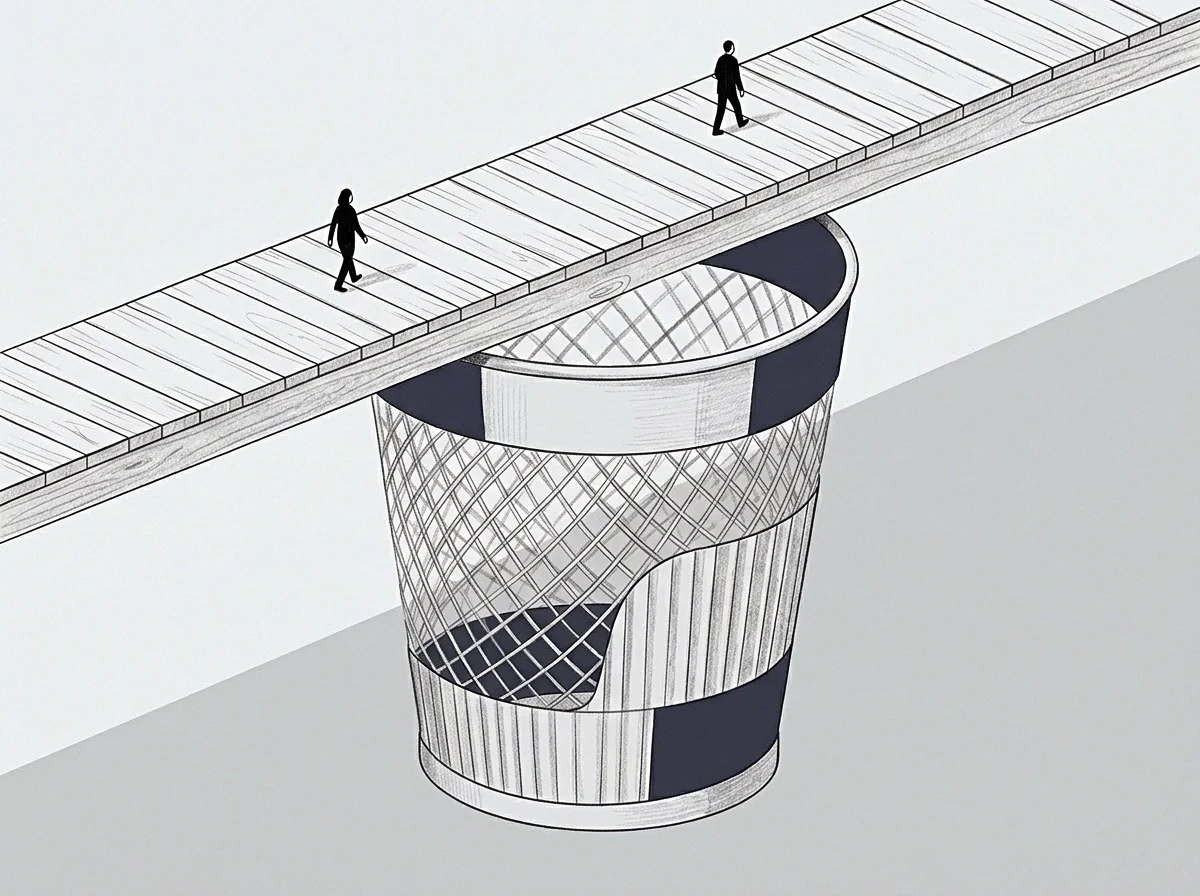
Meaning
Loss of distinction between professional obligations and personal recovery time that results in continuous allostatic load. When boundary collapse occurs, the structures intended to separate high-stakes regulation from low-stakes rest fail to hold. It is frequently seen in roles where the personal identity of the individual is tied to the survival of an organization.
The absence of clear transitions between states prevents the nervous system from returning to a baseline level of function.
Attention Drain
Constant availability erodes the ability to focus on deep work or rest. When boundary collapse is present, every notification carries the weight of a potential emergency regardless of its actual urgency. The person stays in a state of high physiological arousal because the environment offers no safe signal that the workday has ended.
This state demands an unrelenting expenditure of mental energy and hours.
Regulatory Failure
Internal regulation depends on the existence of a protected space where external demands do not reach. If boundary collapse persists, the mechanism for self-regulation stops functioning correctly. The individual becomes reactive and loses the capacity to plan for long-term objectives.
Chronic exposure to this environment leads to a measurable decline in decision quality and patience.
Structural Fix
Restoration of function requires the imposition of hard limits on contact and accessibility. Addressing boundary collapse involves physical or digital barriers that prevent work signals from entering rest spaces. These barriers are essential for maintaining the capacity to perform at high levels over years.