
How Ungated Relational Threads Trigger Operational Capacity Collapse Under Pressure
Ungated relational loops consume working memory slots, elevating allostatic load and triggering protective operational throttling under pressure.

Seat
Midnight arrives with four messaging channels lit simultaneously on one screen. An engineering incident requires immediate structural triage, an investor requests a non-urgent strategic update, and a co-founder drops a single line asking if the working dynamic between them still functions. The fourth window holds a client escalation waiting on an explicit decision.
The chair remains stationary while attention splits across four active demands. Operational execution halts entirely as attention jumps between the technical system break and the ambiguous relational inquiry.
The human nervous system processes incoming relational pings through dedicated neurobiological channels designed for social baseline monitoring. When a relational message arrives without clear parameters, explicit timelines, or bounded topic limits, the brain categorizes the exchange as an active threat vector or open supervisory loop. This tracking occurs in working memory, consuming mental capacity regardless of whether the person responds immediately or stays silent.
Relational exchanges missing a clear end date occupy active cognitive architecture continuously.
Operational execution demands focused allocation of executive function, working memory, and working headroom. An ungated relational line operates like a background process with elevated thread priority, continuously requesting status updates from the central regulator. As total cognitive demand hits system ceiling, the ability to process complex technical logic, strategic tradeoffs, or operational logistics degrades rapidly.
When internal processing power reaches saturation, the regulator selects for survival by dampening non-essential operations. The person sitting in the operational seat appears detached, non-responsive, or blunt to external teams. The underlying reality involves an executive processing architecture running at maximum capacity to hold multiple unresolved relational states simultaneously.
The partner on the other side of the unclosed loop interprets the delayed response and shortened speech as an intentional emotional withdrawal.
Slot
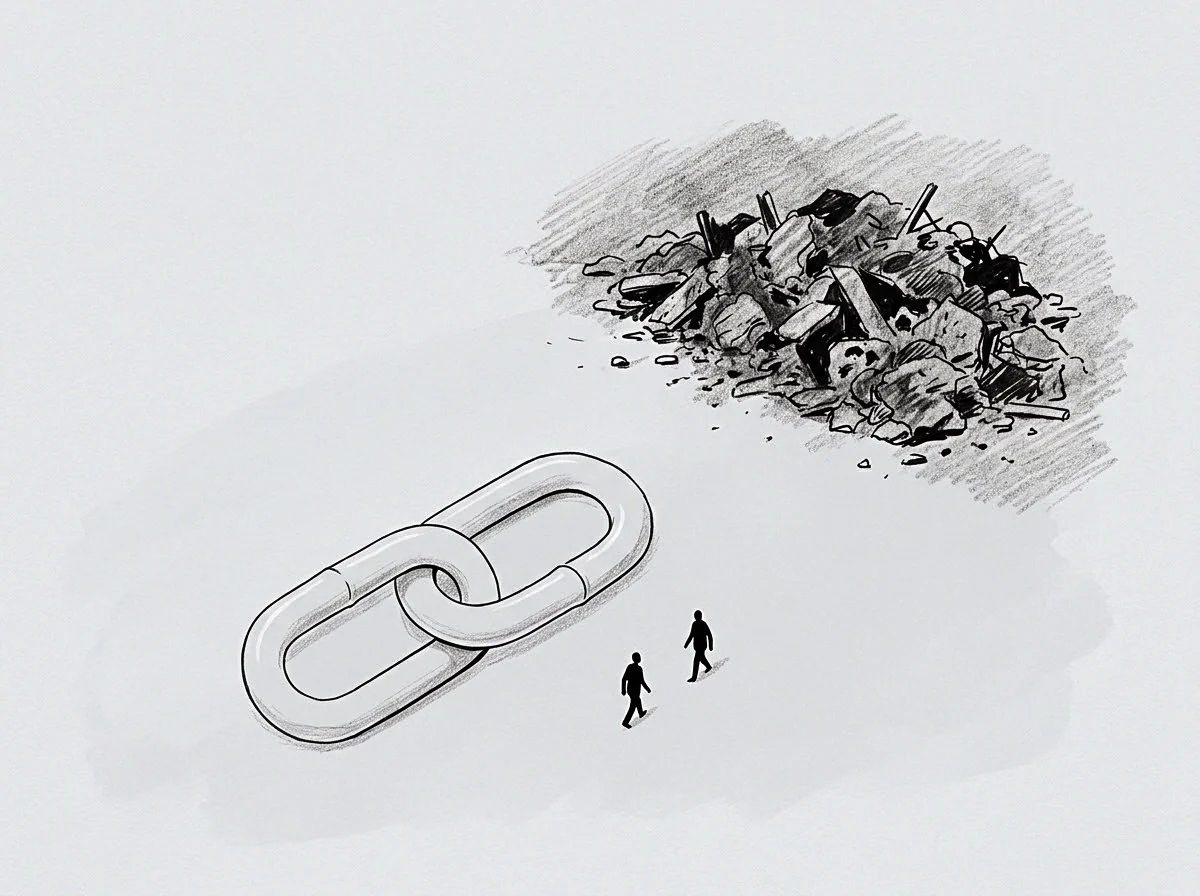
Working memory maintains a finite number of available processing channels for simultaneous management. Empirical research in cognitive psychology demonstrates that the human capacity for concurrent active task loops sits within a tight numerical bound, typically holding between three and five active items at once. Every unresolved relational line occupies one complete processing slot inside this limited architecture.
A project with a defined scope, explicit milestone date, and clear deliverables consumes a fractional operational sub-routine. An ambiguous relational inquiry occupies a full slot because its resolution conditions remain completely undefined. The brain cannot relegate an open social loop to secondary storage while the relational status of a key partner or collaborator remains indeterminate.
Relational loops without stated limits accumulate rapidly in operational environments lacking structural gating mechanics. These loops manifest in recurring patterns across executive interactions:
- The Unbounded Check-In phrase that introduces general friction without specifying an action item, schedule window, or topic boundaries.
- The Implicit Contract Probe exchange where one party tests the emotional availability or personal commitment of another during an active operational launch.
- The Floating Post-Mortem conversation that seeks to dissect past interpersonal friction while the current deployment phase remains active.
When three of four working memory slots hold unresolved relational queries, exactly one slot remains for operational decision-making, technical execution, and financial risk oversight. The operator attempts to run complex organizational infrastructure through a single remaining mental channel.
Working memory overloaded by open loops drops operational output before emotional regulation fails.
The switching cost between holding an open relational loop and executing an operational directive compounds the total energy spent. Context switching across disparate operational tasks incurs a measurable temporal latency; switching between social threat monitoring and analytical problem-solving demands an even higher neural toll.
A communication contract containing explicit review dates, defined scope bounds, and unambiguous termination criteria converts an active relational monitoring loop into a passive stored record, immediately clearing the underlying working memory slot.

Drain
Allostatic load defines the cumulative physiological wear on the human biological system caused by sustained, unmediated regulatory demand. In high-pressure operational environments, the body maintains performance by continuously elevating cortisol, adrenaline, and autonomic nervous system tone. When ungated relational demands enter this elevated baseline, the total regulatory demand breaches biological recovery thresholds.
As headroom vanishes, a system running at maximum allostatic capacity transitions from active regulation into a protected state known as throttling. Throttling reduces non-essential outputs to preserve baseline physiological integrity. In clinical settings, this state is routinely misdiagnosed as depressive apathy or motivational collapse.
The distinction rests on system output characteristics under pressure.

Why Does Throttling Present as System Apathy?
The throttled state reflects a conscious or unconscious protective conservation of regulatory capacity. When capacity drops below operational minimums, the nervous system actively restricts affective processing, creative problem-solving, and conversational nuance. The underlying system remains fully functional, operating under strict protective energy constraints.
| Observable Variable | Throttled Operational Capacity | Depressive Atrophy State |
|---|---|---|
| Headroom Response | Rapid drop under incoming relational load; immediate recovery when loops close. | Pervasive absence of headroom across all operational and low-demand contexts. |
| Input Processing | Selective gating; high efficiency on structured technical inputs, zero capacity for ambiguous inputs. | Generalized deficit across both structured and unstructured incoming inputs. |
| Output Latency | Elevated response latency on relational channels; baseline latency on gated operational tasks. | Uniform high latency across all functional and relational output vectors. |
| System Integrity | Core execution capabilities preserved; protective shutdown of external regulation functions. | Systemic degradation of baseline execution, self-care, and cognitive capabilities. |
Research in autonomic physiology establishes that nervous system regulation rests on predictable energetic supply curves. The physiological finding that co-regulation with a secure partner reduces metabolic load relies on explicit social safety signals; absent those signals, social monitoring increases total physiological energy expenditure. This claim rests on cardiovascular and endocrinological markers gathered across acute stress trials; a shift in baseline subject safety parameters or task complexity metrics would alter the observed metabolic curve.
Unstated expectations in relational dynamics generate chronic physiological demand that drains operational headroom.
Misreading a throttled system as an emotionally distant or uncommitted partner leads to increased relational demands, forcing further biological protective throttling until operational capacity collapses completely.

Shelf
Consider two founders who built an enterprise software firm over three consecutive years without establishing explicit communication terms or emotional availability limits. Assume equal equity splits, direct operational reliance, and shared final sign-off authority across all engineering and revenue decisions. Assume operational scale triples the daily decision volume over six months, pushing internal work hours to system ceiling.
The technical founder handles core infrastructure, while the commercial founder manages client acquisition and board relations. As pressure exposes the cost, late evening messaging opens with ambiguous queries regarding mutual trust, personal alignment, and long-term vision. Neither founder establishes an explicit duration, agenda, or resolution criteria for these exchanges.
The queries remain active across nights and weekends.
The technical founder holds three unresolved relational loops in active memory while managing a major server outage. The commercial founder, sensing a delayed response, sends secondary probes to evaluate partner commitment. The ungated nature of these queries consumes the technical founder’s final available processing slot.
Technical decision latency quadruples, leading to a critical deployment error that takes client systems offline for twelve hours.
The commercial partner interprets the deployment failure as proof of operational incompetence or burnout, while the technical partner identifies the continuous relational probing as the primary catalyst for executive overload. Both interpretations miss the underlying mechanism. The system collapsed because open relational loops consumed the processing capacity required to maintain core operational stability.
How many operational failures attributed to strategic divergence are simply the direct result of unmanaged thread concurrency breaching human processing limits?
Latch
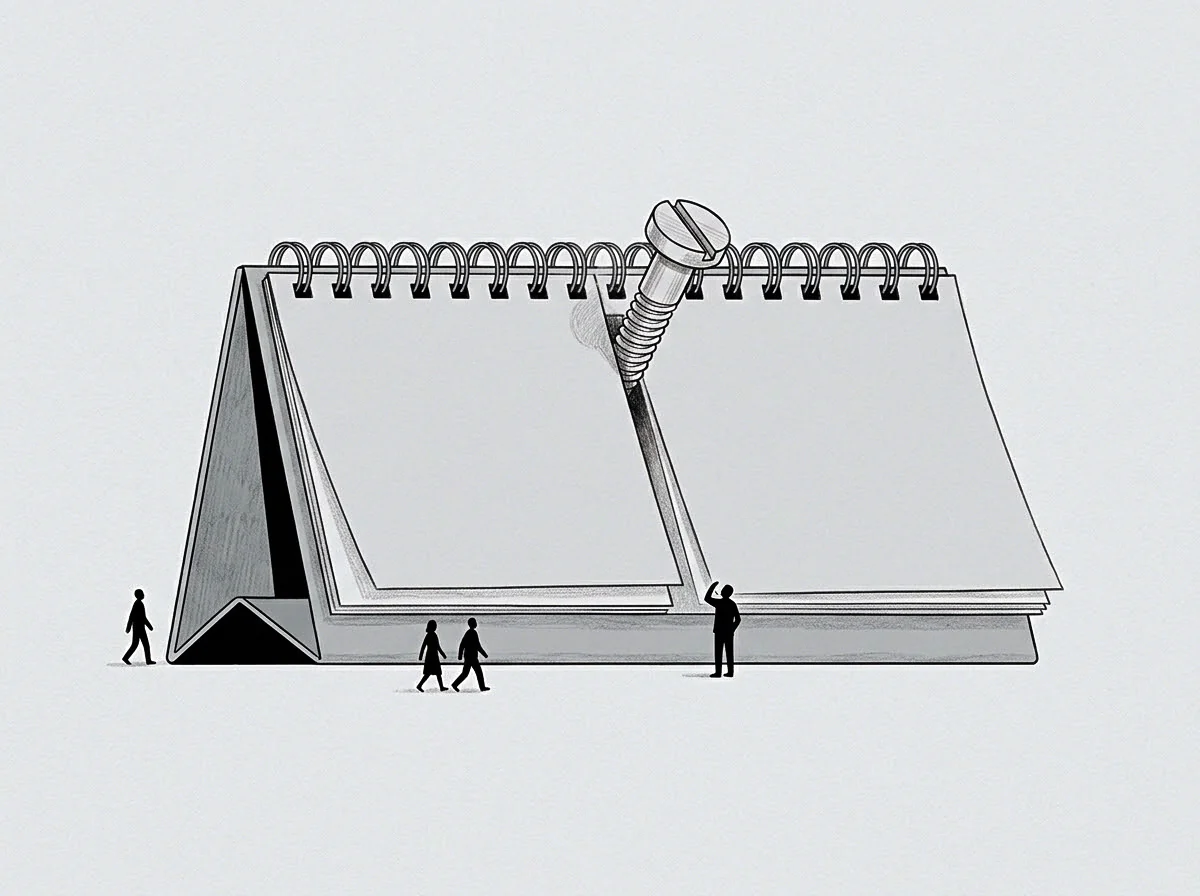
Preventing capacity collapse requires converting ungated relational lines into structured, time-bounded, and scope-defined protocols. A relational line equipped with explicit parameters ceases to function as an open loop in working memory, releasing processing slots back to the operational pool.
Establishing clear operational gates creates immediate headroom without requiring emotional detachment or conversational avoidance. Structuring communication channels protects both operational throughput and long-term relational integrity by preventing the nervous system from entering protective throttling states.
Converting an active, ungated relational ping into a gated operational entry follows a precise structural sequence:
- Acknowledge incoming receipt of the relational ping within a defined time window to satisfy initial social safety monitoring.
- State current operational capacity bounds flatly without emotional framing or extended justification.
- Assign an explicit future time slot and fixed duration for addressing the unresolved topic.
- Define the precise scope and required parameters of the upcoming discussion.
- Park the open loop completely until the designated review window opens.
Gating a relational loop with explicit time and scope boundaries restores operational capacity instantly.
Gated threads ensure that high-value operational tasks retain dedicated working memory capacity during acute execution windows. When communication channels operate with explicit scopes, fixed review dates, and stated parameters, the underlying cognitive system retains the headroom needed to sustain peak operational output without triggering capacity collapse.
Relational availability maintained without stated limits guarantees operational failure when pressure rises.