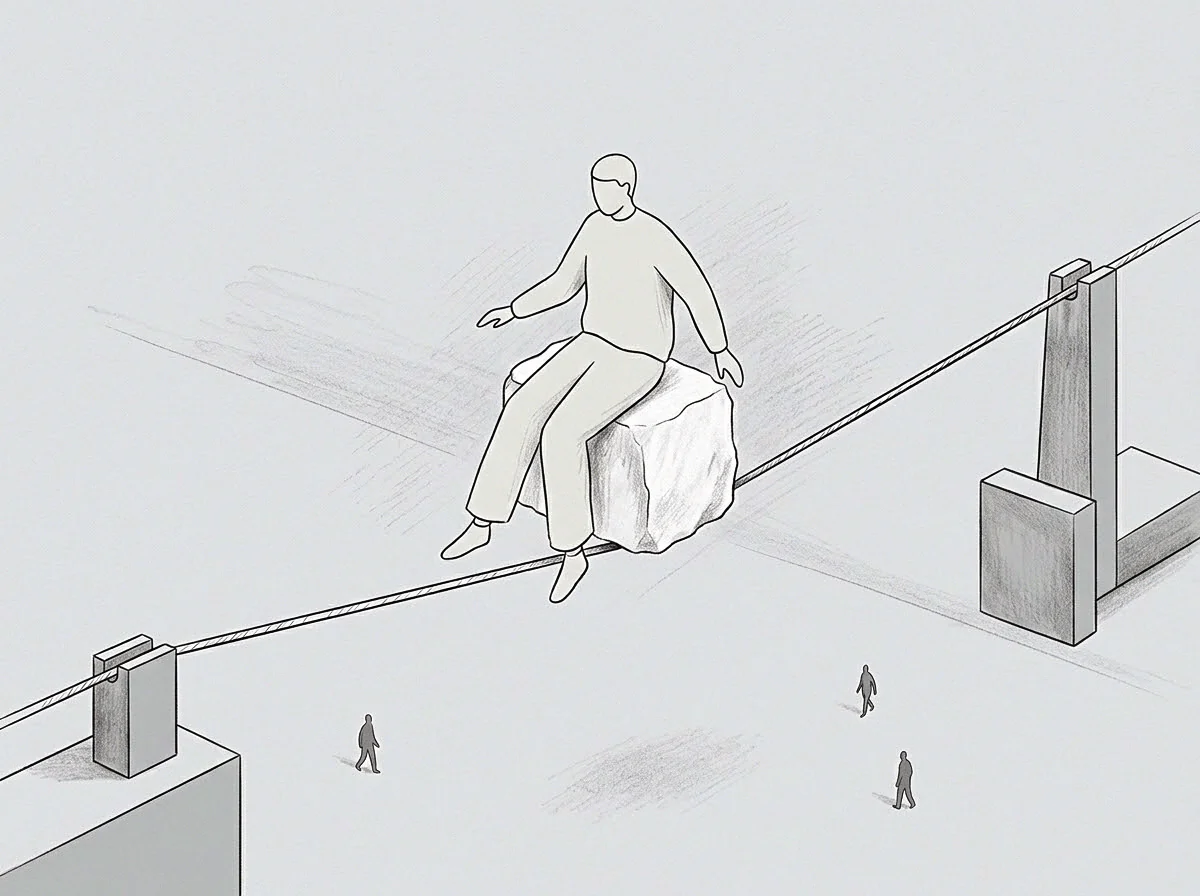
Meaning
Permanent reduction in cognitive or emotional processing bandwidth follows prolonged high-intensity decision cycles during periods of professional leadership. Capacity erosion describes a measurable decline in executive output efficiency when biological and psychological resources fail to replenish at a rate proportional to ongoing work demands. This phenomenon occurs when physiological indicators like cortisol elevation or sleep disruption become chronic, effectively lowering the ceiling for sustained attention.
Stated Mechanism
Sustained exposure to complex problem solving forces a shift in cognitive resource allocation. The founder spends mental energy managing operational volatility, which necessitates a withdrawal of attention from long-term strategy to immediate survival tasks. Over time, the internal regulation systems that allow for high-order thinking suffer from the constant requirement to remain in a state of high alert.
Narrowing focus becomes a functional adaptation to ensure the entity continues to operate while the individual reserves diminish.
Performance Metric
Quantitative changes in decision latency provide a proxy for the internal load a person bears. Tasks requiring minimal effort before founding now demand excessive time and concentrated energy, marking the transition from routine management to active exhaustion. Accurate assessment requires tracking the delta between historical throughput and current operational speed, removing task complexity as a variable.
Discrepancies here indicate a systemic inability to maintain previous work intensities regardless of intent or willpower.
External Boundary
Environmental stability allows for the stabilization of internal resource depletion if the individual removes the stressors causing the drain. Permanent degradation remains avoidable if the person transitions out of the high-stakes environment before the decline affects baseline functionality. Complete recovery of cognitive load ability depends on the length of time the individual remains in the diminished state.
Rest periods function as a hard stop against further losses only when the individual separates entirely from the professional stimulus that initiated the process.