Meaning
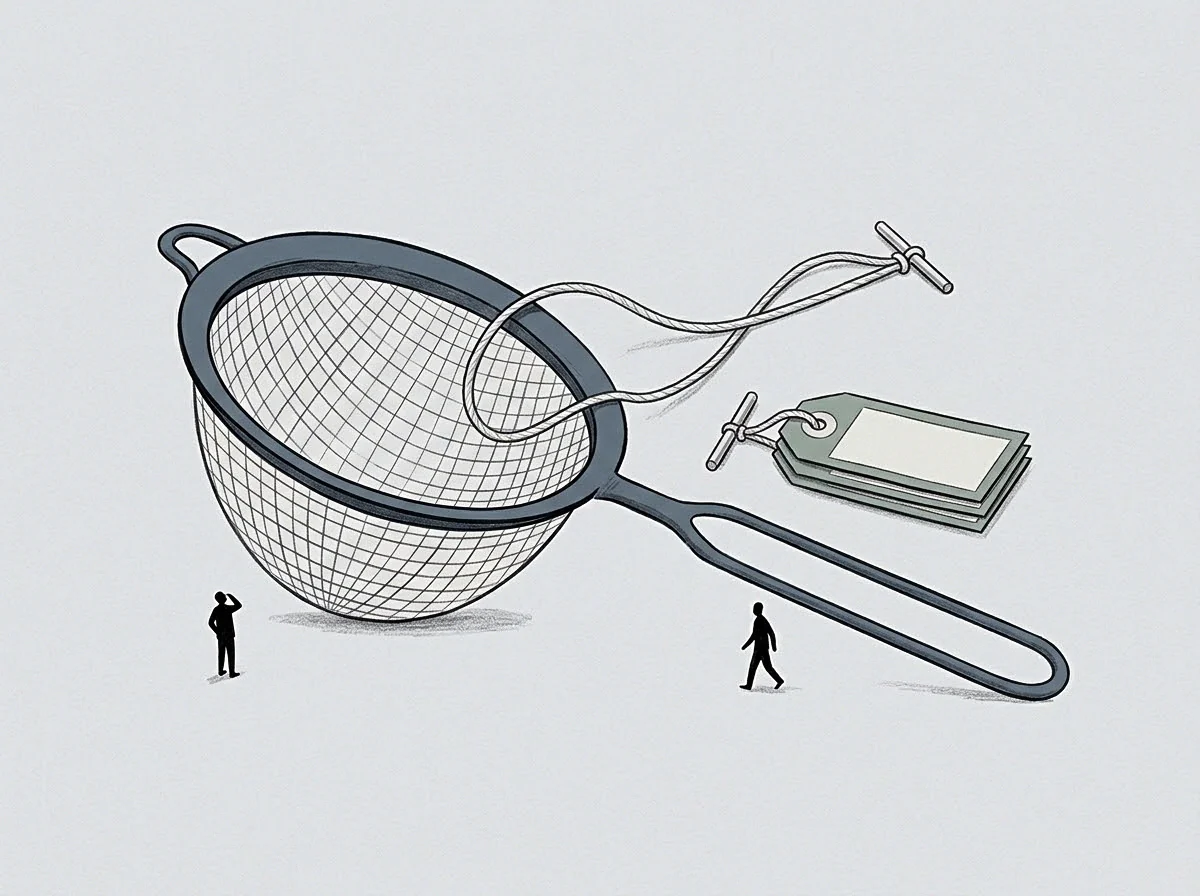
Attentional routing architecture comprises the set of institutional protocols, executive delegates and technical mechanisms that intercept, parse and sort external signals before cognitive exposure occurs. The filter structure defines what information reaches the perceptual surface of the post-founding executive, governing latency, signal-to-noise ratios and context compression. It acts as a cognitive perimeter that protects baseline capacity by treating human attention as a scarce, non-renewable systemic asset.
The mechanism ceases to apply when legal obligations, fiduciary subpoenas or physical operational catastrophes require unmitigated direct discovery.
Architectural Screening
Multi-tiered information architectures isolate the central decision-maker from raw inbound telemetry. By implementing a filter structure, the enterprise ensures that incoming communications undergo verification, condensation and contextual framing by intermediary systems or designated chiefs of staff. This arrangement protects executive attention from the destructive cadence of modern messaging platforms, which otherwise induce continuous low-grade vigilance and frequent attentional reorienting.
The central executive receives curated information packets at synchronized, predictable intervals rather than as continuous, chaotic interruptions. This buffering allows cognitive recovery systems to function between strategic interventions, maintaining analytical depth and emotional detachment.
Attention Conservation
Designing and updating these structural screens consumes structural overhead while shielding personal energetic reserves. A robust filter structure requires constant calibration to avoid stripping away crucial operational nuance or blinding the leader to emerging threats. The operational cost of this barrier falls on peripheral personnel, who must absorb the raw emotion and ambiguity of initial stakeholder contacts.
For the founder, the cost shifts from reactive firefighting to intentional meta-governance, requiring disciplined adherence to established communication schedules. When the filter functions correctly, it saves hundreds of executive hours each quarter, preserving autonomic balance and strategic clarity at the expense of absolute immediacy.
Information Asphyxiation
Excessive information filtering risks total operational detachment and dangerous strategic myopia. When a filter structure becomes excessively bureaucratic or self-serving, it suppresses legitimate warning signs under the guise of protecting executive focus. The central executive becomes trapped within an echo chamber of sanitised reports, losing sensory touch with operational reality and front-line morale.
Critical structural failures can metastasize entirely unnoticed behind pristine operational summaries. Breaking through this structural isolation requires intentional, calibrated penetrations of the perimeter, such as unannounced spot audits or skip-level dialogues, to recalibrate internal models against unvarnished ground truth.