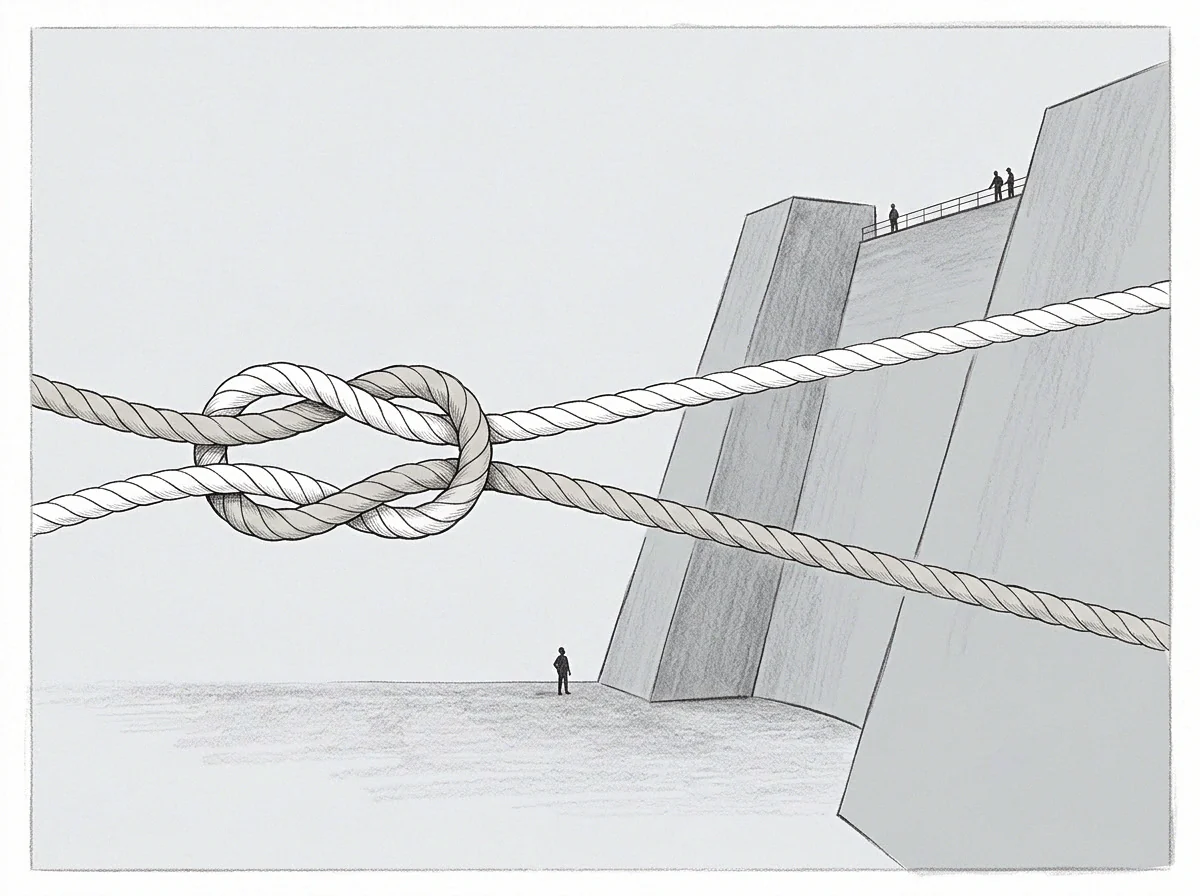
Meaning
Organizational partitions separate distinct layers of authority to regulate the vertical flow of information and operational mandate within an enterprise. These institutional structures, known as hierarchy barriers, govern vertical transmission speeds, prevent operational congestion at senior tiers and define institutional escalation boundaries. They restrict direct bidirectional exchange to formal reporting intervals.
The arrangement ceases to function during structural insolvency or emergency interventions where functional distinctions dissolve.
Filtration Friction
Structured authority boundaries selectively restrict bottom-up diagnostic disclosures while enforcing top-down command delivery. Under these conditions, hierarchy barriers introduce information latency, filtering operational realities through successive administrative layers until upward communication reflects sanitised consensus. Subordinate tiers withhold ambiguous warnings to avoid administrative friction.
Signals that survive upward transmission often arrive stripped of immediate urgency. Decision-makers at the apex consequently navigate incomplete operational landscapes. Distorted reporting represents the structural cost of organizational stratification.
Cognitive Cost
Maintaining segmented authority lines demands extensive procedural governance. Senior officers invest finite attention in cross-verifying indirect signals through auxiliary channels, compensating for filtered reports. Mid-tier supervisors dedicate attention to monitoring compliance rather than executing functional tasks.
This overhead increases as structural distance widens between strategic decision makers and operational reality. Disrupted communication lines force recurrent realignments.
Crisis Degradation
Severe operating emergencies expose the fundamental rigidity of compartmentalized organizational architecture. Urgent threats require instantaneous lateral coordination that vertical structures naturally impede. Direct contact between operational specialists and supreme decision-makers becomes unavoidable when survivability is threatened.
Hierarchical permissions yield to practical triage necessity. Such modifications collapse ordinary reporting sequences until stability returns.