Meaning
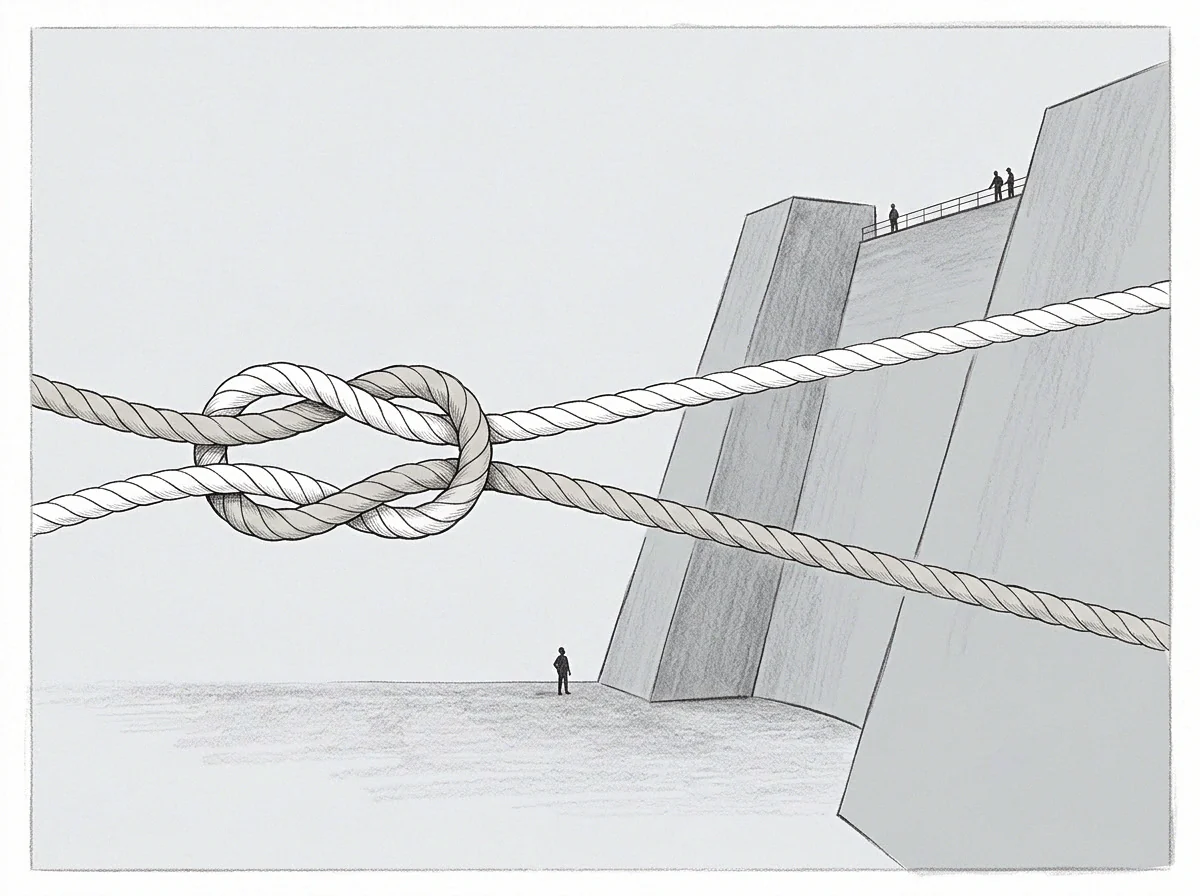
Relational divergence denotes an imbalance in social baseline monitoring wherein one participant tracks and adapts to another person’s physiological states, non-verbal cues and stress markers while receiving no corresponding calibration in return. This attunement asymmetry measures the unequal expenditure of sensory attention and emotional regulation within a collaborative or executive dyad. It defines the structural gap between unilateral surveillance and mutual physiological synchrony.
The concept stops applying to detached administrative transactions where neither participant assumes responsibility for the other’s internal state.
Somatic Allocation
Continuous tracking of an external nervous system requires persistent prefrontal and insular activity without the metabolic relief provided by shared regulatory baselines. Under attunement asymmetry, the attuned participant registers shifts in the other’s respiration, vocal tone, pupil dilation and micro-expressions, spending metabolic resources to anticipate volatility. The non-attuned participant operates with minimal sensory overhead, offloading the work of relationship preservation onto the attuned counterpart.
One nervous system acts as an unacknowledged dampening mechanism for two bodies. This unequal distribution leaves the vigilant individual perpetually operating above resting autonomic baselines.
Structural Setting
Supervisory relationships and founder transitions systematically generate this imbalance when authority boundaries remain vague. In an acute attunement asymmetry, the departing founder or subordinate monitors the board member, incoming executive or key partner to prevent friction, while the institutional actor tracks only formal metrics. The unreciprocated sensory labor remains invisible on organisational charts yet dictates daily interaction patterns.
Feedback mechanisms fail because the attuned individual softens, filters or delays critical structural signals to manage the immediate interpersonal climate.
Metabolic Drain
Extended periods of unreciprocated tracking exhaust parasympathetic reserves, driving up tonic cortisol levels and degrading sleep continuity. This attunement asymmetry strips the nervous system of restorative social contact, transforming collaborative hours into unilateral surveillance duty. The long-term physiological expense accumulates as chronic vigilance, persistent muscular bracing and an inability to downregulate autonomic arousal even in solitary environments.