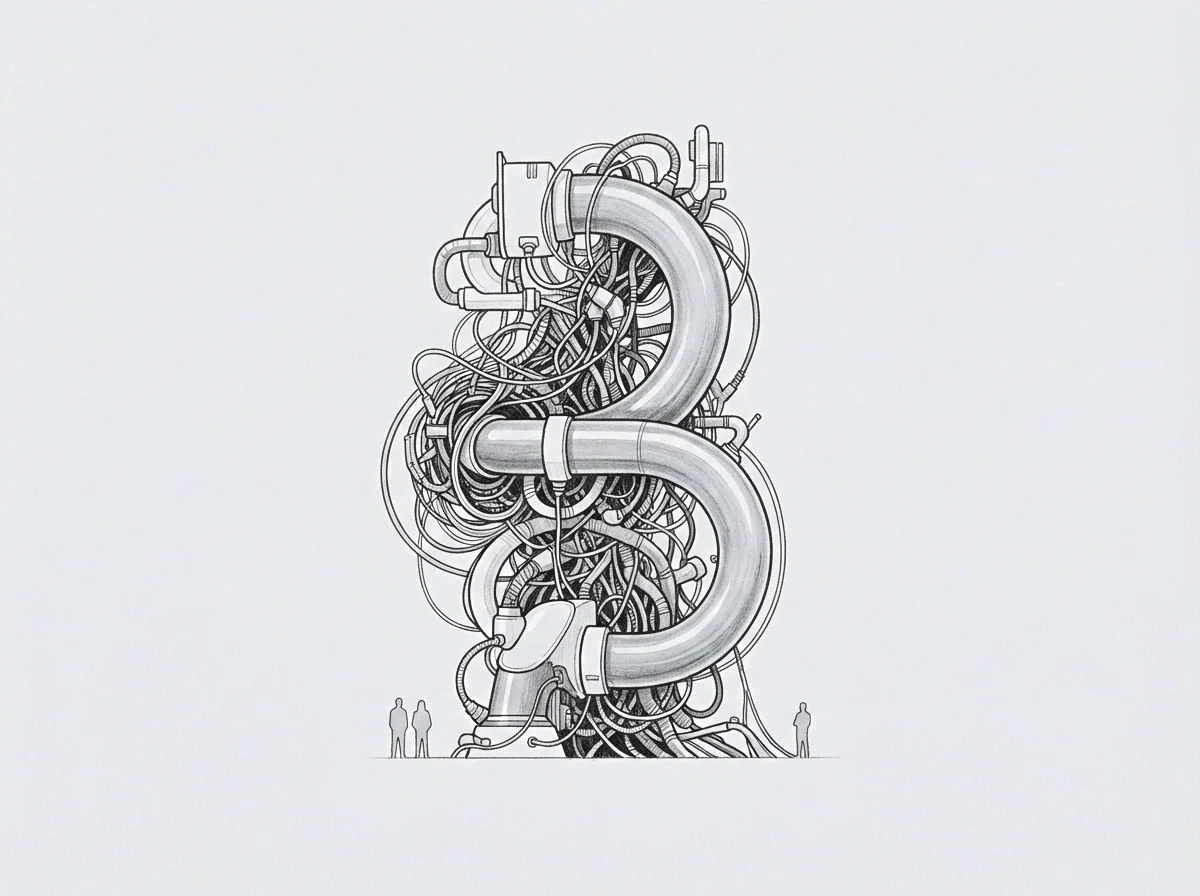
Meaning
Rapid reduction in freely deployable cash reserves restricts an organization from meeting immediate financial commitments. A sudden liquidity contraction destabilizes commercial operations by compressing working capital margins below necessary operating baselines. It monitors cash conversion cycles against ongoing burn rates, highlighting operational fragilities across the enterprise.
The phenomenon terminates when an injection of external capital restores cash balances, or when absolute capital exhaustion forces corporate insolvency and organizational wind-down.
Somatic Impact
Running an enterprise through sharp cash compression imposes severe physiological tolls on leadership. Experiencing a sudden liquidity contraction locks the autonomic nervous system into unrelenting hyper-arousal, marked by elevated cortisol and persistent tachycardia. The executive experiences intense somatic vigilance, waking repeatedly through the night to reassess vanishing operating margins.
Cognitive bandwidth narrows toward near-term financial threats, impairing abstract reasoning and long-term strategic calculation. Over time, prolonged somatic mobilization degrades baseline immune functions, exhausting personal biological resilience.
Operational Shockwaves
Deficits in deployable cash disrupt standard business functions with escalating speed. When liquidity contraction hits an enterprise, vendor disbursements pause, causing supplier friction and halting inventory flows. Departmental budgets face severe cuts, terminating marketing campaigns and freezing infrastructure investments.
Management shifts attention entirely away from growth initiatives toward defensive cash conservation tactics. Payroll obligations become critical deadlines that generate intense organizational anxiety across the company.
Governance Stress
Severe cash depletion destabilizes relations among the board of directors, management and external capital providers. During a liquidity contraction, investor factions dispute emergency bridge terms, down-round valuations and liquidation preferences. Founders lose operational autonomy as protective investor covenants trigger emergency oversight powers.
Disagreements regarding resource allocation spark internal conflicts, threatening managerial cohesion. The company risks institutional fragmentation unless leadership can demonstrate an immediate, reliable path back to sustainable operating cash flow.