Meaning
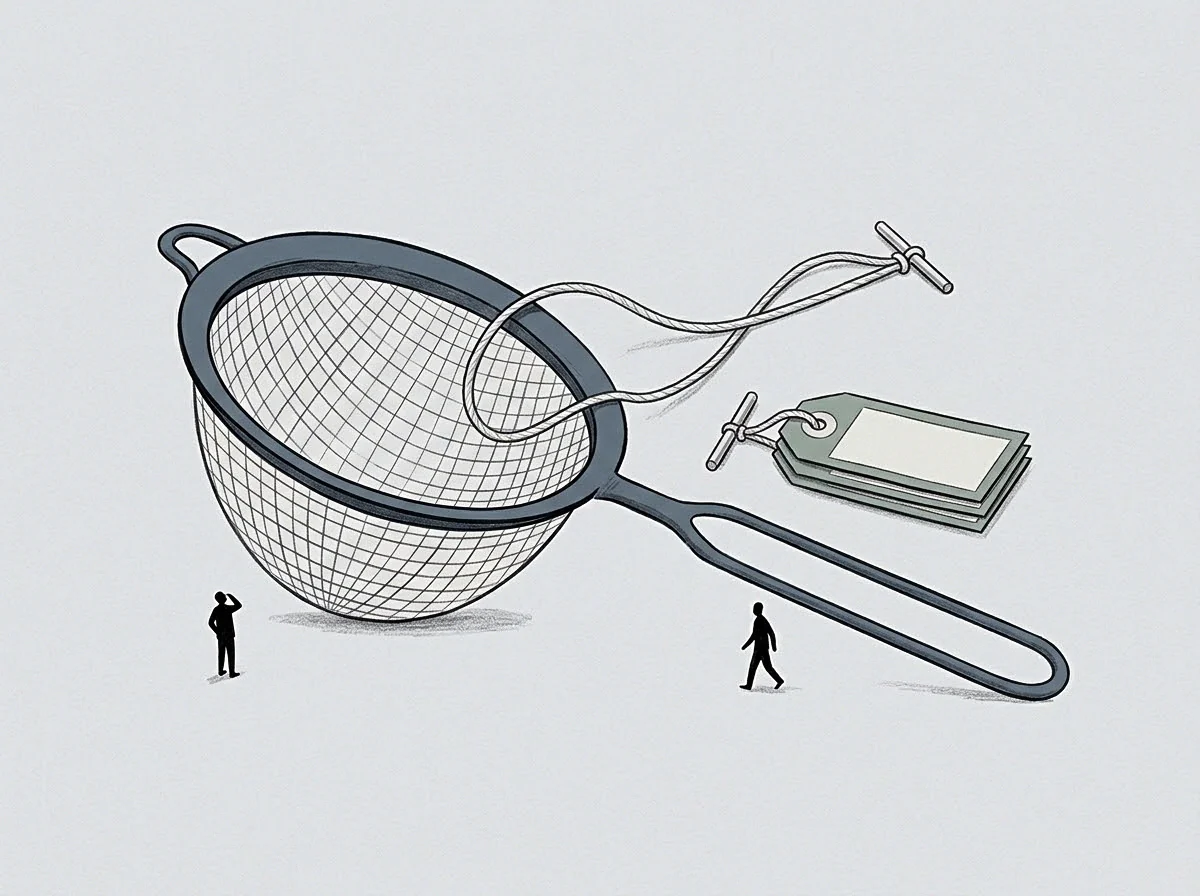
Sorting criteria dictate how a system discards incoming requests when its processing capacity reaches a fixed limit. A triage barrier maintains structural stability by enforcing a hard cutoff point for secondary tasks during periods of peak load. It prevents the saturation of core functions by redirecting non-essential inputs into a cold storage queue.
Load Capacity
Sustained input velocity defines the frequency at which this mechanism engages. High internal pressure forces the filter to reject all data packets that fail to meet a pre-set priority threshold. The filter consumes zero processing power to decline these requests since it operates as a binary gate rather than a complex evaluator.
Resource Allocation
Attention shifts exclusively toward high-priority operations when the barrier remains active. Founders suffer a measurable loss in peripheral awareness because they direct all available mental hours into the primary operational pipeline. This isolation protects the uptime of critical internal systems but introduces latency for any task located behind the gate.
Systemic Efficiency
Rigid constraints within the filter reduce the risk of cascading failure during unexpected spikes in demand. It ensures that the primary function retains sufficient energy to continue operating despite external volatility. Any overflow beyond the threshold vanishes from the active environment to preserve the integrity of the remaining operations.